This checkin to GC8W7QW Forgotten Bridge reflects a geocaching.com log entry. See more of Dan's cache logs.
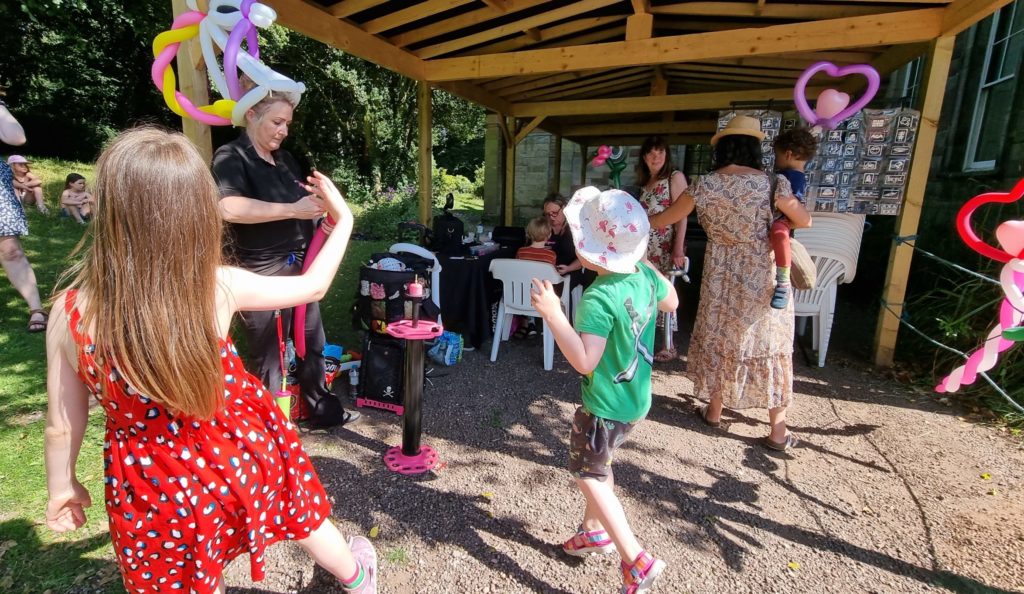
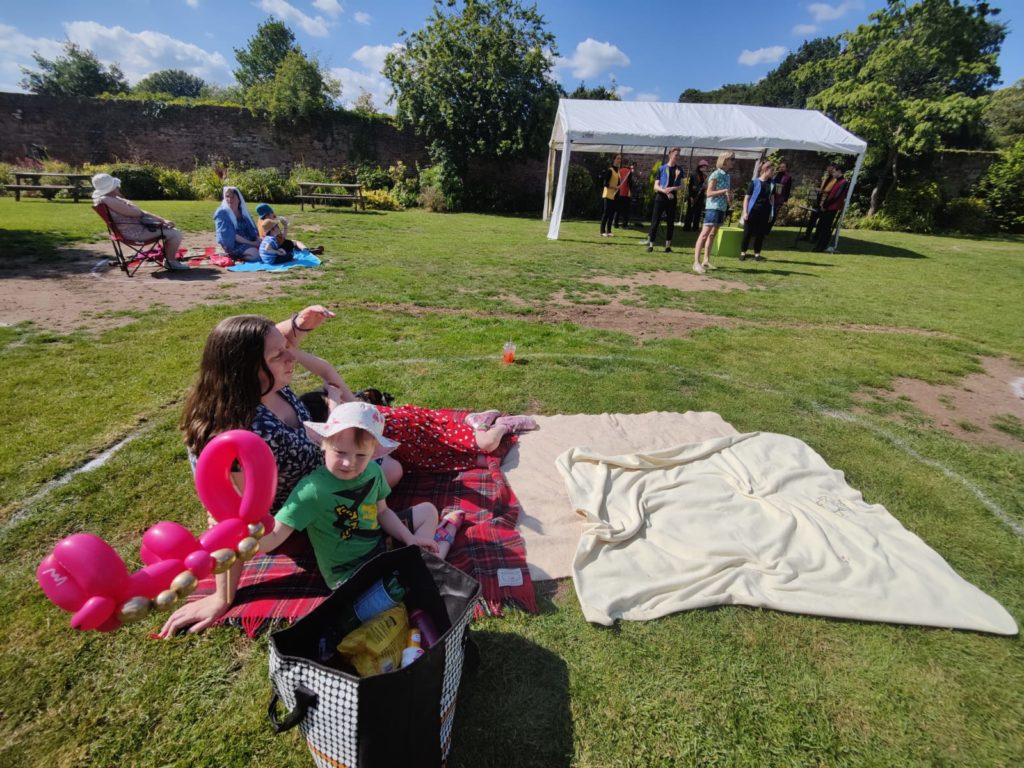
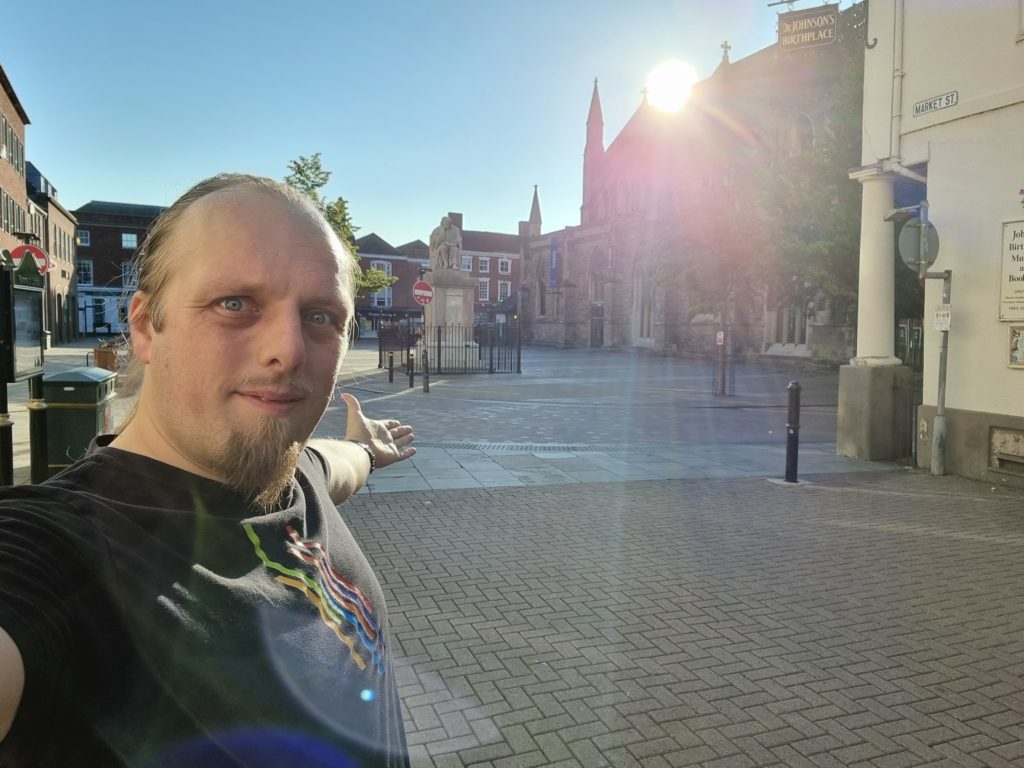
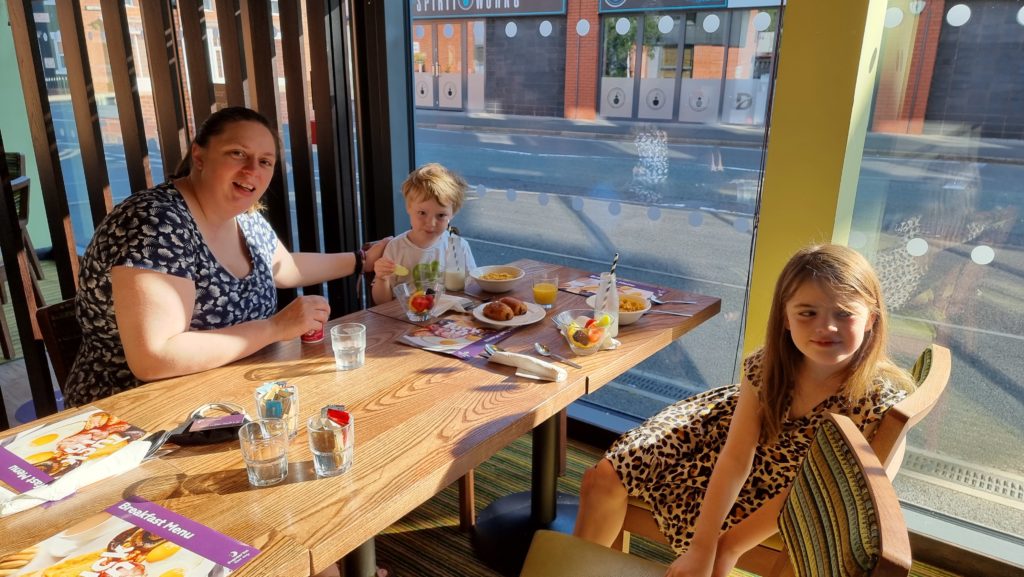
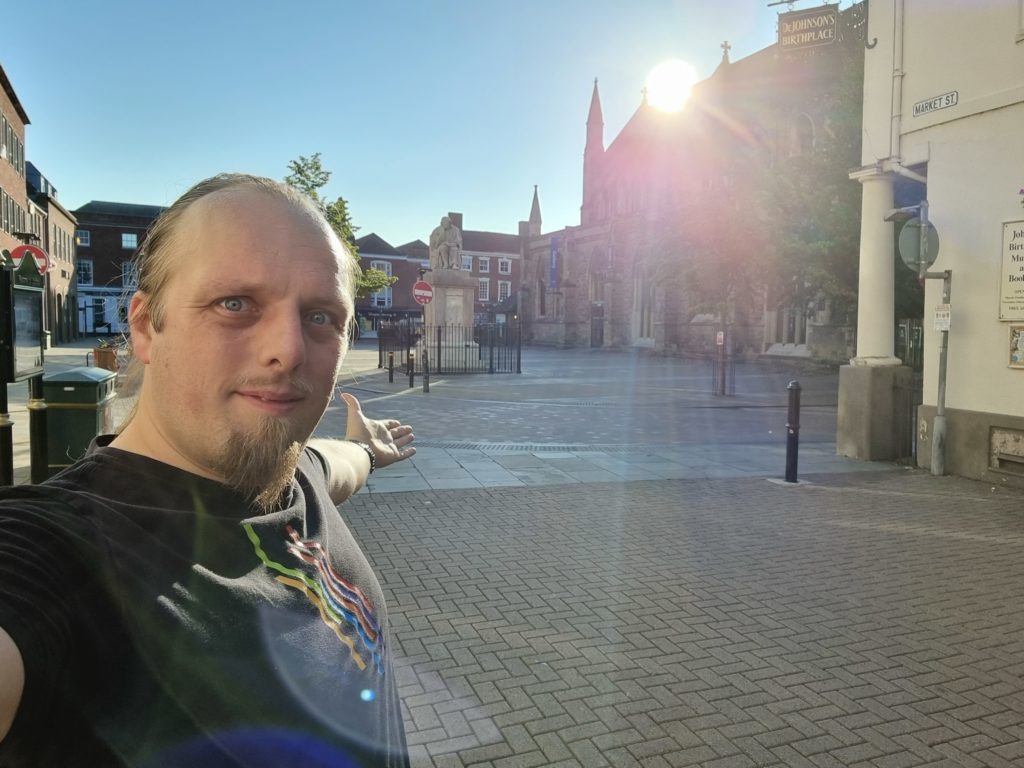
Quick maintenance check in while out on a walk with the 3y/o. All is well. Left the incumbent travel tag for the next ‘cacher!
This checkin to GC8W7QW Forgotten Bridge reflects a geocaching.com log entry. See more of Dan's cache logs.
Quick maintenance check in while out on a walk with the 3y/o. All is well. Left the incumbent travel tag for the next ‘cacher!
For most of the last decade, one of my side projects has been FreeDeedPoll.org.uk, a website that helps British adults to change their name for free and without a solicitor. Here’s a little known fact: as a British citizen, you have the right to be known by virtually any name you like, and for most people the simplest way to change it is to write out a deed poll: basically a one-person contract on which you promise that you’re serious about adopting your new name and you’re not committing fraud or anything.
Over that time, I’ve helped thousands of people to change their names. I don’t know exactly how many because I don’t keep any logs, but I’ve always gotten plenty of email from people about the project. Contact spiked in 2013 after the Guardian ran an article about it, but I still correspond with two or three people in a typical week.
These people have lots of questions that come up time and time again, and if I had more free time I’d maintain an FAQ of them or something. In any case, a common one is people asking for advice when their high street bank, almost invariably either Nationwide or Santander, disputes the legitimacy of a “home made” deed poll and refuses to accept it.
When such people contact me, I advise them of a number of solutions and workarounds. Going to a different branch can work (training at these high street banks is internally inconsistent, I guess?). Getting your government-issued identity documents sorted and then threatening to move your account elsewhere can sometimes work. For applicants willing to spend a little money, paying a solicitor a couple of quid to be one of your witnesses can work. I often don’t hear back from people who email me about these banks: maybe they find success by one of these routes, or maybe they give up and go down one an unnecessarily-expensive avenue.
But one thing I always put on the table is the possibility of fighting. I provide a playbook of strategies to try to demonstrate to their troublemaking bank that the bank is in the wrong, along with all of the appropriate legal citations. Recent years put a new tool in the box: the GDPR/DPA2018, which contains clauses prohibiting companies from knowingly retaining incorrect personal data about an individual. I’ve been itching for a chance to use these new weapons… and over this last month, I finally had the opportunity.
I was recently contacted by a student (who, as you might expect, has more free time than they do spare money!) who was having trouble with Santander refusing to accept their deed poll. They were willing to go all-out to prove their bank wrong. So I gave them the toolbox and they worked through it and… Santander caved!
Not only have Santander accepted that they were wrong in the case of this student, but they’ve also committed to retraining their staff. Oh, and they’ve paid compensation to the student who emailed me.
Even from my position on the sidelines, I couldn’t help but cheer at this news, and not just because I’ll hopefully have fewer queries to deal with.
This is a repost promoting content originally published elsewhere. See more things Dan's reposted.
This comic is perhaps the best way to enjoy this news story, which describes the theft of £2.4 million during an unusual… let’s call it an “art heist”… in 2018. It has many the characteristics of the kind of heist you’re thinking about: the bad guys got the money, and nobody gets to see the art. But there’s a twist: the criminals never came anywhere near the painting.
This theft was committed entirely in cyberspace: the victim was tricked into wiring the money to pay for the painting into the wrong account. The art buyer claims that he made the payment in good faith, though, and that he’s not culpable because it was the seller’s email that must have been hacked. Until it’s resolved, the painting’s not on display, so not only do the criminals have the cash, the painting isn’t on display.
Anyway; go read the comic if you haven’t already.
This is a repost promoting content originally published elsewhere. See more things Dan's reposted.
As a Brit who does software engineering alongside a team from all over the rest of the world… I wish I’d thought of making this video first.
As always seems to happen when I move house, a piece of computer hardware broke for me during my recent house move. It’s always exactly one piece of hardware, like it’s a symbolic recognition by the universe that being lugged around, rattling around and butting up against one another, is not the natural state of desktop computers. Nor is it a comfortable journey for the hoarder-variety of geek nervously sitting in front of them, tentatively turning their overloaded vehicle around each and every corner. UserFriendly said it right in this comic from 2003.
This time around, it was one of the hard drives in Renegade, my primary Windows-running desktop, that failed. (At least I didn’t break myself, this time.)
Fortunately, it failed semi-gracefully: the S.M.A.R.T. alarm went off about a week before it actually started causing real problems, giving me at least a little time to prepare, and – better yet – the drive was part of a four-drive RAID 10 hot-swappable array, which means that every single byte of data on that drive was already duplicated to a second drive.
Incidentally, this configuration may have indirectly contributed to its death: before I built Fox, our new household NAS, I used Renegade for many of the same purposes, but WD Blues are not really a “server grade” hard drive and this one and its siblings will have seen more and heavier use than they might have expected over the last few years. (Fox, you’ll be glad to hear, uses much better-rated drives for her arrays.)
So no data was lost, but my array was degraded. I could have simply repaired it and carried on by adding a replacement similarly-sized hard drive, but my needs have changed now that Fox is on the scene, so instead I decided to downgrade to a simpler two-disk RAID 1 array for important data and an “at-risk” unmirrored drive for other data. This retains the performance of the previous array at the expense of a reduction in redundancy (compared to, say, a three-disk RAID 5 array which would have retained redundancy at the expense of performance). As I said: my needs have changed.
In any case, the change in needs (plus the fact that nobody wants watch an array rebuild in a different configuration on a drive with system software installed!) justified a reformat-and-reinstall, which leads to the point of this article: how I optimised my reformat-and-reinstall using Chocolatey.
Chocolatey is a package manager for Windows: think like apt for Debian-like *nices (you know I do!) or Homebrew for MacOS. For previous Windows system rebuilds I’ve enjoyed the simplicity of Ninite, which will build you a one-click installer for your choice of many of your favourite tools, so you can get up-and-running faster. But Chocolatey’s package database is much more expansive and includes bonus switches for specifying particular versions of applications, so it’s a clear winner in my mind.
So I made up a Windows installation pendrive and added to it a “script” of things to do to get Renegade back into full working order. You can read the full script here, but the essence of it was:
Set-ExecutionPolicy Bypass -Scope Process -Force; [System.Net.ServicePointManager]::SecurityProtocol = [System.Net.ServicePointManager]::SecurityProtocol -bor 3072; iex
((New-Object System.Net.WebClient).DownloadString('https://chocolatey.org/install.ps1'))
choco install -y Firefox -y --params "/l:en-GB /RemoveDistributionDir"
choco install virtualbox -y --params "/NoDesktopShortcut /ExtensionPack" --version 6.0.22
choco install -y 7zip audacity autohotkey beaker curl discord everything
f.lux fiddler foobar2000 foxitreader garmin-basecamp gimp
git github-desktop glasswire goggalaxy googlechrome handbrake heidisql inkscape keepassxc krita mountain-duck nmap nodejs notepadplusplus
obs-studio owncloud-client paint.net
powertoys putty ruby sharpkeys slack steam sublimetext3 telegram teracopy thunderbird vagrant vlc whatsapp wireshark wiztree zoom
By scripting virtually all of the above I was able to rearrange hard drives in and then completely reimage a (complex) working Windows machine with well under an hour of downtime; I can thoroughly recommend Chocolatey next time you have to set up a new Windows PC (or just to expand what’s installed on your existing one). There’s a GUI if you’re not a fan of the command line, of course.
This is a repost promoting content originally published elsewhere. See more things Dan's reposted.
{FTF} at 1.55am.
Full log to follow shortly.
344 miles & safely home at 3am.
Long ol’ day!Update now I’m awake.
I spotted this cache while on a little down-time in south Wales, where I’d gone to help my editor move out of his office. I was considering my caching options (this was before I realised it’d be 11pm before I went, not 5pm) when I spotted this outside Oxford. Well, my route would take me from Swindon to Aylesbury via the area, so it was perfect. I then spotted the lack of logs, and the published date and the dye was cast!Spool forward, past overpriced petrol and a total lack of food since 8am bar a discounted Service Station ToffeeCrisp, and I pull up at the southern car parking spot. I leave the car somewhat nervously (partly because if security pop by, I’ve got a hell of a story about what it’s full to the gunnels with. Full to the point I had to open the sunroof blind to get the final box in!) at 1.35am and had done the necessary (while filming some non-spoiler time-lapse footage for a future GIFF movie project) 20 mins later. I’d walked the full circuit to odd noises coming from the pond and waypointed the outlier to give me a reference. 44m, if you’re wondering, at a bearing of none-of-your-business degrees.
After collecting my camera up I remembered to also mark the notice board on my phone (important!) to give me my clock-face orientation, as I couldn’t easily see it in relation to the outlier in the dark. A few stars out, but they didn’t help much.
On the drive home I saw 5 foxes, including a rare pair sighting. I also had a deer with small antlers run in front of the car (not across the road, along it, zig-zagging) for ages on a very minor road with ample exits it could have taken but chose not to. Eventually I lowered a window and shouted, “Oi, Bambi. I shot your mum!” and that seemed to do it. It vanished into the bushes as I got along side of him.
Anyway, an atmospheric time of ‘day’ to visit GZ and I’ll have to come back in daylight as I’d no idea this was here and really enjoyed the experience. Weird and a bit spooky though it was.
TN:LN:Virt-TFTVC! A FP for the experience and the answers have been sent by Messenger. Thank you Dan Q! I’ll add a pic shortly…SP
Cache Safely > Avoid Groups > Don’t Chase FTFs (generally)
I created a new geocache lately, a virtual cache under the Geocaching.com Virtual Rewards 2.0 scheme. Logging it requires visiting the site of the Devil’s Quoits, a prehistoric monument (well, by this point it’s mostly a replica) which, following my recent house move, is conveniently close by. This is the first finders’ log against the new cache, and it’s pretty epic: Simply Paul, who from the sound of things didn’t expect to be passing by quite so late-on, visited the GZ at almost 2am, but that didn’t stop him from stomping around and counting stones in the dark. Cleverly, he waypointed the outlier stone that forms part of the virtual challenge so that he didn’t need to sight it from the centre of the henge, which is probably for the best because I can only assume that he wouldn’t have been able to see it once inside the circle anyway!
This is a repost promoting content originally published elsewhere. See more things Dan's reposted.
For the first episode of the Human Tapestry, I talked to Dan, a bisexual man who lives in Oxford, England, with his partner and her husband in what he describes as a “polyamorous V-shaped thingy”. Listen as we talk about relationships, identities, the “bi-cycle”, and various forms of vegetarianism.
…
Fellow Automattician Mike has just launched his new podcast, exploring the diversity of human experience of relationships, sexuality, attraction, identity, gender, and all that jazz. Earlier this year, I volunteered myself as an interviewee, but I had no idea that I’d feature in the opening episode! If hearing people in your ears is something you like to do, and you’re interested in my journey so-far of polyamory and bisexuality, have a listen. And if you’re not: it might still be worth bookmarking the show for a listen later on – it could be an interesting ride.
Possibly SFW, depending on your work. Specific warnings:
Caveats aside, I think it came out moderately well; Mike’s an experienced interviewer with a good focus on potentially interesting details. He’s also looking for more guests, if you’d like to join him. He says it best, perhaps, with his very broad description of what the show’s about:
If you have a gender, have attractions (or non-attractions) to certain humans (or all humans), or have certain practices (or non-practices) in the bedroom (or elsewhere), we’d love to talk to you!
Go listen over there or right here.
I’ve made a puzzle game about breaking open padlocks. If you just want to play the game, go play the game. Or read on for the how-and-why of its creation.
About three months ago, my friend Claire, in a WhatsApp group we both frequent, shared a brainteaser:
The puzzle was to be interpreted as follows: you have a three-digit combination lock with numbers 0-9; so 1,000 possible combinations in total. Bulls and Cows-style, a series of clues indicate how “close” each of several pre-established “guesses” are. In “bulls and cows” nomenclature, a “bull” is a correctly-guessed digit in the correct location and a “cow” is a correctly-guessed digit in the wrong location, so the puzzle’s clues are:
By the time I’d solved her puzzle the conventional way I was already interested in the possibility of implementing a general-case computerised solver for this kind of puzzle, so I did. My solver uses a simple “brute force” technique, as follows:
Visualising the solver as a series of bisections of a search space got me thinking about something else: wouldn’t this be a perfectly reasonable way to programatically generate puzzles of this type, too? Something like this:
Interestingly, this approach is almost the opposite of what a human would probably do. A human, tasked with creating a puzzle of this sort, would probably choose the answer first and then come up with clues that describe it. Instead, though, my solution would come up with clues, apply them, and then see what’s left-over at the end.
I expanded my generator to go beyond simple bulls-or-cows clues: it’s also capable of generating clues that make reference to the balance of odd and even digits (in a numeric lock), the number of different digits used in the combination, the sum of the digits of the combination, and whether or not the correct combination “ascends” or “descends”. I’ve ideas for other possible clue types too, which could be valuable to make even tougher combination locks: e.g. specifying how many numbers in the combination are adjacent to a consecutive number, specifying the types of number that the sum of the digits adds to (e.g. “the sum of the digits is a prime number”) and so on.
Next up, I wanted to make a based interface so that people could have a go at the puzzles in their web browser, track their progress through the levels, get a “score” based on the number and difficulty of the locks that they’d cracked (so they can compare it to their friends), and save their progress to carry on next time.
I implemented in pure vanilla HTML, CSS, SVG and JS, with no dependencies. Compressed, it delivers to your browser and is ready-to-play in a little under 10kB, most of which is the puzzles themselves (which are pregenerated and stored in a JSON file). Naturally, it lends itself well to running offline, so it’s PWA-enhanced with a service worker so it can be “installed” onto your device, too, and it’ll check for bonus puzzles and other updates periodically.
Honestly, the hardest bit of implementing the frontend was the “spinnable” digits: depending on your browser, these are an endless-scrolling <ul> implemented mostly in CSS and with snap points set, and then some JS to work out “what you meant” based on where you span to. Which feels like the right way to implement such a thing, but was a lot more work than putting together my own control, not least because of browser inconsistencies in the implementation of snap points.
Anyway: you should go and play the game, now, and let me know what you think. Is it worth expanding and improving? Should I leave it as it is? I’m open to ideas (and if you don’t like that I’m not implementing your suggestions, you can always fork a copy of the code and change it yourself)!
Or if you’d like to see some of the other JavaScript experiments I’ve done, you might enjoy my “cheating” hangman game, my recreation of the lunar lander game I wrote in college, or rediscover that time I was ill and came up the worst conceivable tool to calculate Pi.
This checkin to GC8VMXW Spooky container reflects a geocaching.com log entry. See more of Dan's cache logs.
FTF! (Been a while since I got one of those!)
A quick park-and-grab while on the way back from the school run which, following my house move the other week, goes right past the end of
this road. Not a bad first hide, and certainly a cool spot. SL, TNLN,
TFTC!
This checkin to GC4XEPP School Run reflects a geocaching.com log entry. See more of Dan's cache logs.
A second quick geocache find while the 6 year-old and I took a stroll around the village, which – as of yesterday – became our home! Nice to see the lights here that’ll help protect her during our “school runs”!
This checkin to GC7XEZ9 Church Micro 12107...Stanton Harcourt reflects a geocaching.com log entry. See more of Dan's cache logs.
Moved to the village yesterday; found this cache quickly (after a glance at the hint) while out on a walk around our new neighbourhood. TFTC!
We’ve only got a couple of days left before we move to our new house. In order that she and her little brother might better remember our old house, I encouraged our 6 year-old to record a video tour.
Also available via:
Seven years ago, I wrote a six-part blog series (1, 2, 3, 4, 5, 6) about our Ruth, JTA and I’s experience of buying our first house. Now, though, we’re moving again, and it’s brought up all the same kinds of challenges and stresses as last time, plus a whole lot of bonus ones to boot.
In particular, new challenges this time around have included:
But it’s finally all coming together. We’ve got a house full of boxes, mind, and we can’t find anything, and somehow it still doesn’t feel like we’re prepared for when the removals lorry comes later this week. But we’re getting there. After a half-hour period between handing over the keys to the old place and picking up the keys to the new place (during which I guess we’ll technically be very-briefly homeless) we’ll this weekend be resident in our new home.
Our new house will:
We lose some convenient public transport links, but you can’t have everything. And with me working from home all the time, Ruth – like many software geeks – likely working from home for the foreseeable future (except when she cycles into work), and JTA working from home for now but probably returning to what was always a driving commute “down the line”, those links aren’t as essential to us as they once were.
Sure: we’re going to be paying for it for the rest of our lives. But right now, at least, it feels like what we’re buying is a house we could well live in for the rest of our lives, too.
I certainly hope so. Moving house is hard.
This is a repost promoting content originally published elsewhere. See more things Dan's reposted.
…
I am almost certainly racist.
I don’t intend to be racist, but like I said, intentions aren’t really what matter. Outcomes are.
Note, for example, the cliché of the gormless close-minded goon who begins a sentence with “I’m not racist, but…” before going on to say something clearly racist. It’s as though the racism could be defanged by disavowing bad intent.
…
Yes indeed.
To claim you’re free of prejudice almost certainly means that you’re not looking hard enough. The aim of the exercise is, as always, to keep improving yourself: find where you have (or are) a problem, get better, repeat. We’re not one of us perfect, but we can all strive to be better tomorrow than we are today.
This is a repost promoting content originally published elsewhere. See more things Dan's reposted.
I managed to crack this on my second attempt, but then: I did play an ungodly amount of Kerbal Space Program a few years back. I guess this means I’m now qualified to be an astronaut, right? I’d better update my CV…