Letting code (and games) die
Mike Cook wrote a provocative blog post this weekend; an anti-preservationist argument for video games. The essence of his arguments seem to boil down to:
- Emphasising creation over preservation is liberating, as demonstrated by the imagination in the livecoding community.
- Archiving without intensive curation is building an emotional or intellectual safety net you never expect to be used.
- Digital preservation is a lossy process: effort spent on accurately preserving some media is at the expense of other media, whose lossy preservation paints in inaccurate picture of what is lost.
- Recreation, rather than strict preservation, ensures the continuity of the most culturally-important parts of games

He concludes to say:
60 games are released on Steam every day.
There are 294 game jams active on Steam as I write this.
Preserve nothing. Make more.
To make is to preserve.
Let games die.
Digital preservationism
Philosophically-speaking, there’s no doubt that I am a digital preservationist. I argue against unnecessary URI changes. I donate to The Internet Archive. Back at the Bodleian, I used to carve out free time from project work to spend time making sure the University’s “older” exhibition websites could be made to survive1. My approach to running out of hard drive space is to buy more hard drives. Even my blog retains content going back into the last millennium2!
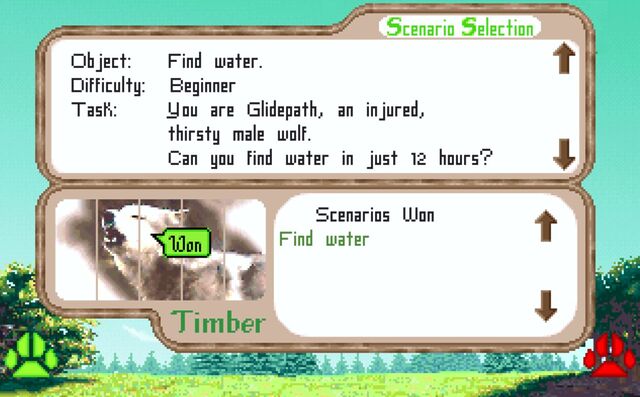
But I like this kind of conversation. For World Digital Preservation Day a few years back I re-implemented Pong as a modern application but using retro controllers. Within its micro-exhibition, I used this as an excuse to get people to discuss what does it mean to preserve a videogame?
Similarly, back in 2021 I reverse-engineered and re-implemented “lost” piece of advertainment Axe Feather, mostly because I felt that a slightly-modernised version belonged in the “commons”.

This makes it seem like I’m very much on the side of recreation, rather than preservation, but that’s not the case. In both of these projects I started by disassembling the original works.
That I chose to make them accessible to a modern audience by reimplementation rather than by emulation was an artistic choice. I opted for lower fidelity by making something mildly-transformative. I chose to appeal to the widest possible audience, at the expense of presenting an experience that was totally in-keeping with the original.
But I couldn’t have done that without access to the originals. Had I recreated Pong from memory rather than from re-playing it, I’d have doubtless introduced inconsistencies that would have “felt wrong” to people whose memories of the game, while fundamentally accurate, differed from mine. Had I recreated Axe Feather without first coming up with a mechanism to extract and reformat the video clips in the original I’d have failed to tap into the specific nostalgia of some of its users, which was tied to the specific actor who performed in it3.
So I guess it’s important to me that somebody is preserving these things. So that I can use them to create new things. I stand for preservation for culture’s sake, so that I personally can enjoy the benefits for nostalgia’s sake.
But I get what Mike’s saying
For all that I feel like I’m making the case for “preserve everything; work out what’s important later”, Mike’s argument gives me an uncomfortable cognitive dissonance. Because I’ve also come to discover a joy in the ephemeral, too.
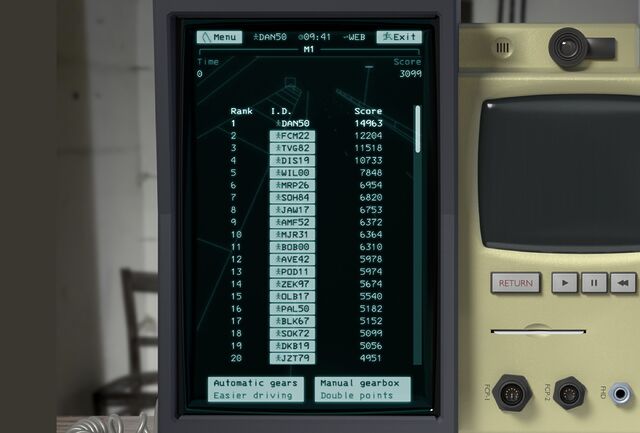
Increasingly, I’m okay with just taking the experience of something with me. It bothers me that my memory is fallible and that I can’t necessarily recreate a digital experience whose technology has been lost to time, but I am, for the most part, okay with it.
Some of the best gaming experiences I’ve ever had are impossible to “capture” in an archive anyway. They were conversations over the tabletop roleplaying table, or moments of tension resulting from a videogame’s emergent gameplay, or random occurrences unlikely to be replicated. Those get preserved in my memory alone, retold as stories with gradually-decreasing accuracy as new memories take their place.
That said…
Who decides what games get preserved?
I feel like the decision about what to preserve and how should be in the hands of the audience of a piece of art, not its creators. If a videogame (or film, or book, or whatever) is culturally-significant enough to warrant a high-fidelity preservation, it ought to be ultimately up to the members of that culture to make that decision!
Transport Tycoon Deluxe met that bar, and it’s possible to play both faithful recreations or modern reimplementations (the latter having excellent new features) courtesy of the OpenTTD project4.
But modern videogames are, perhaps, getting harder to preserve. Always-online features, insidious DRM, digital distribution, live updates, and games-as-a-service streaming all shift the balance of power more-firmly into the hands of publishers5 rather than players. It’s already hard to play a randomly-selected thirty-year-old videogame today; I reckon it’ll be almost impossible to do the same thirty years hence.
Saying “let games die” feels a bit like giving up to that inevitability. Like saying to the slimier publishers “it’s okay, we didn’t care about keeping that anyway” when they shut down servers or remotely kill games. I know that’s not what Mike’s saying, but it could be wilfully misinterpreted that way.
Anyway: I don’t have a nice conclusion to any of this. Just a lot of mixed-up feelings.
Footnotes
1 A policy which, since my departure, does not seem to have continued.
2 Even where those writings don’t really represent me well any more.
3 It turns out that, for a significant number of folks who are mostly younger-than-me, this advertisement represented a kind of sexual awakening, based on some of the comments and emails I’ve received about it!
4 Which I’ve also donated too. Turns out I’m happy to invest in both pure preservation and in spiritual-successor reimplementation!
5 Supposing that Sonic Rumble Party somehow wasn’t a catastrophic pay-to-win nightmare and somehow was deemed culturally-significant… how would you go about archiving it? Without Sega/Sonic Team’s consent, you’d be totally out of luck.
I think the notion of ’emphasising creation over preservation’ is a nice mantra when we’re encouraging indie developers and studios to produce enjoyable experiences and ideally compensate them for their work, but unfortunately it’s this need to ever press-forward that’s seemingly abused by AAA mega studios and their backing corporations.
Companies like Activision Blizzard, Ubisoft, and even Nintendo think it’s acceptable to produce a beloved experience, often arbitrarily tie it to some live service, then subsequently discontinue it leaving it permanently unplayable, and then exploit that desire to produce another, often lesser experience and milk the cow all over again. I really do believe that companies should be held accountable to release server binaries after live-service games are discontinued – preservation MUST be a part of every game’s lifecycle rather than just an afterthought in response to outcry. This is the heart of the stop killing games movement.
If EA or Activision Blizzard is so worried about people not wanting to move to the next flavour of rooty tooty point and shooty, they better make the experience worth the additional $80, rather than forcing people’s hands by means of manufactured obsolescence. I think the cornerstone of game preservation is putting the power back in the hands of the consumer, more than anything else.