This child is eating sausages with one hand while playing a video game about eating sausages with the other.

Is this life-imitating-art or the other way around? Who can possibly say?
This child is eating sausages with one hand while playing a video game about eating sausages with the other.
Is this life-imitating-art or the other way around? Who can possibly say?
This post is also available as a podcast. Listen here, download for later, or subscribe wherever you consume podcasts.
Right in time for International Crisp Sandwich Day (St. Crispin’s Day) tomorrow, I’ve taught myself to enjoy Pickled Onion Monster Munch.
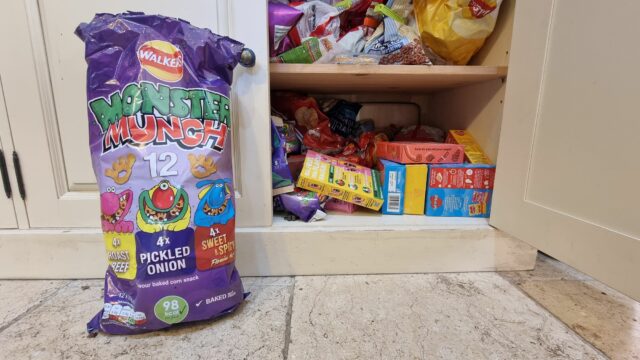
There’s a need for somebody… anybody… to eat Pickled Onion Monster Munch in our household, because we have a bit of an oversupply. In order to reliably get both of the other flavours that people like (Roast Beef and Flamin’ Hot, respectively), we end up buying multipacks that also contain Pickled Onion flavour, and these unwanted extras pile up in the snack cupboard until we happen to have a houseguest that we can palm them off onto.
My entire life, I’ve claimed not to like pickled onion flavour crisps. As a kid, I would only eat salt & vinegar and ready salted flavours, eventually expanding my palate into “meaty” flavours like chicken and roast beef (although never, absolutely never, prawn cocktail). Later, I’d come to also enjoy cheese & onion and variants thereof, and it’s from this that I realise that I’m probably being somewhat irrational.
Because if you think about it: if you want to make a “pickled onion” flavour crisp, what flavouring ingredients would you use? It turns out that most crisp manufacturers use a particular mixture of (a) the ingredient that makes salt & vinegar crisps taste “vinegary” and (b) the ingredient that makes cheese & onion crisps taste “onioney”. So in summary:
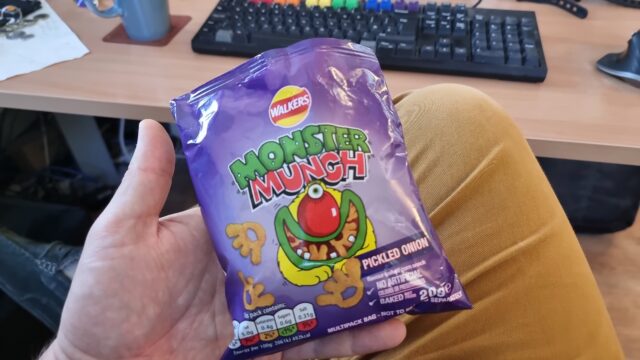
Maybe that deliberate and conscious thought process is all I need? Maybe that’s it, and just having gone through the reasoning, I will now like pickled onion crisps!
Conveniently, I have a cupboard in my kitchen containing approximately one billion packets of Pickled Onion Monster Munch. So let’s try it out.
It turns out they’re okay!
They’re not going to dethrone either of the other two flavours of Monster Munch that we routinely restock on, but at least now I’m in a position where I can do something about our oversupply.
And all it took was stopping to think rationally about it. If only everything were so simple.
This morning’s actual breakfast order from the 7-year-old: “A sesame seed bagel with honey, unless there aren’t any sesame seed bagels, in which case a plain bagel with honey on one half and jam on the other half, unless there aren’t any plain bagels, in which case a cinnamon and raisin bagel with JimJams on one half and Biscoff on the other half.”

Some day, this boy will make a great LISP programmer. 😂
Why don’t I like pickled onion crisps?
I like pickled onions. And I imagine that the flavourings used in pickled onion crisps are basically the onion flavouring from cheese & onion and the vinegar flavouring from salt & vinegar, both of which are varieties I like.
This checkin to GC2GR3Z The Brass Bands of MK - Secklow Brass reflects a geocaching.com log entry. See more of Dan's cache logs.
I’ve been working in Milton Keynes the tail end of this week while my kids attend a ski camp at the X-scape centre. While eating my lunch today I came out for a walk to find this geocache.
Approaching from the direction of the car park was definitely the right route and I was soon standing at GZ alongside a likely host. I had to search for some time, though, before I found this surprisingly we’ll-concealed cache.
(I was hindered perhaps by my own eagerness to check the hint, which left me searching several feet lower down than the container eventually turned out to be!)
Right, back to work for me! TFTC.
RotatingSandwiches.com is a website showcasing animated GIF files of rotating sandwiches1. But it’s got a problem: 2 of the 51 sandwiches rotate the wrong way. So I’ve fixed it:
My fix is available as a userscript on GreasyFork, so you can use your favourite userscript manager2 to install it and the rotation will be fixed for you too. Here’s the code (it’s pretty simple):
1 2 3 4 5 6 7 8 9 10 11 12 |
// ==UserScript== // @name Standardise sandwich rotation on rotatingsandwiches.com // @namespace rotatingsandwiches.com.danq.me // @match https://rotatingsandwiches.com/* // @grant GM_addStyle // @version 1.0 // @author Dan Q <https://danq.me/> // @license The Unlicense / Public Domain // @description Some sandwiches on rotatingsandwiches.com rotate in the opposite direction to the majority. 😡 Let's fix that. // ==/UserScript== GM_addStyle('.q23-image-216, .q23-image-217 { transform: scaleX(-1); }'); |
Unless you’re especially agitated by irregular sandwich rotation, this is perhaps the most-pointless userscript ever created. So why did I go to the trouble?
Obviously, I’m telling you this as a vehicle to talk about userscripts in general and why you should be using them.
Userscripts fix and improve websites for you. Whether you want to force Reddit to stay “old Reddit” as long as possible, make Geocaching.com’s maps more-powerful, show Twitter images uncropped by default, re-add the “cached” link to Google search results, show prices on shopping sites in terms of hours-of-your-life of work they “cost”, or just automatically click Netflix’s “yes, I’m still here, keep playing” button for maximum binge-mode, there’s a script for you. They’re like tiny browser plugins.

But the real magic is being able to remix the web your way. With just a little bit of CSS or JavaScript experience you can stop complaining that a website’s design has changed in some way you don’t like or that some functionality you use isn’t as powerful or convenient as you’d like and you can fix it.
A website I used disables scrolling until all their (tracking, advertising, etc.) JavaScript loads, and my privacy blocker blocks those files: I could cave and disable my browser’s
privacy tools… but it was almost as fast to add setInterval(()=>document.body.style.overflow='', 200); to a userscript and now it’s fixed.
Don’t want a Sports section on your BBC News homepage (not just the RSS
feed!)? document.querySelector('a[href="/sport"]').closest('main > div').remove(). Sorted.
I’m a huge fan of building your own tools to “scratch your own itch”. Userscripts are a highly accessible introduction to doing so that even beginner programmers can get on board with and start getting value from. More-advanced scripts can do immensely clever and powerful things, but even if you just use them to apply a few light CSS touches to your favourite websites, that’s still a win.
1 Remember when a website’s domain name used to be connected to what it was for? RotatingSandwiches.com does.
2 I favour ViolentMonkey.
This post is part of my attempt at Bloganuary 2024. Today’s prompt is:
What snack would you eat right now?
Pizza.
Always pizza.
Forever pizza.
Do you know what I love about pizza? Everything. Every little thing1.
First up, it’s a bread product. Bread is magical. You take flour, water, a pinch of salt, and a certain other magical ingredient, knead it, let it rest, knock it back, and bake it, and you end up with food. The magical ingredient is yeast, and it’s a tiny living organism that eats carbohydrates and excretes a lot of carbon dioxide and a little bit of alcohol. Humans use both, but whether you’re brewing beer or baking bread the process feels somewhat mystical and otherworldly.
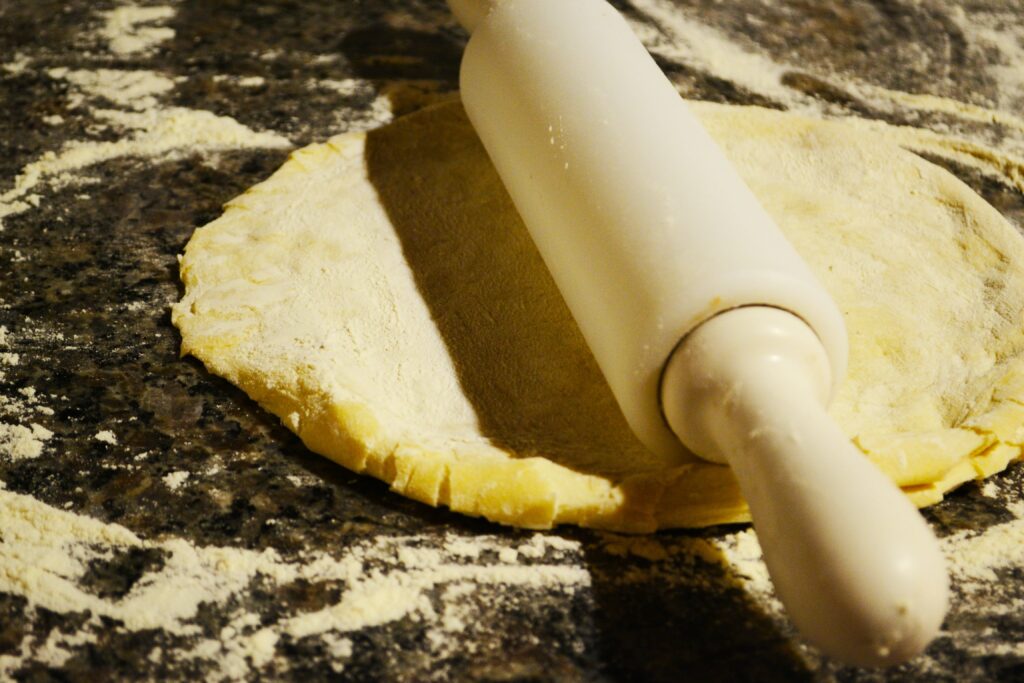
But it’s not like rising a loaf nor is it like finishing a flatbread. Pizza dough is risen, but kept thin to act as a base for everything else. And already there’s such variety: do you spin it out in a classic thin Neapolitan style to get those deliciously crispy leopard-print cornicione bites? Do you roll it out thick to hold a maximum depth of tomato sauce and other toppings when you pile it high, per the Chicago tradition? Do you go somewhere in-between? Or perhaps do something different entirely like a calzone or panzarotto? There’s no wrong answer, but already so many options.
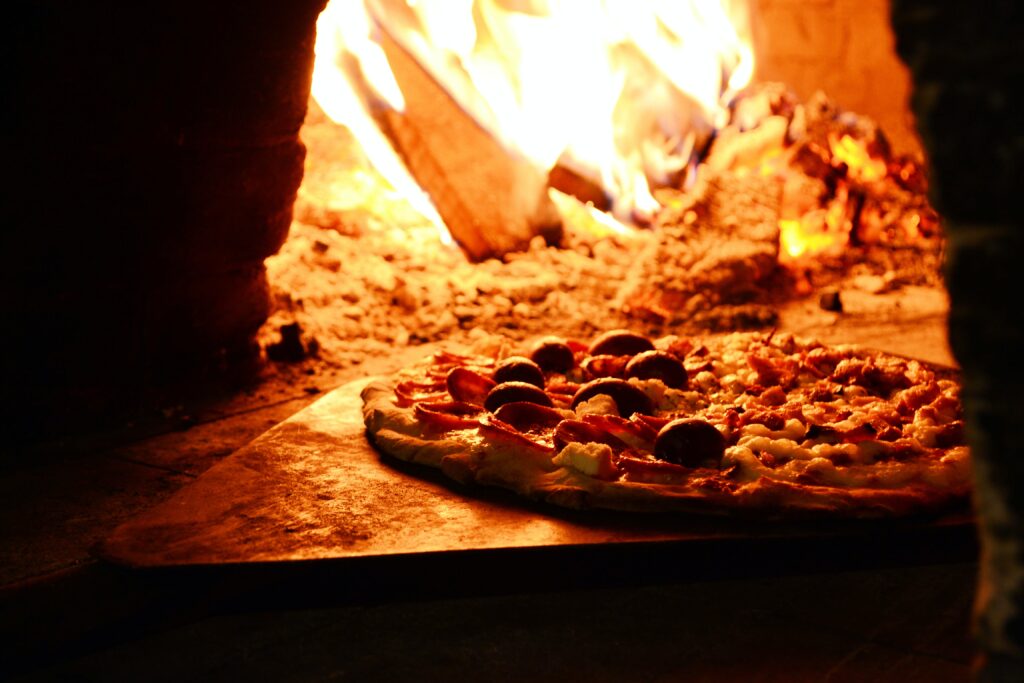
Pizza is cooked fast: the relatively thin surface absorbs heat quickly, and you keep your oven hot, baking the bread and heating the toppings at the same time. If you’re feeling fancy and fun then you can add some extras as it cooks. Crack an egg into the centre, perhaps, or drizzle some chilli oil across the entire thing. Or keep it plain and simple and let the flavours combine as the dish cooks. Whatever you do, you’ll be enjoying delicious hot food within minutes of putting it into the oven: the cooking-speed to deliciousness ratio is perhaps the highest of any savoury food.
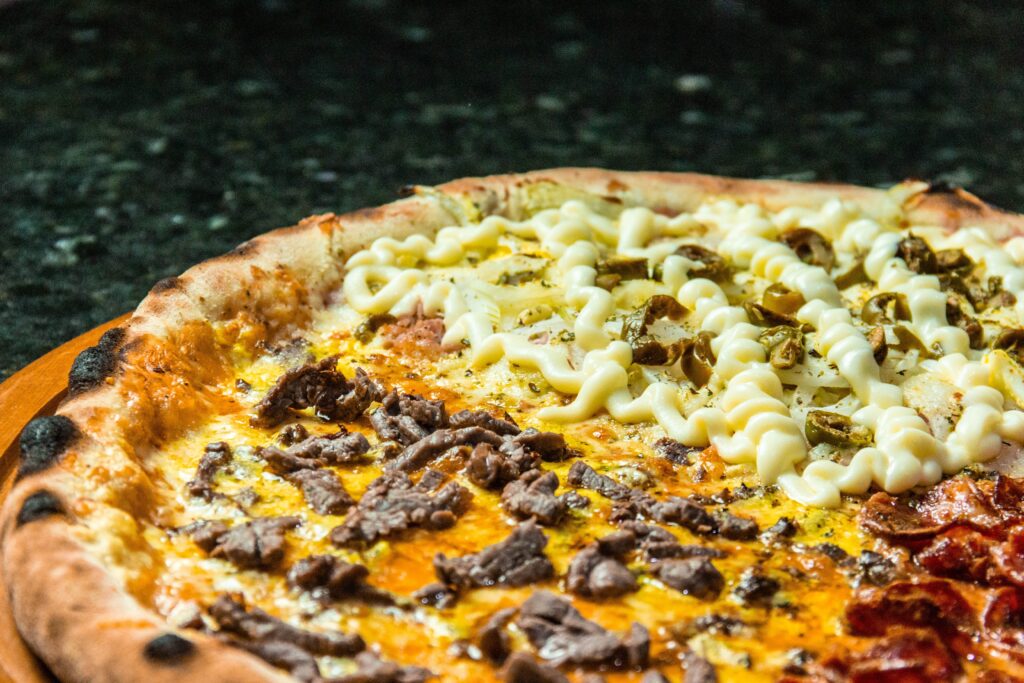
If my favourite meal is pizza3, my second-favourite has to be leftover pizza. Because it reheats easily and makes a great next-morning snack. Or can be enjoyed cold, hours or days after the fact. It’s even suitable for parbaking and chilling or freezing, making it an excellent convenience food4. It’s widely produced in a variety of styles (and qualities) in restaurants and takeaways wherever you go, and its convenient shape means that it can be boxed and stacked with little more help than, perhaps, one of those little plastic “tables” that stop the centre of the cardboard box sagging onto it.
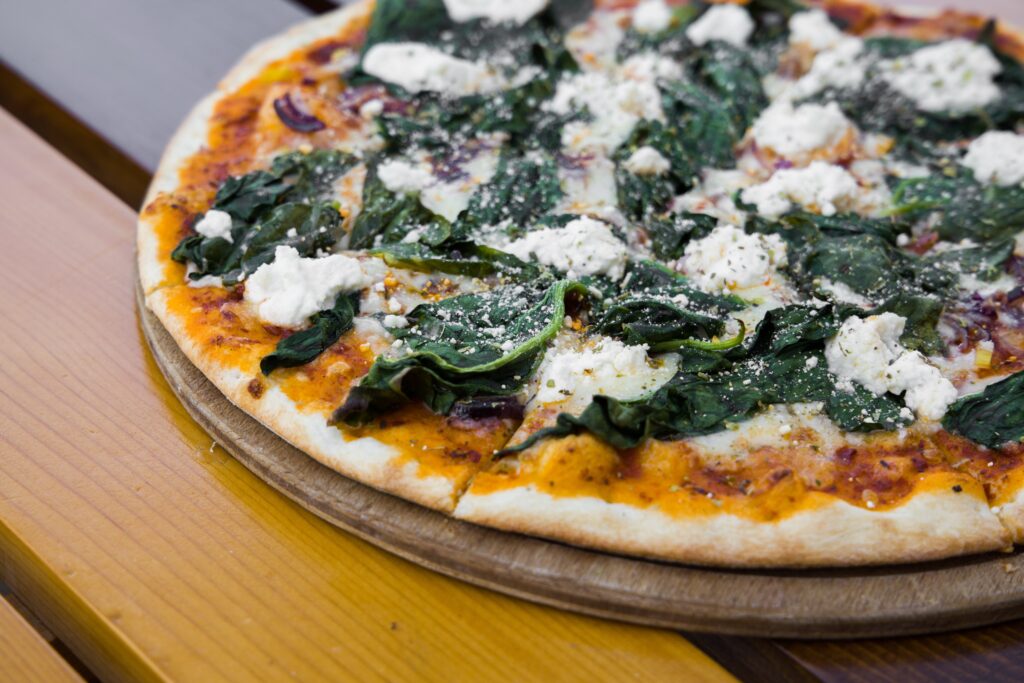
So yeah, I’ll take a slice to go with mozzarella, peppers and red onion for my snack, please.
1 If you know me well, you’re probably well-aware of my love of pizza, although you might previously have seen it articulated so thoroughly.
2 #NotAllPizzas! You don’t have to feel constrained by the
bread-plus-tomato-plus-cheese-plus-other stuff paradigm. Swap out the tomato sauce for barbecue sauce on the base of a meaty pizza with a spicy tang or omit it entirely for a
pizza bianca. Replace the cheese or remove it entirely for a vegan or lactose-free alternative. Or dispense with both entirely and spread pesto on your base, topped with
roasted vegetables! The sky’s the limit!
3 It is. What gave it away?
4 Obviously I prefer a lovingly-crafted hand-stretched pizza, freshly-made under ideal circumstances. But pizza is so good that it’s still usually perfectly acceptable even when it’s mass-produced at economy scale and frozen for later consumption, which is more than can be said for many foods.
Experimenting with some unusual combinations in anticipation of International Crisp Sandwich Day.
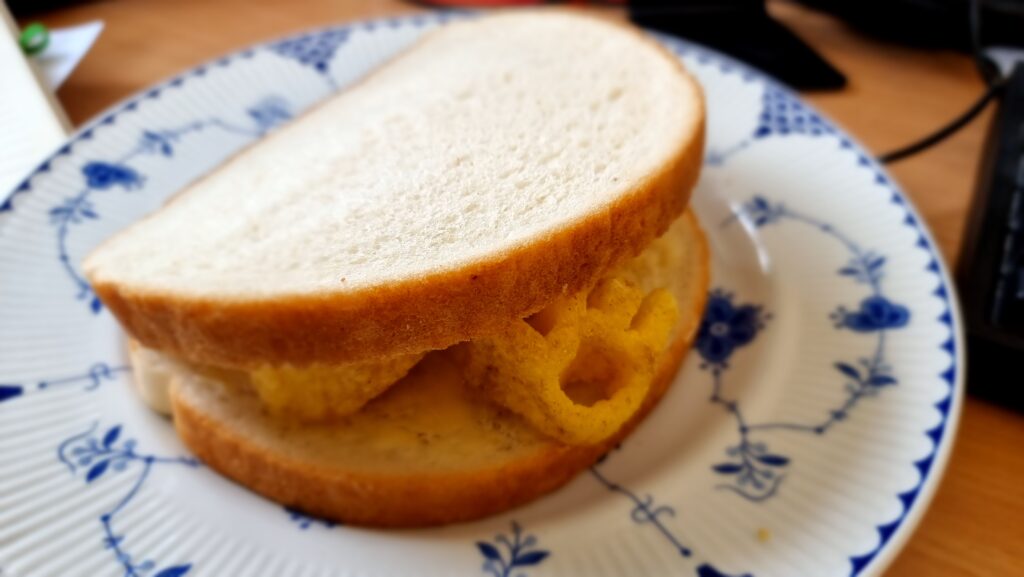
This one’s Roast Beef Monster Munch on Farmhouse White.

(I hereby release the crisp sandwich photo into the public domain / CC0 license; your choice.)

In his latest Last Month video, TomSka took the “is a hot dog a sandwich” argument into a whole new arena by saying:
I’m a firm believer that the sauce and toppings should go under the dog. And that way, I don’t have to put it all in my moustache when I eat it.
My initial reaction was: What the hell are you doing‽ They’re toppings, not… bottomings, I guess?
But on the other hand:
So yeah, I might try doing this. But if I do, I’m definitely going to start calling them “bottomings”.
I swear I’m onto something with this idea: Scottish-Mexican fusion cookery. Hear me out.
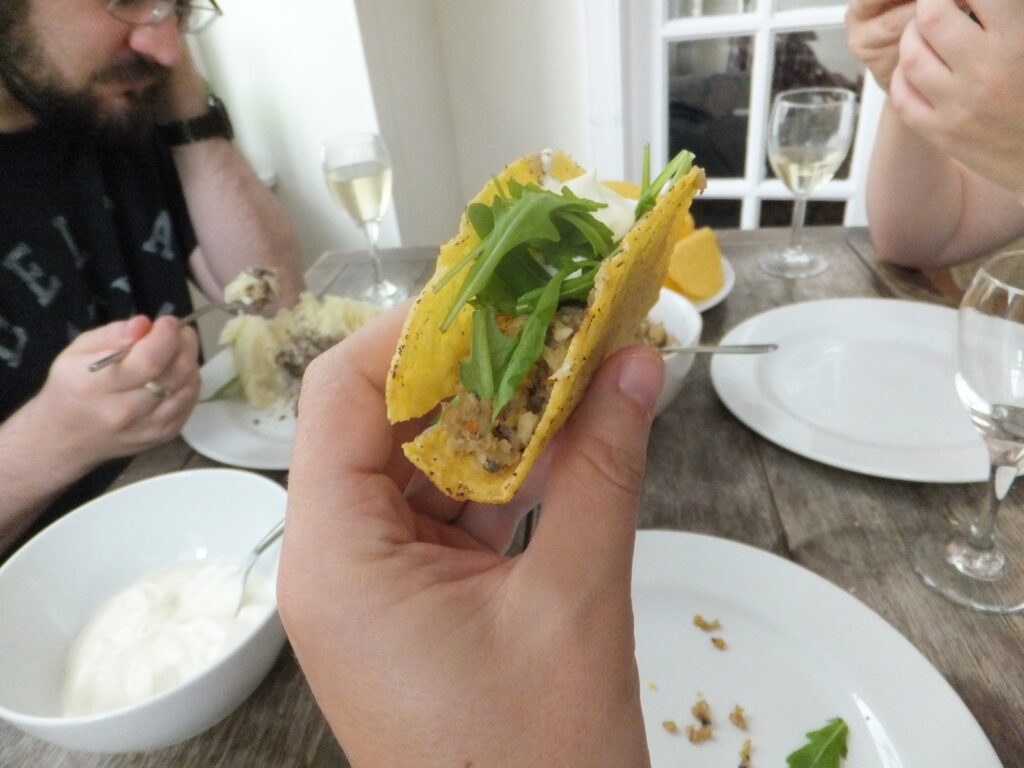
It started on the last day of our trip to the Edinburgh Fringe Festival in 2012 when, in an effort to use up our self-catering supplies, JTA suggested (he later claimed this should have been taken as a joke) haggis tacos. Ruth and I ate a whole bunch of them and they were great.
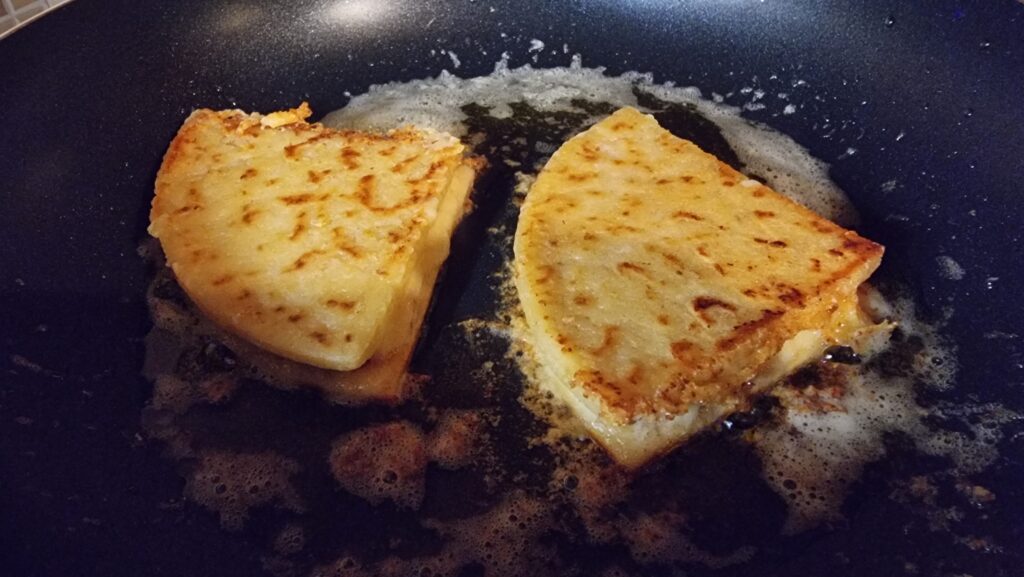
In Scotland last week (while I wasn’t climbing mountains and thinking of my father), Ruth and I came up with our second bit of Scottish-Mexican fusion food: tattie scone quesadillas. Just sandwich some cheese and anything else you like between tattie scones and gently fry in butter.
We’re definitely onto something. But what to try next? How about…
Kids: We want porridge for breakfast.
Me: How do you want it?
Kids: Surprise us.
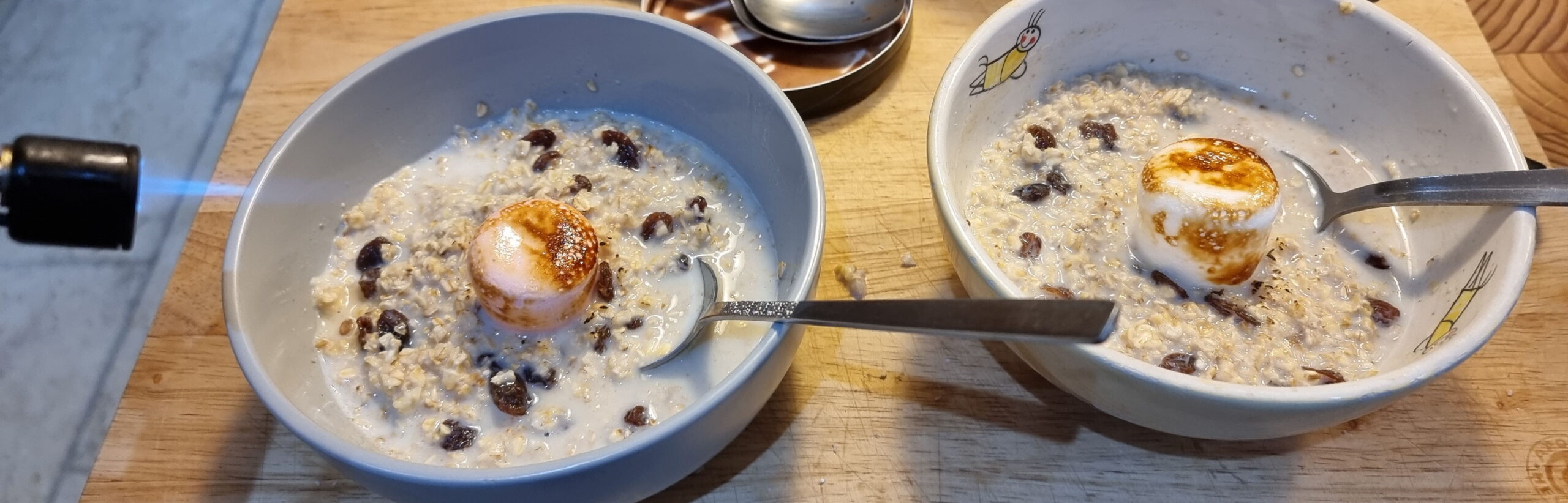
Presenting… oatmeal, honey and sultanas with a toasted marshmallow.
For lunch today I taste-tested five different plant-based vegan “cheeses” from Honestly Tasty. Let’s see if they’re any good.
This blog post is available as a video (here or on YouTube), for those who like that sort of thing. The content’s slightly different, but you do get to see my face when I eat the one that doesn’t agree with me.
I’ve been vegetarian or mostly-vegetarian to some degree or another for a little over ten years (for those who have trouble keeping up: I currently eat meat only on weekends, and not including beef or lamb), principally for the environmental benefits of a reduced-meat lifestyle. But if I’m really committed to reducing the environmental impact of my diet, the next “big” thing I still consume is dairy products.
My milk consumption is very low nowadays, but – like many people who might aspire towards dropping dairy – it’s quitting cheese that poses the biggest challenge. I’m not even the biggest fan of cheese, and I don’t know how I’d do without it: there’s just, it seems, no satisfactory substitute.
It’s possible, though, that my thinking on this is outdated. Especially in recent years, we’re getting better and better at making convincing (or, at least, tasty!) plant-based substitutes to animal based foods. And so, inspired by a conversation with some friends, I thought I’d try a handful of new-generation plant-based cheeses and see how I got on. I ordered a variety pack from Honestly Tasty (who’ll give you 20% off your first order if you subscribe your favourite throwaway email address to their newsletter) and gave it a go.
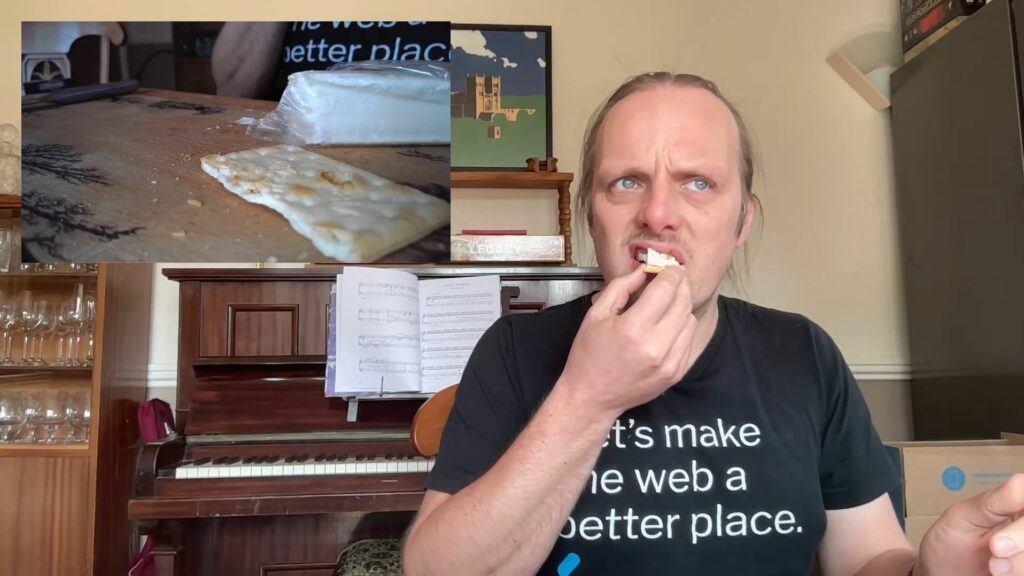
It’s supposed to taste like Brie, I guess, but it’s not convincing. The texture of the rind is surprisingly good, but the inside is somewhat homogeneous and flat. They’ve tried to use
mustard powder to provide Brie’s pepperiness and acetic acid for its subtle sourness, but it feels like there might be too much of the former (or perhaps I’m just a little oversensitive
to mustard) and too little of the latter. It’s okay, but I wouldn’t buy it again.
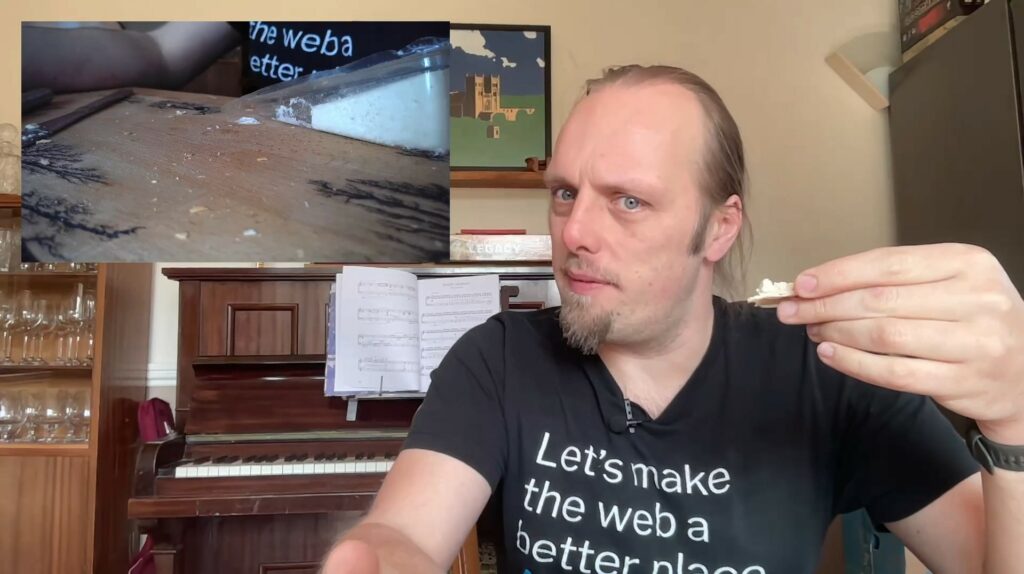
This was surprisingly flavoursome and really quite enjoyable. It spreads with about the consistency of pâté and has a sharp tang that really stands out. You wouldn’t mistake it for
cheese, but you might mistake it for a cheese spread: there’s a real “cheddary” flavour buried in there.

This is supposed to be modelled after Gorgonzola, and it might as well be because I don’t like either it or the cheese it’s based on. I might loathe Blue slightly less than
most blue cheeses, but that doesn’t mean I’d willingly subject myself to this again in a hurry. It’s matured with real Penicillium Roqueforti, apparently, along with seaweed, and it
tastes like both of these things are true. So yeah: I hated this one, but you shouldn’t take that as a condemnation of its quality as a cheese substitute because I’d still rather eat it
than the cheese that it’s based on. Try for yourself, I guess.
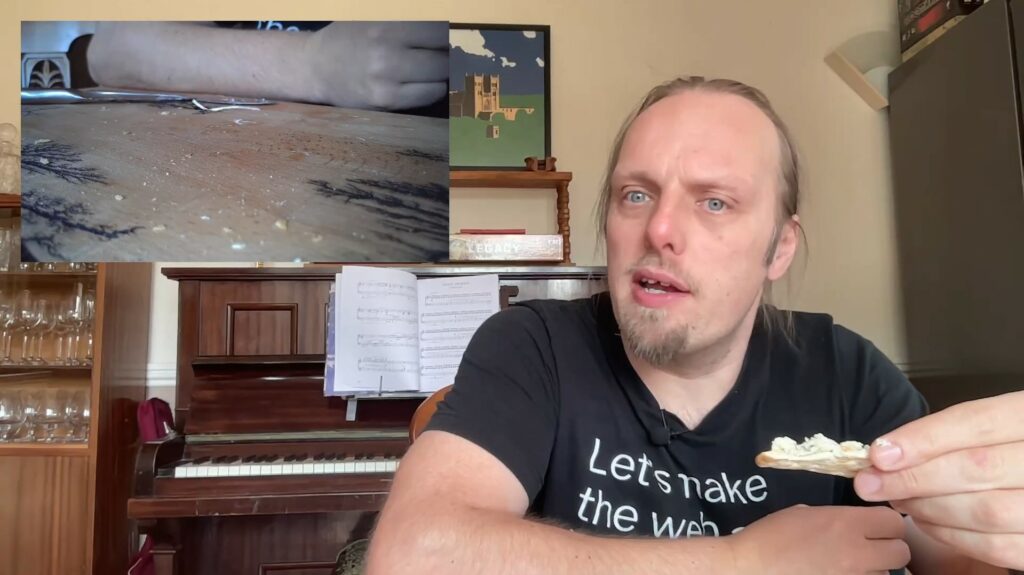
This was probably my favourite of the bunch. It’s reminiscent of garlic & herb Boursin, and feels like somebody in the
kitchen where they cooked it up said to themselves, “how about we do the Ched Spread, but with less onion and a whole load of herbs mixed-through”. It seems that it must be easier to
make convincingly-cheesy soft cheeses than hard cheeses, but I’m not complaining: this would be great on toast.
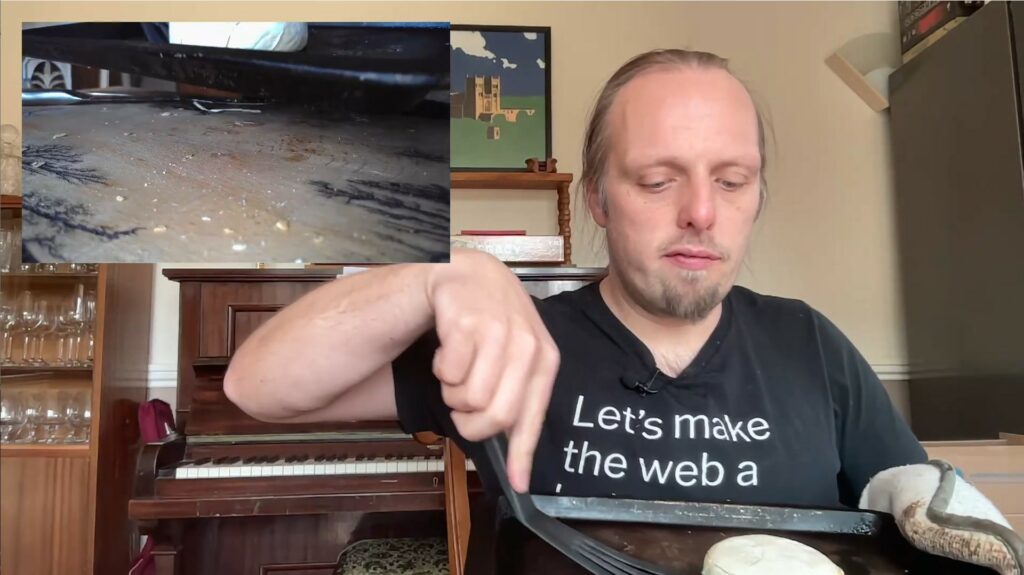
If you’d served me this and told me it was a baked Camembert… I wouldn’t be fooled. But I wouldn’t be disappointed either. It moves a lot like Camembert and it tastes… somewhat like it.
But whether or not that’s “enough” for you, it’s perfectly delicious and I’d be more than happy to eat it or serve it to others.
Honestly Tasty’s Ched Spread, Herbi, and Shamembert are perfectly acceptable (vegan!) substitutes for cheese. Even where they don’t accurately reflect the cheese they attempt to model, they’re still pretty good if you take them on their own merits: instead of comparing them to their counterparts, consider each as if it were a cheese spread or soft cheese in its own right and enjoy accordingly. I’d buy them again.
Their Bree failed to capture the essence of a good ripe Brie and its flavour profile wasn’t for me something to enjoy outside of its attempts at emulation. And their “Veganzola” Blue cheese… was pretty grim, but then that’s what I think of Gorgonzola too, so maybe it’s perfect and I just haven’t the palate for it.
Earlier this month, I made my first attempt at cooking pizza in an outdoor wood-fired oven. I’ve been making pizza for years: how hard can it be?
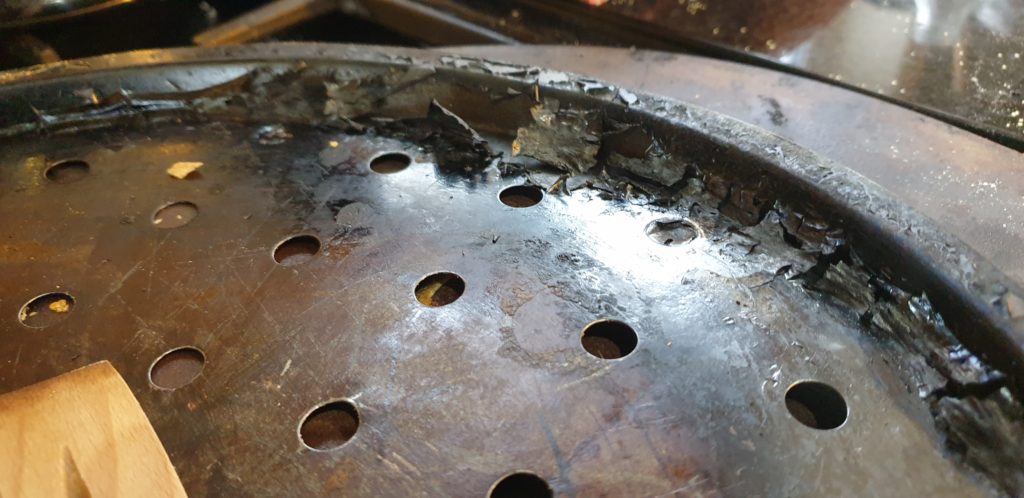
It turned out: pretty hard. The oven was way hotter than I’d appreciated and I burned a few crusts. My dough was too wet to slide nicely off my metal peel (my wooden peel disappeared, possibly during my house move last year), and my efforts to work-around this by transplanting cookware in and out of the oven quickly lead to flaming Teflon and a shattered pizza stone. I set up the oven outside the front door and spent all my time running between the kitchen (at the back of the house) and the front door, carrying hot tools, while hungry children snapped at my ankles. In short: mistakes were made.
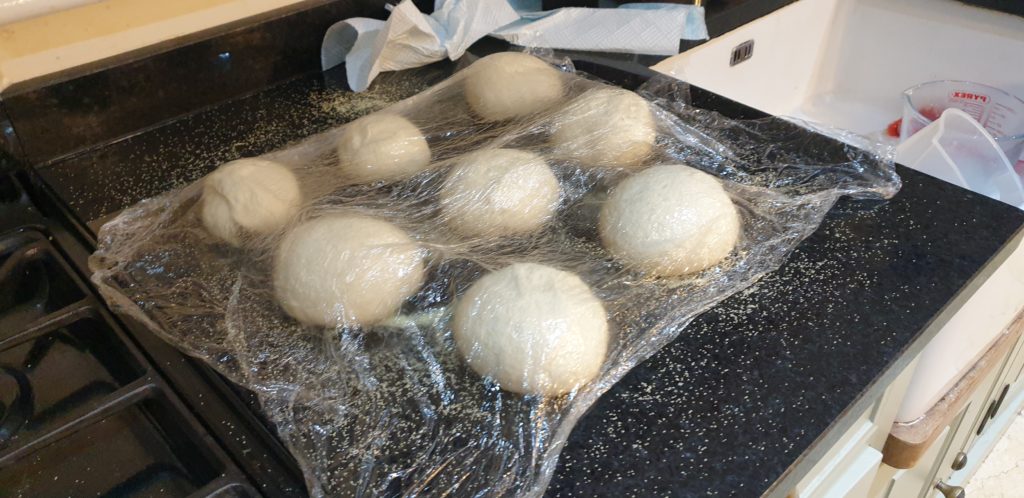
I suspect that cooking pizza in a wood-fired oven is challenging in the same way that driving a steam locomotive is. I’ve not driven one, except in simulators, but it seems like you’ve got a lot of things to monitor at the same time. How fast am I going? How hot is the fire? How much fuel is in it? How much fuel is left? How fast is it burning through it? How far to the next station? How’s the water pressure? Oh fuck I forget to check on the fire while I was checking the speed…
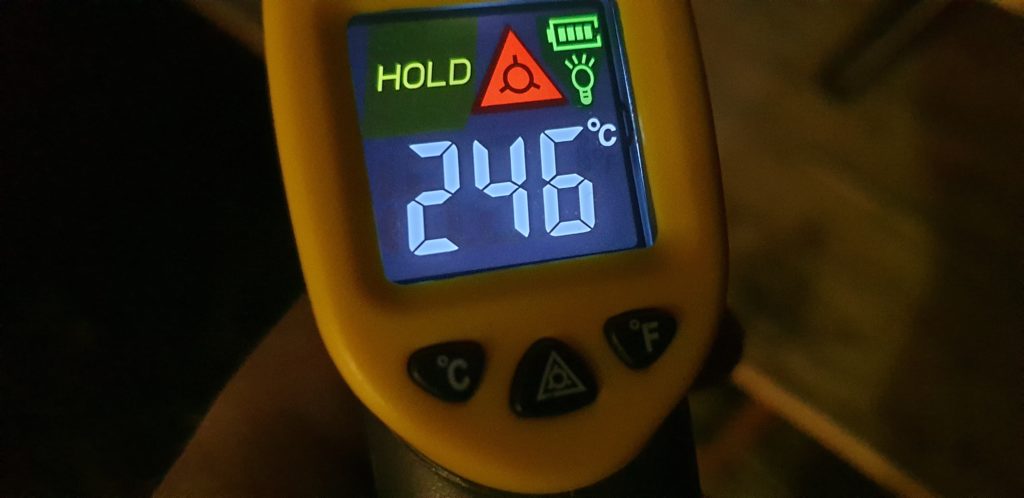
So it is with a wood-fired pizza oven. If you spend too long preparing a pizza, you’re not tending the fire. If you put more fuel on the fire, the temperature drops before it climbs again. If you run several pizzas through the oven back-to-back, you leech heat out of the stone (my oven’s not super-thick, so it only retains heat for about four consecutive pizzas then it needs a few minutes break to get back to an even temperature). If you put a pizza in and then go and prepare another, you’ve got to remember to come back 40 seconds later to turn the first pizza. Some day I’ll be able to manage all of those jobs alone, but for now I was glad to have a sous-chef to hand.
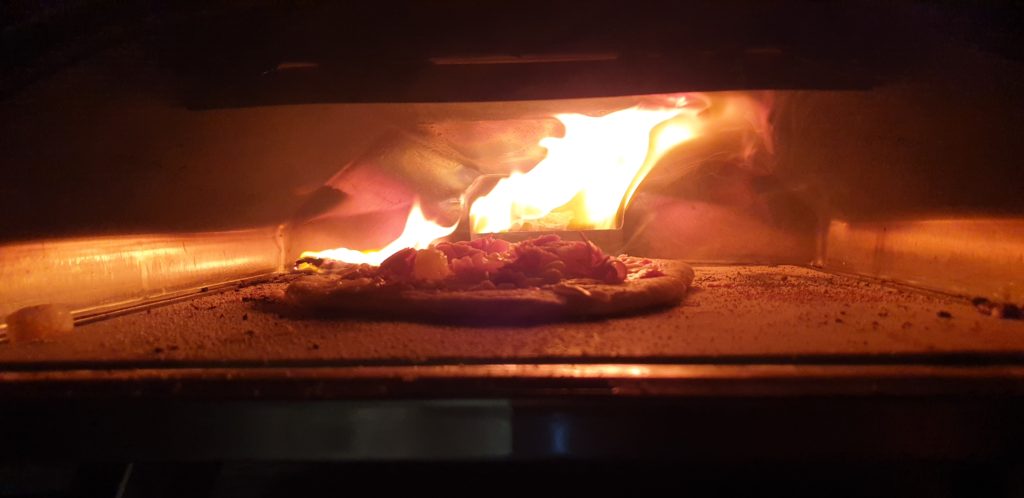
Today I was cooking out amongst the snow, in a gusty crosswind, and I learned something else new. Something that perhaps I should have thought of already: the angle of the pizza oven relative to the wind matters! As the cold wind picked up speed, its angle meant that it was blowing right across the air intake for my fire, and it was sucking all of the heat out of the back of the oven rather than feeding the flame and allowing the plasma and smoke to pass through the top of the oven. I rotated the pizza oven so that the air blew into rather than across the oven, but this fanned the flames and increased fuel consumption, so I needed to increase my refuelling rate… there are just so many variables!
The worst moment of the evening was probably when I took a bite out of a pizza that, it turned out, I’d shunted too-deep into the oven and it had collided with the fire. How do I know? Because I bit into a large chunk of partially-burned wood. Not the kind of smoky flavour I was looking for.
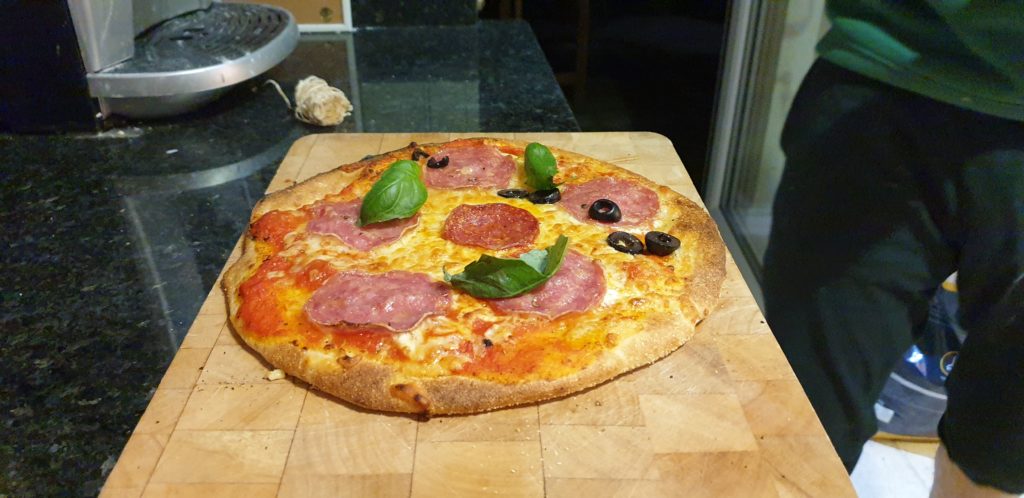
But apart from that, tonight’s pizza-making was a success. Cooking in a sub-zero wind was hard, but with the help of my excellent sous-chef we churned out half a dozen good pizzas (and a handful of just-okay pizzas), and more importantly: I learned a lot about the art of cooking pizza in a box of full of burning wood. Nice.
Clearly those closest to me know me well, because for my birthday today I received a beautiful (portable: it packs into a bag!) wood-fired pizza oven, which I immediately assembled, test-fired, cleaned, and prepped with the intention of feeding everybody some homemade pizza using some of Robin‘s fabulous bread dough, this evening.
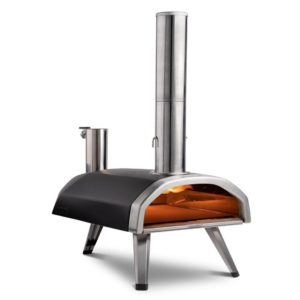
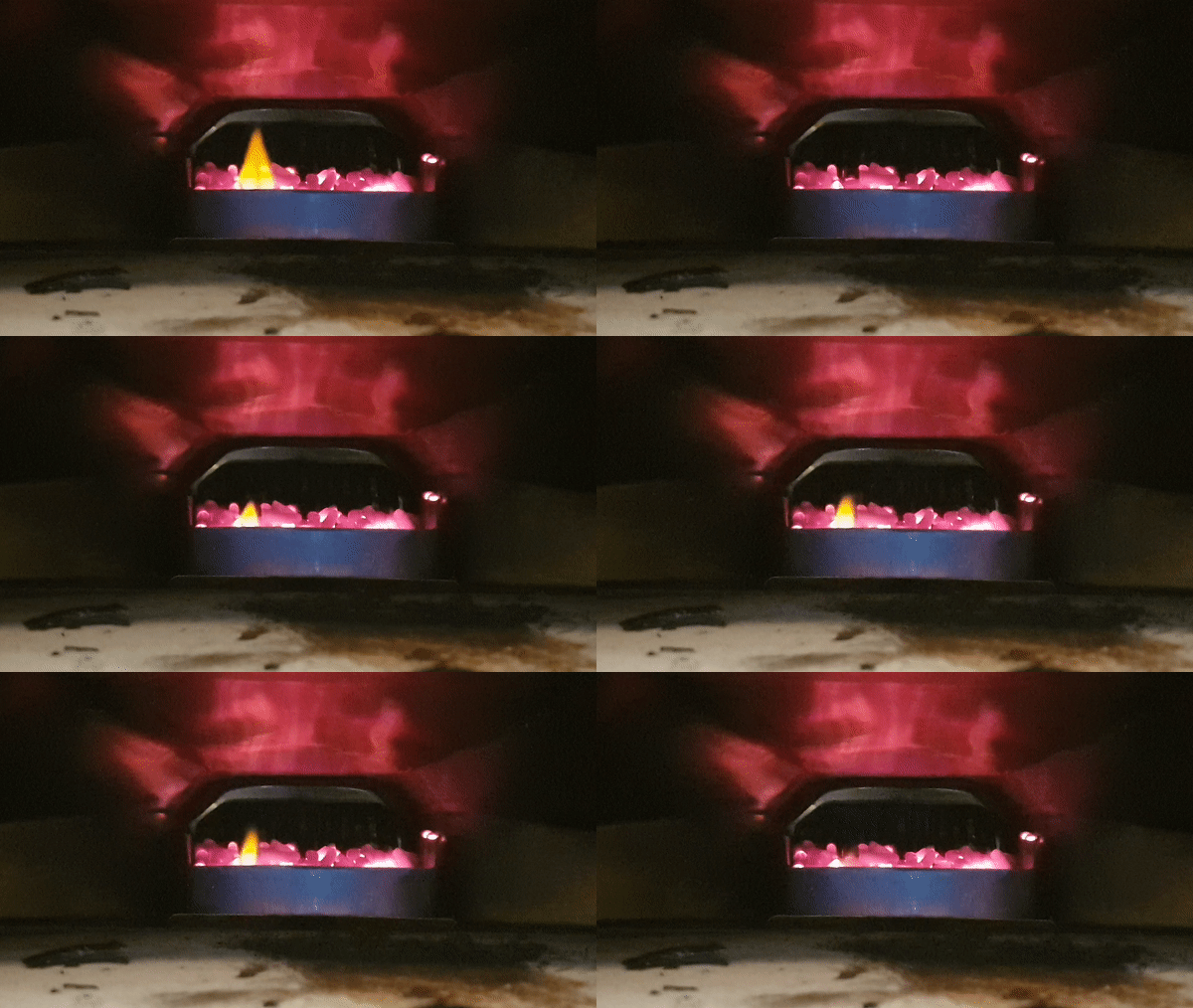
Fuelled up with wood pellets the oven was a doddle to light and bring up to temperature. It’s got a solid stone slab in the base which looked like it’d quickly become ideal for some fast-cooked, thin-based pizzas. I was feeling good about the whole thing.
But then it all began to go wrong.

If you’re going to slip pizzas onto hot stone – especially using a light, rich dough like this one – you really need a wooden peel. I own a wooden peel… somewhere: I haven’t seen it since I moved house last summer. I tried my aluminium peel, but it was too sticky, even with a dusting of semolina or a light layer of oil. This wasn’t going to work.
I’ve got some stone slabs I use for cooking fresh pizza in a conventional oven, so I figured I’d just preheat them, assemble pizzas directly on them, and shunt the slabs in. Easy as (pizza) pie, right?
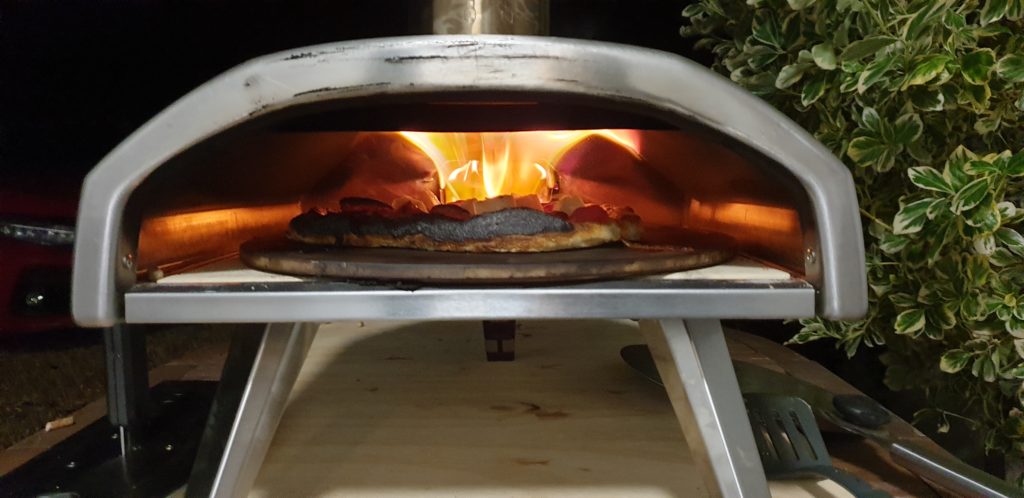
This oven is hot. Seriously hot. Hot enough to cook the pizza while I turned my back to assemble the next one, sure. But also hot enough to crack apart my old pizza stone. Right down the middle. It normally never goes hotter than the 240ºC of my regular kitchen oven, but I figured that it’d cope with a hotter oven. Apparently not.
So I changed plan. I pulled out some old round metal trays and assembled the next pizza on one of those. I slid it into the oven and it began to cook: brilliant! But no sooner had I turned my back than… the non-stick coating on the tray caught fire! I didn’t even know that was a thing that could happen.
Those first two pizzas may have each cost me a piece of cookware, but they tasted absolutely brilliant. Slightly coarse, thick, yeasty dough, crisped up nicely and with a hint of woodsmoke.
But I’m not sure that the experience was worth destroying a stone slab and the coating of a metal tray, so I’ll be waiting until I’ve found (or replaced) my wooden peel before I tangle with this wonderful beast again. Lesson learned.
 RSS
RSS Spotify
 Pocket Casts
 Apple Podcasts
 YouTube