Contactless Transport in London vs Paris

Paris’s public transport tickets suck… for now!

In his blog post yesterday, Terence Eden observed that of all the cities he’s travelled to over the last year, Paris had the most-ridiculously-unhelpful public transport ticketing system:

Fuck Paris. The only way to buy a metro ticket is to download an app. Fair enough. But, after downloading the app it tells you to install another app!

Navigo app saying I have to install another app.

What the actual fuck? A convoluted, messy, and frustrating situation which has resulted in awful reviews for them.

Trains and metro travel require separate tickets at different prices. You can’t easily hop from one to another. You need to think carefully about the route you’re taking. A more convoluted route may be significantly cheaper because it doesn’t involve swapping between services.

This absolutely parallels my experience of hopping around the Paris’s metro area, last time I was there.

Dan, a white man with a ponytail and a goatee, site in a Parisian cafe sipping a glass of white wine.
If I’ve got to navigate my way through Paris’s public transport network… I’m going to need a drink first.

I was interested to hear, though, that by 2030 virtually all of Paris’s public transport will accept contactless payment, bringing its convenience level to a similar level to that of London. Cool.1

From the sounds of things, this is clearly designed as a convenience for visitors to the city, not regulars and locals:

Dès le 30 juin 2026, les touristes et les voyageurs hyperoccasionnels pourront opter pour valider leur titre en sortie de l’aéroport d’Orly sur la ligne 14 avec la carte bancaire.2

Paris’s relationship with tourists is different from London’s

But the bit that surprised me is Paris’s pricing for the parts they’ve deployed so far:

Les prix des titres de transport via les bornes d’achat sont les suivants :

  • Bus/tram/funiculaire : 2,55 € (soit + 0,50 € sur le prix classique) ;
  • Métro/train/RER : 3,35 € (soit + 0,80 € sur le prix classique) ;
  • Aéroports : 14,80 € (soit + 0,80 € sur le prix classique).

Buying transport tickets in Paris using a contactless card… costs 0.50 € to 0.80 € more. Paris will charge you for the convenience of tapping in and out with your carte bancaire.

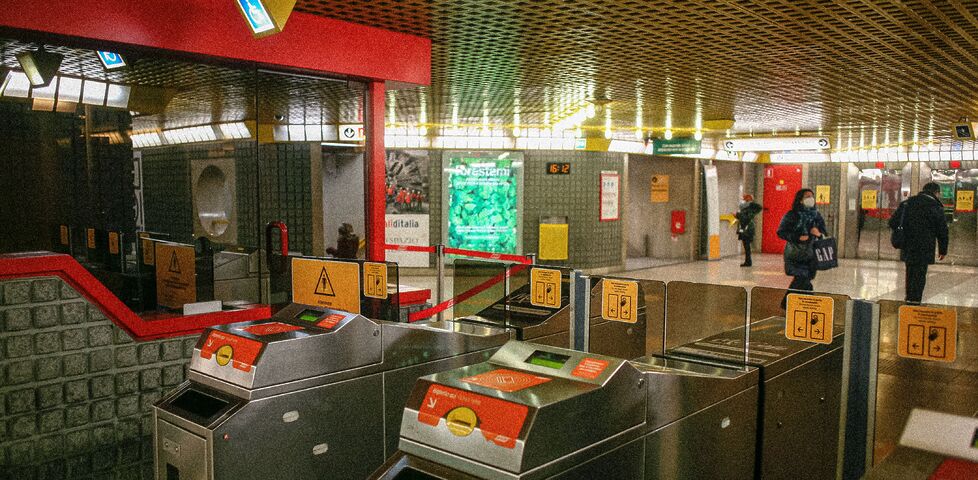
A row of ticket gates in a London Underground station.
Tap in, tap out. Unless you’re eligible for discounted travel, you probably might as well use your debit card to get around London. Photo by Luca Sammarco.

Contactless is clearly more-convenient for city visitors, but I think the difference between London and Paris’s attitude to it says something about the relationship both cities have with their tourists. In London, most travellers can use whatever bank card and mobile wallet they’ve already got… and they’ll get as good a deal as possible. But in Paris, doing the same will invariably cost more than a conventional ticket would. You pay a convenience-tax.

Both cities get tens of millions of annual visitors and extract billions of euros worth of financial benefit from their tourist economies. Paris doing slightly better overall, but they’re closely-comparable enough that differences like this probably mean something.

Crowds file down the escalator into Charles de Gaulle-Étoile station.
Tap in, pay a premium for the privilege. Thanks, Paris! Photo by Candelario Benítez.

I’m not saying that London loves tourists and Paris hates them! It’s not so simple as that. But I think perhaps the cites try to present themselves in a different way.

London’s public transport says: we’ll work around you. You can learn the rules as you go; you don’t have to “learn London” to get around. Just use your usual contactless card wherever you go; we’ll work out the details, and your daily cost will get capped just the same as if you chose to pick up an Oyster card. Visiting the city as a tourist is an ordinary use-case for the transport network.

Paris’s public transport says: you should learn the rules. You’re welcome to visit, but you either need to do the work to be a “temporary Parisian”… or you can just use your usual contactless card but we’ll charge you a premium for the convenience. Visiting the city as a tourist is a special case that the transport network sees differently from being a local.

Neither approach is “wrong”… but I think it’s interesting. And now I’m wondering what the approach is like across other European cities.

Footnotes

1 I’ll almost-certainly have to tackle the current-generation of Paris’s public transport at some point before then, but I’ll look forward to the improved version once it rolls-out.

2 “From 30 June 2026, tourists and hyper-ocassional travellers will be able to pay by bank card on Line 14 out of Orly Airport.” Emphasis mine.

× × ×

Wikipedia @ 25: Presto Card

Today’s random article was Presto card: a contactless transit prepayment card used in Toronto and the surrounding area. It’s powered by MIFARE, the same underlying system as the Oyster card uses. I enjoyed learning about its rollout and history but it wasn’t quite interesting enough to be worth a full blog post or podcast episode, especially as I was just writing about public transport as a result of yesterday’s dive. So you just get this note.

Wikipedia @ 25: Rail transport in Indonesia

Duration

Podcast Version

This post is also available as a podcast. Listen here, download for later, or subscribe wherever you consume podcasts.

To celebrate the site’s 25th birthday this year, Wikipedia is encouraging/challenging people to read one Wikipedia article a day for 25 consecutive days. I felt that I could do one better than that: not only reading an article but – where I found one that was particularly interesting – to write a blog post or record a podcast episode for each of those days, sharing what I learned. For each entry, I’ll hit “random article” a few times until something catches my interest, start reading, and then start writing! Everything I’ve written below came from Wikipedia… so you should check other sources before you use it to do your homework. Happy birthday, Wikipedia!


Today’s random article: Argo Wilis
Today’s topic: Rail transport in Indonesia

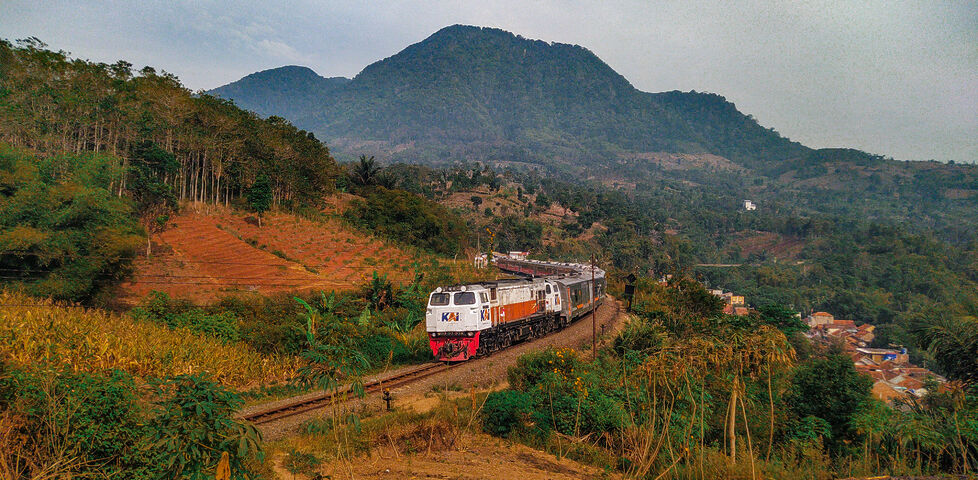
A long train snakes around hillside stepped farms in a tropical and mountainous landscape.
The Argo Wilis, near Lebakjero Station. Photograph courtesy of Naufal Farras, used under a Creative Commons license.

With such an unfamiliar-sounding article title as “Argo Wilis” I momentarily thought I was playing Two Of These People Are Lying, but it turns out that it’s just a train. Well, I say just a train, but it’s a train that took me on a journey (ah-hah!) to a rabbithole of Wikipedia pages, and today I’m going to drag you along with me.

The Argo Wilis is a train that goes back and forth along the Southernmost train line connecting Surabaya Gubeng, in the East, to Bandung, in the West, along Java, the vastly most-populous island of the Indonesian archipelago: most of the length of the island. “Argo” means “mountain”: it’s part of a modern collection of “Argo network” trains that are each named after mountains in the region. Mount Wilis itself is a dormant volcano whose magma chamber apparently has the potential for future geothermal power generation possibilities.

Map showing the East-West route of a train line along the island of Java.
Map courtesy Twotwofourtysix, used under a Creative Commons license.

Learning about the Argo Wilis got me to reading about rail travel in Indonesia in general. There are particular challenges to running a train network in a mountainous island nation with a somewhat monsoonal climate, it seems!

Like: one of the stops on the Argo Wilis‘s line is Cipeundeuy, a relatively tiny mountain station that every single passing train stops at in both directions. Why? Because every train is required to have its brakes tested here before proceeding down the mountain slops on either side of it!

Cipeundeuy Railway Station, a small white building with a railway track running alongside, with people on the platform.
All services must stop here, and have since the 1910s (except for a brief period in the 1990s).

That rule’s existed since the railway was first built, under Dutch East Indies rule, over a century ago. It’s been consistently enforced ever since… except for a spell in the early 1990s when the practice was stopped… until a head-on crash in 1995 nearby acted as a reminder of the importance of the checks, at which point they were reinstated.

 Workers pose at a railway tunnel under construction in the mountains.
The construction of the Javanese railways up and over or through the many mountains of the island would have been an incredible feat of engineering even today, let alone in the late 19th and very-early 20th centuries.

Anyway, here are some other things I learned about Indonesia’s railways while I was exploring Wikipedia:

Trains drive on the right

Like many island nations (and in common with some non-island nations, particularly those that were part of the British Empire), Indonesian cars drive on the left. But unusually, their railways don’t follow the same pattern: on twin-tracks, Indonesian trains typically travel on the right.

The Dutch colonists were already running their railways on the right and brought this tradition with them, but when the Netherlands switched to right-hand driving for their cars in 1906 (except in Rotterdam, which imposed no fixed rules about which side of the road you should drive on until 1917!), they only dragged some of their colonies along for the ride.

Suriname is another former Dutch colony that still drives on the left. The question of which side their trains travel on is somewhat moot, though, because they don’t currently operate any trains on their railways.

Train classes

Not sufficing to have just first and second class travel like we do here in the UK, Indonesian trains are broken down into at least four classes: luxuryexecutivebusiness, and economy. Plus a further two categories for tourist-centric trains, imperial and priority. Plus some sub-classes that seem to be line-specific.

Interior of a busy train carriage.
“Premium economy”-class interior of the train Sawunggalih Utama. Photo courtesy Gaudi Renanda, used under a Creative Commons license.

It’s all mostly diesel locomotives…

Jakarta’s got an electrified metro system, but most of the Indonesian rail network’s powered by diesel. However, a handful of industrial narrow-gauge mountain railways might still see the use of steam locomotives for farming or mining purposes, like this one seen hauling sugar cane in 2003:

A small steam locomotive pulls carts full of cut sugar cane along a railway line through cropped fields.
Photo courtesy Joachim Lutz, used under a Creative Commons license.

Jakarta was supposed to be getting an electrified monorail, but the project stalled in 2008 and the already-built infrastructure is in the process of being demolished.

Lebong Tandai is a special case

The remote mountain village of Lebong Tandai is only reliably connected to the rest of the world via a mountain railway line. Much of the narrow-gauge track is connected via a plateway, rather than by sleepers, and residents operate the tiny motorised locomotives independently of the rest of the railway network.

A tiny enclosed passenger rail vehicle crosses an old narrow iron bridge in a jungle.
This “Molek-Motor” on the remote line to Lebong Tandai is constructed out of the remains of a goods vehicle that was written-off after an accident. Photo courtesy Harry Siswoyo, used under a Creative Commons license.

Anyway, that’s what I enjoyed learning about on today’s Wikipedia dive. I wonder what I’ll learn tomorrow! (If it’s as-interesting, I’ll let you know!)

Trams Rights

Fellow folks at the interest-intersection of “public transport” and “queer activism” (I know you’re out there!): I had an idea for a t-shirt.

T-shirt design: a sign in the typographic and graphical style of British road signs, showing the words 'Trams rights at all times' on a background in the blue/pink/white of the trans pride flag, with an outline of a tram whose pantograph is reshaped to resemble the trio of the masculine, feminine, and combined symbols used as a trans symbol.

Do I print it? Or give up on graphic design and go back to backend programming where I belong?

×

Clapham South Deep Shelter

At the weekend, JTA and I – along with our eldest child – explored the Clapham South Deep Shelter as part of one of Hidden London‘s underground tours, and it was pretty great!

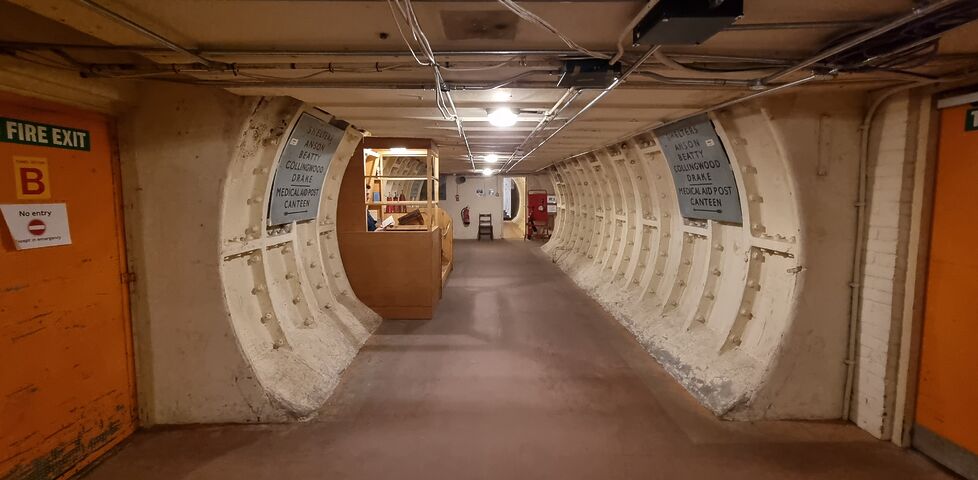
A circular tunnel with a flat floor and low ceiling, wrapped in white-painted iron and concrete, with exposed wiring and WWII-era signage, leads deeper into a subterranean bunker past a small guard post in which a figure can barely be seen, reading a book.
Anybody else get Fallout vibes from this place?

I’ve done a couple of bits of exploration of subterranean London before: in the service tunnels around Euston, and into the abandoned station on the Aldwych branch line. But I was especially impressed by the care and attention that had gone into making this particular tour fun and engaging.

Broad staircase reminiscent of those found around the London Underground, but sparsely lit and decorated. Looking up the stairs, it ends in a brick wall.
Had this deep shelter gained a second life as a new tube station, as was originally hoped, this staircase would have connected it to the Northern Line platforms. Instead, it ends at a brick wall.

The site itself is deep: trains on the Northern Line – already one of the deepest lines on the London Underground – can be heard passing above you, and any noise from street level is completely gone (even the sounds of bombing couldn’t be heard down here, WWII residents reported). It’s also huge: long interconnected tunnels provided space for 8,000 beds, plus canteens, offices, toilets, medical bays, and other supporting architecture.

Table with basins, kidney bowl, old-style medical vials, kettle, jug, and WWII-era shrapnel dressing kit, in an iron-framed subterranean tunnel.
Significant parts of the bunker contain original furniture, including the metal-frames triple-bunk-beds (some of which show signs of being temporarily repurposed as archival storage shelves). But other bits have been restored to make them feel contemporaneous with the era of its construction.

To extend the immersion of the theme even further, there’s a “warden” on-site who – after your 179-step descent – welcomes you and checks your (replica) night admission ticket, identifying which bed’s bed assigned to you. The warden accompanies your group around, staying in-character as you step through different eras of the history of the place! By the time you get to the interpretative space about the final days of its use for human habitation – as a budget hotel for the “Festival of Britain” national exhibition in 1951 – he speaks fondly of his time as its warden here and wonders about what will become of the place.

In an extremely long semicircular concrete tunnel, a tween girl wearing a green hoodie stands near signage made to look like 1940s newspapers.
The long, long double-helix staircases that brought us deep into the earth represented only a fraction of the distance we walked on the tour, through these long networks of tunnels.

All of which is to say that this was a highly-enjoyable opportunity to explore yet another hidden place sprawling beneath London. The Hidden London folks continue to impress.

Small pink replica ticket reading 'Clapham South Shelter: Admit One Person for One Night Only', ticket number L0281.
I’m glad I’ve got a bed of my own in a house of my own that’s not being bombed by the Luftwaffe, actually, thanks.

If you want to see a little more, they’ve released a video just yesterday: or for the full experience, see if there are any slots you can make to visit the place for yourself.

× × × × ×

Harswell Steel

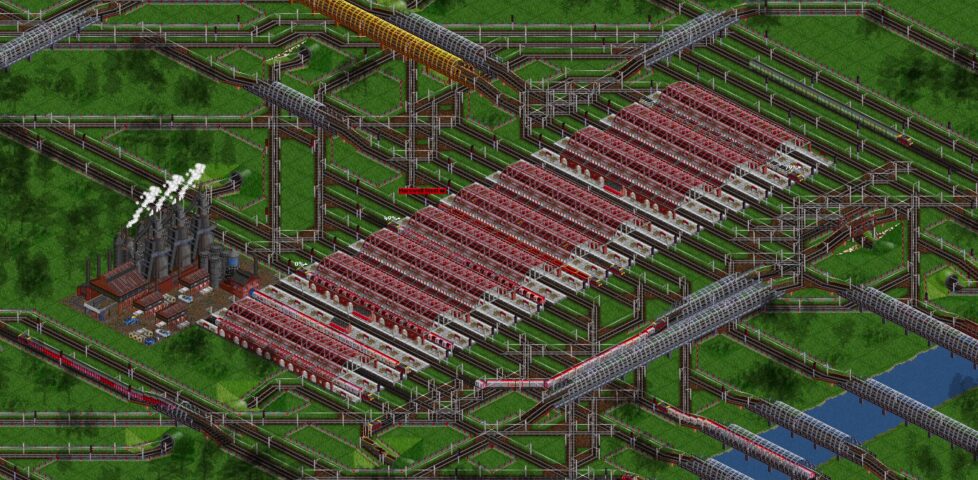
My past self, receiving a copy of Transport Tycoon for his 14th birthday, would have his mind blown if he could see the kind of insanely-complex super-stations that are possible in (the open-source successor to) the game 30 years on.

Of course, this kind of thing – multiple simultaneously shared in-and-out routes on a bidirectional station – wasn’t (sensibly) possible before the introduction of path-based signalling in OpenTTD 0.7.0. And modern path-based signals in the game are even smarter.

But still, 14-year-old me had a dream. And nowadays that dream is real.

London Transport 25

This is a repost promoting content originally published elsewhere. See more things Dan's reposted.

Girl on the Net is a popular sex blogger, so this is a link to a SFW page on an otherwise NSFW site. If your only concern is seeing or hearing sexy things or somebody looking over your shoulder and thinking that’s what you’re doing, go ahead and read it. But if you’re connected through the monitored corporate firewall of a sex-negative employer, you might want to read on a different device…

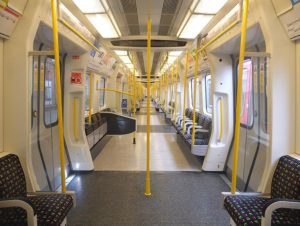
25 different forms of London transport in a day

Hello! My name is Sarah and I love London transport. Because I am a very cool and interesting person, for a long time I’ve thought it might be fun to see how many different types of London transport I can take in a 24-hour period: bus, tram, tube, train, ferry, etc. The trip outlined below took me (and the lucky man I invited on this date) on 25 different forms of London transport in one single day. It criss-crossed the city from East through North to West, then South, Central, South East and back to where we started. I’m sharing the itinerary because this turned out to be a phenomenal adventure, and I thought others might like to give it a go.

The rules

The rules for the challenge were:

  1. Transport must be transport, not a ride, i.e. it must take me from A to B. So the London Eye doesn’t count, but the cable car definitely does.
  2. Each form of transport must continue the journey. So no going from A to B then immediately back again. The journey can meander, but it must keep moving forwards.
  3. No form of transport can be taken more than once. Changes on a single line are OK (for instance, if traveling on the DLR from Greenwich to Bank requires a change at Canary Wharf, that’s fine, or if you’re on a bus that gets taken out of service you can get on the next one) but repeated trips on the same form of transport aren’t allowed (you can’t take one double-decker bus in the morning then another in the afternoon). The exceptions to this are: walking; escalators; stairs. We’ll be using these a lot.

This sounds like a ludicrously fun adventure and a great use of a date for anybody who can find an even-remotely similarly-transport-obsessed partner.

The one thing this wonderful post is lacking is a map. Oh, and maybe a GPX file, but that’s a much bigger ask. Really I just want the map, to help me visualise the route. Maybe with the different forms of transport colour-coded or something? Okay, okay, now I’m asking a lot again.

Just go read it, it’s a fun London romp.

Canine commuters chase dog travel season tickets

This is a repost promoting content originally published elsewhere. See more things Dan's reposted.

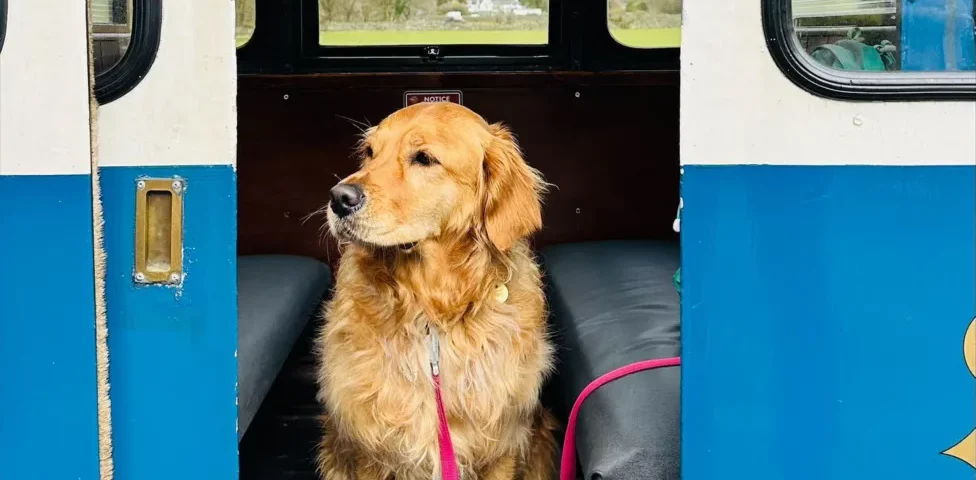
Dog aboard a train at the Ravenglass and Eskdale Railway

Dogs are being offered boat and rail season tickets to ease their path to walkies in the Lake District.

Ullswater Steamers and the Ravenglass and Eskdale Railway have introduced £20 annual “Rover” season tickets, which include a 10% donation to animal charities.

The cost for a standard doggie day ticket is £2.50 for the railway and £1 for a boat trip.

In a world where the news is dominated by war, cyber attacks, or imminent elections, it’s nice to be distracted by a nonsense bit of news. And this one’s just delightful.

For a fee of £1 – £2.50, dogs can travel on the boats and railways of Ravenglass and Eskdale Railway and Ullswater Steamers. So far, so good.

And now they’ve introduced a season pass for people who take their canines on the ferries or railways more often. Also good.

And they’ve called the season pass for dogs… a “Rover” ticket.

Excellent.

Screenshot of the page selling Ravenglass Railway 'Rover' tickets for dogs.
Yes. This. 😘🤌
× ×

Dan Q found GCAJGEA Welcome to Amsterdam! (Virtual Reward 4.0)

This checkin to GCAJGEA Welcome to Amsterdam! (Virtual Reward 4.0) reflects a geocaching.com log entry. See more of Dan's cache logs.

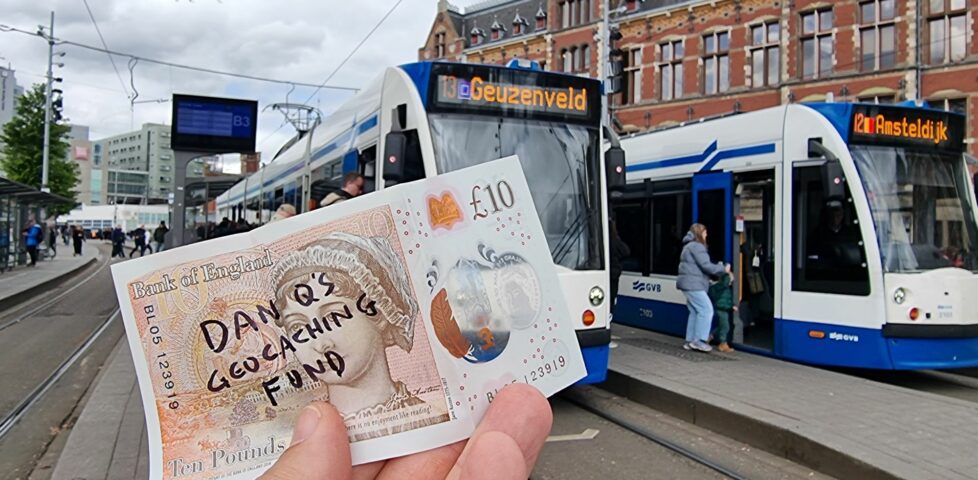
TFTC! I’m not carrying any tickets for UK transport, but I’ve got a (mildly defaced) British banknote and I found a tram (the number 13, which connected me to my hotel this week) and a ferry (which I then went and caught to go find some more caches!).

A £10 note with "Dan Q's Geocaching Fund" written on it in front of a number 13 tram.

A £10 note with "Dan Q's Geocaching Fund" written on it in front of a ferry.

× ×

London civil servant’s bus odyssey sparks Twitter storm

This is a repost promoting content originally published elsewhere. See more things Dan's reposted.

When Jo Kibble, a 39-year-old civil servant from Greenwich, set out to travel as far as he could from London in one day only using public bus routes it was supposed to be a personal project. But he ended up sparking a Twitter storm, causing a debate about how to build a fairer country along the way.

“I like travelling by public transport and by bus; I think it’s a great way to see the country,” Mr Kibble explains.

..

Mr Kibble figured the furthest he could get in one day would be Morecambe in Lancashire – some 260 miles from Charing Cross, the geographical centre of London.

I’m sure that many of you, like me, really enjoyed The Political Travelling Animal‘s Twitter adventure up the country, last week. If you missed it (and you should really go read it if you did): Jo decided to see how far he could get from London within 24 hours via local bus routes only, and live-tweeted the entire experience for the world to enjoy too. Perhaps unsurprisingly, I particularly enjoyed that fact that he gave a nod to Preston’s unusual and iconic bus station.

Reading it, though, I found myself reminded of a time, long ago, that I planned (although never took) a similar journey. In 1999 I moved away from my family in Preston to Aberystwyth to go to university.

Before he became a bus my father was a bus industry professional and at a rest stop during the journey to Aberystwyth as he dropped me off, he and I perused the (paper) timetables to explore a hypothesis that the pair of us had come up with.

Our question: Is it possible to travel from Aberystwyth to Preston, in a single day, using local bus routes only?

After much consideration, we determined that yes, it was possible, but better than that: it was possible to do so (at the time) entirely on Arriva buses. This presented an unexploited opportunity: for the price of an “all day” Arriva ticket (£2.20, IIRC), an enterprising and poor student could, in a pinch, find their way back from Aberystwyth to Preston over the course of about 16 hours for only a fraction more than the price of a pint of beer.

This was utterly academic: in the years that followed, I would almost invariably leave Aberystwyth by train. Sometimes I’d do this to go to London: a route for which, I discovered, I could catch the 6am train, hide aboard it as it was vacated at its Birmingham New Street terminus and take a nap, safe in the knowledge that the same rolling stock would subsequently become a train to London Euston! Other times I’d return to Preston; a journey for which not even floods could stop me.

But regardless, for my first full term at university I kept on the corner of the desk in my study room the sum of £2.20, as an “insurance policy”. No matter what happened in this new phase of my life, that small pile of coins could, at a stretch, get me back “home”.

By Christmas 1999 I’d re-purposed the coins to do my laundry (the washing machines in the halls’ laundrette took pound coins and the dryers 20p pieces, so this was a far more-valuable use of spare change in those denominations). By this point I’d settled in and had become confident that Aberystwyth was likely to be my home almost year-around, and indeed I’d go on to live there another decade before saying goodbye for Oxfordshire.

But we answered the question, at least in theory: a hypothetical but symbolic question about the versatility and utility of an interconnected network of local bus routes. And that’s just great.

Reply to @ADumbGreyHam

This is a reply to a post published elsewhere. Its content might be duplicated as a traditional comment at the original source.

Adam Graham tweeted:

@scatmandan I’ve just been in a meeting with with some people who were saying some very positive things about the legacy of work your dad (I think) did with buses in the North East

That seems likely. Conversely: if people are still talking about my work 7½ years after I die it’ll probably be to say “who wrote this bit of legacy code this way and what were they thinking?”

CC @TASPartnership @bornvulcan @TheGodzillaGirl