Since my dad’s funeral, a little over a month ago, I’ve been responsible – as executor of his will – for
leading the efforts to deal with the distribution of his estate. By necessity of the complexity of the case, we’ve had to draft some friendly lawyers, but there’s still been an awful
lot to be taken care of by my sisters, my mother, my dad’s partner, and I, among others. Some bits have been easier than others.
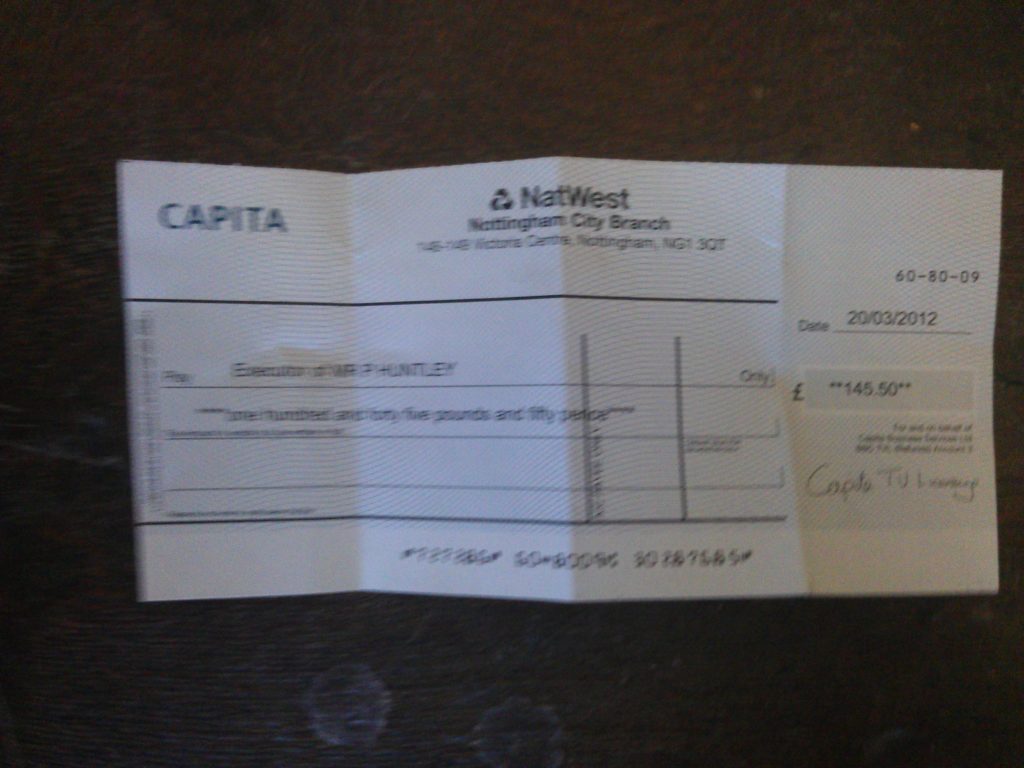
TV Licensing, for example, have been particularly useless, as evidenced by this cheque.
Standard Life‘s pensions department, for example, made my dealings with them very easy: they explained exactly what
they needed from me, exactly what they’d do with it, and how quickly they could act upon it. TV Licensing, on the other
hand, seem to be working against me rather than for me, issuing me a cheque made out as it is to “Executor of MR P HUNTLEY”, which was subsequently rejected by my bank on account of
being in the name of nobody at all. I suppose I could easily change my
name in order to accept that cheque, but that seems like the wrong solution. Plus I’ve always felt like more of a “Dan” than an “Executor”.
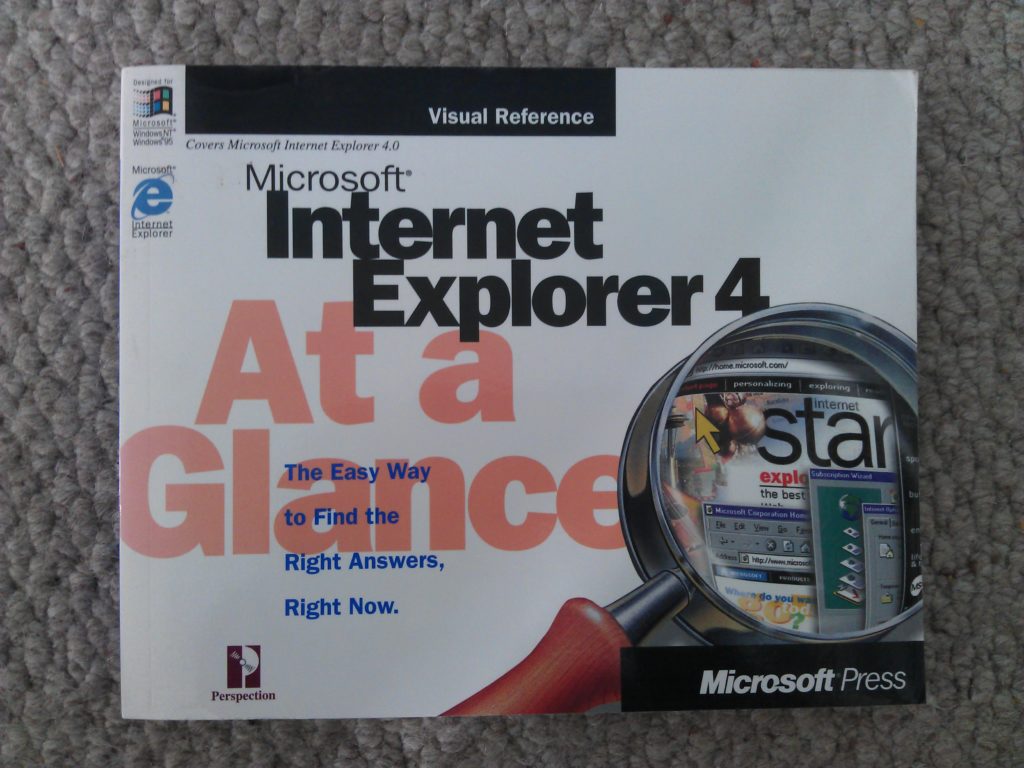
For some reason, my dad kept his copy of the (rather thick) book “Internet Explorer 4 At A Glance”; a book whose necessity I would have questioned even back in 2001, when it was
published.
I’ve begun packing up the contents of my dad’s house, too, so that they can be meaningfully distributed to whoever ought to have them. This leads to an inevitable clash, of course,
between the lawyers and the local council. The former want us to remove as little as possible before they can appraise the value of the contents, which is relevant to the assessment of
inheritance tax. The latter demand that the house be left unfurnished so that it does not become liable for council tax. In order to walk the fine line between the two I’ve been
packaging things up based on their types: his vast library of transport books in these boxes, etc. And despite great efforts (such as the work it took to disassemble the rusty
old trampoline in the back garden), it still feels like there’s a long, long, long way to go.
I’ve been a vegetarian for a year
and a bit, now, and it’s not significantly easier than it was to begin with. There are lots of meats that I miss. And there are some meats that I expected to miss, that I don’t. Here’s
my experience:
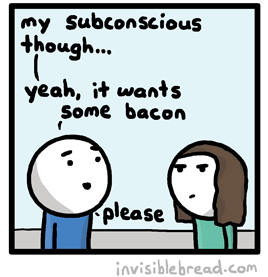
This is how my subconscious communicates with me, too. Click for the original comic.
The things I miss the most:
Fish finger sandwiches. I know they’re not to everybody’s taste, but these things are just delicious.
Chicken in convenient things. What do you mean, I can’t have the dupiaza unless it’s with chicken? You do other dishes with vegetables!
Having a wide variety of choice. If I grab myself a lazy pre-made sandwich from the supermarket, my choices are – at best – limited to cheese-and-tomato or egg mayo.
There are plenty of great veggie sandwich fillings: like falafel and hummus, roasted peppers, brie and pickle, curried tofu and lettuce, carrot and rocket, or even QuornTM. But I’ve had to get used
to many supermarkets giving me a choice of one or two (and this is also the case in a shocking number of restaurants, too).
This is the fourth time I’ve used this photo on my blog, and it isn’t getting any easier. Man, that’s a tasty-looking sandwich.
And things I don’t miss as much as I expected to:
Bacon. I’ve had the ocassional craving for crispy, well-done bacon. This is odd, because as a meat-eater I generally preferred my bacon barely cooked at all. But I’ve
not missed bacon as much as I’d feared, and that’s great, because JTA‘s still liable to cook it, and the smell
might otherwise have been intolerable.
Steak. I occasionally feel like I’m missing out, but this is more-often because I’m stuck with a limited choice on a restaurant menu than that the steak in itself
looked particularly tasty. I guess I wasn’t as attached to lumps of beef or mutton as I suspected!
Cooking with meat. I expected to have some difficulties here: I cook a variety of different things, some of them well. And of those, the vast majority had a meat
component. Meat-substitutes aren’t always suitable (even where they are adequate), so I’ve had to discover a stack of new things that I can put together in the kitchen. But this
turned out to be simpler than I thought… perhaps in part thanks to the number of vegetarians I’ve lived with or dated over the years.
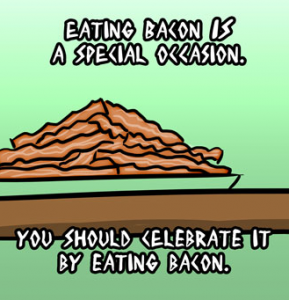
The webcomic-o-sphere loves bacon. Click for the original comic.
So there we go. There are things I miss more than I thought, and there are things I’ve missed less. And there’s not a particularly strong pattern between them.
If you’ve restricted your diet (e.g. by choosing to be vegetarian), what do you miss? Or if you haven’t, what do you think you’d miss the most? I think we all know how Adam feels, at least…
On this day in 2040 I first managed to get my Internet Time Portal working. It’s been a long time coming, but my efforts have
finally paid off. The trick was just to run The Wayback Machine in reverse, which just
required the integration of my flux capacitor with the webserver. Thankfully, Apache 5‘s plugin architecture’s
made it pretty easy, but I’ve already talked about how time-travel/webserver integration works back in my blog posts at the end of 2039, so I won’t bore you with them all again.
Despite what I said about password security back in 2011, I
haven’t actually changed the password for my blog in 28 years, so it was the obvious target for my first reverse-websurfing experiment. That’s why past-me will be surprised to find this
article posted to his blog, now that I’ve connected back in time and posted it. And I know he’ll be surprised, because I was.
In fact, it was probably this moment – this surprising moment back in April 2012 – that first made me realise that reverse-chronological web access was possible. That’s why I spent most
of the next three decades cracking the secret and finally working out a way to send information back in time through the Internet.
Looking Back
There’s so much potential for this new technology. I’m hoping that soon the technology will evolve to the point where I’ll even be able to use ancient and outdated Internet protocols
like “Facebook” (remember that fad?) to actually communicate directly with the people of the early 21st century. Just think of what we can learn from them!
After the second coming of Jesus in 2028 resulted in the deletion the mysterious “Video R” from the entire Internet, as well as from the minds of everybody on Earth, we’ve only
been able to speculate what this mysterious media contained. Whatever it was, it was something so offensive to our Lord and Saviour that He saw fit to wipe it from the face of the
Earth… but you can’t help but be curious, can’t you? Of course, those of you reading this back in 2012 can still see the video, you lucky lucky guys.
The possibilities are limitless. As soon as I’ve finished making this post, I’ll be trying to make contact with the past version of myself and see if past-Dan is capable of looking up
this Wikipedia article for me: for some reason I can’t get access to it now, in 2040…
This blog post is part of the On This Day series, in which Dan periodically looks back on
years yet to come.
It’s like stepping back in time through videogaming history. And also sideways, into a parallel universe of knights and dragons.
8-bit Google Maps. At different view levels, you’ll see mountainous areas (Wales is worth looking at) and sprites for cities of different sizes.
It’s like Google Maps, but in the style of retro top-down, turn-based RPGs. It’s really quite impressive: it’s presumably being generated at least semi-dynamically (as it covers the
whole world), but it’s more than a little impressive. It sometimes makes mistakes with rivers – perhaps where their visibility from the air is low – but nonetheless an
interesting feat from a technical perspective.
Commissioned, a webcomic I’ve been reading for many years now, recently made a couple of observations on the nature of “fetch quests” in contemporary computer
role-playing games. And naturally – because my brain works that way – I ended up taking this thought way beyond its natural conclusion.
Today’s children are presumably being saturated with “fetch quests” in RPGs all across the spectrum from fantasy Skyrim-a-likes over to modern-day Grand Theft Auto clones and science fiction
Mass Effect-style video games. And the little devil on
my left shoulder asks me how this can be manipulated for fun and profit.
A typical fetch quest, taken to an illogical extreme. It's only a matter of time until you see this in a video game.
The traditional “fetch quest” goes as follows: I’ll give you what you need (the sword that can kill the monster, the job that you need to impress your gang, the name of the star that
the invasion fleet are orbiting, or whatever), in exchange for you doing a delivery for me. Either I want you to take something somewhere, or I want you to pick something up, or – in
the most overused and thankfully falling out of fashion example – I want you to bring me X number of Y object… 9 shards of triforce, 5 orc skulls, $10,000, or whatever. Needless to say,
about 50% of the time there’ll be some kind of challenge along the way (you need to steal the item from a locked safe, you’ll be offered a bribe to “lose” the item, or perhaps you’ll
just be mobbed by ninja robots as you ride along on your hypercycle), which is probably for the best because it’s the only thing that adds fun to role-playing a postman. I
wonder if being attacked by mage princes is something that real-life couriers dream about?
This really doesn’t tally with normality. When you want something in the real world, you pay for it, or you don’t get it. But somehow in computer RPGs – even ones which allegedly try to
model the real world – you’ll find yourself acting as an over-armed deliveryman every ten to fifteen minutes. And who wants to be a Level 38 Dark Elf Florist and Dog Walker?
YAFQ.
So perhaps… just perhaps… this will begin to shape the future of our reality. If the children of today start to see the “fetch quest” as a perfectly normal way to introduce
yourself to somebody, then maybe someday it will be socially acceptable.
I’m going to try it. The next time that somebody significantly younger than me looks impatient in the queue for the self-service checkouts at Tesco, I’m going to offer to let them go in
front of me… but only if they can bring me a tin of sweetcorn! “I can’t go myself, you see,” I’ll say, “Because I need to hold my place in the queue!” A tin of sweetcorn may
not be as impressive-sounding as, say, the Staff of Fire Elemental Control, but it gets the job done. And it’s one of your five-a-day, too.
Or when somebody asks me for help fixing their broken website, I’ll say “Okay, I’ll help; but you have to do something for me. Bring me the bodies of five doughnuts, to
prove yourself worthy of my assistance.”
You just can’t rely on GMail’s “contacts” search any more. Look what it came up with:
Not a result I'd commonly associate with the word "virgin".
With apologies to those of you who won’t “get” this: the person who came up in the search results is a name that is far, far away, in my mind, from the word “virgin”.
In not-completely-unrelated news, I use a program called SwiftKey X on my phone, which uses Markov chains (as I’ve described before) to intelligently suggest word completion and
entire words and phrases based on the language I naturally use. I had the software thoroughly parse my text messages, emails, and even this blog to help it learn my language patterns.
And recently, while writing a text message to my housemate Paul, it suggested the following sentence as the content of my
message:
I am a beautiful person.
I have no idea where it got the idea that that’s something I’m liable to say with any regularity. Except now that it’s appeared on my blog, it will. It’s all gone a little recursive.
I’ve just come across a product called SonicNotify, and I’m wracking my brain to try to find a way to see it as a good idea.
I’m struggling.
SonicNotify. You spray red noise into your audience, and their phones become infuriating. Or something.
The world is just coming to terms with spatial advertising and services that “link” to their mobile devices. I’ve quite enjoyed playing with QR codes, but there are plenty of other mechanisms enjoying some amount of exposure,
such as Bluejacking: in the early days of Bluetooth, some
advertisers experimented with devices that would push out Bluetooth messages to anybody who strayed within range. Now that most Bluetooth devices capable of receiving such messages
“switch off” Bluetooth after a couple of minutes, they need to be coupled with a visual medium that says, for example, “turn on Bluetooth to get our business card”, or something, which
is slightly less insidious.
SonicNotify works by having a smartphone app that passively listens for high-frequency sound waves, which act as carriers to the marketing message. These messages can be broadcast at
live events over existing PA systems, embedded in traditional media like radio or television, or transmitted from localised devices concealed in billboards or alongside products on
shelves. Lady Gaga tried it out in a concert, in order to – I don’t know – distract her fans from actually listening to the music by
giving them things to play with on their phones, instead.
Buy Doritos? I never would have thought of that on my own! Thanks, SonicNotify!
Let’s stop for a moment and think about everything that’s wrong with this idea:
I have to install a closed-source third-party app that runs in the background and keeps my microphone open at all times? We’ve got a name for that kind of device: a
bug.
This app would presumably need to run the whole time, reducing battery lifespan and consuming clock cycles… and for what? So that I can see more advertisements?
Thinking about the technology – I’m not convinced that mobile phone microphones are well-equipped to be able to pick up ultrasonic waves with any accuracy, especially not once
they’re muffled in a bag or trouser pocket. I can’t always even hear my phone ringing when it’s in my pocket, but it expects to be able to hear something “ringing” some distance away?
For that matter: television and radio speakers, and existing PA systems, aren’t really designed to be able to faithfully reproduce ultrasound, either. Why would they? A good
entertainment system is one which sounds best at all of the frequencies that humans can hear. Anything else is useless.
And let’s not forget that different people have different hearing ranges. Thinking back to the controversies surrounding anti-youth alarm The Mosquito: do you really want to be surrounded by sharp,
tinnitus-like noises just on the cusp of your ability to hear them?
No thank you, SonicNotify. I don’t think there’s mileage in this strange and quirky product idea.
scatmania.org in August 2003, showing off the simplistic look it had before it was deleted.
Since then, I’ve kept regular backups. A lot of the old stuff is sometimes cringeworthy (in a “did I really used to be such a dick?” way), and I’m sure that someday I’ll
look back at my blog posts from today, too, and find them shockingly un-representative of me in the future. That’s the nature of getting older.
Nostalgia’s awesome, which I choose to represent with this photo of me and my parents on a hilltop somewhere. You have permission to “aww”.
But it’s still important to me to keep all of this stuff. My blog is an extension to my diary: the public-facing side of what’s going on in my life. I back-link furiously, especially in
the nostalgia-ridden “On This Day” series of blog posts I throw out once in a while.
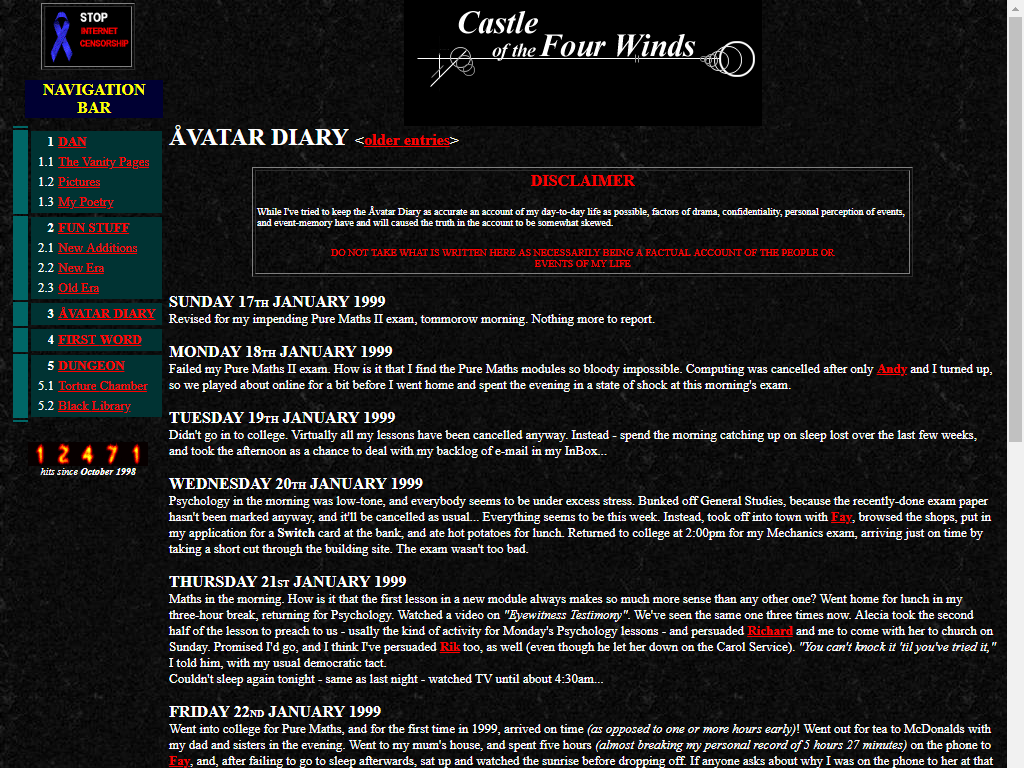
If you remember my blog when it used to look like this, back in the late 1990s, then you’ve been following me than longer than most folks have been on the Web at all.
The blog posts I’ve newly recovered are:
Parcel of Goodies(1st December 2003), in which I get some new jeans and announce an upcoming Chez Geek Night (the
predecessor to what eventually became Geek Night) at the Ship & Castle
AbNib & Str8Up (2nd December 2003), in which I apologise for Abnib being down and perv over hot young
queer people
The Software Engineers Behind My Alarm Clock(3rd December 2003), containing my complaints about the
engineering decisions behind my clock, which woke me up too early in the morning
Something In The Water(10th December 2003), talking about several of the new romantic releationships that have appeared
amongst my friends – of these, the one that had surprised me the most is the one that lasts to this day
Andy & Sian, the adorable couple who I declared “most surprising” of the new relationships to get underway late in 2003. The pair married in 2010.
Worst 100 Films Of All Time(10th December 2003): my observation about how many Police Academy movies made
it into the IMDb’s “bottom 100”
Gatecrashing(13th December 2003), in which I drop in uninvited on a stranger’s house party, and everything goes better than expected
Final Troma Night Of The Year(14th December 2003); a short review of 2003’s final Troma Night – at this point, we
probably had no idea that we’d have still been having Troma Nights for seven more years
This is the very definition of a first world
problem. The other week, on the recommendation of my favourite whisky shop owner, I bought a bottle of particularly spectacular whisky:
A 21-year-old Miltonduff from Douglas of Drumlanrig.
In fact, it turns out to be the best whisky I’ve ever tasted. It’s moderately smoky but with a subtle caramel-like sweetness, and it’s simply beautiful. At 46% ABV, it’s no lightweight,
but an ice cube (filtered water only, please) or two sets it right.
But there’s a problem: on closer examination of the box and bottle, it turns out that it is, this year, one of only 421 bottles produced.
tl;dr: Find best whisky ever. Discover it’s one of only 421 bottles. #firstworldproblems
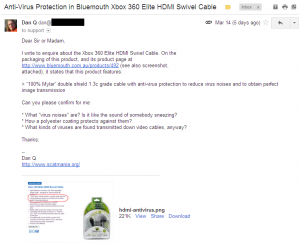
Apparently the plastic coating around this cable helps to prevent 'virus noises', whatever those are. Red scribbles added by me.
Somehow, this triggered a transformation in me. You know how when Eric eats
a banana, an amazing transformation occurs? A similar thing happened to me: this horrendously-worded advertisement turned me into an old person. I wanted to write a letter
to them.
My letter... er... email to Bluemouth Interactive.
There were so many unanswered questions in my mind: what is a “virus noise” (is it a bit like the sound of somebody sneezing?)? How a polyester coating protects against them? And what
kind of viruses are transmitted down video cables, anyway?
Bluemouth's response to me. Like the other pictures, you can click it to see it in full.
Their explanation? The ‘Virus’ was transcribed from French terminology for interference. It’s not a computer virus or anything like that.
The world is full of examples of cables being over-sold, especially HDMI cables and things like “gold-plated optical cables” (do photons care about the conductivity of gold, now?).
Does anybody have enough of a familiarity with the French language to let me know if their explanation is believable?
I gather that we’re going to be deploying
surface-to-air missiles in London during the Olympic Games this year. I can’t help but feel that this could be a really bad idea.
The CAA chart for VFR restricted airspace during the Olympic Games. Basically: don't fly over London without IFR.
Do we really want to shoot down an aircraft over one of the areas of highest population density in the country? Even if you know that AirBus is exclusively filled with
evil, nasty terrorists, I’m not sure that raining burning aircraft onto the city is necessarily an improvement.
Furthermore, is the solution to terrorism in Britain really to put even more dangerous weapons into the affected area? Isn’t there a risk that these powerful
rocket-propelled explosives could be turned against our own targets?
I’m sure that somebody must know what they’re doing. I’m just not convinced that it’s the people making the decisions.
As I mentioned in my reflections on this year’s Valentine’s Day, I was recently interviewed by
a media student putting together a radio documentary as part of her Masters thesis. She’d chosen polyamory as the subject of her documentary, and I met her in a
discussion on social news website Reddit. I’d originally expected that the only help I’d be able to provide would be some tips on handling the subject – and the community –
sensitively and without excessive sensationalism, but it later turned out that I’d be able to be of more aid than I initially expected.
I rarely get the chance to talk to the media about polyamory. I’m happy to do so – I’m registered with the Polyamory Media Association and I’ll sometimes reply to the requests of the (sensible-sounding) journalists who reach out to the uk-poly mailing list. However, I’m often not a suitable candidate because my partner (Ruth) and her husband (JTA) aren’t so poly-activist-ey
as me, and don’t really want to be interviewed or photographed or to generally put into the public eye.
Logo of the Polyamory Media Association.
I respect that. It’s actually pretty damn sensible to not want your private life paraded about in front of the world. I’ve known people who, despite taking part in a perfectly
good documentary about their love lives, have faced discrimination from – for example – their neighbours, subsequently. I appreciate that, often, reporters are challenged by how
hard it is to find people who are willing to talk about their non-monogamous relationships, but it turns out that there’s a pretty-good reason for that.
From my perspective, I feel like it’s my duty to stand up and say, “I’m in an ethical, consensual, non-monogamous relationship… and I’m just another normal guy!” Jokes aside
about how I’m perhaps not the best spokesperson to represent a “normal guy”, this is important stuff: people practicing ethical non-monogamy face discrimination and misunderstanding
primarily because society often doesn’t have a reference point from which to understand that these people are (otherwise) perfectly normal. And the sooner that we can fix
that, the sooner that the world will shrug and get on with it. Gay people have been fighting a similar fight for far longer, and we’re only just getting to the point where
we’re starting to see gay role models as film and television characters for whom their sexuality isn’t the defining or most-remarkable part of their identity. There’s a
long way to go for all of us.
Emily: the media student who interviewed us.
Emily – the media student who came over to interview me – was friendly, approachable, and had clearly done her homework. Having spoken online or by telephone to journalists and authors
who’ve not had a clue about what they were talking about, this was pretty refreshing. She also took care to outline the basis for her project, and the fact that it was primarily for her
degree, and wouldn’t be adapted for broadcast without coming back and getting the permission of everybody involved.
I’m not sure which of these points “made the difference”, but Ruth (and later, JTA) surprised me be being keen to join in, sitting down with Emily and I over a bottle of wine and a big
fluffy microphone and chatting quite frankly about what does and doesn’t work for us, what it all means, how to “make it work”, and so on. I was delighted to see how much our answers –
even those to questions that we hadn’t anticipated or hadn’t really talked about between ourselves, before – aligned with one another, and how much compatibility clearly exists in our
respective ideas and ideals.
I was particularly proud of Ruth. Despite having been dropped into this at virtually no notice, and having not previously read up on “how to talk to the media about polyamory” nor
engaged in similar interviews before, she gave some wonderfully considered and concise soundbites that I’m sure will add a lot of weight and value to the final cut. Me? I keep an eye on
things (thanks, Polyamory In The News) and go out of my way to look for opportunities to practice
talking to people about my lifestyle choice. But even without that background, Ruth was a shining example of “how to do it”: the kind of poly spokesperson that I wish that we had more
of.
I hope that Emily manages to find more people to interview and gets everything that she needs to make her project a success: she’s got a quiet tact that’s refreshing in polyamory
journalism. Plus, she’s a genuinely nice person: after she took an interest in the board games collection on New Earth, we made sure to offer an open invite for her to come back for a
games night sometime. Hell: maybe there’s another documentary in there, somewhere.
This picture’s been floating around the Internet lately. I’m sure that the guy in the picture thinks he’s original, but we totally beat him to it. Back in about 2003.
The Tampon Gun
The difference is, though, that when some friends and I were messing around with about a thousand applicator tampons that had reached their use-by date, we went one step further. We
sellotaped laser pointers to the barrels of our guns, and had a laser-guided tampon battle in the car park.
It turns out that laser sights don’t actually improve the accuracy of tampon blowguns. As a weapon, they’re worse than useless, of course – tampons have actually been used to save people from
blood loss after a bullet wound. But still, it made for a more fun – if sillier – afternoon than would have been had by just throwing the damn things away, even if we did then have
to spend quite a lot of time picking them all up and binning them anyway.
Friday was the day of my dad’s funeral. If you’ve just tuned in, you might like to see my blog post about his death, and a second article about the things that have been hardest, so far, in its aftermath. I’m not inclined
to say too much, so I’ll be brief and let pictures, and a video, tell the story. As usual, you’ll find that you can click on the pictures to enlarge them.
A convoy of buses arrive to deliver attendees to the funeral.
A remarkable number of people turned up to mark my dad’s passing on this sad occasion. I was genuinely surprised to see how many lives he’d touched (and to hear about a great many more
from people who couldn’t make it). About 350 people struggled to fit in to the cramped crematorium, and many had to stand outside where – thankfully – there were repeater speakers.
The buses with digital display boards, provided by Stagecoach, had been reprogrammed to show my dad’s name and years of life.
My sisters and I were determined that this event would be a celebration of our father’s life. So rather than focusing on his tragic and premature death, we made every effort
to commemorate his achievements and reinforce the lessons that we can all learn from his time with us. In a similar vein, we’d told everybody that we had the chance to that there was no
need to wear black for this funeral: that people should wear what’s appropriate to them for their personal act of mourning and remembrance.
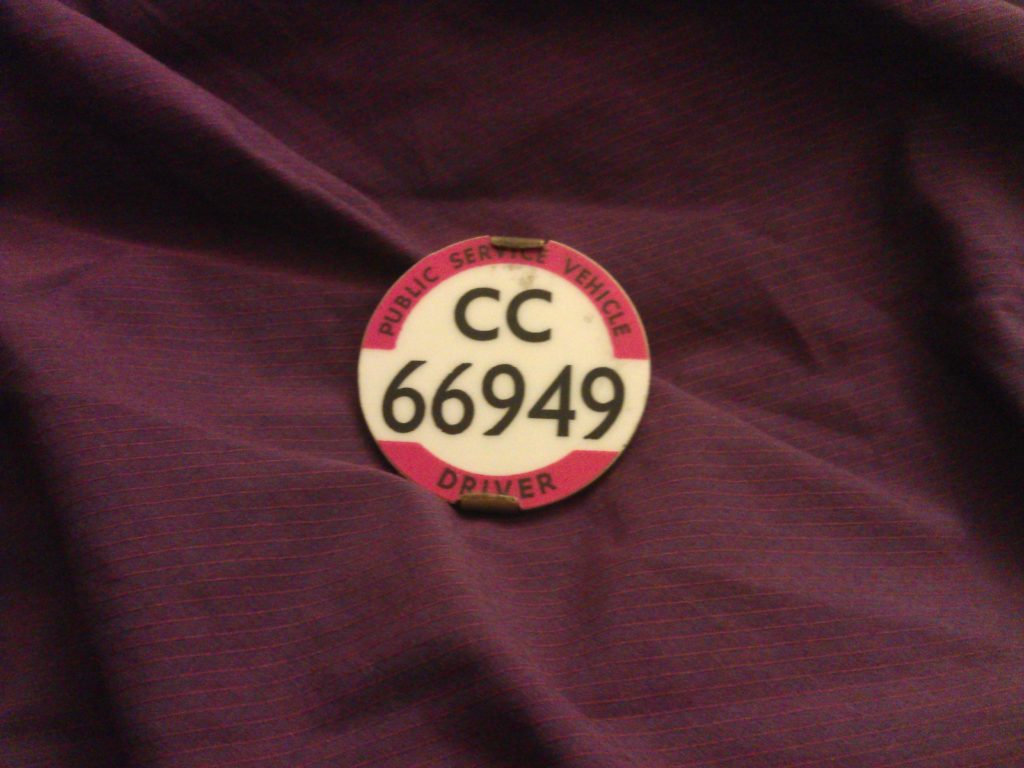
In memory of my dad, I wore his old-style bus driver’s license badge, as well as wearing both socks and sandals together, as he often would.
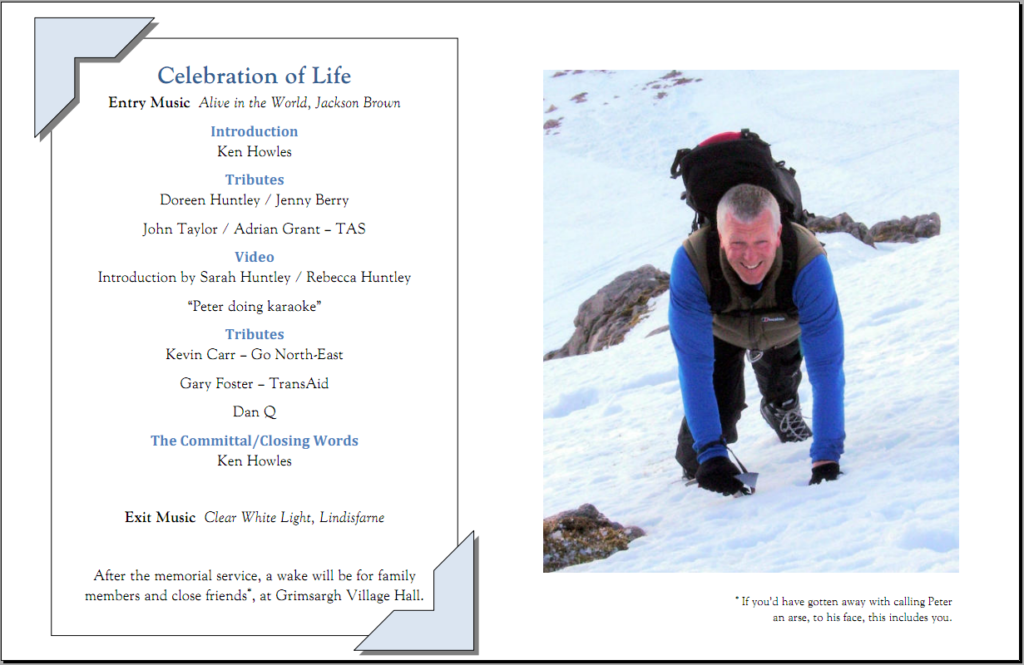
We’d hired a former minister, Ken Howles, to provide a (thoroughly secular, under threat of non-payment!) framework for the service, but we “rolled our own” so far as possible. Seven
individual tributes and eulogies were given by people representing different aspects of my dad’s life: from my mother, from his partner, from the friend with whom he was walking on the
day he died, from the managing directors of the company he founded and the company he last worked for, from the chief executive of the charity he was fundraising for, and – finally –
from me.
(if you can’t view the YouTube video above, or if you want to share it with others, you can also view it on YouTube)
The contrast between the different tributes was stark and staggering, reflecting the huge variety in the different facets of my father’s life. From guerrilla gardening to
trainspotting, lessons learned to tyres pulled, we collectively painted a picture of the spectrum of my dad’s life. The tributes given were, in order:
My mother, Doreen (watch), who talked about their adventures together as
young adults and the roots of his career in transport
His partner, Jenny (watch), who shared the experiences they’d had together, and
mourned for those that they would not
His friend, John (watch), who let us in on the things that they’d talked about
during my dad’s final hours
Adrian, the managing director of the company my dad founded (watch), on his success in the world of transport consultancy, and working with him
A picture of the “Celebration of Life” order of service that we distributed at the funeral. Click on the picture to download the original (which includes a list of some of the
charities my dad supported) as a PDF.
Kevin, the managing director of Go North-East (watch), on the subject of my dad’s recent career and influence on British transport
Gary, chief executive of TransAid (watch), announced the future creation of the Peter Huntley Fundraising Award, and thanked my dad and his supporters on behalf of the dozens of
charities my dad helped
And finally, me (watch), contrasting all of the above by talking about what
my dad was like as a father and a friend, and the lessons we can learn from him
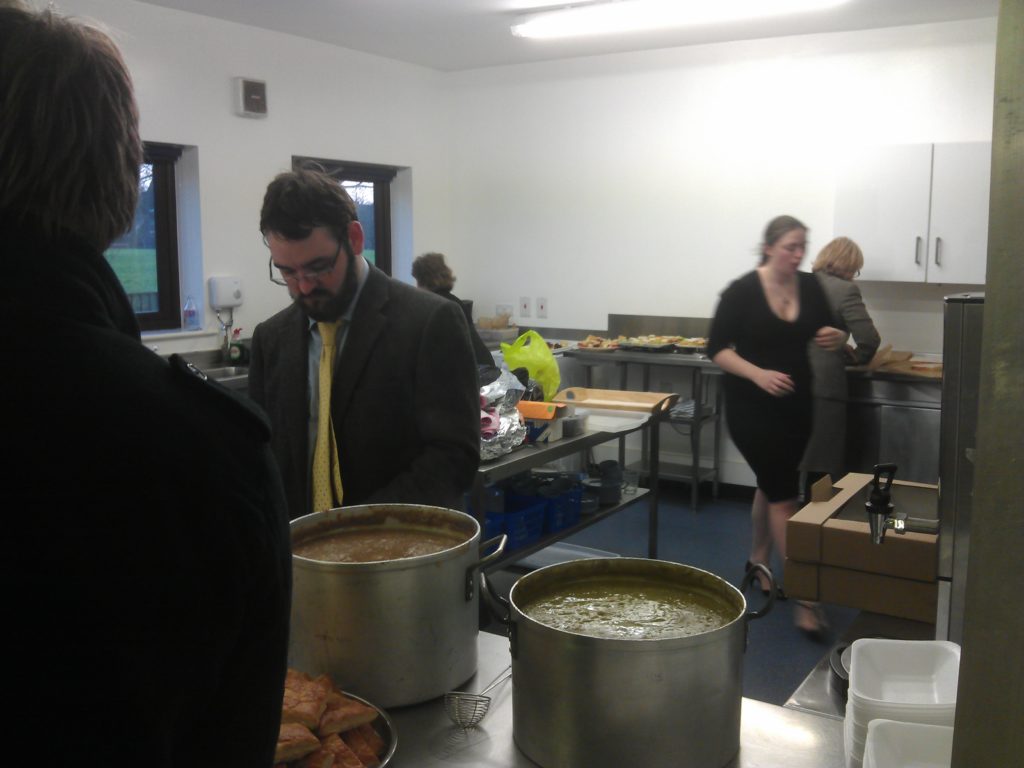
JTA serves butter pie, mushy peas, and hotpot – classic Lancashire comfort foods – to guests at the wake.
Afterwards, we held a wake at Grimsargh Village Hall which, on account of the sheer number of bus industry attendees,
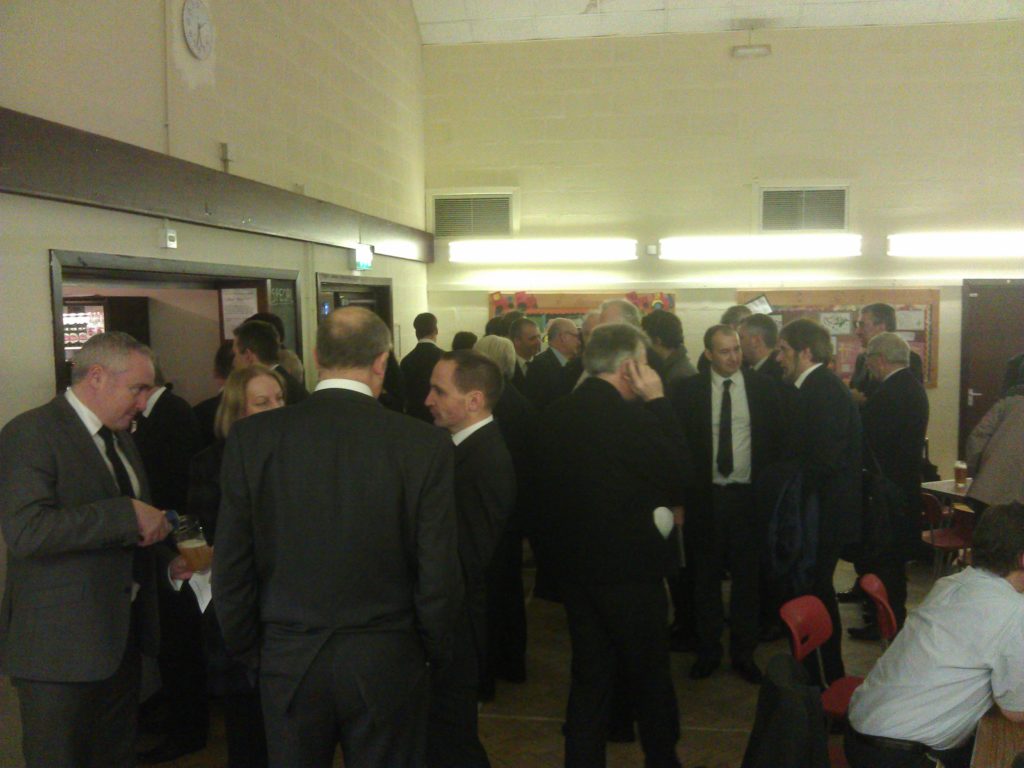
rapidly became a micro-conference for the public transport sector! It was great to have the chance to chat to so many people who’d worked with my dad in so many different contexts.
Mourners gather near the (convenient!) bar at Grimsargh Village Hall. I’ve decided: all wakes should have a bar.
Between hot food provided by a local caterer, cold savories courtesy of
Jenny’s daugher Eppie, and a copious quantity of cakes baked by Ruth, there was an incredible superfluity
of food. These two, plus JTA, Paul, and Eppie’s
boyfriend James, provided a spectacular level of “behind-the-scenes” magic, keeping everything running smoothly and ensuring that everything happened as and when it was supposed to.
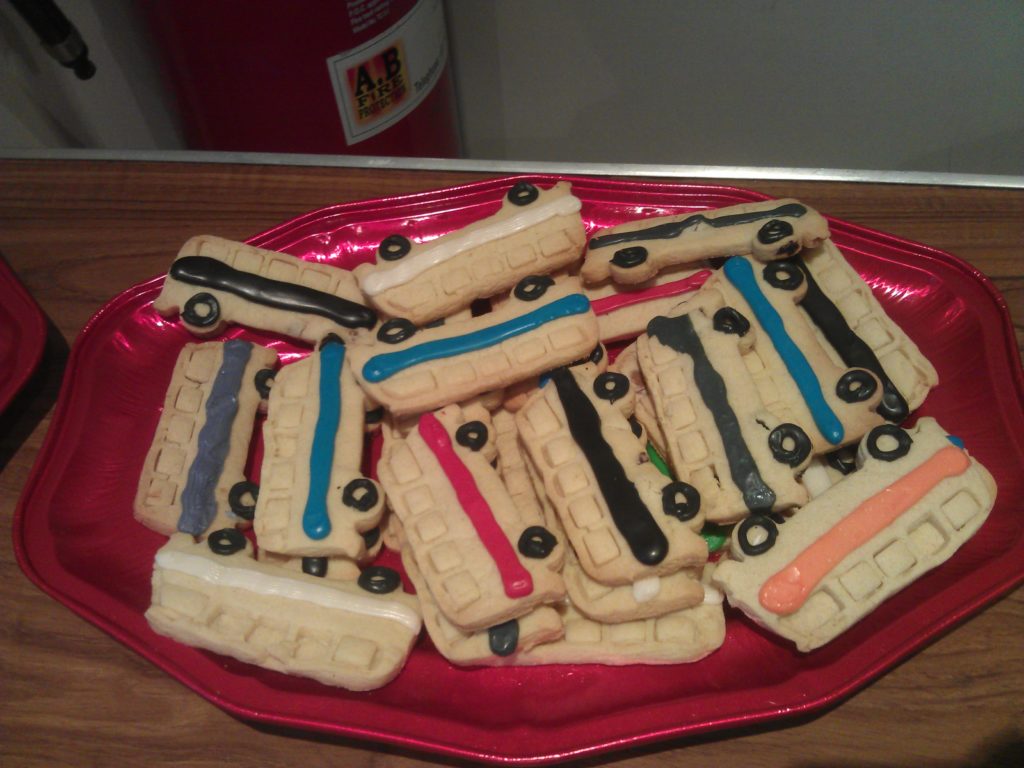
Among other things, Ruth baked biscuits in the shape of buses, decorated in the colours of the different routes that my dad rebranded during his time at Go North-East.
We set up a “memory book”, in which people could write their recollections of my dad. I haven’t had time to read much of it yet, but one of them stands out already to me as a concise
and simple explanation of what we achieved at the crematorium that day. It reads:
“Great funeral, Peter. Sorry that you missed it.”
It was certainly a great send-off for a man who did so much for so many people. Thank you so much to everybody who made it such a success, and to everybody who, in the meantime, has
donated to TransAid via my dad’s
JustGiving page (or by giving us cash or cheques at or after the funeral). You’re helping his memory live on, for everybody: thank you.
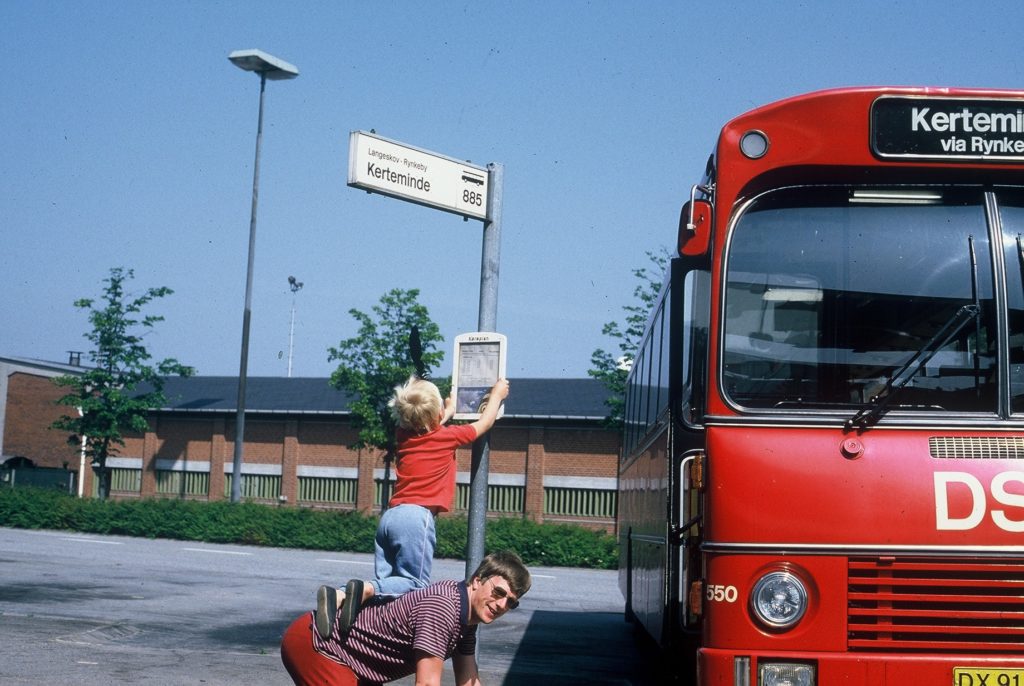
My dad didn’t teach me to drive. But he did teach me to read a bus timetable. Thanks, dad. I love you.
My dad died almost a fortnight ago when he lost his footing during a climb in the Lake District, and –
since then – it’s felt like I’ve been involuntarily transplanted out of my life and into somebody else’s. I’ve only been in and out of work, and I’m glad to have done that: it’s added a
semblance of normality to my routine. But most of my “new life” seems to consist of picking up the pieces of the jigsaw of my dad’s affairs and piecing them together into a meaningful
picture.
An endless outpouring of sympathy cards adorn shelf after shelf in my dad’s house.
The big stuff is easy. Or, at least, it’s easy thanks to the support of my sisters and my mum. The big stuff isn’t small, of course, and it takes a significant effort to make sure it’s
handled correctly: arranging a funeral and a wake, pouring over the mountains of paperwork in my dad’s files, and discussing what’s to ultimately be done with his house… those are all
big things.
But the small things: they’re tough. The little things that sneak up on you when you least expect it. Last night, Becky and I were watching television when an advertisement came on.
We were both trying to work out what it was an advertisement for – perhaps some kind of holiday company? – as we watched a scene of a family (father, mother, and two teenage daughters)
packing their bags and moving them into the hallway. The kids squeezed past their dad on the stairs and hugged their mother: “It won’t be the same, without dad,” said one.
The commercial was for life insurance, and it pulled a Sixth Sense (spoiler:
Bruce Willis is dead the entire time) on us – the girls’ father wasn’t there at all.
That we happened to see that advertisement was a little thing, in the scale of things. But it’s the little things that are the hard ones.
Funeral’s tomorrow. I’d better finish writing this eulogy.