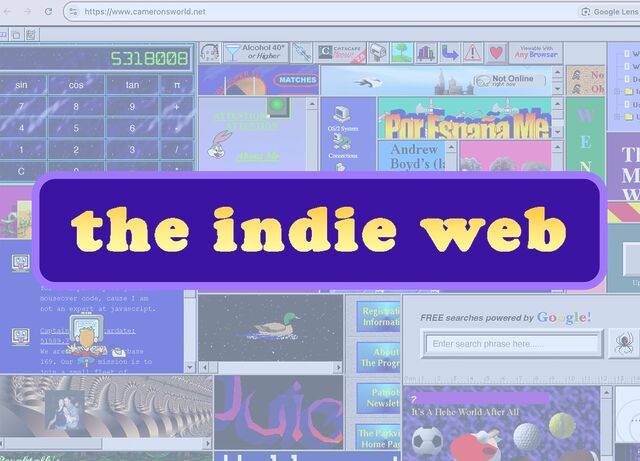
Have you ever wished there were more to the internet than the same handful of apps and sites you toggle between every day? Then you’re in for a treat.
Welcome to the indie web, a vibrant and underrated part of the internet, aesthetically evocative of the late 1990s and early 2000s. Here, the focus is on personal websites, authentic self-expression, and slow, intentional exploration driven by curiosity and interest.
These kinds of sites took a backseat to the mainstream web around the advent of big social media platforms, but recently the indie web has been experiencing a revival, as more netizens look for connection outside the walled gardens created by tech giants. And with renewed interest comes a new generation of website owner-operators, intent on reclaiming their online experience from mainstream social media imperatives of growth and profit.
…
I want to like this article. It draws attention to the indieweb, smolweb, independent modern personal web, or whatever you want to call it. It does so in a way that inspires interest. And by way of example, it features several of my favourite retronauts. Awesome.
But it feels painfully ironic to read this article… on Substack!
Substack goes… let’s say half-way… to representing the opposite of what the indieweb movement is about! Sure, Substack isn’t Facebook or Twitter… but it’s still very much in the same place as, say, Medium, in that it’s a place where you go if you want other people to be in total control of your Web presence.
The very things that the author praises of the indieweb – its individuality and personality, its freedom control by opaque corporate policies, its separation from the “same handful of apps and sites you toggle between every day” – are exactly the kinds of things that Substack fails to provide.
It’s hardly the biggest thing to hate about Substack, mind – that’d probably be their continued platforming of Covid conspriacy theorists and white nationalist hate groups. But it’s still a pretty big irony to hear the indieweb praised there!
Soo… nice article, shame about the platform it’s published on, I guess?
0 comments