Did you know that about 1 in 12 sheep is gay? And we are not just talking about rams. According to scientists, same-sex behaviour has been documented in over 1500 species. You see,
queerness is quite prevalent on planet Earth. But sadly, there are still many people that have a problem with it. The shocking truth is: 62 countries still criminalize same-sex
relationships – that’s right, it’s illegal to be gay in one third of the world! And even where it is not illegal, cases of queer hostility are increasing – including in Germany.
This is why we are getting the help from a gay flock of rams in a small town in Germany: We are using their wool to create fashion products that support projects for the queer
community.
Meet the world’s first gay flock of sheep
Sadly, gay rams are often sent to slaughter because they can’t fulfill a farm’s “breeding role.” We rescue them before that happens, giving them a safe home where they can live and
love freely. Each year, their wool is crafted into fashion, with profits donated to the queer charity LSVD+. You can also adopt a gay ram – helping cover food and
medicine to keep them happy and healthy for life. Every adoption comes with a digital certificate you can print at home.
…
Well this is just adorable.
About 1 in 12 rams (and a similar proportion of ewes) show a strong preference for other sheep of their same sex. Which is useless for breeders, who expect their rams to be able to
impregnate 40 ewes per fortnight, so such rams tend to be destroyed.
But this farm in Germany has started rescuing them and allowing people to “adopt a gay sheep” to help sponsor their care and upkeep. They also collect a small amount of wool from their
queer flock and make products (which almost-immediately sell out).
So yeah: there’s a flock of homosexual sheep living happily together on a farm in Germany, and that’s just awesome.
Welcome to my 88×31 button creator, this is a pretty rough and ready implementation so it could be buggy, please let me know if you find any issues.
This supports gif despite the basic canvas tag limitation courtesy of gif.js – none of
this would be possible without that project.
…
Dan (whose website is freakin’ awesome, by the way) has done an amazing job with this new 88×31 generator. Look at this (trashy, but I don’t care) button I threw together in literally
seconds, with it:
Have a play, and remind yourself that the Web is brilliant.
This is a blog post about things that make me nostalgic for other things that, objectively, aren’t very similar…
When I hear Dawnbreaker, I feel like I’m nine years old…
…and I’ve been allowed to play OutRun on the arcade cabinet at West View
Leisure Centre. My swimming lesson has finished, and normally I should go directly home.
On those rare occasions I could get away1
with a quick pause in the lobby for a game, I’d gravitate towards the Wonderboy machine. But there was something about the tactile
controls of OutRun‘s steering wheel and pedals that gave it a physicality that the “joystick and two buttons” systems couldn’t replicate.
The other thing about OutRun was that it always felt… fast. Like, eye-wateringly fast. This was part of what gave it such appeal2.
OutRun‘s main theme, Magical Sound Shower, doesn’t actually sound much like Dawnbreaker. But
both tracks somehow feel like… “driving music”?
But somehow when I’m driving or cycling and it this song comes on, I’m instantly transported back to those occasionally-permitted childhood games of OutRun4.
When I start a new Ruby project, I feel like I’m eleven years old…
It’s not quite a HELLO WORLD, but it’s pretty-similar.
At first I assumed that the tedious bits and the administrative overhead (linking, compiling, syntactical surprises, arcane naming conventions…) was just what “real”, “grown-up”
programming was supposed to feel like. But Ruby helped remind me that programming can be fun for its own sake. Not just because of the problems you’re solving or the product
you’re creating, but just for the love of programming.
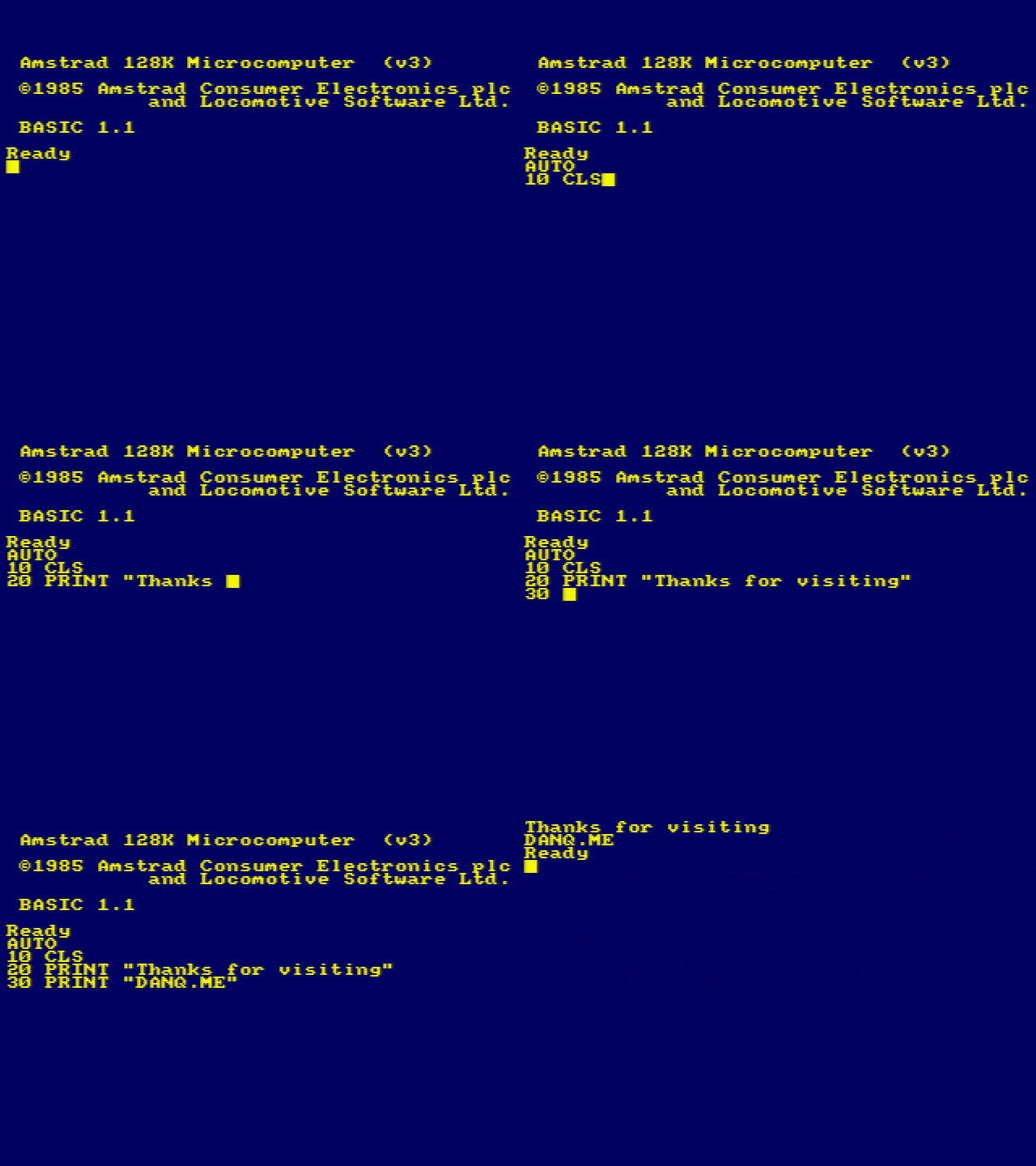
The experience of starting a new Ruby project feels just like booting up my Amstrad CPC and being able to joyfully write code that will just work.
I still learn new programming languages because, well, I love doing so. But I’m yet to find one that makes me want
to write poetry in it in the way that Ruby does.
When I hear In Yer Face, I feel like I’m thirteen years old…
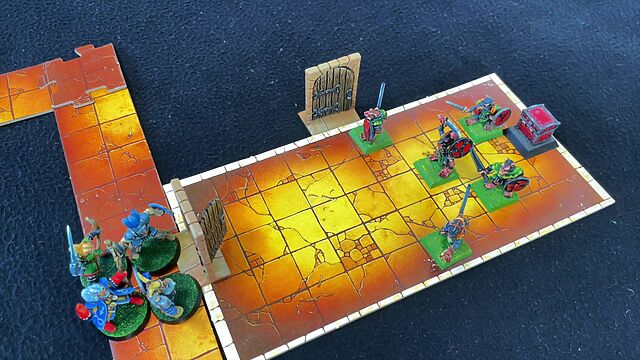
…and I’m painting Advanced HeroQuest miniatures6 in the attic at my dad’s house.
I’ve cobbled together a stereo system of my very own, mostly from other people’s castoffs, and set it up in “The Den”, our recently-converted attic7,
and my friends and I would make and trade mixtapes with one another. One tape began with 808 State’s In Yer Face8,
and it was often the tape that I would put on when I’d sit down to paint.
Advanced HeroQuest came with some fabulously ornate secondary components, like the doors that were hinged so their their open/closed state could be toggled, and I spent
way too long painting almost the entirety of my base set.
In a world before CD audio took off, “shuffle” wasn’t a thing, and we’d often listen to all of the tracks on a medium in sequence9.
That was doubly true for tapes, where rewinding and fast-forwarding took time and seeking for a particular track was challenging compared to e.g. vinyl. Any given song would loop around
a lot if I couldn’t be bothered to change tapes, instead just flipping again and again10.
But somehow it’s whenever I hear In Yer Face11
that I’m transported right back to that time, in a reverie so corporeal that I can almost smell the paint thinner.
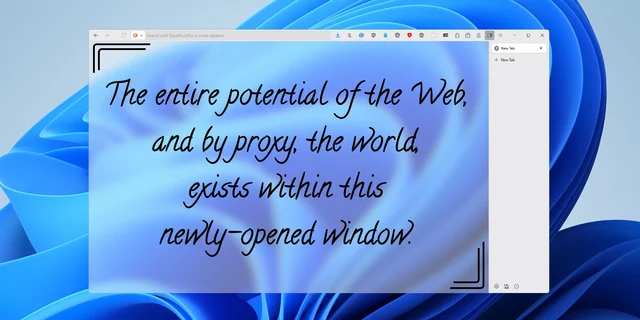
When I see a personal Web page, I (still) feel like I’m fifteen years old…
…and the Web is on the cusp of becoming the hot “killer application” for the Internet. I’ve been lucky enough to be “online” for a few years by now12,
and basic ISP-provided hosting would very soon be competing with cheap, free, and ad-supported services like Geocities to be “the
place” to keep your homepage.
Nowadays, even with a hugely-expanded toolbox, virtually every corporate homepage fundamentally looks the same:
Logo in the top left
Search and login in the top right, if applicable
A cookie/privacy notice covering everything until you work out the right incantation to make it go away without surrendering your firstborn child
A “hero banner“
Some “below the fold” content that most people skip over
A fat footer with several columns of links, to ensure that all the keywords are there so that people never have to see this page and the search engine will drop
them off at relevant child page and not one of their competitors
Finally, a line of icons representing various centralised social networks: at least one is out-of-date, either because (a) it’s been renamed, (b) it’s changed its
branding, or (c) nobody with any moral fortitude uses that network any more14
But before the corporate Web became the default, personal home pages brought a level of personality that for a while I worried was forever dead.
2 Have you played Sonic Racing: CrossWorlds? The first time I played it I was overwhelmed by the speed and colours of the
game: it’s such a high-octane visual feast. Well that’s what OutRun felt like to those of us who, in the 1980s, were used to much-simpler and slower arcade games.
3 Also, how cool is it that Metrik has a blog, in this day and age? Max props.
4 Did you hear, by the way, that there’s talk of a movie adaptation of OutRun, which could turn out to be the worst
videogame-to-movie concept that I’ll ever definitely-watch.
5 In very-approximate order: C, Assembly, Pascal, HTML, Perl, Visual Basic (does that even
count as a “grown-up” language?), Java, Delphi, JavaScript, PHP, SQL, ASP (classic, pre-.NET), CSS, Lisp, C#, Ruby, Python (though I didn’t get on with it so well), Go, Elixir… plus
many others I’m sure!
6 Or possibly they were Warhammer Quest miniatures by this point; probably this memory spans one, and also the other, blended together.
7 Eventually my dad and I gave up on using the partially-boarded loft to intermittently
build a model railway layout, mostly using second-hand/trade-in parts from “Trains & Transport”, which was exactly the nerdy kind of model shop you’re imagining right now: underlit
and occupied by a parade of shuffling neckbeards, between whom young-me would squeeze to see if the mix-and-match bin had any good condition HO-gauge flexitrack. We converted the
attic and it became “The Den”, a secondary space principally for my use. This was, in the most part, a concession for my vacating of a large bedroom and instead switching to the
smallest-imaginable bedroom in the house (barely big enough to hold a single bed!), which in turn enabled my baby sister to have a bedroom of her own.
8 My copy of In Yer Face was possibly recorded from the radio by my friend ScGary, who always had a tape deck set up with his finger primed close to the record key when the singles chart came on.
9 I soon learned to recognise “my” copy of tracks by their particular cut-in and -out
points, static and noise – some of which, amazingly, survived into the MP3 era – and of course the tracks that came before or after them, and
there are still pieces of music where, when I hear them, I “expect” them to be followed by something that they used to some mixtape I listened to a lot 30+ years
ago!
10 How amazing a user interface affordance was it that playing one side of an audio
cassette was mechanically-equivalent to (slowly) rewinding the other side? Contrast other tape formats, like VHS, which were one-sided and so while rewinding there was
literally nothing else your player could be doing. A “full” audio cassette was a marvellous thing, and I especially loved the serendipity where a recognisable “gap” on one
side of the tape might approximately line-up with one on the other side, meaning that you could, say, flip the tape after the opening intro to one song and know that you’d be
pretty-much at the start of a different one, on the other side. Does any other medium have anything quite analogous to that?
11 Which is pretty rare, unless I choose to put it on… although I did overhear it
“organically” last summer: it was coming out of a Bluetooth speaker in a narrowboat moored in the Oxford Canal near Cropredy, where I was using the towpath to return from a long walk to nearby Northamptonshire where I’d been searching for a geocache. This was a particularly surprising
place to overhear such a song, given that many of the boats moored here probably belonged to attendees of Fairport’s Cropredy Convention, at which – being a folk music festival – one
might not expect to see significant overlap of musical taste with “Madchester”-era acid house music!
12 My first online experiences were on BBS systems, of which my very first was on a
mid-80s PC1512 using a 2800-baud acoustic coupler! I got onto the Internet at a point in the early 90s at which the Web
existed… but hadn’t yet demonstrated that it would eventually come to usurp the services that existed before it: so I got to use Usenet, Gopher, Telnet and IRC before I saw
my first Web browser (it was Cello, but I switched to Netscape Navigator soon after it was released).
13 On the rare occasion I close my browser, these days, it re-opens with whatever
hundred or so tabs I was last using right back where I left them. Gosh, I’m a slob for tabs.
14 Or, if it’s a Twitter icon: all three of these.
15 Of course, they’re harder to find. SEO-manipulating behemoths dominate the search
results while social networks push their “apps” and walled gardens to try to keep us off the bigger, wider Web… and the more you cut both our of your online life, the calmer and
happier you’ll be.
Tonight I learned that when my electric car gets down to 5% battery, it sounds an alarm.
And that when it gets down to 4% battery, it sounds a louder alarm.
And that when it gets down to 3% battery, it engages ‘limited performance’ mode and shows a picture of a tortoise.
And that when it gets down to 2%, and you’ve already turned off the heating and the radio and you’re wondering how much power the windscreen wipers are using… that’s when it stops
showing you it’s estimated range.
Fortunately, I then only had half a mile left to go. But for a while there it felt a little bit hairy!
I’ve been enjoying playing Chain Words, from eclectech, intermittently, since it came out in November (when I complained
that the word ‘TOSSPOT’ was rejected; I don’t know if this obvious omission has yet been corrected). If you’ve not given it a go yet, and you like a word game that’s “a bit
different”, you should try it!
Clive Barker’s Imajica has long been one of my favourite fantasy novels. The heft of the single-volume edition renders it both unwieldy and
intimidating, which is probably why my most recent reading of it was only the fourth time I’ve enjoyed it from cover-to-cover. But enjoyed it I did, and I’m sure I’ll pick
it up again in a further decade or so for another adventure.
I’m aware that it draws comparison to his perhaps more-widely-read Weaveworld, but somehow that never did it for me in the same way. Perhaps my mistake was
reading Imajicafirst, way back when I was a teenager, and so satiating my appetite for “curious flawed everyman explores adjacent reality alongside magical
woman, faces horrors”; just an unfortunate coincidence that I picked up Weaveworld right after!
I also fully accept the critics who observe that it’s exceptionally drawn-out, at times. But where it does seem to drag, it does so with a certain gravity;
an inertia: the slower parts of the story are full of intention, and meaning, and – frequently – foreshadowing. I still find new expressions of its themes in
it, each time I read it. This time around, for example, I found myself finding a plethora of reflections of protagonist Gentle’s role as a forger: unable to create anything novel as an
artist (for reasons that become apparent in the long run) but only able to copy beautiful things belonging to others. This self-inflicted curse shows up again and again in innumerable
subtle ways before the truth of it is (finally, eventually – did I mention how weighty this fat book is?) exposed… and with such an epic tale it’s little wonder that it’s impossible to
remember all of the indications that preceded it!
I’ve long appreciated how Imajica plays with gender and, to a lesser-extent, relationships and sexuality, in a way that was revelatory for me on a first reading and which with
the benefit of hindsight I can see is incredibly progressive for its age. Gentle and Judith exist each to further the plot in their own ways, not as romantic “goals” for one another…
despite not only tropes in the genre but also the ways in which their characters are presented within their world – by which I mean: this isn’t a story about how they “get together at
the end”, and that subverts both the expectation of how they’re introduced in the writing and also the destinies with which their characters seem to be imbued. Pie’o’pah
presents, depending on the circumstance, as either male or female but also as some other gender entirely. Gender is a huge overarching theme, with a oppressive patriarchal
power that’s threatened by a mysterious feminine energy playing a key role that, like everything else, is quietly echoed throughout the novel.
But perhaps my favourite part of this wonderful book is its world-building, which – through the eyes of an outsider – paints a rich picture of each of several fantastical dominions.
Over the course of the adventure a character draws a map to chart the wonders of the story’s universe, but it’s ultimately incomplete (and perhaps impossible to complete). That’s what
it feels like to me as a reader, too: like being given a glimpse of a wider and even-more-wonderful world just beyond the horizon: a fantastical creation too large to ever fully
comprehend. While retaining a focus on the story of three-or-so core characters, Barker teases us with the idea that there’s “something more” just beyond our peripheral vision. And
that’s flipping amazing.
on YouTube (also as a “short”, for people who are too lazy to rotate
their phone screen to horizontal and/or don’t have the attention span for more than three minutes of content)
This post is also available as a video. If you'd prefer to watch/listen to
me talk about this topic, give it a look.
I am tired. For a couple of years I’ve been blaming it on iron-poor blood, lack of vitamins, diet, and a dozen other maladies. But now I’ve found out the real reason: I’m tired
because I’m overworked.
The population of the UK is 69 million1, of which the latest census has 37 million “of working age”2.
According to the latest statistics, 4,215,913 are unemployed3, leaving 32,784,087 people to do all the work.
19.2 million are in full time education4, 856,211 in the armed
forces5, and collectively central, regional, and local government employs 4.987 million6. This leaves just 12,727,876
to do all of the real work.
Long term disabilities affect 6.9 million7. 393,000 are on visas that prohibit them from working8, and 108,0859 are working their way through the
asylum process.
Of the remaining 339,791 people, a hundred thousand are in prison10 and 239,789 are in hospital11.
That leaves just two people to do all the work that keeps this country on its feet.
You and me.
And you’re sitting reading this.
This joke originally appeared aeons ago. I first saw it in a chain email in around 199612, when I adapted it from a US-centric version to a more
British one and re-circulated it among some friends… taking the same kinds of liberties with the numbers that are required to make the gag work.
And now I’ve updated it with some updated population statistics13.
12 In fact, I rediscovered it while looking through an old email backup from 1997,
which inspired this blog post.
13 Using the same dodgy arithmetic, cherry-picking, double-counting, wild
over-estimations, and hand-waving nonsense. Obviously this is a joke. Oh god, is somebody on the satire-blind Internet of 2026 going to assume any of these numbers are
believable? (They’re not.) Or think I’m making some kind of political point? (I’m not.) What a minefield we live in, nowadays.
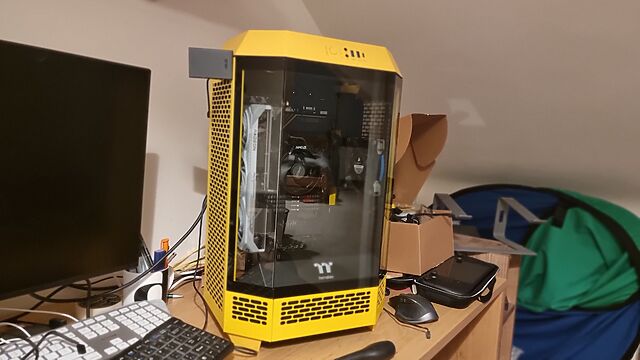
As part of my efforts to reclaim the living room from the children, I’m building a new gaming PC for the playroom. She’s called Bee, and – thanks to the absolute insanity that is
The Tower 300 case from Thermaltake – she’s one of the most bonkers PC cases I’ve ever worked in.
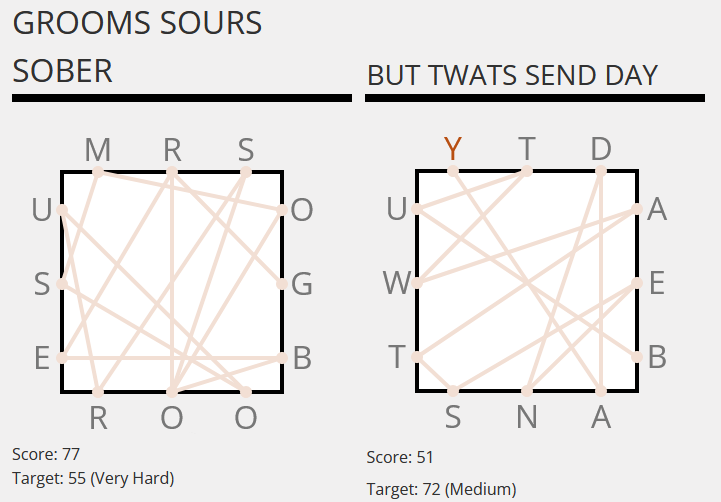
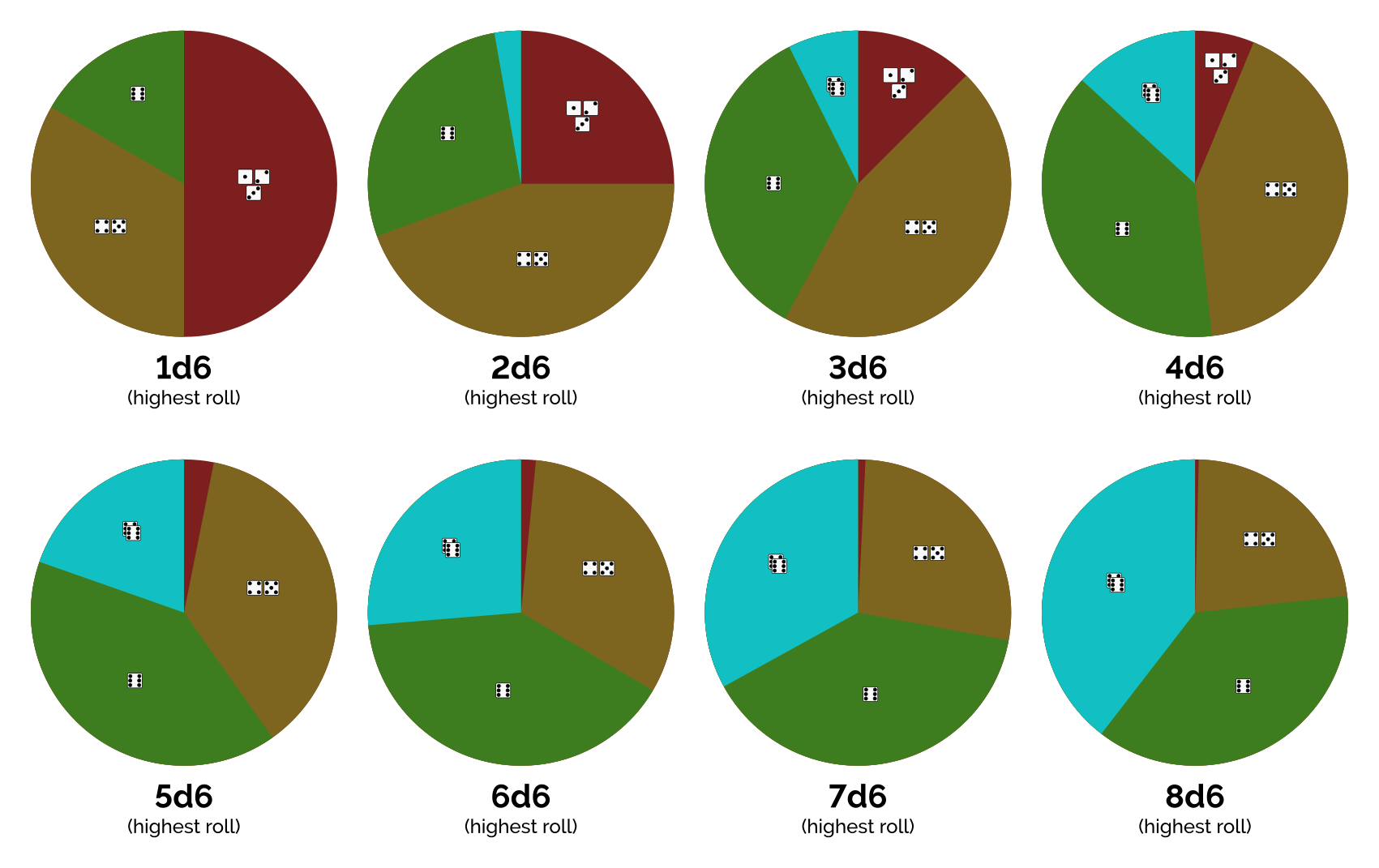
I was having trouble visualising the dice probabilities for some Forged in the Dark-based1
RPGs2, so I drew myself a
diagram. I don’t know who, if anybody, would be interested in such a thing other than me… but that’s why we put these things online, right?
1-3: Failure – depending on the circumstances you might be
able to try again (with greater risk) and/or suffer some kind of consequence (a “harm” or “complication”).
4-5: Limited success – you succeed, but with come kind of
consequence.
6: Success – you succeed!
Multiple 6s: Critical – you succeed, and it’s more-effective
than you’d hoped or you gain some other benefit4.
If you’re playing Blades in the Dark or another Forged in the Dark-based game and find it useful to visualise how likely you are to get screwed-over by the dice…
you’re welcome!
Footnotes
1Forged in the Dark is the name of the permissively-licensed SRD originally used
for fantasy RPG Blades in the Dark, but it’s been used in plenty of other places too where its relatively fast-and-loose mechanics are best-suited. Sharp-eyed readers might
have noticed this come up in a repost from last week, too…
2 I may or may not be considering Forged in the Dark as the engine for a
prototype RPG environment I’ve been half-heartedly constructing this winter…
3 A task for which you’ve prepared and have trained, in an area in which you’re skilled,
and for which you’re well-equipped (e.g. an accomplished thief takes the time to carefully pick a basic lock using fine tools) is likely to involve rolling more dice than a
less-fortunate individual.
I’m not saying the plain-text is the best web experience. But it is an experience. Perfect if you like your browsing fast, simple, and readable. There are no
cookie banners, pop-ups, permission prompts, autoplaying videos, or garish colour schemes.
I’m certainly not the first person to do this, so I thought it might be fun to gather a list of websites which you browse in text-only mode.
…
Terence Eden’s maintaining a list of websites that are presented as, or are wholly or partially available via, plain text. Obviously my own text/plain
blog is among them, and is as far as I’m aware the only one to be entirely presented as text/plain.
Anyway, this inspired me to write a post of my own (on text/plain blog, of course!), in which I ask the question: what do we
consider plain text? Based on the sites in the list, Markdown is permissible as plain text, (for the purposes of Terence’s list), but this implies that “plain text” is a
spectrum of human-readability.
If Markdown’s fine, then presumably Gemtext would be too? How about BBCode? HTML and RTF are explicitly excluded by Terence’s rules,
but I’d argue that HTML 1.0 could be more human-readable than some of the more-sophisticated dialects of BBCode (or any Markdown that contains tables, unless those tables are laid-out
in a way that specifically facilitates human-readability)?
As I say in my post:
  <--  More human-readable                                              Less human-readable  -->
|-----------|-----------|-----------|------------|-----------|-----------|-----------|-----------|
Plain text       Gemtext       Markdown        BBCode         HTML 1.0         Modern HTML     RTF
This provocation is only intended to get you to think about “what does it mean for a markup language to be ‘human readable’?” Where do you draw the line?


 RSS
RSS Spotify
 Pocket Casts
 Apple Podcasts
 YouTube