Managed to answer the questions about the pub, war memorial, and village hall, but the church was locked up tight this morning and I couldn’t find the final clue. :-(
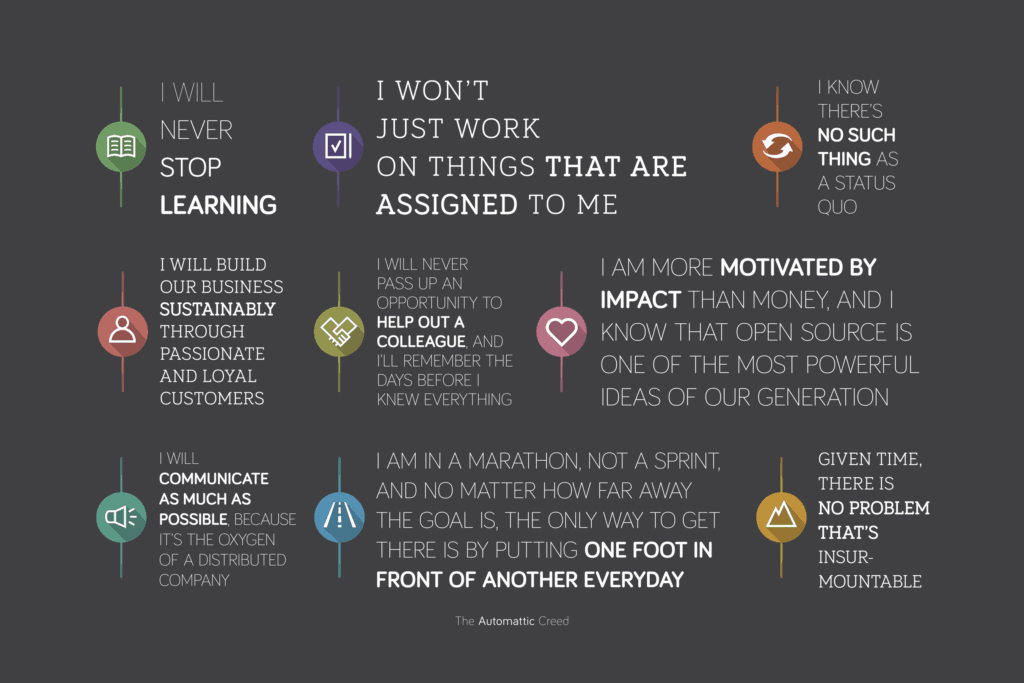
Lots of companies have something like this, even if it falls short of a “creed”. It could be a “vision”, or a set of “values”, or something in that line.
Of course, sometimes that just means they’ve strung three clichéd words together because they think it looks good under their company logo, and they might as well have picked
any equally-meaningless words.
Company Name
respect
integrity
teamwork
Future logo and values of of Any Company, Anywhere.
But while most companies (and their staff) might pay lip service to their beliefs, Automattic’s one of few that seems to actually live it. And not in an awkward, shoehorned-in
way: people here actually believe this stuff.
By way of example:
Coffee: check. Webcam: check. Let’s touch bases, random colleague!
We’ve got a bot that, among other things, pairs up people from across the company for virtual “watercooler chat”/”coffee dates”/etc. It’s cool: I
pair-up with random colleagues in my division, or the whole company, or fellow queermatticians… and collectively these provide me a half-hour hangout about once a week. It’s a great way
to experience the diversity of culture, background and interests of your colleagues, as well as being a useful way to foster idea-sharing and “watercooler effect” serendipity.
For the last six months or so, I’ve been bringing a particular question to almost every random-chat I’ve been paired into:
What part of the Automattic creed resonates most-strongly for you right now?
On a good day, I’m at least 90% certain I’m a senior software engineer and not a cult member.
I volunteer my own answer first. It’s varied over time. Often I’m most-attached to “I will never stop learning.” Other times I connect best to “I will communicate as much as possible…”
or “I am in a marathon, not a sprint…”. Lately I’ve felt a particular engagement with “I will never pass up the opportunity to help a colleague…”.
It varies for other people too. But every single person I’ve asked this question has been able to answer it. And they’ve been able to answer it confidently and with
justifications for or examples of their choice.
Have you ever worked anywhere before where seemingly all your coworkers profess a genuine belief in the corporate creed? Like, enough that some of them get it tattooed onto their bodies. Unless you’ve been brainwashed by a cult, the answer is probably no.
If Automattic is a cult, then it might be too late for me.
Why are Automatticians like that?
For some folks, of course, the creed is descriptive rather than prescriptive. Regarding its initial creation, Matt
says that “as a hack to introduce new folks to our culture, we put a beta Automattic Creed, basically a statement of things important to us, written in the first person.”
But this alone isn’t an explanation, because back then there were only around a hundred people in the company: nowadays there are over 1,500. So how can the creed continue to be such a
pervasive influence? Or to put it another way: why are Automatticians… like that?
Do we simply attract like-minded individuals? The creed is highly visible and cross-referenced by our recruitment pages, so it wouldn’t be entirely surprising.
Maybe we filter for people who are ideologically-compatible with the creed? Insofar as the qualities it describes are essential to integrating into our corporate
culture, yes: our recruitment process does a great job of testing for those qualities.
Perhaps we converge on these values as a result of our experience as Automatticians? Once you’re in, you’re indoctrinated into the tenets of the creed and
internalise its ideas.
Or perhaps it’s a combination of the three, in some ratio or another. (What’s the ratio?)
I’ve been here 1⅔ years and don’t know the answer yet. But I’ll tell you this: it’s inspiring to be part of a team that really seem to believe in what they do.
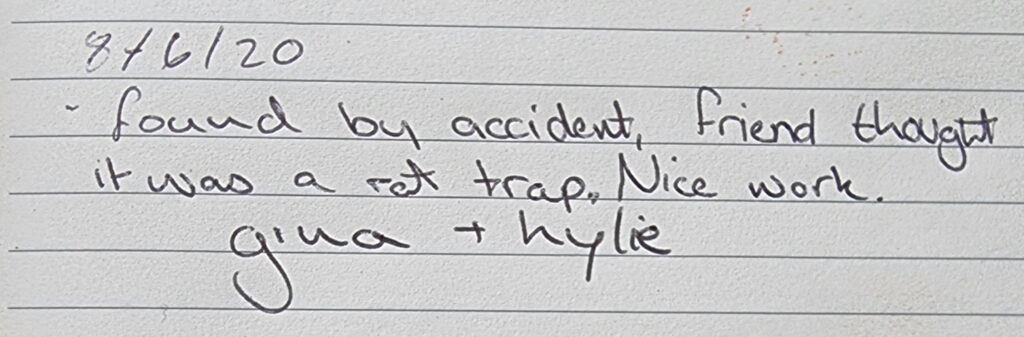
Dropped by while out for a walk and discovered that “Gina + Kylie”, a pair of presumably non-geocachers, found the cache on Tue 8 June and left a note in the logbook! This is cool, not
just because it’s always nice to find a friendly muggle but also because it proves that this path isn’t exclusively used by me (and by geocachers following in my footsteps) as I’d
thought. Awesome!
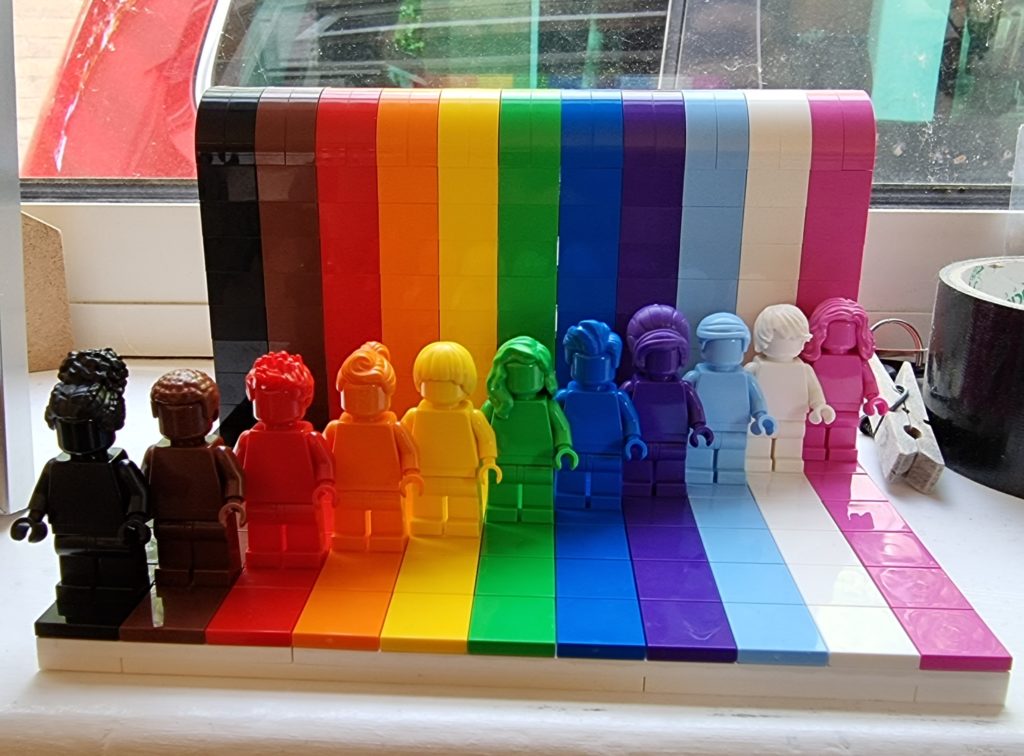
Ahead of schedule on work project. Invited to 2nd COVID jab next week. Spent half of day working on laptop in sunny garden. Parcel arrived from @LEGO_group with Everyone Is Awesome
model (pictured).
Among Twitter’s growing list of faults over the years are various examples of its increasing divergence from open Web standards and developer-friendly endpoints. Do you remember when
you used to be able to subscribe to somebody’s feed by RSS? When you could see who follows somebody without first logging in?
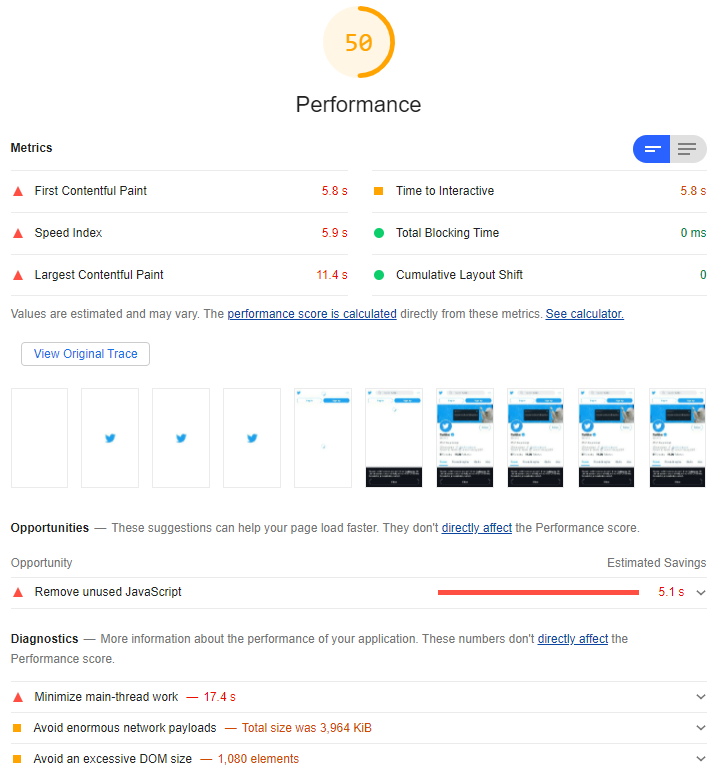
When they were still committed to progressive enhancement and didn’t make your browser download ~5MB of Javascript or else not show any content whatsoever? Feels like a long time ago,
now.
For one of the most-popular 50 websites in the world, this score is frankly shameful.
But those complaints aside, the thing that bugged me most this week was how much harder they’ve made it to programatically get access to things that are publicly accessible via web
pages. Like avatars, for example!
If you’re a human and you want to see the avatar image associated with a given username, you can go to twitter.com/that-username and – after you’ve waited
a bit for all of the mandatory JavaScript to download and run (I hope you’re not on a metered connection!) – you’ll see a picture of the user, assuming they’ve uploaded one and not made
their profile private. Easy.
If you’re a computer and you want to get the avatar image, it used to be just as easy; just go to
twitter.com/api/users/profile_image/that-username and you’d get the image. This was great if you wanted to e.g. show a Facebook-style facepile of images of people who’d retweeted your content.
But then Twitter removed that endpoint and required that computers log in to Twitter, so a clever developer made
a service that fetched avatars for you if you went to e.g. twivatar.glitch.com/that-username.
You want to that image? Well you’ll need a Twitter account, a developer account, an OAuth token set, a stack of code…
Recently, I needed a one-off program to get the avatars associated with a few dozen Twitter usernames.
First, I tried the easy way: find a service that does the work for me. I’d used avatars.io before but it’s died, presumably because (as I soon discovered) Twitter had made
things unnecessarily hard for them.
Second, I started looking at the Twitter API
documentation but it took me in the region of 30-60 seconds before I said “fuck that noise” and decided that the set-up overhead in doing things the official way simply wasn’t
justified for my simple use case.
So I decided to just screen-scrape around the problem. If a human can just go to the web page and see the
image, a computer pretending to be a human can do exactly the same. Let’s do this:
The code is ludicrously simple. It took less time, energy, and code to write this than to follow Twitter’s “approved” procedure. You can download the code via Gist.
Given that I only needed to run it once, on a finite list of accounts, I maintain that my approach was probably kinder on their servers than just manually going to every page
and saving the avatar from it. But if you set up a service that uses this approach then you’ll certainly piss off somebody at Twitter and history shows that they’ll take their displeasure out on you without warning.
This output shows the avatar URLs of a half a dozen Twitter accounts. It took minutes to write the code and takes seconds
to run, but if I’d have done it the “right” way I’d still be unnecessarily wading through Twitter’s sprawling documentation.
But it works. It was fast and easy and I got what I was looking for.
And the moral of the story is: if you make an API and it’s terrible, don’t be surprised if people screen-scape your
service instead. (You can’t spell “scraping” without “API”, amirite?)
Hey @LloydsBank! 2009 called and asked if you’re done sending your customers links to unencrypted HTTP endpoints yet. How do you feel about switching this to a HTTPS link rather than
relying on an interceptable/injectable HTTP request?
This weekend, while investigating a bug in some code that generates iCalendar (ICS) feeds, I learned about a weird quirk in the Republic of Ireland’s timezone. It’s such a strange thing (and has so little impact on
everyday life) that I imagine that even most Irish people don’t even know about it, but it’s important enough that it can easily introduce bugs into the way that computer calendars
communicate:
Most of Europe put their clocks forward in Summer, but the Republic of Ireland instead put their clocks backward in Winter.
If that sounds to you like the same thing said two different ways – or the set-up to a joke! – read on:
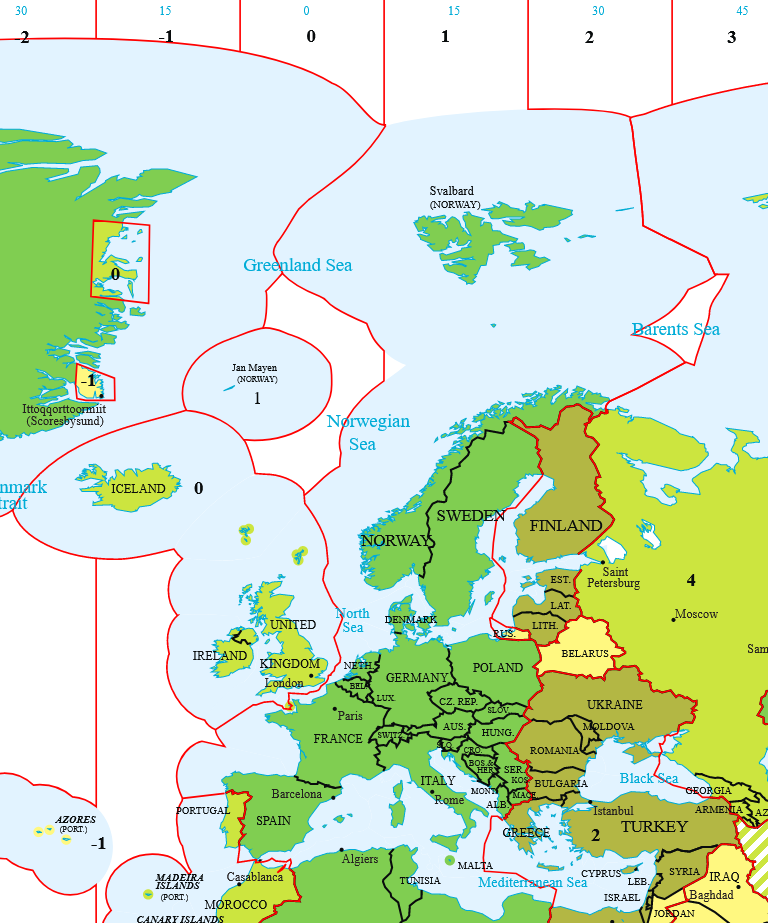
The timezones of Europe look pretty simple compared to some parts of the world, but the illustration of the British Isles hides an interesting eccentricity.
A Brief History of Time (in Ireland)
Spring forward, fall back… just a little bit back, though. Not too much.
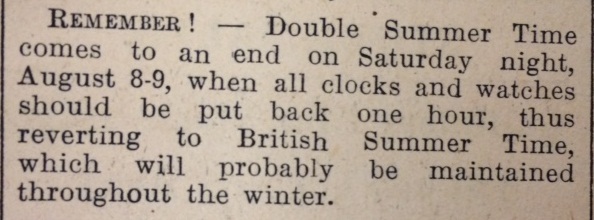
After high-speed (rail) travel made mean solar timekeeping problematic, Great Britain in 1880 standardised on Greenwich Mean Time (UTC+0) as the time throughout the island, and Ireland
standardised on Dublin Mean Time (UTC-00:25:21). If you took a ferry from Liverpool to Dublin towards the end of the
19th century you’d have to put your watch back by about 25 minutes. With air travel not yet being a thing, countries didn’t yet feel the need to fixate on nice round offsets in the
region of one-hour (today, only a handful of regions retain UTC-offsets of half or quarter hours).
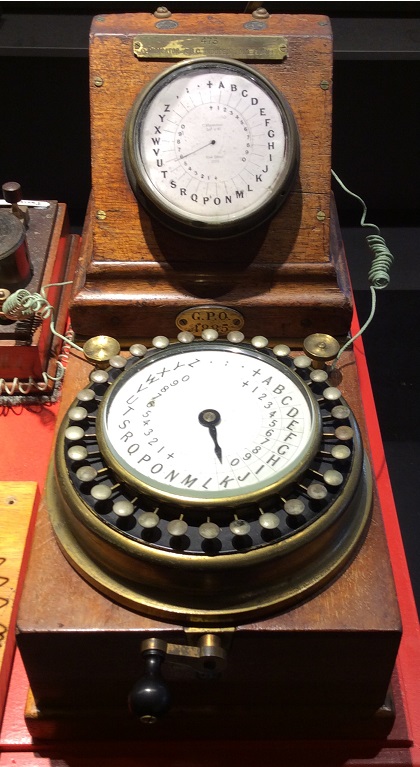
That’s all fine in peacetime, but by the First World War and especially following the Easter Rising, the British government decided that it was getting too tricky for their telegraph
operators (many of whom operated out of Ireland, which provided an important junction for transatlantic traffic) to be on a different time to London.
It’s widely believed that the world’s first “U UP? [STOP]” message never got a response as a direct result of Anglo-Irish timezone confusion.
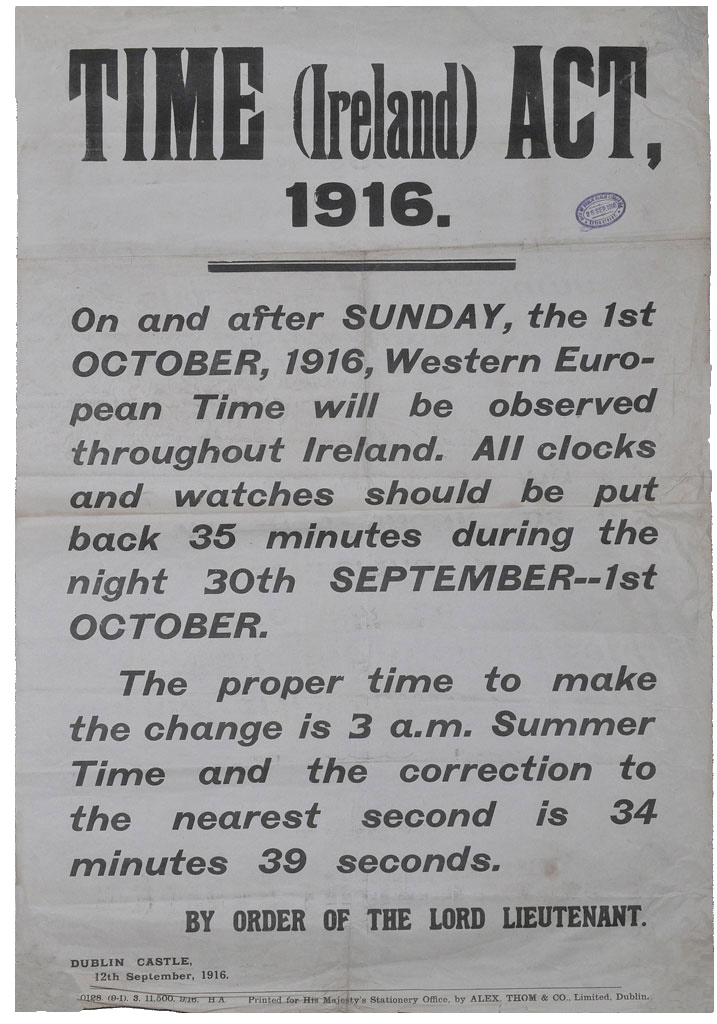
So the Time (Ireland) Act 1916 was passed, putting Ireland on Greenwich Mean Time. Ireland put her clocks back by 35 minutes and synched-up with the rest of the British Isles.
And from then on, everything was simple and because nothing ever went wrong in Ireland as a result of the way it was governed by by Britain, nobody ever had to think about the question of
timezones on the island again.
Ah. Hmm.
“Those Irish people want to govern their own country, do they? After we so kindly shared our king with them? Right-ho: let’s set fire to their cities and see how
they feel then.”
Following Irish independence, the keeping of time carried on in much the same way for a long while, which will doubtless have been convenient for families spread across the Northern
Irish border. But then came the Second World War.
Summers in the 1940s saw Churchill introduce Double Summer Time which he believed
would give the UK more daylight, saving energy that might otherwise be used for lighting and increasing production of war materiel.
Ireland considered using the emergency powers they’d put in place to do the same, as a fuel saving measure… but ultimately didn’t. This was possibly
because aligning her time with Britain might be seen as undermining her neutrality, but was more likely because the government saw that such a measure wouldn’t actually have much impact
on fuel use (it certainly didn’t in Britain). Whatever the reason, though, Britain and Northern Ireland were again out-of-sync with one another until the war ended.
I like to imagine that the development of powerful computers by the folks at Bletchley Park was a result of needing to keep track of timezones across the British Isles.
From 1968 to 1971 Britain experimented with “British Standard Time” – putting the clocks forward in
Summer once, to UTC+1, and then leaving them there for three years. This worked pretty well except if you were Scottish in which case you’ll have found winter mornings to be even
gloomier than you were used to, which was already pretty gloomy. Conveniently: during much of this period Ireland was also on UTC+1, but in their case it was part of a
different experiment. Ireland were working on joining the European Economic Community, and aligning themselves with “Paris time” year-round was an unnecessary concession but an
interesting idea.
But here’s where the quirk appears: the Standard Time Act 1968, which made UTC+1 the “standard” timezone
for the Republic of Ireland, was not repealed and is still in effect. Ireland could have started over in 1971 with a new rule that made UTC+0 the standard and added a “Summer
Time” alternative during which the clocks are put forward… but instead the Standard Time (Amendment) Act
1971 left UTC+1 as Ireland’s standard timezone and added a “Winter Time” alternative during which the clocks are put back.
It all seems so simple until you actually think about it.
(For a deeper look at the legal history of time in the UK and Ireland, see this timeline. Certainly don’t get all your
history lessons from me.)
So what?
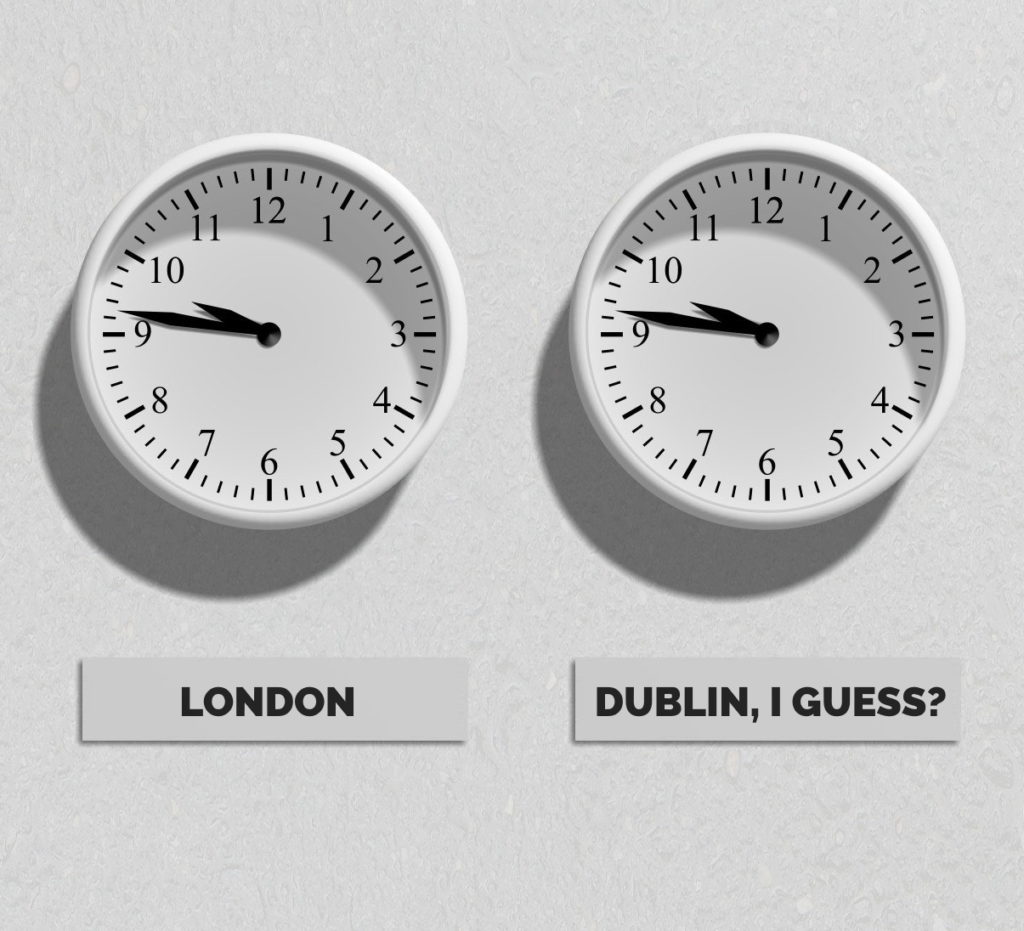
You might rightly be thinking: so what! Having a standard time of UTC+0 and going forward for the Summer (like the UK), is functionally-equivalent to having a standard time of UTC+1 and
going backwards in the Winter, like Ireland, right? It’s certainly true that, at any given moment, a clock in London and a clock in Dublin should show the same time. So why would
anybody care?
This code for Europe/Dublin, from the Perl module Data::ICal::TimeZone, is technically-incorrect
because it states that the winter time is the standard and daylight savings of +1 hour apply in the summer, rather than the opposite.
But declaring which is “standard” is important when you’re dealing with computers. If, for example, you run a volunteer rota management
system that supports a helpline charity that has branches in both the UK and Ireland, then it might really matter that the
computer systems involved know what each other mean when they talk about specific times.
The author of an iCalendar file can choose to embed timezone information to explain what, in that file, a particular timezone means. That timezone information might
say, for example, “When I say ‘Europe/Dublin’, I mean UTC+1, or UTC+0 in the winter.” Or it might say – like the code above! – “When I say ‘Europe/Dublin’, I mean UTC+0, or UTC+1 in the
summer.” Both of these declarations would be technically-valid and could be made to work, although only the first one would be strictly correct in accordance with the law.
But if you don’t include timezone information in your iCalendar file, you’re relying on the feed subscriber’s computer (e.g. their calendar software) to make a sensible
interpretation.. And that’s where you run into trouble. Because in cases like Ireland, for which the standard is one thing but is commonly-understood to be something different, there’s
a real risk that the way your system interprets and encodes time won’t necessarily be the same as the way somebody else’s does.
If I say I’ll meet you at 12:00 on 1 January, in Ireland, you rightly need to know whether I’m talking about 12:00 in Irish “standard” time (i.e. 11:00, because daylight savings are in
effect) or 12:00 in local-time-at-the-time-of-the-meeting (i.e. 12:00). Humans usually mean the latter because we think in terms of local time, but when your international computer
system needs to make sure that people are on a shift at the same time, but in different timezones, it needs to be very clear what exactly it means!
And when your daylight savings works “backwards” compared to everybody else’s… that’s sure to make a developer somewhere cry. And, possibly, blog about your weird legislation.
The rain finally stopped this afternoon so I figured I’d take my next Zoom meeting outdoors with me and stretch my legs while I talked to work colleagues. And so I went, selfie-stick
ahead of me and chatting to teammates in New York and Florence (what a world we live in!), out for a ramble and soon remembered that I was carrying Duck Race / Mustache Pink, a travel
bug I’d picked up near Lands End this weekend. So I diverted my walk to come and check up on this cache (it’s looking fine!) and drop off the TB for the next leg of its journey!
Coordinates brought me exactly to a tree that would match the hint… except for the fact that it’s been recently felled! (Picture attached.) No sign of cache, and anything else nearby
that would fit the hint is on very-clearly-private land, so I’m concerned this cache might have vanished. :-(
Cheered myself up with a quick game of pooh sticks. I won, but that’s to be expected when you play solo.
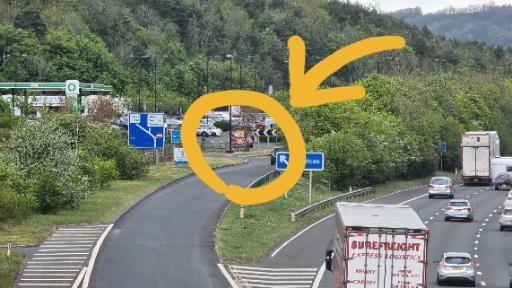
Stopped at the nearby services on a long journey from dropping my partner’s brother and his boat off Lands End (I can just about see my
car from near the GZ: photo attached) for a hot drink and to remotely participate in a work meeting. Meeting’s not starting yet so I walked
out the services’ staff exit and came up here to find this cache. Easy find, TFTC.
Stopped at the services on my way back to Oxford from Lands End, where I was dropping my partner’s brother and his skiff into the sea to begin
his attempt to row the length of the UK! The boat trailer is wobbling in a curious way
so I’ve been driving extra carefully, so it’s been a long journey so far (and I’ve still got the A40 to tackle!) so the opportunity for a break is a welcome one.
Cache was easy to sight – with the hint – and stealthing around the nearby truckers wasn’t hard, but prickly plants made retrieving the container a little challenging. Wish I’d brought
gloves! SL, TFTC.
I just launched my partner’s brother – shown in free attached picture – out in his rowboat to begin his attempt to row from Land’s End to John O’ Groats. Naturally this first involves rowing South, around the headland and past the lighthouse, to
get to Land’s End! So I came up the hill to watch him get started. And while I was at it, I figured I’d find this cache! Took travel bug. TFTC!
I arrived yesterday at nearby Raftra Farm for a weekend, mostly to launch my partner’s brother into the sea to begin his attempt to row from Land’s End to John O’ Groats (making use of inland waterways as much as possible). After a bit of a lie-in this morning,
I came out for a brief walk and to find this geocache. Probably this’ll be a highlight of my day, as much of the rest of it will be dominated by catching up on the work I didn’t get
done yesterday (during the drive down here from Oxford), at least until the afternoon tide turns which is when we’re doing the first launch!
Easy to find cache hidden in the most likely location – I maintain one just like this near my old house North of Oxford! TFTC.