This checkin to GC7YHDV One with the tree reflects a geocaching.com log entry. See more of Dan's cache logs.
QEF in the third host I tried. SL. TFTC!
This checkin to GC7YHDV One with the tree reflects a geocaching.com log entry. See more of Dan's cache logs.
QEF in the third host I tried. SL. TFTC!
This checkin to GC8X88R Crawley to Minster Loop - #12 Zosma reflects a geocaching.com log entry. See more of Dan's cache logs.
Walking backwards and forwards past the GZ eventually enabled the geopup and I to spot this very-visible but high-up cache. Soon it was retrieved, the log signed, and returned. Logbook is very full; I had to just initial it.
This checkin to GC8X888 Crawley to Minster Loop - #11 Wasat reflects a geocaching.com log entry. See more of Dan's cache logs.
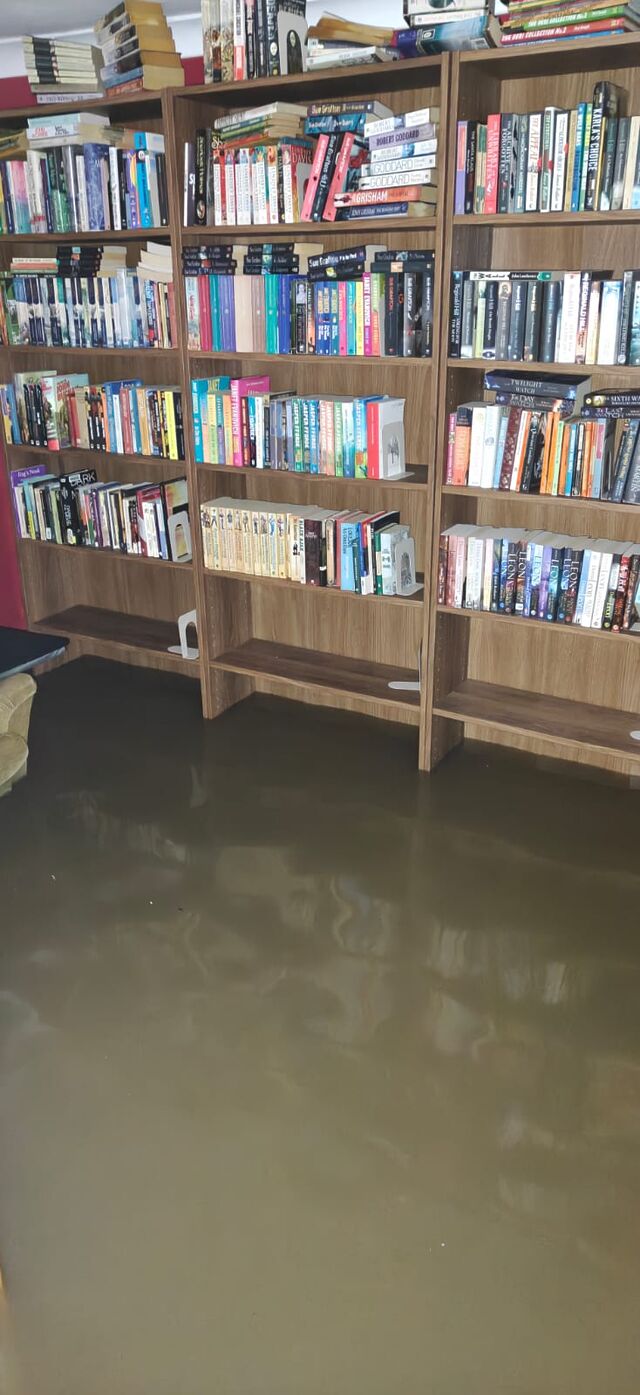
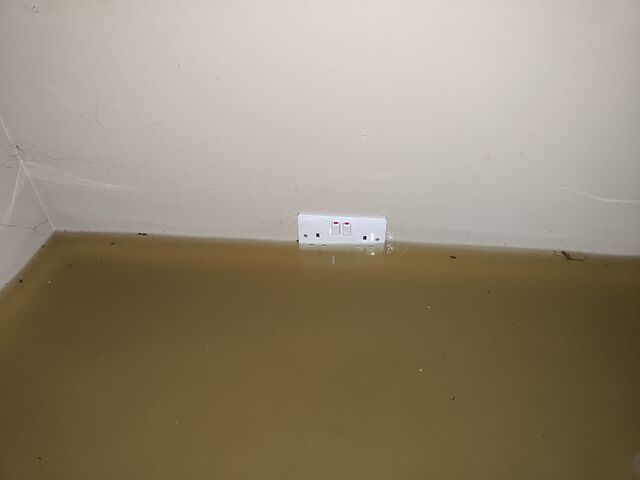
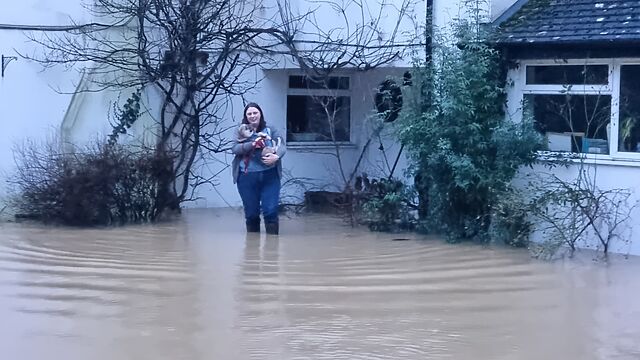
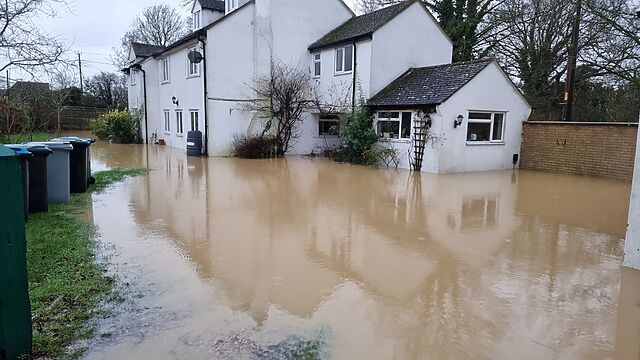
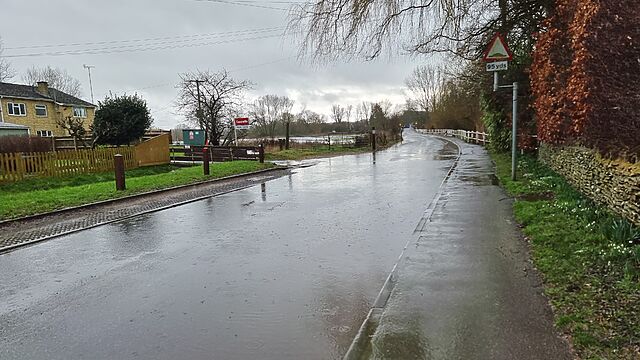
The dog’s walk needed extending to make sure she’s well worn-out and not too-excited for some guests we’re having over this evening, so she and I came and parked on Dry Lane (ironically-named, it seems, as the road was flooded) and walked down to try to find this cache. Unfortunately we weren’t able to find it, this time, but we’ll try again next time we’re in the vicinity.
It’s February, which means that (here in the UK) it’s LGBT+ History Month.1 And it feels like this year, it’s more important than ever to remember our country’s queer history.
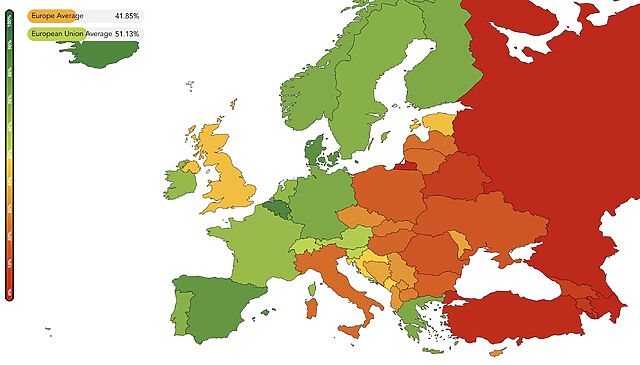
In 2015, the UK was ranked first place in ILGA Europe‘s annual “Rainbow Map” study of LGBT rights in 50 countries of Europe. By 2025, the UK had fallen to 22nd place. That’s the fastest drop of any country in the list, tied with Hungary2 and Georgia3.
Knowing your history is important. I’ve talked before about my personal experience of growing up under Section 28, and I don’t think that the UK’s backsliding is, by any means, harmless4. In case the reasons for the UK’s drop in the rankings aren’t obvious, it’s pretty much entirely to do with the UK’s increasingly restrictive gender identity laws (thanks, Supreme Court)5.
This stuff affects everybody. When you build a community that is a safe space for queer people, and trans people,6 everybody benefits7. So even if you’re somehow not compelled by the argument that we should treat everybody fairly and with compassion, you should at least accept that it helps you, too, when we do.
In many ways, queer rights in the UK have been a success story in recent decades. Within my lifetime, we’ve seen the harmonisation of the age of consent (2001), civil partnerships (2004), the Gender Recognition Act (2004), the Equality Act (2010), same-sex marriage (2013; I was genuinely surprised this bill passed!) and the mass-pardoning of people previously convicted under discriminatory sex act laws (2017). These are enormous and important steps and it’s little wonder that the UK topped ILGA Europe’s scoreboard for a while there.
But as recent developments have shown: we can’t rest on our laurels. There’s more to do. History shows us what’s possible; it’s up to us to decide whether we keep moving forward or let it unravel.
So this LGBT+ History Month, don’t just remember the past: pay attention to the present, and push back where it’s slipping.
1 We celebrate it in February; I’ve never truly understood why. The Independent claims the month was chosen to coincide with the 2003 abolition of Section 28 in England and Wales, but that wouldn’t happen until later in the year; it doesn’t really coincide with the Employment Equality (Sexual Orientation) Regulations 2003 (made June, commencing December) either. So if anybody knows the real reason the UK marks LGBT+ History month in February, I’ve love to hear it.
2 Hungary banned same-sex couples from adopting five years ago and banned Pride parades last year, in an incredible backslide for an EU country.
3 Georgia’s backslide is superficially similar to Hungary’s except that one can’t help but feel the influence of partial occupier Russia – a frequent bottom-scorer in ILGA’s list – in that.
4 By the way: I just looked back at my own blog posts tagged ‘sexuality’, and man, that shit is on fire! Some fun things there if you’re new to my blog and just catching-up, if I may toot my own horn a little! (Is “toots own horn” a protected identity? ‘Cos I do it a lot.)
5 It’s also aggravated by established but regressive problems like the fact that the UK still doesn’t outlaw “conversion therapy”, gender identity is not a recognised justification for seeking asylum, and protections for intersex people are basically nonexistent.
6 And, it turns out, furries, who’ve ‘gone from “ew cringe” to “they’re the lichens of a healthy social ecosystem”‘.
7 Everybody benefits… except, perhaps, nazis.
This is a repost promoting content originally published elsewhere. See more things Dan's reposted.
…
The Internet, the interconnection of most of the computers in the world, has existed since the late sixties. But no protocol existed to actually exploit that network, to explore and search for information. At the time, you needed to know exactly what you wanted and where to find it. That’s why the USA tried to develop a protocol called “Gopher.”
At the same time, the “World Wide Web,” composed of the HTTP protocol and the HTML format, was invented by a British citizen and a Belgian citizen who were working in a European research facility located in Switzerland. But the building was on the border with France, and there’s much historical evidence pointing to the Web and its first server having been invented in France.
It’s hard to be more European than the Web! It looks like the Official European Joke! (And, yes, I consider Brits Europeans. They will join us back, we miss them, I promise.)
…
Google, Microsoft, Facebook may disappear tomorrow. It is even very probable that they will not exist in fourty or fifty years. It would even be a good thing. But could you imagine the world without the Web? Without HTML? Without Linux?
Those European endeavours are now a fundamental infrastructure of all humanity. Those technologies are definitely part of our long-term history.
…
There are so many ways in which the UK has had to choose – and continues to have to choose – which side of the Atlantic it belongs on: the North American side, or the European side. Legally, politically, financially, culturally… And every time we swing away from Europe, it saddens me.
This wonderful article by Lionel Dricot encapsulates one of many reasons why. European tech culture, compared to that in the USA, leans more open-source, more open-standards, more collaborative. That’s the culture I want more of.
Worth a read.
A week or so ago, Terry Godier – who’s been thinking a lot about UX assumptions lately – argued that the design of most feed readers produces an effect called “phantom obligation”.
He observes that the design of feed readers – which still lean on the design of the earliest feed readers, which adopted the design of email software to minimise the learning curve – makes us feel obligated to stay on top of all our incoming content with its “unread counts”.
Email’s unread count means something specific: these are messages from real people who wrote to you and are, in some cases, actively waiting for your response. The number isn’t neutral information. It’s a measure of social debt.
But when we applied that same visual language to RSS (the unread counts, the bold text for new items, the sense of a backlog accumulating) we imported the anxiety without the cause.
…
RSS isn’t people writing to you. It’s people writing, period. You opted to be notified of their existence. The interface implied debt where none existed. The obligation became phantom.
For a while now I’ve been encouraging people to see their feed reader as something distinct from email, and Terry’s expertly summarised exactly why. When people think of RSS as being like email, they’re encouraged to idolise “inbox zero” for both. But that’s not the right metaphor for RSS at all.
I use FreshRSS as my feed reader, and I love it. But here’s the thing: I use the same application for two different kinds of feeds. I call them slow content and fast content.2
Blogs, news, podcasts, webcomics, vlogs, etc. I want to know that there is unread content, but I don’t need to know how much.
In some cases, I configure my reader to throw away stuff that’s gotten old and stale; in other cases, I want it to retain it indefinitely so that I can dip in when I want to. There are some categories in which I’ll achieve “inbox zero” most days3… but many more categories where the purpose of my feed reader is to gather and retain a library of things I’m likely to be interested in, so that I can enjoy them at my leisure.
I also use my RSS reader to subscribe to a few mailing lists (where an RSS feed isn’t available for some reason). These – like blogs – are often “people writing, period” content and shouldn’t have been sent by email in the first place!4
Some of the things I subscribe to, though, I do want to know about. Not necessarily immediately, but “same day” for sure! This includes things like when it’s a friend’s birthday (via the Abnib Birthdays feed) or when there’s an important update to some software I selfhost.
This is… things I want to know about promptly, but that I don’t want to be interrupted for! I appreciate that this kind of subscription isn’t an ideal use for a feed reader… but I use my feed reader with an appropriate frequency that it’s the best way for me to put these notifications in front of my eyeballs.
I agree with Terry that unread counts and notification badges are generally a UX antipattern in feed readers… but I’d like to keep them for some purposes. So that’s exactly what I do.
FreshRSS already provides categories. But what I do is simply… not show unread counts except for designated feeds and categories. To do that, I use the CustomCSS extension for FreshRSS (which nowadays comes as-standard!), giving it the following code (note that I want to retain unread count badges only for feed #1 and categories #6 and #8 and their feeds):
.aside.aside_feed { /* Hide all 'unread counts' */ .category, .feed { .title:not([data-unread="0"])::after, .item-title:not([data-unread="0"])::after { display: none; } } /* Re-show unread counts only within: * - certain numbered feeds (#f_*) and * - categories (#c_*) */ #f_1, #c_6, #c_8 { &, .feed { .title:not([data-unread="0"])::after, .item-title:not([data-unread="0"])::after { display: block; } } }
That’s how I, personally, make my feed reader feel less like an inbox and more like a… I don’t know… a little like a library, a little like a newsstand, a little like a calendar… and a lot like a tool that serves me, instead of another oppressive “unread” count.
Maybe it’ll help you too.
1 Or whenever you like. It’s ‘slow content’. I’m not the boss of you.
2 A third category, immediate content, is stuff where I might need to take action as soon as I see it, usually because there’s another human involved – things like this come to me by email, Slack, WhatsApp, or similar. It doesn’t belong in a feed reader.
3 It’s still slow content even if I inbox-zero it most days… because I don’t inbox-zero it every day! I don’t feel bad ignoring or skipping it if I’m, for example, not feeling the politics news right now (and can you blame me?). This is fundamentally different than ignoring an incoming phone call or a knock at the door (although you’re absolutely within your rights to do that too, if you don’t have the spoons for it).
4 I’m yet to see a mailing list that wouldn’t be better as either a blog (for few-to-many communication) or a forum (for many-to-many communication), frankly. But some people are very wedded to their email accounts as “the way” to communicate!
I’ve had my itch.io account for about six years; I think I first created it to buy a copy of We Are But Worms: A One Word RPG. I’ve since made several purchases, donations, reviews, and comments, but never really used my account as a “creator”.
I changed that today when I realised that there was nothing to stop me re-publishing games like DNDle and Axe Feather 2021 via my itch.io profile as well as on their current homes (and on GitHub, I suppose). For some folks, itch.io’s discovery features might be the best way for them to discover worthwhile content weird stuff like this.
I might republish some other “things” I’ve made on itch.io too. It’s not like there haven’t been lots of them over the years!
This is a repost promoting content originally published elsewhere. See more things Dan's reposted.
The
<geolocation>element provides a button that, when activated, prompts the user for permission to access their location. Originally, it was designed as a general<permission>element, but browser vendors indicated that implementing a “one-size-fits-all” element would be too complex. The result was a single-purpose element, probably the first of several.<geolocation> <strong>Your browser doesn't support <geolocation>. Try Chrome 144+</strong> </geolocation>…
I’ve been waiting for this one. Given that “requesting permission to access a user’s location” has always required user intervention, at least to begin with, it makes sense to me that it would exist as a form control, rather than just as a JavaScript API.
Implementing directly in HTML means that it degrades gracefully in the standard “if you don’t understand an element, simply render its contents” way that the Web always has. And it’s really easy to polyfill support in for the new element so you can start using it today.
My only niggle with <geolocation> is that it still requires JavaScript. It feels like a trick’s been missed, there. What I’d have really wanted would
have been <input type="geolocation">. This would e.g. renders as a button but when clicked (and permission granted) gets the user’s device location and fills the
field (presumably with a JSON object including any provided values, such as latitude, longitude, altitude, accuracy, provider, and so on). Such an element would still provide
all the same functionality of the new element, but would also be usable in a zero-JS environment, just like <input type="file">, <input
type="datetime-local"> and friends.
This is still a huge leap forward and I look forward to its more-widespread adoption. And meanwhile, I’ll be looking into integrating it into both existing applications that use it and using it in future applications, by preference over the old API-driven approach. I’m grateful to Manuel for sharing what he’s learned!
Since 2018 I’ve been a fan of OpenBenches, a community-driven effort to catalogue memorial benches. Co-creator Terence Eden just wrote a blog post about the cost of running the service, which was pretty-much in the region of what I expected but (as an on-again, off-again financial backer, depending on my own financial health!) I appreciated the transparency anyway!
The news came at about the same time as I logged the first bench of the Canary Islands while I was waiting (in vain) to log an obstructed geocache during my recent trip to Tenerife.
OpenBenches’ dataset is still very UK-centric. I like that I’ve helped broaden its borders! (I’m currently the 83rd-from-top photo contributor, apparently.)
If you’re not already helping collect benches, you should give it a look. You can install the site to your mobile device as a progressive web app and start snapping benches.
Off the back of my project to un-suckify BBC News’ RSS feeds (https://bbc-feeds.danq.dev) by removing non-news content and duplicate items, I received an email this week (addressing me by the wrong name, I might add) from somebody who asked if I could do the same… for the Daily Mail.
I’m so very tempted to provide an empty RSS feed and say “there you go; that’s an RSS feed of the Daily Mail but with the crap bits removed”.
Turns out my distaste for the Daily Mail is greater than my love of clean RSS.
This article is probably “safe for work” (depending on your workplace).
It makes reference to a popular pornographic website and the features of that website. It contains screenshots, but the porny bits are blurred. The links are all safe.
After Pornhub introduced age check to comply with the Online Safety Act1, I figured that I’d make an account to see how arduous and privacy-destroying the process of verifying that I was old enough to see naked people2. I thought it would make an amusing blog post.
I felt confident that my stupid name, if nothing else, would guarantee me a hard time with this kind of automated system.
Unfortunately3, it turned out to be super-easy for me to pass the age verification.
I just hit “verify by email” with the third-party age verification tool they use, entered an email address that’s associated with a few online accounts (not even the one I gave Pornhub!), and… everything just worked.
Sooo… this isn’t a blog post about how insurmountable age verification is. This is a blog post about something else I discovered as a result of doing this research: Pornhub has “achievements”!
I was slightly surprised to see how many “social networking”-like features Pornhub accounts have. You can upload a profile photo… you have a “wall” that you can post to, and you can post to other people’s. Your profile (unless you tell it not to) shares which channels you’ve subscribed to, which videos you’ve favourited, and so on.
Who on Earth wants those features? I mean: really? 😅 I consider myself pretty sex-positive, but I’m not sure I’d want there to be a web page with my name, photo, and a list of all my favourite dirty vids!4
Anyway… the other thing a Pornhub profile seems to provide is… achievements:
I’ve only got the one achievement right now, of course, and it’s the one that you get “for free”. So it didn’t feel like I’d earned it.
I suppose I was an actual virgin, once. And I had to prove that I’m a real human to get an account. So… maybe I earned it?
But just stop and think about what this means for a moment. At some point, in some conference room at Pornhub HQ, there was a meeting in which somebody said something like:
“You know what we need? Public profile pages for all Pornhub accounts. And they should show, like, ‘achievements’ like you get for videogames. Except the achievements are for things like how much porn you’ve watched and how often. You can show it off to your friends!”
And then somebody else in the meeting said:
“Yes. That is a good idea.”5
I’ve reverse-engineered the complete6 collection of Pornhub Achievements for you. Y’know, in case you’re trying to finish your collection:
|
|
The Virgin | Congrats! You have accessed your account for the first time! Enjoy the ride on Many Faps Road. |
|
|
The Freshman |
You have accessed your account for the 10th time! I take it you’ve enjoyed the 9 last times?
|
|
|
The Sophomore |
You have accessed your account for the 100th time! Maximus Fappitus, you’re a true Pornhub warrior!
|
|
|
The Junior |
You have accessed your account for the 500th time! If only you could get air miles for this.
|
|
|
The Senior |
You have accessed your account for the 1000th time! If only you could get air miles for this.
|
|
|
The Porn Buff |
You’ve watched 10 videos – This is just the beginning, trust me.
|
|
|
The Two Thumbs |
You’ve watched 500 videos – Lotion or no lotion, that is the question.
|
|
|
The Cinephile |
You’ve watched 5,000 videos – Be careful, carpal tunnel is a thing.
|
|
|
The Connoisseur |
You’ve watched 50,000 videos – you are a veritable porn expert now.
|
|
|
1 Year Old Account |
Our very first anniversary, I wish us many more!
|
|
|
2 Year Old Account |
Two years of pleasure!
|
|
|
3 Year Old Account |
Three years… Ah! The memories!
|
|
|
4 Year Old Account |
Most relationships don’t even last this long #funfact
|
|
|
5 Year Old Account |
That’s half a decade of watching porn.. woah… that’s impressive.
|
|
|
6 Year Old Account |
I guess we were a match made in heaven. Who would’ve known that 6 years later, you would still be fapping on me.
|
|
|
7 Year Old Account |
No 7 year itch here! Thanks for 7 fappy years
|
|
|
8 Year Old Account |
The Outlook is good: you’ve had 8 magical years on Pornhub!
|
|
|
9 Year Old Account |
In 9 more years, your account will be old enough to view itself.
|
|
|
10 Year Old Account |
You were really ahead of the wave – here’s to a decade on Pornhub!
|
I have no idea who this feature is “for”. I’d feel the same way if YouTube had achievements, too7, but the fact that you can, and by default do, showcase your achievements on a porn site is what really blows my mind.
But maybe they ought to double-down and add more achievements. If they’re going to have them, they might as well make the most of them! How about achievements for watching a particular video a certain number of times? Or for watching videos in each of many different hour segments of the day? Or for logging in to your account and out again without consuming any pornography (hey, that’s one that I would have earned!)? If they’re going to have this bizarre feature, they might as well double-down on it!
I also have no idea who this blog post is “for”. If it turned out to be for you (maybe you wanted to know how to unlock all the achievements… or maybe you just found this as amusing as I did), leave me a comment!
1 Don’t get me started with everything that’s wrong with the so-called Online Safety Act. Just… don’t. The tl;dr would be that it’s about 60% good ideas, 20% good implementation.
2 Obviously if I were actually trying to use Pornhub I’d just use a VPN with an endpoint outside of the UK. Y’know, like a sensible person.
3 I mean: it’s probably pretty fortunate that – based on my experience at least – it seems to be easy for adults to verify that they’re adults in order to access services that are restricted to adults as a result of the OSA. But it’s unfortunate in that I’d hoped to make a spicy blog post about all the hoops I had to jump through and ultimately it turned out that there was only one hoop and it was pretty easy.
4 Of course, the Indieweb fan within me also says that if I did want such a page to exist, I’d want it to be on my own domain. Should there be an Indieweb post kind for “fap” for people who want to publicly track their masturbatory activities as an exercise in the quantified self?
Or should there be a “sex” kind that works a bit like “invitation” in that you can optionally tag other people who were involved? Or is sex a kind of “exercise”? Could it be considered “game play”? What about when it’s a “performance”? Of course, the irony is that anybody who puts a significant amount of effort into standardising the way that a person might publicly catalogue their sex life… is probably rendering themselves less-likely to have one.
I think I got off-topic in this footnote.
5 To be fair, I’ve worked places where committee groupthink has made worse decisions. Want a topical example? My former employer The Bodleian Libraries decided to call a podcast series “BodCast” without first performing a search… which would have revealed that Playboy were already using that name for a series of titillating vlogs. Curiously, it was Playboy who caved and renamed their service first. Presumably the strippers didn’t want to be associated with librarians?
6 It’s possible there are achievements I’ve missed – their spriteset file looks like it contains others! – that are only available to content creators on the platform. But if that’s the case, it further reinforces that these achievements are for the purpose of consumers who want to show off how many videos they’ve watched, or whatever! Weird, right?
7 “Congratulations: you watched your 500th YouTube ‘short’ – look how much of your life you’ve wasted!”
I got another postcard. This one’s from Joe Crawford, all the way over in San Diego.
I first started soliciting Internet strangers to send me postcards three months ago and I’m still loving it.
It adds a layer of humanity and personality to the Web. It introduces me to cool new people, and re-introduces me to cool people whom I’d crossed paths with at a distance: Joe’s one of the latter, but I’ve now taken the time to ensure he’s in my RSS reader… and, by proxy, in my blogroll.
I don’t have a return address for anybody who posted anything to me, yet (obviously I’d have masked it out from the postcard if I had!), but I feel like I ought to buy some postcards now too. It’s only a matter of time.
And hey, maybe there’s mileage in starting an Personal Web Postcards Club or something…
Amusing announcement from the captain of my plane out of Tenerife South this afternoon. In place of the usual recommendation to keep your seatbelt fastened while seated in case of turbulence, he advised that there was a “risk of potholes”.
I’m sure the analogy makes sense to the Brits aboard, but I hope it translated well for the Spanish speakers on this plane!
This checkin to GC45BDD Mirador La Paz reflects a geocaching.com log entry. See more of Dan's cache logs.
My partner Ruth and I are staying at the Meliá hotel down in the city, from which amazingly I was able to get a WiFi connection despite the considerable distance!
As others have observed, the hint is misleading for this cache. Substitute the word “right” in place of the word “left” and the hint makes more sense!
SL, TFTC! And thanks for the great view!
This checkin to GC9PMF7 Crossing the street reflects a geocaching.com log entry. See more of Dan's cache logs.
QEF while on the way down from Taoro Park with Ruth. SL, TFTC!