I was having trouble visualising the dice probabilities for some Forged in the Dark-based1 RPGs2, so I drew myself a diagram. I don’t know who, if anybody, would be interested in such a thing other than me… but that’s why we put these things online, right?
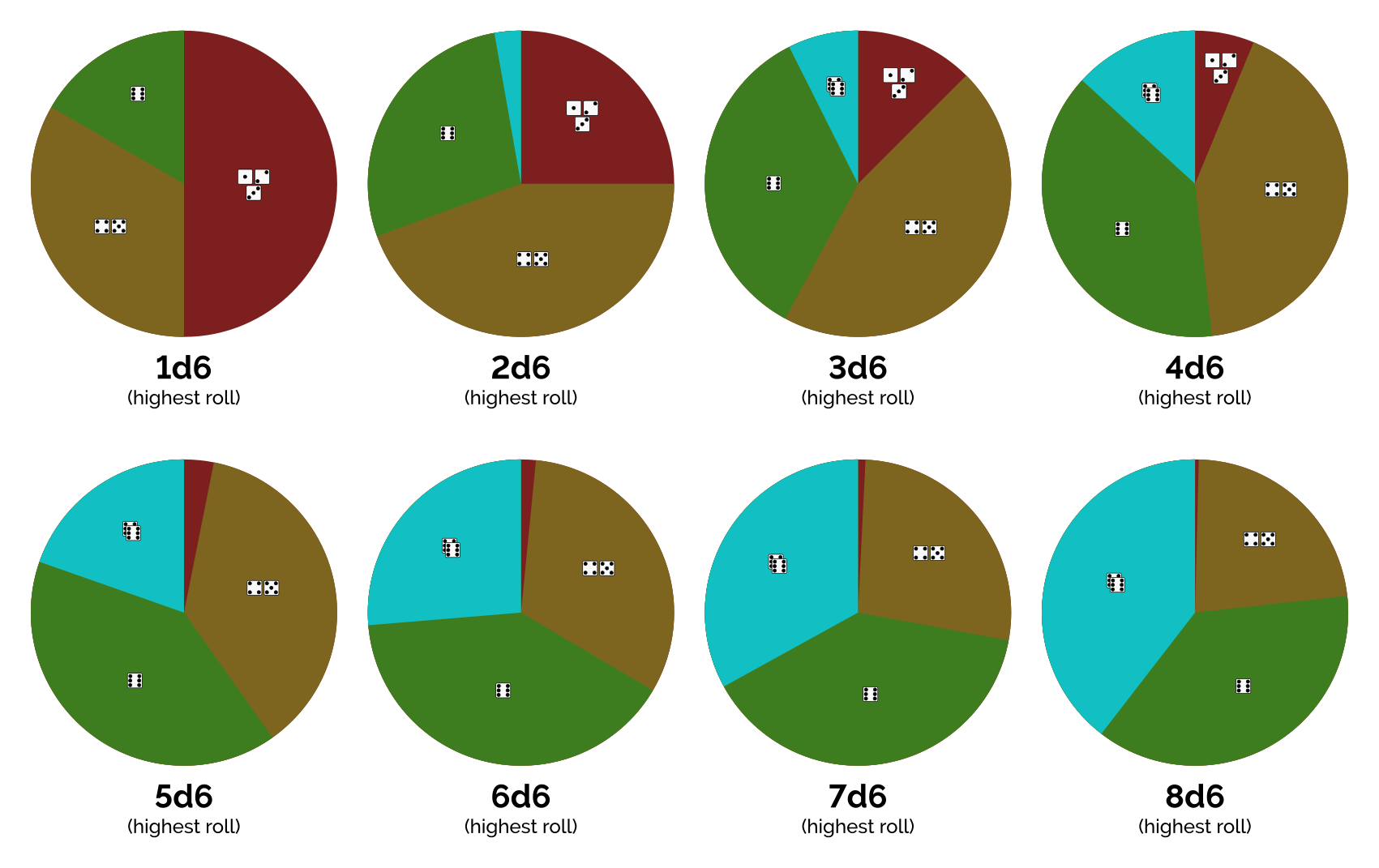
The general idea for Forged in the Dark action resolution is that you throw a number of six-sided dice representative of your chance of success3. You look at the highest value rolled in your dice pool, typically with most or all of the following effects:
- 1-3: Failure – depending on the circumstances you might be able to try again (with greater risk) and/or suffer some kind of consequence (a “harm” or “complication”).
- 4-5: Limited success – you succeed, but with come kind of consequence.
- 6: Success – you succeed!
- Multiple 6s: Critical – you succeed, and it’s more-effective than you’d hoped or you gain some other benefit4.
If you’re playing Blades in the Dark or another Forged in the Dark-based game and find it useful to visualise how likely you are to get screwed-over by the dice… you’re welcome!
Footnotes
1 Forged in the Dark is the name of the permissively-licensed SRD originally used for fantasy RPG Blades in the Dark, but it’s been used in plenty of other places too where its relatively fast-and-loose mechanics are best-suited. Sharp-eyed readers might have noticed this come up in a repost from last week, too…
2 I may or may not be considering Forged in the Dark as the engine for a prototype RPG environment I’ve been half-heartedly constructing this winter…
3 A task for which you’ve prepared and have trained, in an area in which you’re skilled, and for which you’re well-equipped (e.g. an accomplished thief takes the time to carefully pick a basic lock using fine tools) is likely to involve rolling more dice than a less-fortunate individual.
4 I’m hugely grateful to AnyDice for helping with these calculations. Did you know that you need to be rolling ten six-sided dice before it becomes more-likely-than-not that there’ll be a double-six somewhere in there?
I don’t play these games but an interesting view of some statistics anyway!
Though it took me some time to realise why the six dice was so far away from the four and five, until a glimmer on my screen hinted that they’re not the same slice. Apparently those colours land quite poorly for my colour perception, zoomed out I hadn’t realised they were different at all!
Aw man! I was thinking when I made it that I ought to do something to help differentiate between the slices without the need for colour, and then I didn’t! Sorry!
don’t forget 0d6!