Well, now I know who to call if it’s cold outside and there’s no kind of atmosphere.
Stellar Rescue
This is a repost promoting content originally published elsewhere. See more things Dan's reposted.
This is a repost promoting content originally published elsewhere. See more things Dan's reposted.
Well, now I know who to call if it’s cold outside and there’s no kind of atmosphere.
This is a repost promoting content originally published elsewhere. See more things Dan's reposted.
It was 1949 when highways officials started to look at traffic issues affecting Newtown.
A multi-million pound bypass that has been 70 years in the planning officially opened in Powys on Thursday.
One haulier said Newtown bypass will make a “big difference” due to 45-minute hold-ups in the town, while the local AM said it was a “momentous” day.
The Welsh Government said the road will ease congestion by about 40% in the town centre.
A public notice printed in 1949 shows a bypass was being considered by the former Montgomeryshire County Council.
The four-mile (6.4km) road runs to the south of the town with two lanes in one direction and one in the opposite direction, to provide overtaking points.
…
Never thought I’d see the day. Back when she used to work in Newtown, Claire would routinely be delayed on her journey home by traffic passing through the town that could quite-justifiably have gone around it were it not for the lack of a decent trunk road, and she’d bemoan the continuing absence of the long-promised bypass. That was like 15 years ago… I can’t imagine what it’s been like for the people who’ve lived in Newtown, waiting for the bypass to be built, for their entire life.
In the time it’s taken to build this bypass, people who’ve been too young to drive have heard about it, grown up, had children of their own, and those people have had children who are now old enough to drive. The mind boggles.
Hello, friendly insurance salesman I spoke to earlier today! I’ve been expecting you. Also: sorry.

I’ve been expecting you because you seemed so keen to finish your shift and search for me and, with my name, I’m pretty easy to find. I knew that you planned to search for me because after I caused so much trouble for your computer systems then, well, I probably deserved it.
I’m sorry that I have such an awkward name and that you had to make your computer system work around it. At least it handled it better than Equifax’s did, and you were far friendlier about it than the Passport Office were. It’s an awkward name, yes, but mostly only because programmers are short-sighted when it comes to names. And I say that as a programmer.
I’m sorry that my unusual relationship structure made your computer system do a double-take. My partner Ruth can’t have a husband as well, can she not? Try telling her that! Don’t feel bad: you’re not even the first person this last fortnight to get confused by our uncommon arrangement, and even where my name doesn’t break computer systems, my relationship status does: even the census can’t cope. I’m sure people must assume we’re insanely radical but we’re honestly pretty boring: just like any other family, just with more love. Don’t believe me? We have spreadsheets. You can’t get more boring than that.
I’m sorry that the email address I gave you looked like a typo and you felt you had to check it thrice. It wasn’t, it’s just that I give a different email address to every company I deal with.
I’m sorry that what should have been a click-click-done exercise came down to a live chat session and then a phone call. I don’t mean to be more work for people.

But thank you for being friendly. And useful. And generally awesome. I expected a painful process, perhaps because that’s what I’d had from my last insurer. You, on the other hand (and your Live Chat colleague who I spoke to beforehand) were fantastic. Somehow you were more-pleasant, more-competent, and represent better value than the insurer we’re coming from, so thank you. And that’s the real reason that I hope you’ll follow through on the suggestion that you search for me by name: because you deserve a pat on the back.
So thanks. But yeah: sorry.
This is a repost promoting content originally published elsewhere. See more things Dan's reposted.
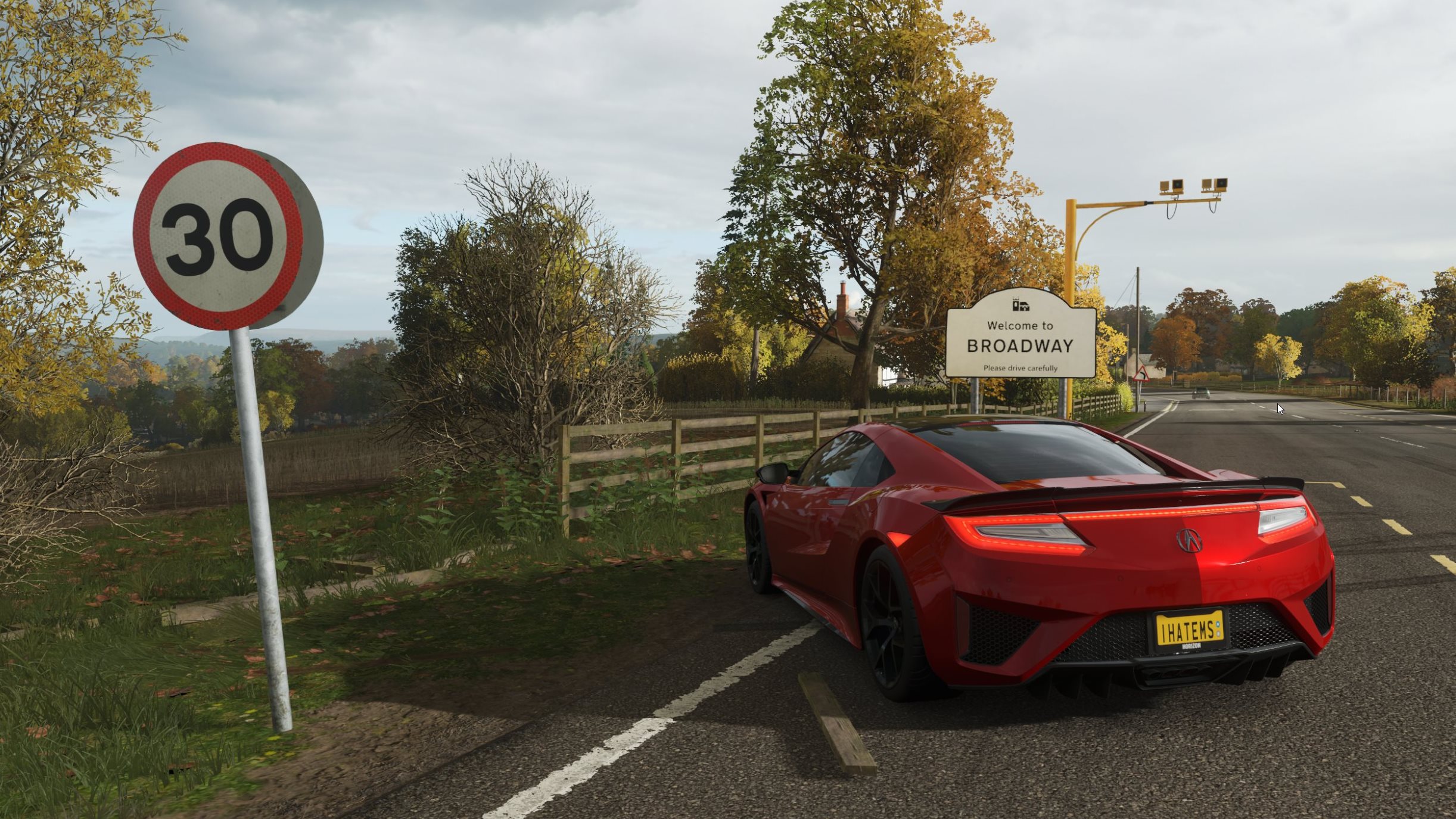
There is a phenomenon of culture that I’m not convinced has a name. Living in the UK, the vast, vast majority of the media I consume is from the US. And nearly always has been. While television was more localised, all my life the films and games (and indeed an awful lot of the TV) I’ve watched and played has not only come from America, but been set there, or created by people whose perception of life is based there. And, while we may share a decent proportion of a common language, we really are very different countries and indeed continents. The result of this being, the media I watch that comes from the US is in many senses alien, to the point where a film set in an American high school might as well be set on a spaceship for all the familiarity it will have to my own lived experiences.
Which makes playing Forza Horizon 4 a really bloody weird thing. It’s… it’s British. Which is causing my double-takes to do double-takes.
…
I’m not usually a fan of driving games, but this review of Forza Horizon 4 on Rock Paper Shotgun makes me want to give it a try. It sounds like the designers have worked incredibly hard to make the game feel genuinely-British without falling back on tired old tropes.
As you may know, I’ve lately found an excuse to play with some new web technologies, and I’ve also taken the opportunity to try to gain a deeper understanding of some less bleeding-edge technologies that I think have some interesting potential. And so it was that, while I was staffing the Three Rings stall at last week’s NCVO conference, I made use of the time that the conference delegates were all off listening to a presentation to throw together a tech demo I call Steer!

As you can see from the GIF above, Steer! is a driving game. The track and your car are displayed in a web browser on a large screen, for example a desktop or laptop computer, television, or tablet, and your mobile phone is used to steer the car by tilting it to swerve around a gradually-narrowing weaving road. It’s pretty fun, but what really makes it interesting to me is the combination of moderately-new technologies I’ve woven together to make it possible, specifically:

The desktop browser does all of the real work: it takes the orientation of the device and uses that, and the car’s current speed, to determine how it’s position changes over the time
that’s elapsed since the screen was last refreshed: we’re aiming for 60 frames a second, of course, but we don’t want the car to travel slower when the game is played on a
slower computer, so we use requestAnimationFrame to get the fastest rate possible and calculate the time between renderings to work out how much of a change has
occurred this ‘tick’. We leave the car’s sprite close to the bottom of the screen at all times but change how much it rotates from side to side, and we use it’s rotated to decide how
much of its motion is lateral versus the amount that’s “along the track”. The latter value determines how much track we move down the screen “behind” it.
The track is generated very simply by the addition of three sine waves of different offset and frequency – a form of very basic procedural generation. Despite the predictability of mathematical curves, this results in a moderately organic-feeling road because the player only sees a fraction of the resulting curve at any given time: the illustration below shows how these three curves combine to make the resulting road. The difficulty is ramped up the further the player has travelled by increasing the amplitude of the resulting wave (i.e. making the curves gradually more-agressive) and by making the road itself gradually narrower. The same mathematics are used to determine whether the car is mostly on the tarmac or mostly on the grass and adjust its maximum speed accordingly.

In order to help provide a visual sense of the player’s speed, I added dashed lines down the road (dividing it into three lanes to begin with and two later on) which zip past the car and provide a sense of acceleration, deceleration, overall speed, and the impact of turning ‘sideways’ (which of course reduces the forward momentum to nothing).
This isn’t meant to be a finished game: it’s an experimental prototype to help explore some technologies that I’d not had time to look seriously at before now. However, you’re welcome to take a copy – it’s all open source – and adapt or expand it. Particular ways in which it’d be fun to improve it might include:
This link was originally posted to /r/todayilearned. See more things from Dan's Reddit account.
The original link was: http://www.nationalmotormuseum.org.uk/motoring_firsts
Walter Arnold of East Peckham, Kent, had the dubious honour of being the first person in Great Britain to be successfully charged with speeding on 28 January 1896. Travelling at approximately 8mph/12.87kph, he had exceeded the 2mph/3.22kph speed limit for towns. Fined one shilling and costs, Arnold had been caught by a policeman who had given chase on a bicycle.
Today, my cycle helmet might have saved my life.
This morning, I was cycling to work along my usual route, National Cycle Network Route 51, on its final leg down Banbury Road to Parks Road. Here, the cycle route shares its path with a bus lane, and – on a warm, bright morning like this one, having a broad, flat lane is a great opportunity for a strong cyclist to make great time in a safe environment.

As I approached the bus stop, a spotted a car in the lane to my right, just ahead, slow down and turn on it’s indicator to turn left: it was heading for one of the driveways. But when the car began its maneuver, a split second later, I realised that the driver had not seen me. Perhaps she’d not checked her mirrors before turning? Or perhaps she’d only glanced (and seen no buses in the bus lane – just me and the second cyclist behind me)? Or perhaps she’d underestimated my speed, or dramatically overestimated her ability to get into the driveway before I reached her? In any case, she turned out to be wrong. I hit my brakes as sharply as I safely could, but it wasn’t enough to stop me from ploughing right into the side of her bonnet.
I’m not entirely sure what happened next. At the time, it felt like everything went into slow motion: a gentle flight through the air followed by a gradual landing on the other side, and that I’d be able to recall every single moment. But, probably as a result of the blow to my head (which as I’ve discovered before can have profound and confusing effects on memory), my memory of everything from a few seconds before the collision onwards is fuzzy and fragmented. But I spoke to the driver (a woman with dark hair), to the cyclist behind me (who was wearing a white t-shirt), and to a man who came out of a nearby building (who spoke with an accent – these details are the only things I can reliably remember about any of them), and based upon their descriptions – any my injuries – I’ve managed to piece together broadly what happened.
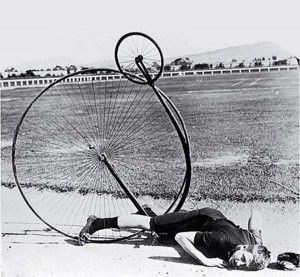
I hit the side of the car and flipped forward, throwing myself, some of the contents of my pannier bag, and my D-lock into the air. My handlebars knocked a dent into the bonnet of the car, and the lock landed elsewhere on it, but I flew clear over the car and flipped around in the air. I’m not sure how I landed, but it was probably on my back, because I struck the backs of my head, right shoulder, and elbow… but I must have rolled, because I also managed to scrape and graze the front of my legs.
I initially thought that I was fine (though I was clearly in shock), but I discovered about a quarter of an hour (or thereabouts: I’ve only been able to piece together a timeline in hindsight) that I was in more pain than I’d first thought, was feeling intermittently dizzy, and was unable to remember the details of the accident or even what day of the week it was. I asked for a taxi to be called for me and rode to the hospital, where they cleared me of anything seriously wrong (spinal injuries, serious concussion, broken bones, etc.) and sent me home for a day of lying down and mainlining NSAIDs.
Now it’s the early evening. I’m still far from entirely “with it”: I feel like my brain’s been rebooted into safe mode – I seem to be incapable of decent multi-tasking (for example: I can have a conversation with you, or can listen for my name being called by the doctor, but not both). I’ve got aching shoulders and arms and a bit of a limp. And I’ve been pretty much exhausted the whole day.
But here’s something: if I’m right about the angle I landed at, based on where I hurt the most, then it’s possible that my cycle helmet saved my life, today.
Wear your cycle helmet, folks.
While JTA was off breaking parts of his body (and showing off his injuries on Reddit) with Ruth on the second part of their honeymoon, the week before last, I too took some time off work in order to have a bit of a holiday. I’d originally hoped to get some cheap domestic skiing in, but the weather forecast showed that Scotland was going to consist of exactly two weather conditions, depending on where you were:
This kind-of put a dampener on my plans to get some snowsports done, but I’d already taken the time off work so I re-arranged my plans into a “make it up as you go along” tour of the highlands and lowlands of Scotland.
Highlights of my little tour included:



All in all, a delightful little tour, particularly impressive considering that it was launched into with the minimum possible amount of planning.
Recently, I wrote about the fact that I’m driving to and from Aylesbury once a week in order to study there. I passed my driving test a year and a half ago, but, of course, I don’t actually own a car. What I’ve been doing is using a car sharing company called Zipcar (technically, Streetcar, when I started, but the latter is merging into the former).
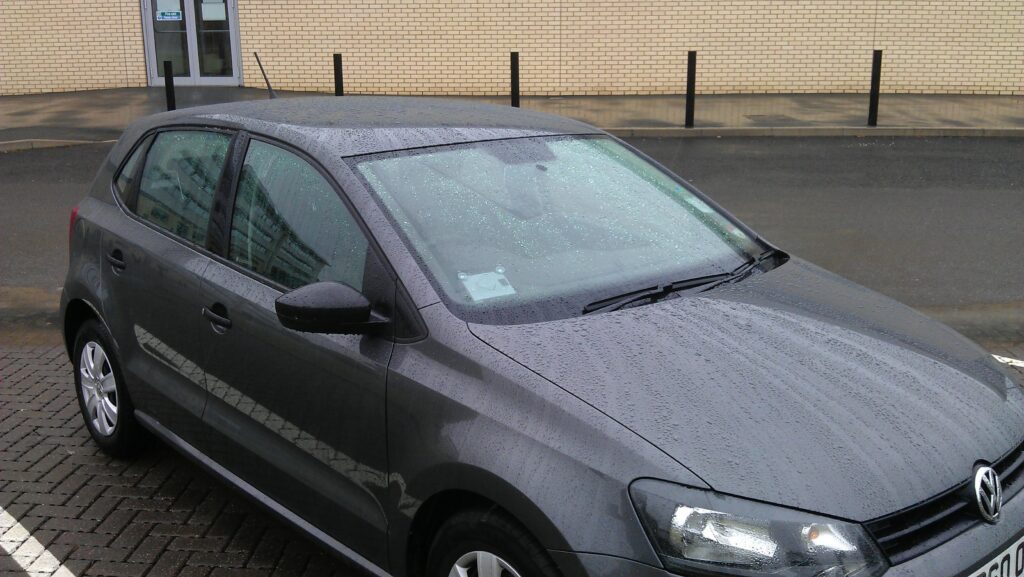
There are two varieties of car sharing clubs. These are:
I haven’t had the chance to try the latter variety yet, although there are a number in my area. The important things are the things that both types have in common, and that is distinctfrom most traditional car rental companies:
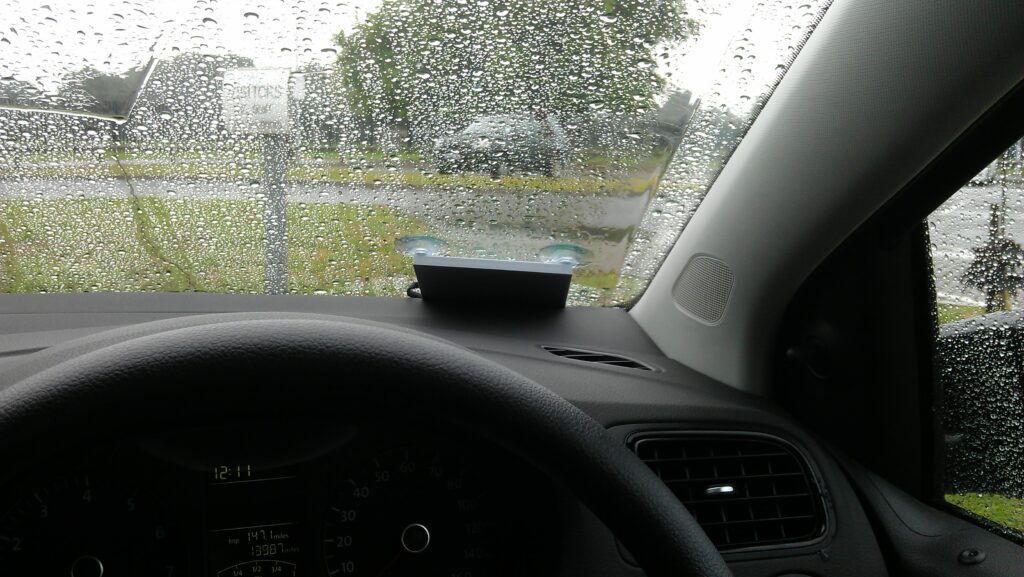
For me, at least, it’s far cheaper than owning a car – I only make one journey a week, and sometimes not even that. It’s far more convenient for that journey, for me, than public transport (which would involve travelling at awkward times and a longer journey duration). If I were using my own car, I’d have to park it in Oxford city centre on Mondays in order to make my journey possible (which is as challenging as it is expensive). Paying by the half-hour makes it convenient for short hops, and the ability to book, pick up, and return the car without staff intervention means that it doesn’t matter if it’s midnight or a bank holiday or anything: if I ever need access to a car or van in a hurry, there’s almost always one available for me to just “swipe into”.
And it’s far simpler than a conventional car rental company… at least, once you’ve gone through the telephone set-up process: a three-way phone call between you, the DVLA, and the car hire company. If I want a car, I pop up the website or pull out my phone, find a nearby one that’s free when I want it, and go drive.
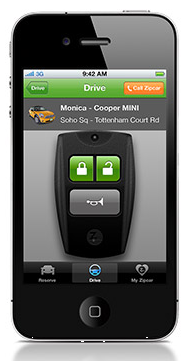
The cars are all new and well-kept, and the pricing is reasonable: you get a daily mileage allowance (now 40 miles, which is pretty ideal for me, as my round trip journey is barely more than that), and then pay a mileage rate thereafter (if you need to fuel up, there’s a fuel card in the car). Paying by the mile, rather than the litre, has the unfortunate side-effect of failing to encourage eco-driving, but other than that it’s a sensible policy which allows you to accurately anticipate your costs.
It’s been great, so far. I’ve been doing it for a few months and I’ve only had one niggle: I was on my way to college, as usual, when Zipcar called me to let me know that the previous person booking my car was running late. I’d never had this happen before: I’d never even been lined up back-to-back with another user before; it actually seems to be quite rare. In any case, Zipcar found me another car, which I declined (it was on the wrong side of town, and by the time I’d cycled back to it and driven across to this side again, I might as well have waited). In the end, the other user was fined, and I was given a discount in excess of the “missed” time, which I spent on a tin of biscuits to share with my classmates by way of apology for turning up late and disrupting the lesson. I’ve had a few difficulties with their website, especially when they first started taking over Streetcar’s fleets, but they’ve been pretty good about fixing them promptly.
So there we go: a nod of approval for Zipcar from me. So if you’re based in London (where there’s loads of them), Brighton, Bristol, Oxford, Cambridge, or – soon –
Maidstone, Guildford, or Edinburgh, and occasionally have need for an on-demand car, look into them. And if you sign up using this link or the shiny button below, we’ll each get £25 of free driving credit. Bonus!
Update (2022): Many years later, ZipCar would come to start mis-charging me and then repeatedly fuck up my
requests for them to stop doing so and stop processing my personal information (they actually told me twice that they’d done the latter, and I needed to log into my account to produce
screenshots for them with which to demonstrate that they were lying to me). As a result, I can’t give them the same level of glowing recommendation as I used to.
Update (2023): Somehow, ZipCar are still fucking-up my personally-identifiable information, despite
repeatedly being told to delete it (and on several occasions promising that they would or had). I can no longer in good faith recommend them as a company. Please don’t use them.
Next week is half-term. Why does that matter? Because I’m back in education.
Since last month, I’ve been a student again. Not full-time (I’m not falling for that one again), of course, but I currently spend my Monday evenings studying towards a Certificate in Counselling Skills at Aylesbury College.
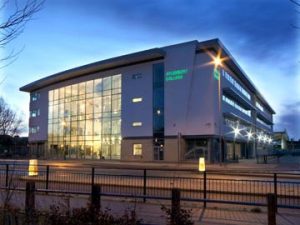
It’s actually a qualification I’ve been looking at for several years, but it’s only recently that I’ve lived somewhere even remotely close to somewhere that it’s taught: while there’s a lot of counselling theory that can be learned by distance learning, there’s naturally a lot of hands-on counselling practice that demands a classroom or clinical setting, and for that… you really do need to be within reach of a suitable school.
Not that Aylesbury‘s exactly on my doorstep. It’s not even in the same county as me (it’s just barely over the border, in fact, into Buckinghamshire). And this can make things a little challenging: whereas many of my classmates walk or cycle in, I have a special little dance that I have to do every Monday, in order to make my study possible.
I arrive at work early, so that I can get out of the door by 4:30pm. I then leap onto my bike and pedal furiously through Oxford’s crowded afternoon streets to the East side of the city. There, I lock my bike up and hop into a borrowed car (more about that in another blog post), pick my way out between the growing pre-rush-hour traffic, sprawling 20mph zones, and deathwish cyclists, and hammer along the A418 in order to get to class for its 6pm start.
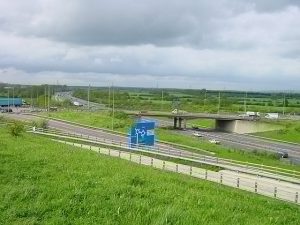
Three hours of theory and roleplay later (as well as a break to eat a packet sandwich), I’m back on the road. It annoys me more than a little that now that I’m not in a hurry, the roads are usually clear and empty, but it’s a good excuse to crank up the volume on Jack FM and enjoy the ride back through the villages of East Oxfordshire. Back in Oxford, I pick up my bike and cycle home: I’m usually back before 10:30. It’s quite a long day, really.
So what’s it all for? Well: ultimately, if I stick with it, it leads to a Certificate in Counselling, then to a Diploma in Counselling. If you take that and couple it with a stack of distance learning modules, it adds up to… well, this Foundation Degree in Counselling, perhaps.
But that’s not what you wanted to know: what you wanted to know was, “What are you doing, Dan? What’s wrong with the degree and career you’ve already got?”
Well firstly, of course, learning doesn’t have to be about qualifications. This is a field that I’ve been interested in for longer than I’ve been blogging. Plus: I’m sure that my various pieces of emotional support work, like my work with Oxford Friend, will benefit from the experience and learning that I bring to it.
But also, it’s about the idea I’ve always had that a good mid-life crisis ought to benefit from planning: it’s too important to leave to chance. And I’ve been thinking that a career switch might be a great mid-life crisis. The social sciences are fun, and while counselling might not be exactly what I’m looking for, there’s some doors opened by studying it. With less than a decade before I’m 40, and with part-time study being an ever-so-slow way to get things done, I’d better pull my finger out.
Doubtless, I’ll have more to say about my course as it progresses, but for now, I’m just glad that it’s half-term week, which means I get a week in which I don’t spend my Monday running around like a headless chicken… and I get twice as long to finish my homework.
Recently, I learned that the roads in Great Britain are numbered in accordance with a scheme first imagined about ninety years ago, and, as it evolved, these road numbers were grouped into radial zones around London (except for Scotland, whose road numbering only joined the scheme later). I’d often noticed the “clusters” of similarly-numbered roads (living in Aberystwyth, you soon notice that all the A and B roads start with a 4, and I soon noticed that the very same A44 that starts in Aberystwyth seems to have followed me to my home here in Oxford).
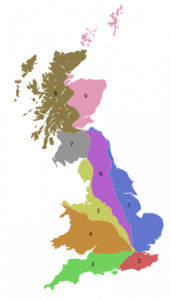
Who’d have thought that there was such a plan to it. If you’re aware of any of the many roads which are in the “wrong” zone, you’d be forgiven for not seeing the pattern earlier, though. However, seeing all of this attempt at adding order to what was a chaotic system for the long period between the Romans leaving and the mid-20th century makes me wonder one thing: are there “roadspotters”?
There exist trainspotters, who pursue the more-than-a-little-bit-nerdy hobby of traveling around and looking at different locomotives, marking down their numbers in notepads and crossing them off in reference books. Does the same phenomena exist within road networks?
It turns out that it does; or some close approximation of it does, anyway. One gentleman, for example, writes about “recovering” road signs formerly of the A6144(M), which – until 2006 – was the UK’s only single-carriageway motorway. A site calling itself The Motorway Archive has a thoroughly-researched article on the construction history of the M74/A74(M) from Glasgow to Carlisle. Another website – and one that I’m embarrassed to admit that I’d visited on a number of previous occasions – reviews every motorway service area in Britain. And, perhaps geekiest of all, the Society for All British and Irish Road Enthusiasts (SABRE) maintains a club, meetups, and a thoroughly-researched wiki of everything you never wanted to know about the roads of the British Isles.
From what started as a quick question about British road numbering, I find myself learning about a hobby that’s perhaps even geekier than trainspotting. Thanks, Internet.
This afternoon, I passed my driving test. This was my second attempt, and I pretty much kicked arse, scoring 2 minor faults (one for undue hesitiation as I pulled out from a roadworks stop on the way up Penglais Hill, and the second for insufficient use of mirrors at some point while moving out of the roundabout near Morrisons). So there we have it: I’m legally allowed on the roads.
All of the best drivers pass on their second attempts. Or so my dad tells me. Why yes, he did pass on his second attempt: why do you ask?
I have so many other things I’m overdue to blog about, but that’ll do, for now. Time for a beer.
Took and passed my driving theory test this lunchtime. 50/50 (pass mark 44) on the multiple choice bit, and 66/75 (pass mark, again, 44) on the silly little hazard perception video, which’ll do.
Not one question about stopping distances, meaning that I’ve committed to memory that most useless of information (I mean, am I really going to spot a child running into the road and start counting the car-lengths between me and him to work out if I need to start braking yet?) for no reason whatsoever. It feels like they’re all stuck in my head, now, so I may have to knock up a quick computer quiz to ask me those “missing” questions so I can release them again.
So yeah; there we are. Suppose I ought to have a practical test sometime.
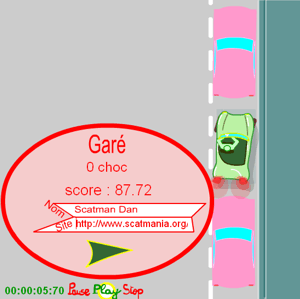 Have a go at the parallel parking game – let’s so how good you lot are. I’ve managed to beat the rest of the folks at work with a stunning score
of 87.72, parking in 5.7 seconds flat… not bad for the only non-driver!
Have a go at the parallel parking game – let’s so how good you lot are. I’ve managed to beat the rest of the folks at work with a stunning score
of 87.72, parking in 5.7 seconds flat… not bad for the only non-driver!
As this article [The Sun] shows, a man was caught speeding in Cheshire this week at 406mph.
Quite impressive, I thought, as he was driving a Peugeot 406, who’s maximum speed is listed as being 129mph.
I suppose it stands to reason that we Brits, the nation who currently hold the land speed record of 766mph [CNN], would be the first people to have a speed safety camera pick one of us up at over half the speed of sound. And such a clear picture, too…
Despite the obvious mistake, a spokesperson for Cheshire Safety Camera Partnership has stated that they will still be taking legal action.