There's a new Star Wars movie coming out soon, so we're looking at my favorite piece from the original trilogy: Darth Vader's theme, also known as the Imperi…
The last six months have been remarkable. At this point, I can simply text the name of a powerful man to a friend, and they know—another has been accused, outed, exposed. The
context is so present …
The last six months have been remarkable. At this point, I can simply text the name of a powerful man to a friend, and they know—another has been accused, outed, exposed.
The context is so present in our minds, partly because it always has been, but largely because the public conversation that’s erupted has been so thorough and—for the most part—
wonderfully persistent in both condemning predatory behaviour and upholding the testimony of victims. New precedents are being established. Where we would once discuss these crimes
with beleaguered resignation about the consequences, we can now be quietly confident that we’re entering a new era. Finally, retribution is being inflicted on the perpetrator and not
the victim.
It feels different even from a year ago. Would Casey Affleck have won the Oscar in this climate, we ask? Probably not, we think. I bet he’s relieved, we say. Public opinion has swung:
the Weinstein Company didn’t fire Harvey Weinstein because they found out he was a sexual predator, they fired him because we found out. It’s good to see that the
house is finally burning down around him and men of his ilk, but we need to talk about that house— who built it, who lived there, and why it was allowed to stand for so long.
Oxford University Babylab, Anna Watts Building, Radcliffe Observatory Quarter, Woodstock Rd, Oxford OX2 6GG, United
Kingdom.
Rating: ⭐⭐⭐⭐⭐
Not only are the team here doing fascinating and important research… they’re great at engaging and supporting the kids they use as the subjects of their experiments, too! They
‘borrowed’ one of ours for research on language development and the experiments seemed as stimulating and interesting to the little tot as they were useful to the understanding of the
human brain, we were kept informed about everything all the way along, and our kid even got to choose a toy at the end of it (which, three years on, she still has and loves).
If you’re willing to volunteer your baby’s time for the betterment of science but were concerned about the environment in which you’d be doing so, let this review dispel that.
Sainsbury's Bank ATM, 362 Oxford Rd, Kidlington OX5 1DA, United Kingdom.
Rating: ⭐⭐⭐
2 cash machines. Not much queuing space (occupied by trolley park) but at least it’s under cover. “Pick up/drop off” spaces adjacent useful, if free, but often occupied during store
opening hours so you’re likely to need to use the main car park if you’re flying-by. Been targetted by card skimmers at least once (a friend had his card cloned by one that was later
traced to here); not good CCTV coverage.
The 1969 Easter Mass Incident Content Warnings: Religion, food, symbolic cannibalism, symbolic gore, penis mention, Blasphemy, SO MUCH BLASPHEMY, weapons, war mention. Mind the
warnings and your…
When my dad was a young man and still a practicing catholic, he participated in a small church communion that nearly got him and six other people excommunicated.
Father Patrick ran a small church outside of California Polytechnical and tended to be… rather more liberal in his interpretations of scripture than most of the church was, which made
him something of a hit with the local students and liberally-inclined populace. Pat went to all manner of civil demonstrations, condemned the shit out of the vietnam war and the
politics that lead to it and so on. In January of 1969 a series of incidents lead him to start exploring “nontraditional” means of holding Mass as a means of reaching out to his
community and exploring his own faith, which ultimately culminated in the 1969 Easter Mass Incident.
For those of you who weren’t raised catholic, Communion is this ritual where you become one with Jesus by eating a really horrible bland wafer cookie and taking a shot of wine (called
hosts), which then *literally* become the flesh and blood of jesus in your mouth, allowing him to become one with you. It’s big McFucking deal, and you have the opportunity to
take communion at every mass. All this had to be explained to me second-hand because after this and Dad’s 51 days in the army, Dad decided he wouldn’t inflict religion on any
children he might have in the future.
I've taken the piece "Waltz of the Flowers" by Tchaikovsky, and synchronized it to a chain reaction marble run by hand. After listening to parts of this song…
In this extract from his new book, Johann Hari, who took antidepressants for 14 years, calls for a new approach
In the 1970s, a truth was accidentally discovered about depression – one that was quickly swept aside, because its implications were too inconvenient, and too explosive. American
psychiatrists had produced a book that would lay out, in detail, all the symptoms of different mental illnesses, so they could be identified and treated in the same way across the
United States. It was called the Diagnostic and Statistical Manual. In the latest edition, they laid out nine symptoms that a patient has to show to be diagnosed with
depression – like, for example, decreased interest in pleasure or persistent low mood. For a doctor to conclude you were depressed, you had to show five of these symptoms over several
weeks.
The manual was sent out to doctors across the US and they began to use it to diagnose people. However, after a while they came back to the authors and pointed out something that was
bothering them. If they followed this guide, they had to diagnose every grieving person who came to them as depressed and start giving them medical treatment. If you lose someone, it
turns out that these symptoms will come to you automatically. So, the doctors wanted to know, are we supposed to start drugging all the bereaved people in America?
The authors conferred, and they decided that there would be a special clause added to the list of symptoms of depression. None of this applies, they said, if you have lost somebody
you love in the past year. In that situation, all these symptoms are natural, and not a disorder. It was called “the grief exception”, and it seemed to resolve the problem.
When the Woolwich foot tunnel closed for repairs in 2011, it should have been a routine job. The pathway had been providing pedestrians with a quick route beneath the Thames since
1912. A century o…
When the Woolwich foot tunnel closed for repairs in 2011, it should have been a routine job. The pathway had been providing pedestrians with a quick route beneath the Thames since
1912. A century on, a few minor improvements were necessary. Contractors were hired to plug holes, improve access and bring communications capabilities into the 21st Century: swapping
leaky tiles for a leaky feeder.
But Woolwich residents will recall that the refurb of this much loved and much used walkway did not go according to
plan. When it finally re-opened it was 8 months behind schedule, having been closed for more than a year and a half. What the average Woolwich dweller doesn’t know, however,
are the unusual circumstances behind this delay.
In the brutal, self-centered bash-fest that social media often becomes, a moment of simple kindness and connection stands out.
American comedian Sarah Silverman is unapologetically blunt in her fight
against misogyny. But Silverman has also made a point of exploring the depths of her own empathy.
“I just keep asking myself, can you love someone who did bad things?” she said, after her dear friend and fellow
comedian, Louis CK, was accused of sexual harassment. “I can
mull that over later, certainly, because the only people that matter right now are the victims.”
Last week, Silverman demonstrated similar level-headed compassion when subjected to sexism and harassment herself. After tweeting about an article describing her honest attempts to understand Trump
supporters, Silverman received a crude response from a Twitter follower:
It’s been a frantic week of security scares — it seems like every day there’s a new vulnerability. It’s been a real struggle for me personally to pretend like I understand what’s
going on when asked about it by family members.
Seeing people close to me get all flustered at the prospect of being “powned” has really put things in perspective for me.
So, it is with a heavy heart that I’ve decided to come clean and tell you all how I’ve been stealing usernames, passwords and credit card numbers from your sites for the past few
years.
My mum just used the phrase “we’d be in for a bucket of custard.” I’m not sure if this is a real phrase or she’s having a stroke. Please advise.
My mother once described her new cat, which was very skinny when she got it, as looking “like a bag of choppy”. I asked her what “choppy” was and she admitted that she didn’t
actually know – all she knew is that her mother used to describe things that looked like that cat did as looking “like a bag of choppy”. We tried to look it up or work it out but we
couldn’t get to the bottom of it – what is “choppy” except for something that comes in a bag and looks like a scrawny cat? – and so we decided to ask her mother, who was then still
alive.
My gran was a proper Hartlepudlian, the kind that you could genuinely imagine hanging a monkey, and she was full of old phrases that defied definition. If you ate with your mouth
open she’d tell you off for “clacking”, babies were “baens”, and we were always told not to sit on cold doorsteps or else we’d get “chin cough” (I’ve no idea to this day what chin
cough is; all I know about it is the mechanism of transmission, and I’m skeptical of that!). Anyway, on our next visit to the North East we resolved to ask my grandmother what
exactly was a “bag of choppy”.
Turns out she didn’t know either; it was just a phrase her mother had used.
A deconstruction of Fleetwood Mac's "Dreams," off their masterpiece 1977 album, Rumours. Get 10% any purchase here: http://squarespace.com/nerdwriter Support…
Hold on tight, because with a stabilised camera shot and a pair of sunglasses, you're about to see a video that works in both 2D and 3D at the same time. The…
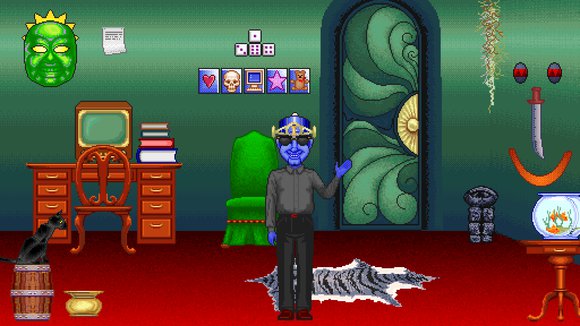
The year was 1995, and CompuServe’s online service cost $4.95 per hour. Yet thousands of people logged into this virtual world daily.
WorldsAway was born 20 years ago, when Fujitsu Cultural Technologies, a subsidiary of Japanese electronics giant Fujitsu, released this online experiment in multiplayer communities.
It debuted as part of the CompuServe online service in September, 1995. Users needed a special client to connect; once online, they could chat with others while represented onscreen
as a graphical avatar.
I was already a veteran of BBSes (I even started my own), Prodigy, CompuServe, and the Internet when I saw an advertisement for WorldsAway in CompuServe magazine (one of my favorite
magazines at the time). It promised a technicolor online world where you could be anything you wanted, and share a virtual city with people all over the globe. I signed up to receive
the client software CD. Right after its launch in September, I was up and running in the new world. It blew my young mind.