Gritty blogs have given way to staged Instagram photos.
A grinning toddler is bundled in a creamy quilted blanket and bear-eared hat. Next to him, an iPhone atop a wicker basket displays a Winnie-the-Pooh audiobook. The caption
accompanying the Instagram shot explains, “i am quite excited to
have partnered with @audible_com…. i’m not sure who loves it more, this little bear or his mama!?”
More than 260,000 people follow Amanda Watters, a stay-at-home mom in Kansas City, Mo., who describes herself on Instagram as “making a home for five, living in the rhythm of the
seasons.” Her feed is filled with pretty objects like cooling pies and evergreen sprigs
tucked into apothecary vases, with hardly any chaos in sight.
This is the “mommy Internet” now. It’s beautiful. It’s aspirational. It’s also miles from what motherhood looks like for many of us — and miles from what the mommy Internet looked
like a decade ago.
French Subs by: Garance Broze ✨✨Here's the Plan merchandising available at https://herestheplanshop.tictail.com !✨✨
Well, I just had my heart broken by a cartoon about a dog and a cat. Or as the top commenter at the time of writing puts it “I’M NOT CRYING! YOU’RE CRYING, SHUT UP!”
Interesting research: “Long-term market implications of data breaches, not,” by Russell Lange and Eric W. Burger. Abstract: This report assesses the impact disclosure of data breaches
has on the total returns and volatility of the affected companies’ stock, with a focus on the results relative to the performance of the firms’ peer industries, as represented…
Turns out you can’t trust the free market to penalise companies whose negligence permits data breaches. I am
Dan’s lack of surprise. This is, of course, why security requires regulation.
J'ai joué 10 chansons classiques que tu as déjà ouïes mais dont tu ne connais pas le nom. En effet, personne ne connaît leurs noms. Apprends-les avec cette v…
Masha Gessen writes about a series of recent recent Russian parody videos, started by air-transport cadets as a spoof of the music video for “Satisfaction,” by Benny Benassi, from
2002.
A few weeks ago, fourteen Russian first-year air-transport cadets made a parody of a fifteen-year-old music clip, and now it’s all a lot of Russians can talk about. This is a story of
spontaneous solidarity, self-organization, and, ultimately, just possibly, the triumph of freedom over bureaucracy.
The original clip, set to the 2002 track
“Satisfaction,” by the Italian d.j. Benny Benassi, is itself a parody: of music videos, erotica, and advertising. It features a series of scantily clad young women working with tools,
starting with a hammer and graduating to a masonry drill, a belt sander, and an angle grinder. The screen features names and technical descriptions of the tools while the women pose
with their bodies contorted and their mouths open, as though they were in a Victoria’s Secret catalogue. In their parody, the air-transport cadets used an all-male cast, the interior of a well-worn student dorm, and the kinds of
tools that are found there: a broom, a clothes iron, a spray jar of glass cleaner. Mostly, though, they used their own very young bodies, dressed in underwear, with belts, neckties,
and military caps arranged in apparent homage to Tom of Finland.
HackerRank has published its 2018 Developer Skills Report. The paper looks at a number things essential to understanding the developer landscape, and explores things
like the perks coders demand from their workplaces, the technologies they prefer to use, and how they entered the software development industry in the first place.
While perusing the paper, something struck me as particularly interesting. One of the questions HackerRank asked its community was when they started coding. It then organized the data
by age and country.
Almost immediately, you notice an interesting trend. Those in the 18 to 24 age group overwhelmingly started their programming journey in their late teens. 68.2 percent started coding
between the ages of 16 to 20.
When you look at older generations, you notice another striking trend: a comparatively larger proportion started programming between the ages of five and ten. 12.2 percent of those
aged between 35 and 44 started programming then.
It’s obvious why that is. That generation was lucky enough to be born at the start of the home computing revolution, when machines bearing the logos of Acorn and Commodore first
entered the living rooms of ordinary people.
…
This survey parallels my own experience: that among developers, those of us who grew up using an 80s microcomputer at home were likely to have started programming a decade or so younger
than those who grew up later, when the PC had come to dominate. I’ve written before about why I care about programming education, and I still think
that we’re not doing enough to show young learners what’s “under the bonnet” of our computer systems. A computer isn’t just a machine you can use, it’s a tool you can adapt: unlike the
other machines you use, which are typically built to a particular purpose, a computer is a general-purpose tool and it can be made to do an infinite number of different tasks!
And even if programming professionally isn’t “for you” (and it shouldn’t be for everyone!), understanding broadly how a tool – a tool that we all come into contact with every
single day – is adapted makes us hugely better-able to understand what they’re capable of and pushes us forwards. Imagine how many young inventors would be able to realise their for the
“killer app” they’ve dreamed up (even if they remained unable to program if themselves) if they were able to understand the fundamental limtations and strengths of the platforms, the
way to express their idea unambiguously in a way that a programmer could develop, and the way to assess its progress without falling into the “happy path” testing problem.
I’m not claiming that late-Gen X’s are better programmers than Millenials, by the way: absolutely not saying that! I’m saying that they were often lucky enough to be shaped by
an experience that got them into programming earlier. And that I wish we could find a way to offer that opportunity to today’s children too.
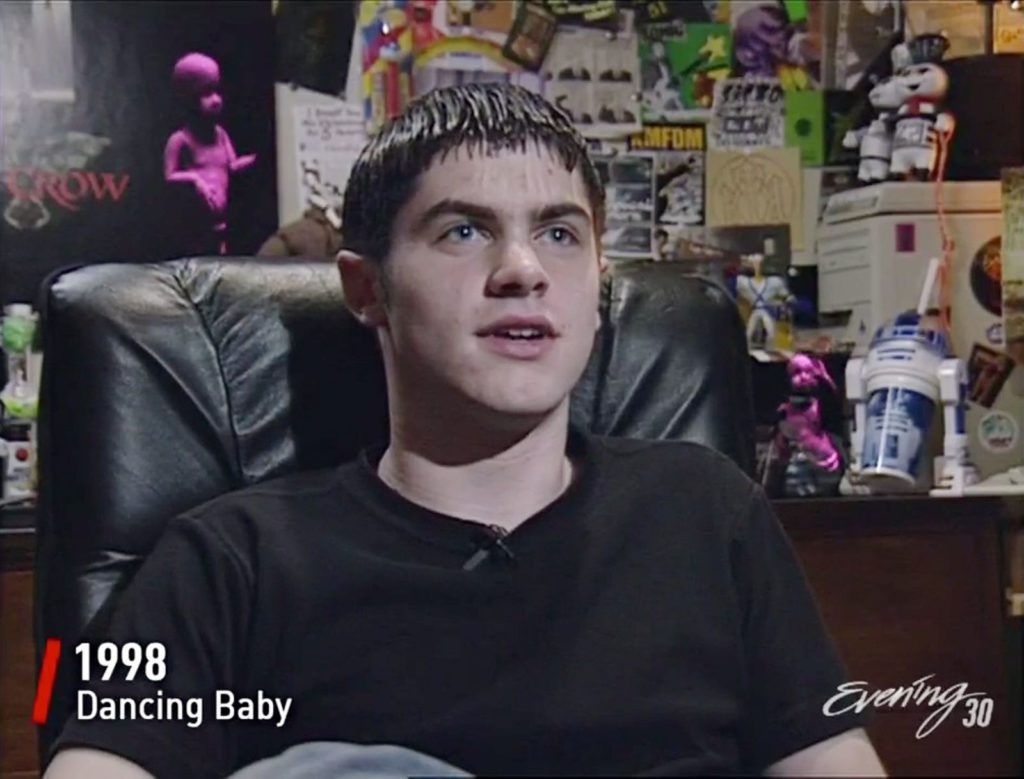
Official Post from Rob Sheridan: That goober you see above is me as a nerdy high school kid in my bedroom in 1998, being interviewed on TV for a dumb website I made. Allow me to
explain.20 years ago this month, an episode of the TV show Ally McBeal featured a strange animated baby dancing the cha-cha in a vision experienced by the
That goober you see above is me as a nerdy high school kid in my bedroom in 1998, being interviewed on TV for a dumb website I made. Allow me to explain.
20 years ago this month, an episode of the TV show Ally McBeal featured a
strange animated baby dancing the cha-cha in a vision experienced by the show’s titular
character. It immediately became an unlikely pop culture sensation, and by the tail end of the 90s you couldn’t pass a mall t-shirt kiosk or a Spencer’s Gifts without seeing corny
merchandise for The Dancing Baby, or “Oogachaka Baby” as it was sometimes
known. This child of the Uncanny Valley was an offensively banal phenomenon: It had no depth, no meaning, no commentary, no narrative. It was just a dumb video loop from the internet,
something your nerdiest co-worker would have emailed you for a ten-second chuckle. We know these frivolous bite-sized jokes as memes now, and they’re wildly pervasive in popular
culture. You can get every type of Grumpy Cat merchandise imaginable, for example, despite the property being nothing more than a photo of a cranky-looking feline with some
added text. We know what memes are in 2018 but in 1997, we didn’t. The breathtaking stupidity of The Dancing Baby’s popularity was a strange development with online origins that had
no cultural precedent. It’s a cringe-worthy thing to look back on, appropriately relegated to the dumpster of regrettable 90s fads. But I have a confession to make: The Dancing Baby
was kinda my fault.
…
Internet memes of the 1990s were a very different beast to those you see today. A combination of the slow connection speeds, lower population of “netizens” (can you believe we used to
call ourselves that), and the fact that many of the things we take for granted today were then cutting-edge or experimental technologies like animated GIFs or web pages with music means
that memes spread more-slowly and lived for longer. Whereas today a meme can be born and die in the fraction of a heartbeat that it takes for you to discover them, the memes of 1990s
grew gradually and truly organically: there was not yet any market for attempting to “manufacture” a meme. If if you were thoroughly plugged-in to Net culture, by the time you
discovered a new meme it could be weeks or months old and still thriving, and spin-off memes (like the dozens of sites that followed the theme of the Hampster Dance) almost
existed to pay homage to the originals, rather than in an effort to supplant them.
I’m aware that meme culture predates the dancing baby, and I had the privilege of seeing it foster on e.g. newsgroups beforehand. But the early Web provided a fascinating breeding
ground for a new kind of meme: one that brushed up against mainstream culture and helped to put the Internet onto more people’s mental maps: consider the media reaction to the
appearance of the Dancing Baby on Ally McBeal. So as much as you might want to wrap your hands around the throat of the greasy teenager in the picture, above, I think that in a
way we should be thanking him for his admittedly-accidental work in helping bring geek culture into the sight of popular culture.
And I’m not just saying that because I, too, spent the latter half of the 1990s putting things online that I ought to by right have been embarassed by in hindsight. ;-)
Official site of The Week Magazine, offering commentary and analysis of the day's breaking news and current events as well as arts, entertainment, people and gossip, and political
cartoons.
The world is disturbingly comfortable with the fact that women sometimes leave a sexual encounter in tears.
When Babe.net published a pseudonymous woman’s account of a difficult encounter with Aziz Ansari that made her cry, the internet exploded with “takes” arguing that the #MeToo
movement had finally gone too far. “Grace,” the 23-year-old woman, was not an employee of Ansari’s, meaning there were no workplace dynamics. Her repeated objections and pleas that
they “slow down” were all well and good, but they did not square with the fact that she eventually gave Ansari oral sex. Finally, crucially, she was free to leave.
Why didn’t she just get out of there as soon as she felt uncomfortable? many people explicitly or implicitly asked.
It’s a rich question, and there are plenty of possible answers. But if you’re asking in good faith, if you really want to think through why someone might have acted as she
did, the most important one is this: Women are enculturated to be uncomfortable most of the time. And to ignore their discomfort.
This is so baked into our society I feel like we forget it’s there. To steal from David Foster Wallace, this is the water we swim in.
Erika & Matt think the world of sex is amazing. Using comedy and research, they make the best educational and sex-positive comics around.
The concept of becoming a mother fucking terrifies me. I mean, don’t get me wrong, if you wanna be a parent that is totally cool with me! Raising a kid looks like the hardest job in
the world and I have nothing but awe and respect for the people who want to take on that…
I only relax when I’m in the countryside. It’s not a convenient truth, especially when London is my home and one of the most exciting and eclectic cities in the world – not to mention
one of the only places I’ve managed to successfully secure full-time work!! (pending probation) I’ve viewed London through the lens…
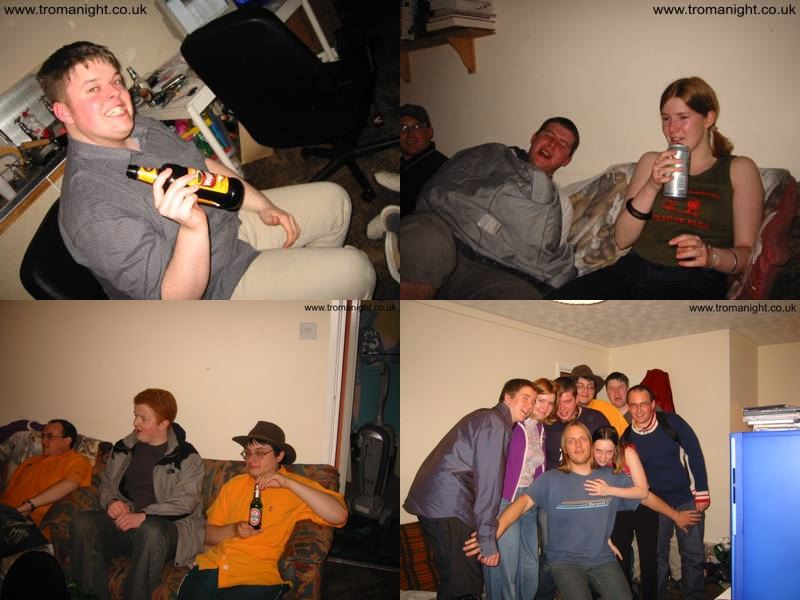
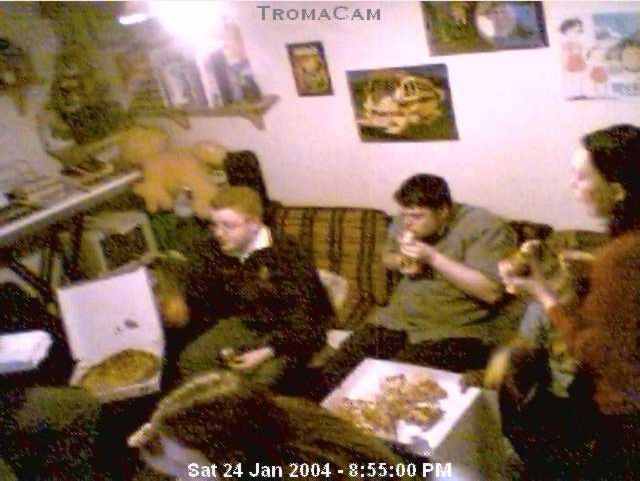
On this day in 2004… Troma Night XXI took place at The Flat. Six people were in attendance: Claire, Paul, Kit, Bryn, (Strokey) Adam and I and, unusually – remember that the digital cameras in phones were still appalling – I took pictures of everybody who showed up.
Cue exclamations of “didn’t we all look young”, etc.
Troma Night was, of course, our weekly film night back in Aberystwyth (the RockMonkey wiki once described it as “fun”). Originally launched as a one-off and then a maybe-a-few-off event with a theme of watching films produced (or
later: distributed) by Troma Entertainment, it quickly became a regular event with a remit to watch “all of the best and the worst films ever made”.
Expanding into MST3K, the IMDb “bottom 250”, and once in a while a good film, we eventually spent
somewhere over 300 nights on this activity (you can relive our 300th, if you like!)
and somehow managed to retain a modicum of sanity.
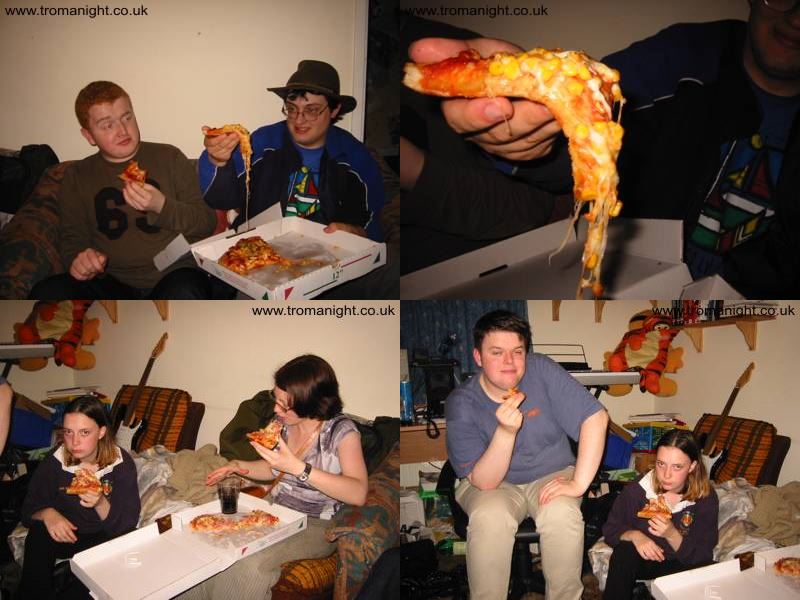
Copious quantities of alcohol might have been part of our survival strategy, as evidenced by these pictures from Troma Night V and Troma Night VI.
Troma Night XXI was among those captured by the Troma Night Webcam, streamed out to the Internet in 1-megapixel, 4 frames per second glory (when it worked).
In addition to running for over 300 weeks, Troma Night became, for many of us, a central facet of our social lives. The original attendees were all volunteers at Aberystwyth Nightline, but we were later joined by their friends, lovers, housemates… and by Liz‘s dates (who after meeting all of her friends, we usually never saw again). We quickly developed our own traditions and ideas, such as:
Pizzas like the Alec Special – a Hollywood Special (ham, pepperoni, beef, mushrooms, green peppers, onions,
sweetcorn) but without the onions and with pineapple substituted in instead – and the Pepperoni Feast particularly enjoyed by our resident vegetarian,
For those who – like me – insist that our regular Hollywood Pizza got greasier over this years, these photos from Troma Night VI.5 are pretty damning. Maybe it’s just that our tastes
changed.
Paul spontaneously throwing a sponge out of the window to mark the beginning of the evening’s activities,
Alec bringing exactly one more can of Grolsch than he’s capable of drinking and leaving the remainder in the fridge to be consumed by Kit at the start of the subsequent event,
A fight over the best (or in some cases only) seats in Claire and I’s various small (and cluttered) homes: we once got 21 people into the living room at The Flat, but it wasn’t
exactly pleasant,
Becoming such a regular customer to Hollywood Pizza that they once phoned us when we hadn’t placed an order in a timely fashion, on another ocassion turned up
with somebody else’s order because it “looked like the kind of thing we usually ordered”, and at least one time were persuaded to deliver the pizza directly up to the living room
and to each recipient’s lap (you can’t get much better delivery service than that).
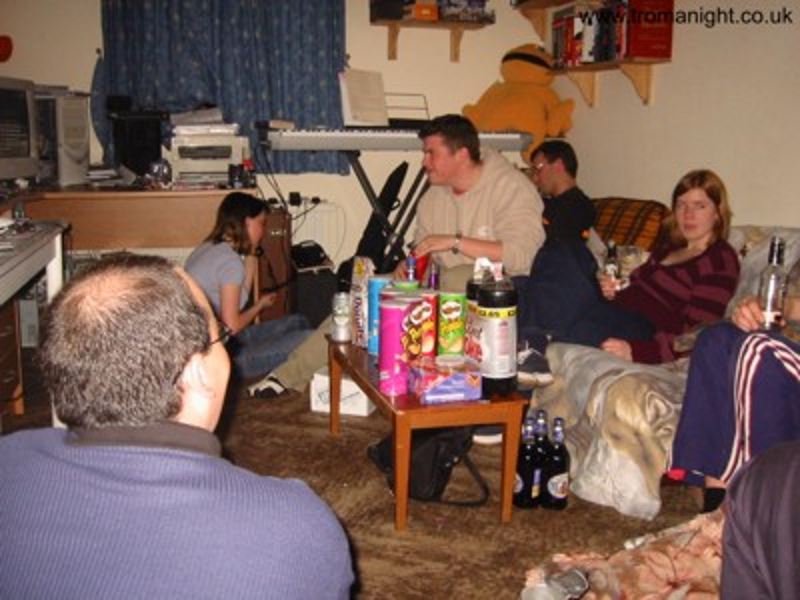
Decisions about how Claire and I would lay out our furniture were eventually influenced directly by maximising the efficiency of our seating plan. This picture, from Troma Night IV,
makes it seem quite spacious and relaxed compared to later nights.
And I still enjoy the occasional awful film. I finally got around to watching Sharknado the other month, and my RiffTrax account’s library grows year on year. One of my reward card accounts is still under the name of Mr. Troma Knight. So I suppose that Troma Night
lives on in some the regulars, even if we don’t make ourselves suffer of a weekend in quite the
same ways as we once did.
Undeniably one of the most obscure and unusual 'wars' in history, this is the story of how the killing of an escaped pig almost caused a war between the United States and Britain.
‘The Pig War’ is perhaps one of the most obscure and unusual wars in history. The story begins back in 1846 when the Oregon Treaty was signed between the US and Britain. The treaty aimed to put to rest a long standing border dispute between
the US and British North America (later to be Canada), specifically relating to the land between the Rocky Mountains and the Pacific coastline.
The Oregon Treaty stated that the US / British American border be drawn at the 49th parallel, a division which remains to this day. Although this all sounds rather straightforward,
the situation because slightly more complicated when it came to a set of islands situated to the south-west of Vancouver. Around this region the treaty stated that the border be
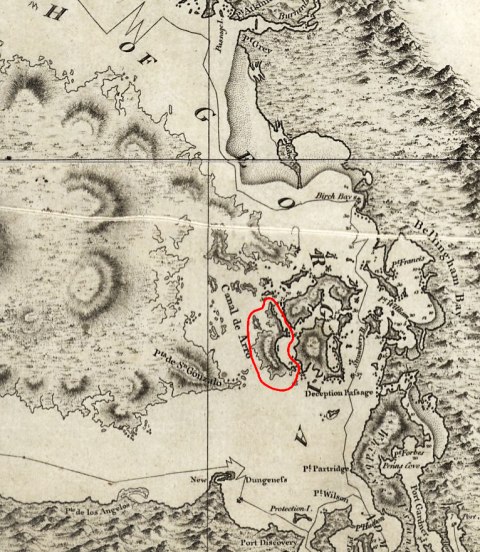
through ‘the middle of the channel separating the continent from Vancouver’s Island.’ As you can see from the map below, simply drawing a line through the middle of
the channel was always going to be difficult due to the awkward positioning of the islands.
The long read: Every baffled new parent goes searching for answers in baby manuals. But what they really offer is the reassuring fantasy that life’s most difficult questions have
one right answer
Human beings are born too soon. Within hours of arriving in the world, a baby antelope can clamber up to a
wobbly standing position; a day-old zebra foal can run from hyenas; a sea-turtle, newly hatched in the sand, knows how to find its way to the ocean. Newborn humans, on the other
hand, can’t hold up their own heads without someone to help them. They can’t even burp without assistance. Place a baby human on its stomach at one day old – or even three
months old, the age at which lion cubs may be starting to learn to hunt – and it’s stranded in position until you decide to turn it over, or a sabre-toothed tiger strolls into
the cave to claim it. The reason for this ineptitude is well-known: our huge brains, which make us the cleverest mammals on the planet, wouldn’t fit through the birth canal if
they developed more fully in the womb. (Recently, cognitive scientists have speculated that babies may actually be
getting more useless as evolution proceeds; if natural selection favours ever bigger brains, you’d expect humans to be born with more and more developing left to do.)
This is why humans have “parenting”: there is a uniquely enormous gap between the human infant and the mature animal. That gap must be bridged, and it’s difficult to resist
the conclusion that there must be many specific things adults need to get right in order to bridge it. This, in turn, is why there are parenting advice manuals – hundreds and
hundreds of them, serving as an index of the changing ways we have worried about how we might mess up our children.
Early start: @3RingsCIC are sending me to visit @WakefieldSams this morning to talk about #technology and #volunteering. Looking forward to meeting everybody there!