
 RSS
RSS Spotify
 Pocket Casts
 Apple Podcasts
 YouTube
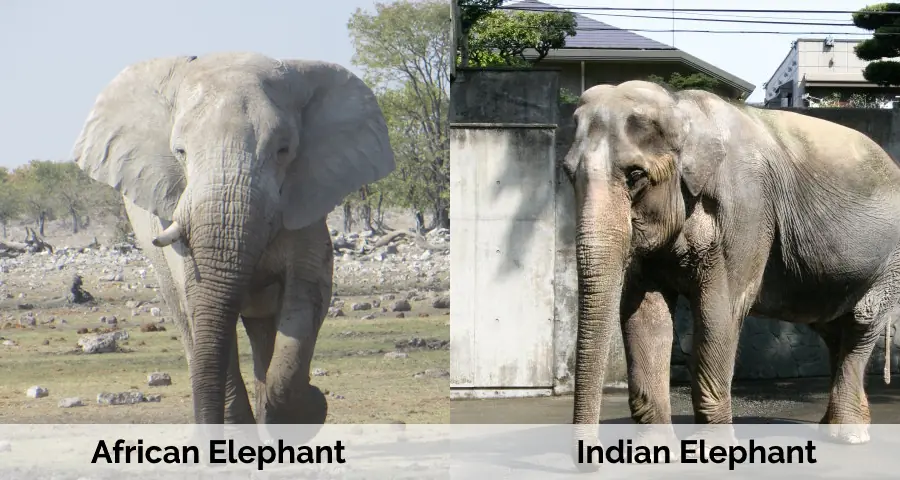
You've probably been taught that you can tell the difference between African Elephants and Indian Elephants by looking at their head and ears. The larger African Elephants have a rounded cranium and big ears (with a shape somewhat like the continent of Africa itself!), whereas the smaller Indian Elephants have a two-lobed skull and diminutive ears that tuck tidily alongside their heads.
Alt
An African Elephant and an Indian Elephant, with the different head & ear shape clearly visible.
But suppose you don't manage to get a glimpse at the front end of the elephant as it passes you. What hope is there of identifying the species? Well: you can look at its back!

Alt
Concave back of an African Elephant.
African Elephants, it turns out, have a concave back, whereas Indian elephants have a convex back (a bit like a hump)!

Alt
Convex back of an Indian Elephant.
I was having difficulty sleeping one night during the UK's current heatwave, so naturally I opted to practice my newfound ability to distinguish elephant species by their spines. Indian, Indian, African, Indian, African, African... etc.
And then I came across this one:

Alt
A flat elephant back, neither concave nor convex.
African Elephant backs are concave. Indian Elephant backs are convex. But what does it mean when you see a flat elephant's back?
It turns out...
...
...that's a grey area.

Alt
Dan with a stuffed toy (African) elephant.
0 comments