Contactless Transport in London vs Paris

Paris’s public transport tickets suck… for now!

In his blog post yesterday, Terence Eden observed that of all the cities he’s travelled to over the last year, Paris had the most-ridiculously-unhelpful public transport ticketing system:

Fuck Paris. The only way to buy a metro ticket is to download an app. Fair enough. But, after downloading the app it tells you to install another app!

Navigo app saying I have to install another app.

What the actual fuck? A convoluted, messy, and frustrating situation which has resulted in awful reviews for them.

Trains and metro travel require separate tickets at different prices. You can’t easily hop from one to another. You need to think carefully about the route you’re taking. A more convoluted route may be significantly cheaper because it doesn’t involve swapping between services.

This absolutely parallels my experience of hopping around the Paris’s metro area, last time I was there.

Dan, a white man with a ponytail and a goatee, site in a Parisian cafe sipping a glass of white wine.
If I’ve got to navigate my way through Paris’s public transport network… I’m going to need a drink first.

I was interested to hear, though, that by 2030 virtually all of Paris’s public transport will accept contactless payment, bringing its convenience level to a similar level to that of London. Cool.1

From the sounds of things, this is clearly designed as a convenience for visitors to the city, not regulars and locals:

Dès le 30 juin 2026, les touristes et les voyageurs hyperoccasionnels pourront opter pour valider leur titre en sortie de l’aéroport d’Orly sur la ligne 14 avec la carte bancaire.2

Paris’s relationship with tourists is different from London’s

But the bit that surprised me is Paris’s pricing for the parts they’ve deployed so far:

Les prix des titres de transport via les bornes d’achat sont les suivants :

  • Bus/tram/funiculaire : 2,55 € (soit + 0,50 € sur le prix classique) ;
  • Métro/train/RER : 3,35 € (soit + 0,80 € sur le prix classique) ;
  • Aéroports : 14,80 € (soit + 0,80 € sur le prix classique).

Buying transport tickets in Paris using a contactless card… costs 0.50 € to 0.80 € more. Paris will charge you for the convenience of tapping in and out with your carte bancaire.

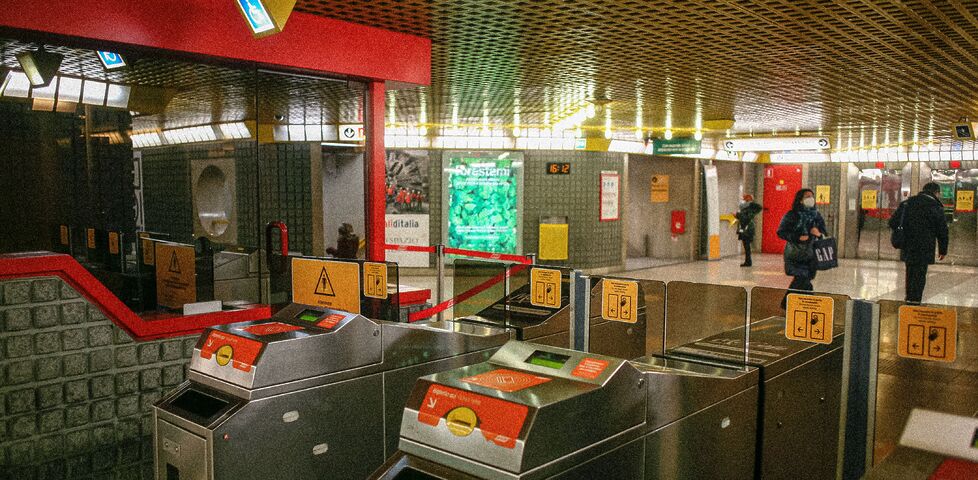
A row of ticket gates in a London Underground station.
Tap in, tap out. Unless you’re eligible for discounted travel, you probably might as well use your debit card to get around London. Photo by Luca Sammarco.

Contactless is clearly more-convenient for city visitors, but I think the difference between London and Paris’s attitude to it says something about the relationship both cities have with their tourists. In London, most travellers can use whatever bank card and mobile wallet they’ve already got… and they’ll get as good a deal as possible. But in Paris, doing the same will invariably cost more than a conventional ticket would. You pay a convenience-tax.

Both cities get tens of millions of annual visitors and extract billions of euros worth of financial benefit from their tourist economies. Paris doing slightly better overall, but they’re closely-comparable enough that differences like this probably mean something.

Crowds file down the escalator into Charles de Gaulle-Étoile station.
Tap in, pay a premium for the privilege. Thanks, Paris! Photo by Candelario Benítez.

I’m not saying that London loves tourists and Paris hates them! It’s not so simple as that. But I think perhaps the cites try to present themselves in a different way.

London’s public transport says: we’ll work around you. You can learn the rules as you go; you don’t have to “learn London” to get around. Just use your usual contactless card wherever you go; we’ll work out the details, and your daily cost will get capped just the same as if you chose to pick up an Oyster card. Visiting the city as a tourist is an ordinary use-case for the transport network.

Paris’s public transport says: you should learn the rules. You’re welcome to visit, but you either need to do the work to be a “temporary Parisian”… or you can just use your usual contactless card but we’ll charge you a premium for the convenience. Visiting the city as a tourist is a special case that the transport network sees differently from being a local.

Neither approach is “wrong”… but I think it’s interesting. And now I’m wondering what the approach is like across other European cities.

Footnotes

1 I’ll almost-certainly have to tackle the current-generation of Paris’s public transport at some point before then, but I’ll look forward to the improved version once it rolls-out.

2 “From 30 June 2026, tourists and hyper-ocassional travellers will be able to pay by bank card on Line 14 out of Orly Airport.” Emphasis mine.

× × ×

Taking A Dive

This is a repost promoting content originally published elsewhere. See more things Dan's reposted.

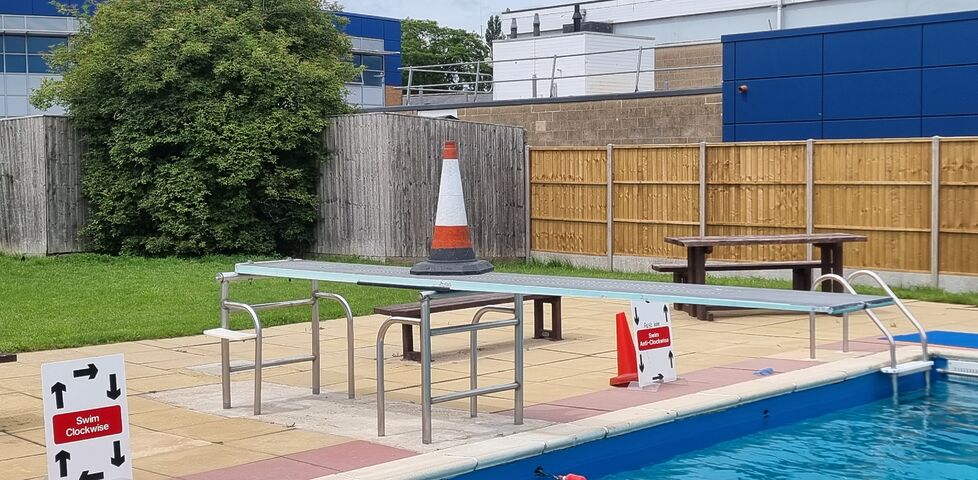
A traffic cone sits atop a diving board at an outdoor swimming pool.

I had another submission accepted to Curious Cones last month; it remains one of my favourite silly niche blogs. This time around, it was this traffic cone seemingly about to take a dive from the low board at an outdoor pool (at which the younger kid and I were taking a respite from the heat!).

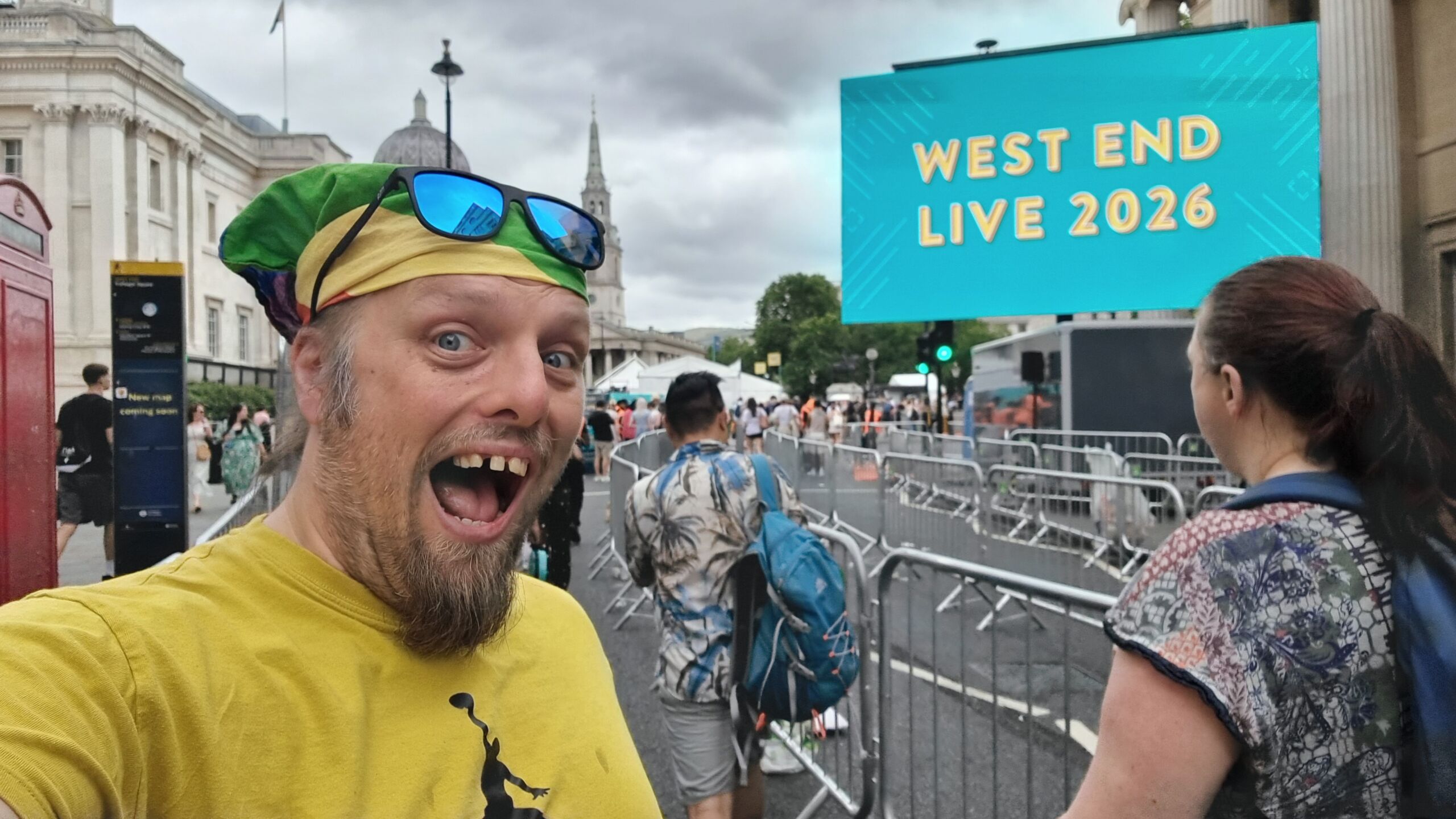
Not-accepted, but shared here for your enjoyment, was a photo I took while at West End Live in London the other week. I spotted a traffic cone on a shelf in the left luggage room at our hotel! I took the pic quickly and the room was dark and the photo came out blurry, so it’s fair that it didn’t make it onto the blog, but it’ll remind me to keep an eye out for cones in the most-curious of places!

A cluttered left-luggage room with many suitcases stacked on shelves... and atop one set of shelves, a traffic cone.

×

MegaConLive London

My 12-year-old’s persuaded me to take her to MegaConLive London this weekend.

As somebody who doesn’t pay much attention to the pop culture circles represented by such an event (and hasn’t for 15+ years, or whenever it was that Asdfbook came out?)… have you got any advice for me, Internet?

Slamiltee at the Lycaeum

Went to a West End theatre wearing my “Slamilton” t-shirt.

In this corridor, during the act break, a stranger spotted it and did a double-take.

“Is that…? wait… that’s not Hamilton!”, they said.

I seized my chance.

“It’s Slamilton,” I replied. “You know: ‘Who slams, who jams, who tells their story.'”

And then, after a pause: “What’s ‘Hamilton’???”

Dan, a white man with a goatee beard and a blue ponytail, wears a 'Slamilton' t-shirt in a theatre stairwell.

×

Clapham South Deep Shelter

At the weekend, JTA and I – along with our eldest child – explored the Clapham South Deep Shelter as part of one of Hidden London‘s underground tours, and it was pretty great!

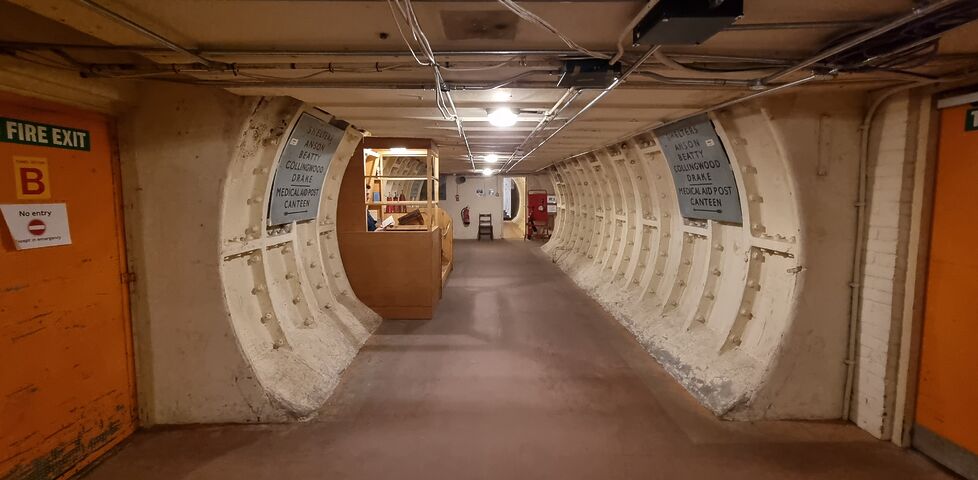
A circular tunnel with a flat floor and low ceiling, wrapped in white-painted iron and concrete, with exposed wiring and WWII-era signage, leads deeper into a subterranean bunker past a small guard post in which a figure can barely be seen, reading a book.
Anybody else get Fallout vibes from this place?

I’ve done a couple of bits of exploration of subterranean London before: in the service tunnels around Euston, and into the abandoned station on the Aldwych branch line. But I was especially impressed by the care and attention that had gone into making this particular tour fun and engaging.

Broad staircase reminiscent of those found around the London Underground, but sparsely lit and decorated. Looking up the stairs, it ends in a brick wall.
Had this deep shelter gained a second life as a new tube station, as was originally hoped, this staircase would have connected it to the Northern Line platforms. Instead, it ends at a brick wall.

The site itself is deep: trains on the Northern Line – already one of the deepest lines on the London Underground – can be heard passing above you, and any noise from street level is completely gone (even the sounds of bombing couldn’t be heard down here, WWII residents reported). It’s also huge: long interconnected tunnels provided space for 8,000 beds, plus canteens, offices, toilets, medical bays, and other supporting architecture.

Table with basins, kidney bowl, old-style medical vials, kettle, jug, and WWII-era shrapnel dressing kit, in an iron-framed subterranean tunnel.
Significant parts of the bunker contain original furniture, including the metal-frames triple-bunk-beds (some of which show signs of being temporarily repurposed as archival storage shelves). But other bits have been restored to make them feel contemporaneous with the era of its construction.

To extend the immersion of the theme even further, there’s a “warden” on-site who – after your 179-step descent – welcomes you and checks your (replica) night admission ticket, identifying which bed’s bed assigned to you. The warden accompanies your group around, staying in-character as you step through different eras of the history of the place! By the time you get to the interpretative space about the final days of its use for human habitation – as a budget hotel for the “Festival of Britain” national exhibition in 1951 – he speaks fondly of his time as its warden here and wonders about what will become of the place.

In an extremely long semicircular concrete tunnel, a tween girl wearing a green hoodie stands near signage made to look like 1940s newspapers.
The long, long double-helix staircases that brought us deep into the earth represented only a fraction of the distance we walked on the tour, through these long networks of tunnels.

All of which is to say that this was a highly-enjoyable opportunity to explore yet another hidden place sprawling beneath London. The Hidden London folks continue to impress.

Small pink replica ticket reading 'Clapham South Shelter: Admit One Person for One Night Only', ticket number L0281.
I’m glad I’ve got a bed of my own in a house of my own that’s not being bombed by the Luftwaffe, actually, thanks.

If you want to see a little more, they’ve released a video just yesterday: or for the full experience, see if there are any slots you can make to visit the place for yourself.

× × × × ×

Note #26938

Seventy years ago, residents of this part of London would take shelter from V1 and V2 bombs in a tunnel beneath my feet. And today, I’m going down there to take a look!

Dan, a white man wearing a Goo Goo Dolls t-shirt, stands in front of a sign describing the history of The Drum in South Clapham.

×

London Transport 25

This is a repost promoting content originally published elsewhere. See more things Dan's reposted.

Girl on the Net is a popular sex blogger, so this is a link to a SFW page on an otherwise NSFW site. If your only concern is seeing or hearing sexy things or somebody looking over your shoulder and thinking that’s what you’re doing, go ahead and read it. But if you’re connected through the monitored corporate firewall of a sex-negative employer, you might want to read on a different device…

25 different forms of London transport in a day

Hello! My name is Sarah and I love London transport. Because I am a very cool and interesting person, for a long time I’ve thought it might be fun to see how many different types of London transport I can take in a 24-hour period: bus, tram, tube, train, ferry, etc. The trip outlined below took me (and the lucky man I invited on this date) on 25 different forms of London transport in one single day. It criss-crossed the city from East through North to West, then South, Central, South East and back to where we started. I’m sharing the itinerary because this turned out to be a phenomenal adventure, and I thought others might like to give it a go.

The rules

The rules for the challenge were:

  1. Transport must be transport, not a ride, i.e. it must take me from A to B. So the London Eye doesn’t count, but the cable car definitely does.
  2. Each form of transport must continue the journey. So no going from A to B then immediately back again. The journey can meander, but it must keep moving forwards.
  3. No form of transport can be taken more than once. Changes on a single line are OK (for instance, if traveling on the DLR from Greenwich to Bank requires a change at Canary Wharf, that’s fine, or if you’re on a bus that gets taken out of service you can get on the next one) but repeated trips on the same form of transport aren’t allowed (you can’t take one double-decker bus in the morning then another in the afternoon). The exceptions to this are: walking; escalators; stairs. We’ll be using these a lot.

This sounds like a ludicrously fun adventure and a great use of a date for anybody who can find an even-remotely similarly-transport-obsessed partner.

The one thing this wonderful post is lacking is a map. Oh, and maybe a GPX file, but that’s a much bigger ask. Really I just want the map, to help me visualise the route. Maybe with the different forms of transport colour-coded or something? Okay, okay, now I’m asking a lot again.

Just go read it, it’s a fun London romp.