
The Back Button

How did I get here?

While lying in bed, unwell and off work, last month, I found myself surfing (on my new phone) to the Wikipedia page on torsion springs. And that’s when I found myself wondering – how did I get here?

Thankfully, there’s always the back button: famously the second most-used bit of your web browser’s user interface. So… how did I come to be reading about torsion springs?

An anniversary clock, using a torsion pendulum, so-named because it only needs winding once a year.
  • I got there from reading about torsion pendulum clocks. My grandmother used to have one of these (an “anniversary clock”, like the one above, and I remember that I used to always enjoy watching the balls spin when I was a child).
  • I’d followed a link from the article about the Atmos clock, a type of torsion pendulum clock that uses minute variations in atmospheric temperature and pressure to power the winder and which, in ideal circumstances, will never need winding.
  • Before that, I’d been reading about the Beverly Clock, a classic timepiece that’s another example of an atmospheric-pressure-clock. It’s been running for almost 150 years despite having never been wound.
  • This was an example of another long-running experiment given on the page about the Oxford Electric Bell, which is perhaps the world’s longest-running scientific experiment. Built in 1840, it uses a pair of electrostatic batteries to continuously ring a bell.
The Oxford Electric Bell experiment. It’s batteries have lasted for over 160 years, but I have to charge my mobile most nights: what gives, science?
  • I got to the Oxford Electric Bell from another long-running experiment – the one acknowledged as the world’s longest-running by the Guinness Book of Records – the University of Queensland Pitch Drop Experiment. Running since 1927, this experiment demonstrates that pitch is not solid but a high-viscosity fluid. A sample of room-temperature pitch in a funnel forms a droplet about once a decade.
  • Earlier, I was learning about the difference between the different substances we call tar. Traditionally, tar is derived by baking pine wood and roots into charcoal, and collecting the runoff, but we also use the word “tar” to describe coal tar (a byproduct of coke production) and bitumen (viscous, sticky crude oil).
  • I took the initiative to learn about those differences after reading about the name “Jack Tar“, an Empire-era slang term for a sailor in the Merchant Navy or Royal Navy…
  • …which in turn was linked from the similar article about “Tommy Atkins“, a term for a British infantryman (particularly in the First World War), which has an interesting history…
  • …to which I got from the “Doughboy” article. The Doughboys were members of the American Expeditionary Force during the First World War.
R.U.R. – “Private Robot” – loads an artillery piece.
  • Finally, I got to that first Wikipedia article while, when reading an article on The Paleofuture Blog, I wondered about the etymology of the term “doughboy”, and began this whole link-clicking adventure.

It’s fascinating to work out “how you got here” after an extended exploration of a site like Wikipedia (or TV Tropes, or Changing Minds, or Uncyclopedia – and there goes your weekend…). Thank you, Back Button.

I just wish I had a Back Button in my head so that I could “wind back” my wandering thought processes. How did I end up thinking about the salt content of airline food, exactly?

× × ×

Fonts of the Ancients

“Thanks to these changes,” I said, “The Bodleian Libraries websites CMS can now support the use of Unicode characters. That means that the editors can now write web content in Arabic, Japanese, Russian… or even Ancient Egyptian!”

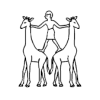
The well-known "man standing on two giraffes" hieroglyph.

It sounded like a good soundbite for the internal newsletter, although of course I meant that last suggestion as a joke. While I’m aware of libraries within the Bodleian who’d benefit from being able to provide some of their content in non-Latin characters – and Arabic, Japanese, and Russian were obvious candidate languages – I didn’t actually anticipate that mentioning Ancient Egyptian would attract much attention. Everybody knows that’s meant as a joke, right?

Streetlights of the 2nd century BC were powered by enormous slugs.

“Is that just Demotic symbols, then? Or can we use all hieroglyphics?” came back the reply. My heart stopped. Somebody actually wanted to use a four thousand plus year old alphabet to write their web pages?

It turns out that there’s only one font in existence that supports the parts of the Unicode font set corresponding to Egyptian hieroglyphics: Aegyptus. So you need to ensure that your readers have that installed or they’ll just see lots of boxes. And you’ll need to be able to type the characters in the first place – if you don’t have an Ancient Egyptian Keyboard (and who does, these days), you’re going to spend a lot of time clicking on characters from a table or memorising five-digit hex-codes.

Papyrus was important, but the Egyptians' greatest achievement was the invention of crazy golf.

But yes, it’s doable. With a properly set-up web server, database, CMS, and templates, and sufficient motivation, it’s possible to type in Ancient Egyptian. And now, thanks to me, the Bodleian has all of those things.

Well: except perhaps the motivation. The chap who asked about Ancient Egyptian was, in fact, having a laugh. In the strange academic environment of Oxford University, it’s hard to be certain, sometimes.

Crocodiles can easily be caught using sleeping bags.

I do find myself wondering what scribes of the Old Kingdom would have made of this whole exercise. To a scribe, for example, it will have been clear that to express his meaning he needed to draw a flock of three herons facing left. Millenia later, we treat “three herons facing left” as a distinct separate glyph from “one heron facing left”, perhaps in a similar way to the way that we treat the Æ ligature as being separate from the letters A and E from which it is derived. He couldn’t draw just one heron, because… well, that just wouldn’t make any sense, would it? So this symbol – no: more importantly, it’s meaning – is encoded as U+13163, the 78,180th character in an attempted “univeral alphabet”.

Starting step in the creation of "vulture and asp soup".

To what purpose? So that we can continue to pass messages around in Ancient Egyptian in a form that will continue to be human and machine-readable for as long as is possible. But why? That’s what I imagine our scribe would say. We’re talking about a dead language here: one whose continued study is only justified by an attempt to understand ancient texts that we keep digging up. And he’d be right.

All existing texts written in Ancient Egyptian aren’t encoded in Unicode. They’re penned on rotting papyrus and carved into decaying sandstone walls. Sure, we could transcribe them, but we’d get exactly the same amount of data by transliterating them or using an encoding format for that specific purpose (which I’m sure must exist), and even more data by photographing them. There’s no need to create more documents in this ancient language: just to preserve the existing ones for at least as long as it takes to translate and interpret them. So why the effort to make an encoding system – and an associated font! – to display them?

Two-headed snakes: the original skipping rope.

Don’t get me wrong: I approve. I think Unicode is awesome, and I think that UTF-16 and UTF-8 are fantastic (if slightly hacky) ways to make use of the breadth of Unicode without doubling or quadrupling the amount of memory consumed by current 8-bit documents. I just don’t know how to justify it. All of those bits, just to store information in a language in which we’re producing no new information.

What I’m saying is: I think it’s wonderful that we can now put Egyptian hieroglyphics on the Bodleian Libraries websites. I just don’t know how I’d explain why it’s cool to a time-traveling Egyptian scribe. Y’know; in case I come across one.

× × ×

Cinco de Mayo

This week included the Cinco de Mayo, the anniversary of the overwhelming (and surprising) Mexican victory over a superior French force at the Battle of Puebla, but used mostly as an excuse for Mexican expatriates and non-Mexicans to celebrate Mexican culture. And food. Mostly food.

To mark the occasion, one of my favourite restaurants, The Mission in Oxford, announced that they were giving away free beer to customers, and your next burrito free if you came along dressed as a Mexican. The Mission already wins my favour by making the best burritos I’ve ever tasted; giving me an excuse to dress up and get free beer and more burritos is just a bonus!

Dan with Ruth and JTA at The Mission.

We’d had a long, long day already. After work, I’d mostly been doing administrative work with helpline Oxford Friend, with whom I’m a volunteer. Ruth and JTA had perhaps been even busier, as they’d spent the evening working on the Yes to AV telephone lines, making sure that everybody who had pledged to vote was out and doing so. We all really felt like we’d earned our burritos. So we donned our ponchos and (in my case) my sombrero, and went to The Mission.

I learned two things:

  1. The Mission remains awesome. If you’re looking for food in Oxford, I highly recommend them. And no, they’re not paying me to say this.
  2. It’s really, really hard to cycle while wearing a sombrero. Those things catch the wind like nothing else, and unless you enjoy riding along with what feels like a kite tied to your neck (and that’s if you’re lucky enough that the neck string catches you; otherwise your hat flies off into traffic and you have to run after it, yelling and screaming), cycling while wearing one is not  a good combination.

We brought home a takeaway for Paul, too, which I suspect was his second burrito of the day. Seriously: nobody celebrates Cinco de Mayo like Paul does.

×

Roman Typesetters

When ancient Roman typesetters or web designers were showcasing a design, and didn’t want the content of the (dummy) text on their mock-ups to distract the client… what did they use for their lorem ipsum text?

These are the kinds of things that bother me most when I’m doing typographic layout. That, and Internet Explorer’s consistently fucked-up interpretation of CSS.