
history of the entire world, i guess
This is a repost promoting content originally published elsewhere. See more things Dan's reposted.
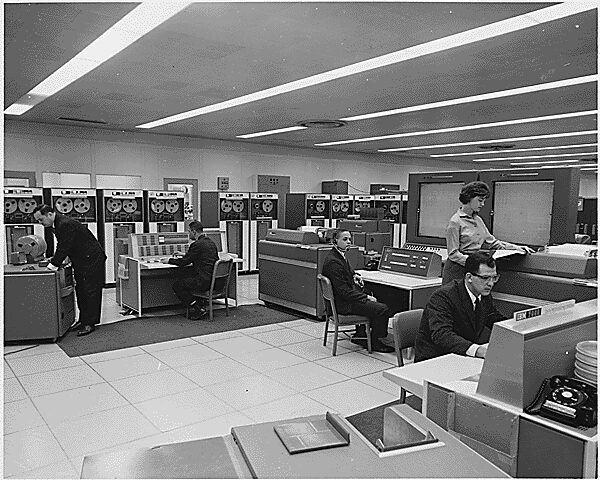
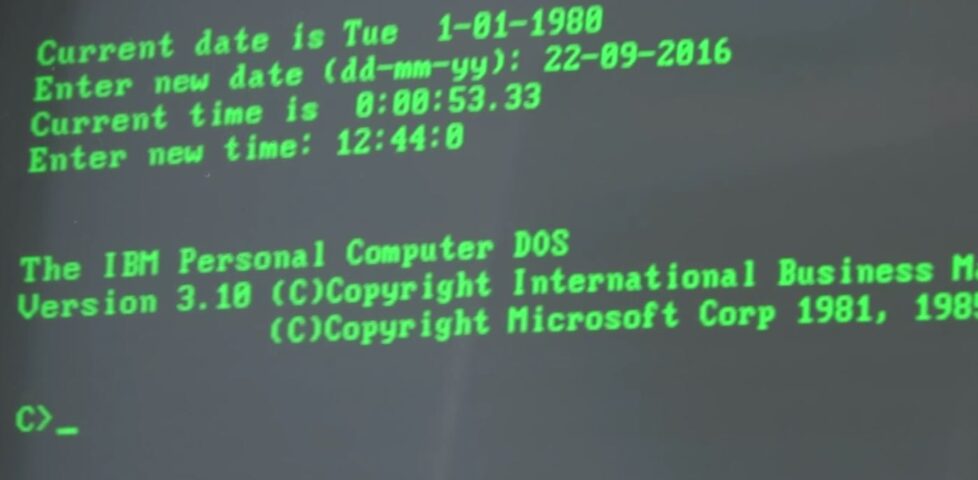
As an engineer for the U.S. Digital Service, Marianne Bellotti has encountered vintage mainframes that are still being used in production — sometimes even powering web apps. Last month she entertained a San Francisco audience with tales about some of them, in a talk called “7074 says Hello World,” at Joyent’s “Systems We Love” conference.
Created under the Obama administration, The U.S. Digital Service was designed as a start-up-styled consultancy to help government agencies modernize their IT operations, drawing engineering talent from Google, Facebook and other web-scale companies.
Or, as President Obama put it last March, it’s “a SWAT team — a world-class technology office.”
So it was fascinating to hear Bellotti tell stories about some of the older gear still running, and the sometimes unusual ways it was paired with more contemporary technology…
This is a repost promoting content originally published elsewhere. See more things Dan's reposted.
I have a vivid, recurring dream. I climb the stairs in my parents’ house to see my old bedroom. In the back corner, I hear a faint humming.
It’s my old computer, still running my 1990s-era bulletin board system (BBS, for short), “The Cave.” I thought I had shut it down ages ago, but it’s been chugging away this whole time without me realizing it—people continued calling my BBS to play games, post messages, and upload files. To my astonishment, it never shut down after all…
This is a repost promoting content originally published elsewhere. See more things Dan's reposted.
In the beginning there was NCSA Mosaic, and Mosaic called itself NCSA_Mosaic/2.0 (Windows 3.1), and Mosaic displayed pictures along with text, and there was much rejoicing…
Have you ever wondered why every major web browser identifies itself as “Mozilla”? Wonder no longer…
This link was originally posted to /r/todayilearned. See more things from Dan's Reddit account.
The original link was: http://www.elasmo-research.org/education/shark_profiles/torpediniformes.htm
This link was originally posted to /r/RedditThroughHistory. See
more things from Dan's Reddit account.
The original link was: http://i.dailymail.co.uk/i/pix/2014/04/17/article-2606950-1D2901CF00000578-199_634x753.jpg
This link was originally posted to /r/oxford. See more things from Dan's Reddit account.
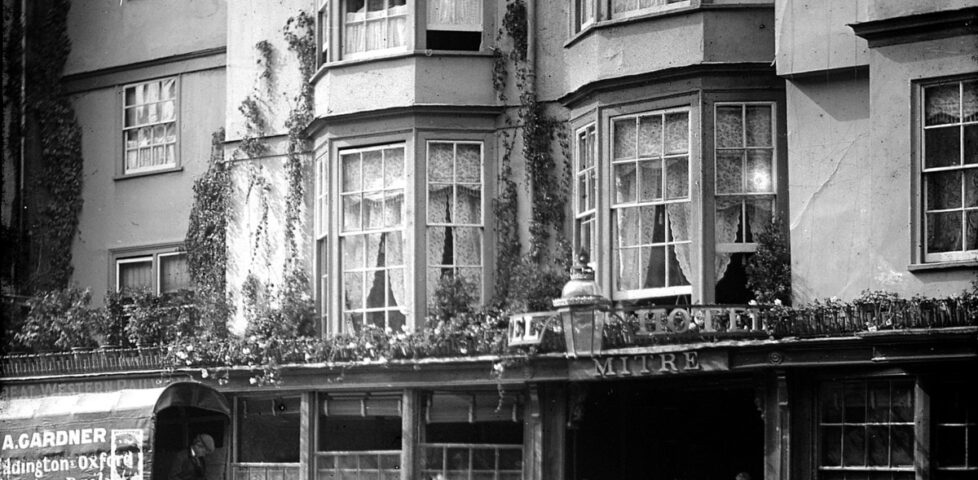
The original link was: http://www.oxfordmail.co.uk/news/community/memorylane/10962771.Recalling_the_last_days_of_horse_drawn_route_to_London/
While you’re tucking in to your turkey tomorrow and the jokes and puzzles in your crackers are failing to impress, here’s a little riddle to share with your dinner guests:
Which is the odd-one out: gypsies, turkeys, french fries, or the Kings of Leon?
In order to save you from “accidentally” reading too far and spoling the answer for yourself, here’s a picture of a kitten to act as filler:
Want a hint? This is a question about geography. Specifically, it’s a question about assumptions about geography. Have another think: the kittens will wait.
Okay. Let’s have a look at each of the candidates, shall we? And learn a little history as we go along:
The Romami are an ethnic group of traditionally-nomadic people, originating from Northern India and dispersing across Europe (and further) over the last millenium and a half. They brought with them some interesting anthropological artefacts of their culture, such as aspects of the Indian caste system and languages (it’s through linguistic similarities that we’ve been best-able to trace their multi-generational travels, as written records of their movements are scarce and incomplete), coupled with traditions related to a nomadic life. These traditions include strict rules about hygiene, designed to keep a travelling population free of disease, which helped to keep them safe during the European plagues of the 13th and 14th centuries.
Unfortunately for them, when the native populations of Western European countries saw that these travellers – who already had a reputation as outsiders – seemed to be immune to the diseases that were afflicting the rest of the population, their status in society rapidly degraded, and they were considered to be witches or devil-worshippers. This animosity made people unwilling to trade with them, which forced many of them into criminal activity, which only served to isolate them further. Eventually, here in the UK, laws were passed to attempt to deport them, and these laws help us to see the origins of the term gypsy, which by then had become commonplace.
Consider, for example, the Egyptians Act 1530, which uses the word “Egyptian” to describe these people. The Middle English word for Egypian was gypcian, from which the word gypsy or gipsy was a contraction. The word “gypsy” comes from a mistaken belief by 16th Century Western Europeans that the Romani who were entering their countries had emigrated from Egypt. We’ll get back to that.
When Europeans began to colonise the Americas, from the 15th Century onwards, they discovered an array of new plants and animals previously unseen by European eyes, and this ultimately lead to a dramatic diversification of the diets of Europeans back home. Green beans, cocoa beans, maize (sweetcorn), chillis, marrows, pumpkins, potatoes, tomatoes, buffalo, jaguars, and vanilla pods: things that are so well-understood in Britain now that it’s hard to imagine that there was a time that they were completely alien here.
Still thinking that the Americas could be a part of East Asia, the explorers and colonists didn’t recognise turkeys as being a distinct species, and categorised them as being a kind of guineafowl. They soon realised that they made for pretty good eating, and started sending them back to their home countries. Many of the turkeys sent back to Central Europe arrived via Turkey, and so English-speaking countries started calling them Turkey fowl, eventually just shortened to turkey. In actual fact, most of the turkeys reaching Britain probably came directly to Britain, or possibly via France, Portugal, or Spain, and so the name “turkey” is completely ridiculous.
Fun fact: in Turkey, turkeys are called hindi, which means Indian, because many of the traders importing turkeys were Indians (the French, Polish, Russians, and Ukranians also use words that imply an Indian origin). In Hindi, they’re called peru, after the region and later country of Peru, which also isn’t where they’re from (they’re native only to North America), but the Portugese – who helped to colonise Peru also call them that. And in Scottish Gaelic, they’re called cearc frangach – “French chicken”! The turkey is a seriously georgraphically-confused bird.
As I’m sure that everybody knows by now, “French” fries probably originated in either Belgium or in the Spanish Netherlands (now part of Belgium), although some French sources claim an earlier heritage. We don’t know how they were first invented, but the popularly-told tale of Meuse Valley fishing communities making up for not having enough fish by deep-frying pieces of potato, cut into the shape of fish, is almost certainly false: a peasant region would be extremely unlikely to have access to the large quantities of fat required to fry potatoes in this way.
So why do we – with the exception of some confusingly patriotic Americans – call them French fries. It’s hard to say for
certain, but based on when the food became widely-known in the anglophonic world, the most-likely explanation comes from the First World War. When British and, later, American soldier
landed in Belgium, they’ll have had the opportunity to taste these (now culturally-universal) treats for the first time. At that time, though, the official language of the Belgian army
(and the most-popularly spoken language amongst Belgian citizens) was French. The British and American soldiers thus came to call them “French fries”.
For a thousand years the Kingdom of Leon represented a significant part of what would not be considered Spain and/or Portugal, founded by Christian kings who’d recaptured the Northern half of the Iberian Peninsula from the Moors during the Reconquista (short version for those whose history lessons didn’t go in this direction: what the crusades were against the Ottomans, the Reconquista was against the Moors). The Kingdom of Leon remained until its power was gradually completely absorbed into that of the Kingdom of Spain. Leon still exists as a historic administrative region in Spain, similar to the counties of the British Isles, and even has its own minority language (the majority language, Spanish, would historically have been known as Castilian – the traditional language of the neighbouring Castillian Kingdom).
The band, however, isn’t from Leon but is from Nashville, Tennessee. They’ve got nothing linking them to actual Leon, or Spain at all, as far as I can tell, except for their name – not unlike gypsies and Egypt, turkeys and Turkey, and French fries and France. The Kings of Leon, a band of brothers, took the inspiration for their name from the first name of their father and their grandfather: Leon.
The Kings of Leon are the odd one out, because while all four have names which imply that they’re from somewhere that they’re not, the inventors of the name “The Kings of Leon” were the only ones who knew that the implication was correct.
The people who first started calling gypsies “gypsies” genuinely believed that they came from Egypt. The first person to call a turkey a “Turkey fowl” really was under the impression that it was a bird that had come from, or via, Turkey. And whoever first started spreading the word about the tasty Belgian food they’d discovered while serving overseas really thought that they were a French invention. But the Kings of Leon always knew that they weren’t from Leon (and, presumably, that they weren’t kings).
And as for you? Your sex is on fire. Well, either that or it’s your turkey. You oughta go get it out of the oven if it’s the latter, or – if it’s the former – see if you can get some cream for that. And have a Merry Christmas.
This is not a blog post about pentesting, or any other kind of software-engineering inspired testing of pens. Nor is it a blog post about the kind of fascination some people have with pens and ink. Instead, this is a blog post about history and psychology.
Recently, JTA asked me what I do when I want to test a pen, and he was surprised with the answer. Before I tell you how I answered, I’ll tell you about what I learned from the conversation. And before that, I’ll tell you about the history of pen testing. And then, finally, I’ll tell you why I think it’s important from a psychological perspective.
Historically, the “breaking in” of a new pen was called a probatio pennae, literally “pen test”, and would typically be a few lines of text or a short proverb: something that demonstrated the pen’s ability to write. For the entire mediaeval period, plus several centuries besides, the principle instrument for writing would be the quill pen: the primary wing feathers of a large bird such as a goose, often hardened in hot ashes, stripped of barbs, and cut down to size with an blade whose purpose lends its name to what we now call a “pen knife”. With such a tool, a scribe would want to be sure that the pen could hold an adequate nibful of ink without splashing or spraying, and – despite the high value of paper – it was clearly essential to write a whole sentence or two to be sure.
A modern ballpoint pen has no such issues, but instead introduces some of its own: a plastic-lined inkwell can be gradually penetrated by the air, causing the ink to dry up; the ball can become stuck and will not turn freely; air bubble can develop within the tube (especially if the pen is stored, or worse-still used, the wrong way up); and, of course, the pen can run out of ink. This typically precipitates its disposal: your biro isn’t built to be re-used for anything except perhaps to perform an emergency tracheotomy, and it’s cheap enough that you don’t want to waste your time repairing it. As a result, our pen tests have become fast, designed to determine within a few seconds whether the pen we’ve got is working or, in the case of a stuck ball, can be made to start working with a sufficiency of scribbling. Our culture of disposal can’t spare the time for any more than a cursory test before we give up and grab the next one.
So what do we write? What is the probatio pennae of our times? It’s been widely-reported (although I can’t find any decent citations) that, upon being offered a new pen to try out, 97% of people will write their own name. Now that statistic smells fishy to me (no good citations anywhere, and 97% of people use 97% as their “virtually all” number, for made-up statistics), but I’ve been testing the hypothesis among friends these last few days, and I’ve gathered enough evidence to convince me that it’s probably the case that many or most people will write their own name to test a pen.
Somebody had presumably asked JTA what he wrote, earlier in the day, because he took the time to tell me that when he tests a new pen, he typically writes the word “hello”.
Now I find that pretty weird. Maybe it’s the software engineer in me, but to me the mark of a good test is that it covers all of the possible cases, in the minimal possible effort. Writing your name is easy because it’s managed by what is popularly-called “muscle memory”: a second-season episode of Castle (correctly) used this as a plot point, when a man suffering from retrograde amnesia was unable to remember his name, but was still able to sign his name because the act of signing it had been rendered, by years of practice, into his procedural memory, which was unaffected by his condition. But writing a word, like “hello”… requires a comprehension of language. Unless he’s tested enough pens to have built a procedural memory of writing “hello” to test pens, JTA’s test has a greater number of neural dependencies, which – with apologies to those of you who aren’t interested in automated software testing – produces what we’d call an unnecessarily “brittle” test.
Me? I just scribble, which my quick survey (and several comparable ones online) show to be probably the second-most popular action to test a pen. Scribbling, to me, simply seems like the minimal test path: the single simplest thing that can be done with a pen that will demonstrate that it’s fit for purpose. I don’t need to test that a new pen can write words, because – to me – writing words in particular is not a function of the pen, but a function of my brain! To me, the pen’s function is simply one of transferring ink to the paper, and any semantic meaning coming from the ink is a product of my intellect, not of the writing implement.
So why is this important? Well: I have a half-baked hypothesis that the choice of what to write with a new pen might be linked to other aspects of our psychology. When I’m developing a new template for a website, for example, I use lorem ipsum text and dummy placeholder images as filler (just occasionally, I’ll use kittens, because kittens are adorable). That’s because the absence of meaning to the words that appear (I don’t read Latin, and even if I did, lorem ipsum is frequently mangled) has no bearing on my comprehension of the design: and, in fact, it can sometimes be a benefit to be deprived of the distraction of legible content.
But I’d hypothesise that people who write words as a probatio pennae would be less-comfortable with illegible placeholder-text in a design than those who drew scribbles or signed their name. I have a notion, from my own experience, that the same parts of the brain that is responsible for judging the quality of a writing implement are used in the judgement of a piece of design work. Hey: maybe if that’s true, graphic designers should have their clients test pens out, in their presence, before they decide whether to use believable filler or lorem ipsum text in the designs they’d like approved.
Or maybe I’m way off base. What do you write when you test a pen?
This link was originally posted to /r/todayilearned. See more things from Dan's Reddit account.
The original link was: http://www.oxforddnb.com/templates/article.jsp?articleid=30513
[since originally being published on Reddit, the resource in question has been moved to http://www.oxforddnb.com/view/10.1093/ref:odnb/9780198614128.001.0001/odnb-9780198614128-e-30513]
A couple of weeks ago – and right at the end of the incredibly-busy development cycle that preceded Three Rings‘ Milestone: Krypton – Ruth, JTA and I joined Ruth’s mother on a long-weekend trip to the island of Jersey. I’d been to the Channel Islands only once before (and that was spent primarily either in the dark and the rain, or else in the basement meeting room of a hotel: I was there on business!), so I was quite pleased to get the chance to visit more “properly”.
Of particular interest was the history of the island during the Second World War. Hitler had been particularly pleased to have captured British territory (after the islands, which were deemed undefensible by the British, had been demilitarised), and felt that the Channel Islands were of critical military significance. As a result, he commanded that a massive 10% of the steel and concrete of the Atlantic Wall project should be poured into the Islands: Jersey was, as a result, probably more heavily-fortified than the beaches of Normandy. In the end, this impregnable island fortress was left until last – Berlin fell before Jersey and Guernsey were liberated – and this was a factor in the great suffering of the islanders during the occupation. We visited the “war tunnels“, a massive underground complex built by the German defenders, and it was one of the most spectacular wartime museums I’ve ever experienced.
The tunnels are, of course, an exhibit in themselves – and that’s what I expected to see. But in actual fact, the care and attention that has gone into constructing the museum within is breathtaking. Starting with a history of the islands (in a tunnel filled with the music and postcards of the 1930s), you can just about hear the sounds of war, echoing distantly from the next chamber. There, you walk through a timeline of the invasions of Poland, Denmark, Norway and France, and see how – even with the enemy just barely over the horizon – Jersey still marketed itself as a holiday destination for Britons: a place to escape from wartime fears. Then comes the evacuation – the entire population given barely a day to decide whether they’re staying (and doubtless being occupied by Germany) or leaving (and never knowing when or if they’ll return to their homes). And then, the story of the occupation: framed in a wonderfully “human” context, through exhibits that engage with the visitor through storytelling and hypothetical questions: what would you do, under German occupation?
Certain to ensure that the whole trip didn’t turn into an educational experience, we played a fabulous round of adventure golf under the glorious sunshine of the Channel Islands. I did ever so well, up until the moment where I lost my ball and, swiftly afterwards, my ability to play the game in any meaningful capacity whatsoever. Eventually, Ruth and I tied, with JTA just a little behind… but we were all quite-embarrassingly well over par.
Jersey is apparently moderately famous for its zoo. Ruth’s mother had apparently been looking forward to visiting it for years, and – despite it only being of a modest size – had opted to spend an entire day there, and considered taking another half-day, too. Once the rest of us caught up with her there, we certainly had to agree that it was a pretty impressive zoo.
I was particularly pleased to visit their pair of very active young komodo dragons, their bat cave, their tortoises, and their remarkable aye-ayes – Jersey hosts one of very few successful captive aye-aye exhibits anywhere in the world (and let’s face it, aye-ayes are a fascinating enough species to begin with).
Ruth, her mother and I also got out for a little geocaching, an activity that I’d somewhat neglected since last summer. It turns out that there’s quite an active community on the island, and there were loads of local caches. We hit Not much room? first, which turns out to be among the best cache containers I’ve ever seen (spoilers below; skip the remaining photos if you’re ever likely to go ‘caching on Jersey), and certainly a worthy find for my 100th!
Later, we set out for View over St Aubins (which I’m sure must have been at a great viewpoint, once, until the trees grew taller and cut off the view), and a quite-enjoyable puzzle cache called Dear Fred… all in all, a great excuse to stretch our legs and to see a little more of the island than we might otherwise have.
I’m pretty sure I spent most of the holiday, though, catching up on sleep (interspersed with tiny bits of Three Rings work as we came to the tail end of the testing period – the WiFi at our B&B was, by-now-unsurprisingly, faster than that which we get at home). Or drinking. Or one, then the other. After a hard run of Three Rings development, coupled with “day job” work and the ongoing challenge of buying a house, I was pleased to be chilling out and relaxing, for a change.
Most-importantly, I reflected as we passed back through airport security on our way back to the mainland, nobody felt the need to kill anybody else the entire trip. Ruth’s mother and I, for example, haven’t always seen eye to eye (something about me ‘stealing’ Ruth from a life of monogamy, or otherwise being a bad influence, might have been an early issue), and it’s not unknown for relations to be strained between her and her daughter or her and her son-in-law, either. But even as we bickered our way through the departures lounge at Jersey Airport, at least I knew that we’d all survived.
All things considered, then: a successful trip. Fun times were had, lots of exciting history was learned, tortoises were prodded, and nobody killed anybody else, however much they might have been tempted.
This link was originally posted to /r/todayilearned. See more things from Dan's Reddit account.
The original link was: https://en.wikipedia.org/wiki/Vince_Coleman_(train_dispatcher)
Patrick Vincent Coleman
Patrick Vincent Coleman (13 March 1872 – 6 December 1917) was a train dispatcher for the Canadian Government Railways (formerly the ICR, Intercolonial Railway of Canada) who was killed in the Halifax Explosion, but not before he sent a message to an incoming passenger train to stop out of range of the explosion. Today he is remembered as one of the heroic figures from the disaster.
On the morning of 6 December 1917, the 45-year-old Coleman and Chief Clerk William Lovett were working in the Richmond station, surrounded by the railway yards near the foot of Richmond Street, only a few hundred feet from Pier 6. From there, trains were controlled on the main line into Halifax. The line ran along the western shore of Bedford Basin from Rockingham Station to the city’s passenger terminal at the North Street Station, located a mile to the south of Richmond Station. Coleman was an experienced dispatcher who had been commended a few years earlier for helping to safely stop a runaway train.
At approximately 8:45 a.m., there was a collision between SS Mont-Blanc, a French munitions ship carrying a cargo of high explosives, and a Norwegian vessel, SS Imo. Immediately thereafter Mont-Blanc caught fire, and the crew abandoned ship. The vessel drifted from near the mid-channel over to Pier 6 on the slack tide in a matter of minutes and beached herself. A sailor, believed to have been sent ashore by a naval officer, warned Coleman and Lovett of her cargo of high explosives. The overnight express train No. 10 from Saint John, New Brunswick, carrying nearly 300 passengers, was due to arrive at 8:55 a.m. Before leaving the office, Lovett called CGR terminal agent Henry Dustan to warn him of a burning ship laden with explosives that was heading for the pier. After sending Lovett’s message, Coleman and Lovett were said to have left the CGR depot. However, the dispatcher returned to the telegraph office and continued sending warning messages along the rail line as far as Truro to stop trains inbound for Halifax. An accepted version of Coleman’s Morse code message reads as follows:
“Hold up the train. Ammunition ship afire in harbour making for Pier 6 and will explode. Guess this will be my last message. Good-bye boys.”
The telegraphed warnings were apparently heeded, as the No. 10 passenger train was stopped just before the explosion occurred. The train was halted at Rockingham Station, on the western shore of Bedford Basin, approximately 6.4 kilometres (4.0 mi) from the downtown terminal. After the explosion, Coleman’s message, followed by other messages later sent by railway officials who made their way to Rockingham, passed word of the disaster to the rest of Canada. The railway quickly mobilized aid, sending a dozen relief trains with fire and medical help from towns in Nova Scotia and New Brunswick on the day of the disaster, followed two days later by help from other parts of Canada and from the United States, most notably Boston. Even though Lovett had left the station, both he and Coleman were killed in the explosion.
Although historians debate whether Coleman’s initial message actually contributed to stopping the No. 10 train, there is some documented evidence to indicate it did. No. 10’s Conductor Gillespie reported to the Moncton Transcript that although running on time, “his train was held for fifteen minutes by the dispatcher at Rockingham.”
Vince Coleman was also the subject of a Heritage Minute and was a prominent character in the CBC miniseries Shattered City: The Halifax Explosion. The Heritage Minute and other sources contain historical inaccuracies in that Coleman is shown warning others in the area surrounding the depot station of the impending explosion. In reality the Richmond Station was surrounded by freight yards. Another error is the exaggeration of the number of passengers aboard the Saint John train. The four-car overnight passenger train contained a maximum of 300 people, not 700 as claimed in the Heritage Minute. The warning message is also changed. Coleman’s telegraph key, watch and pen are on display in the Halifax Explosion exhibit at Halifax’s Maritime Museum of the Atlantic.
Coleman is interred at Mount Olivet Cemetery in Halifax, at the intersection of Mumford Road with Joseph Howe Drive. He was survived by his wife Frances, who lived until 1970. A street is named after him in the Clayton Park neighbourhood of Halifax, and in 2007 a section of Albert Street near his old home was renamed Vincent Street. A condominium near Mount Olivet Cemetery on Bayer’s Road is named The Vincent Coleman, also in his honour.
Coleman was inducted into the Canadian Railway Hall of Fame in 2004. A Halifax harbour ferry was named Vincent Coleman, by popular vote in the spring of 2017. The ferry was dedicated and officially entered service in a ceremony at the Halifax ferry terminal on March 14, 2018.
Wikipedia
This link was originally posted to /r/technology. See more things from Dan's Reddit account.
The original link was: http://www.computeractive.co.uk/pcw/pc-help/1925325/the-invented-gui
The IBM PC is not alone in having a significant anniversary this year. It is 25 years since Steve Jobs and Steve Wozniac started flogging Apple 1 circuit boards from a Palo Alto garage. But it was not until 1984 that the first Apple Mac made its appearance, with its revolutionary mouse-driven graphical user interface (GUI).
Apple’s achievement in recognising the potential of the GUI and putting it into a mass-market machine cannot be denied. But Apple did not invent the system, as many still believe.
The basic elements of both the MacOS and Windows were developed at Xerox’s Palo Alto Research Centre. Xerox did not patent them and blithely showed them off to Jobs, who promptly snaffled the lot.
The roots of the system go back still further. Every computer history website will tell you that Doug Englebart, hired by the US Defense Department to find new ways of harnessing the computer, invented the mouse in 1963.
But this is true only up to a point. Englebart’s contribution was important, but his ideas didn’t come out of the blue.
Roots in radar
Like the pulse circuits that provide the heartbeat of computing, the GUI has its roots in early radar systems. It was wartime radar work that got Englebart thinking about dynamic information displays, and radar engineers were the first to encounter the problem of how to use these displays to communicate with an intelligent machine.
Two engineers came up with a trackball, the innards of the mouse, a full 11 years before Englebart unveiled his device. Moreover, it was used to select a position on a screen to convey information to a processor, which is the fundamental operation of a GUI. One of the engineers, 80-year-old Tom Cranston, is still alive and living in Scotland.
Cranston’s early career nicely mirrors the shift the electronics industry went through in the 1940s and 1950s. Pre-war electronics was overwhelmingly analog, using thermionic valves as amplifiers, oscillators and detectors.
Cranston, who was born in Canada, spent World War II in Britain maintaining Air Force analog radio equipment.
After the war he took an electronics-focused engineering physics degree at the University of Toronto, before joining Ferranti Canada at a time when it was trying to gain a foothold in the nascent computer industry.
This used valves predominantly in switch mode for logic circuits. “What I studied in electronic circuits at university had nothing to do with what was set before us at Ferranti,” he said.
The Datar system – starting from scratch
Cranston was project engineer with a team working on a system for the Canadian Navy called Datar, an attempt to marry radar to digital computers which was way ahead of its time when it started in 1949.
Datar enabled a group of ships to share sonar and radar information. Up to 500 objects could be identified and tracked, and each ship saw the whole position plotted relative to its own moving position.
These calculations would be trivial today, but for Datar the logic had to be hard-wired using around 10,000 valves per ship.
Everything had to be done from scratch. The young engineers recruited for the project even had to prove that data could be transmitted by radio – a demonstration (using pulse-code modulation) that finally persuaded the cash-strapped Canadian government to back the scheme. Positional information was stored on a magnetic drum, a precursor of the hard disk.
The demonstration system on Lake Ontario used standard radar displays with a rotating beam that showed the blips of nearby aircraft, and ships; sonar data from notional submarines was simulated. They needed a way for an operator to identify a target blip and to enter its position.
These displays were drawn by conventional analog circuitry: there was no video RAM to play with. An electronic dot cursor could be thrown up during a brief flyback period between screen sweeps; the engineers needed to find a way that the operator could position this cursor smoothly over a target blip and store the co-ordinates.
To Cranston and his colleague Fred Longstaff, this was just another problem to be solved. “It didn’t seem a big thing… there was a tremendous urgency about all this and it is hard to recreate that atmosphere.”
The simplest answer would have been to set the dot’s X and Y deflections separately using two variable resistances, as used in nearly all electronic level controls, and then translate these values into digital co-ordinates.
Cranston and Longstaff came up with a far more elegant solution that used one control instead of two, and delivered the co-ordinates directly.
The wheel thing
Cranston, while on a visit to a naval establishment, had seen someone using a wheel on a stick, like a miniature pedometer, to measure distances on a chart. “We need something like that which works simultaneously in two dimensions,” he said to Longstaff.
Longstaff then came up with the idea of two follower wheels resting at right angles to a ball that was free to roll in any direction. The prototype actually used two pairs of wheels driven by a standard 4in Canadian bowling ball resting on an air bearing, a feature that is simpler to make than it sounds.
“You just mix up some plaster and stick a ball in it when it is beginning to set,” explained Cranston. “Then you let the plaster harden, take the ball out, drill holes into the plaster, and pump air through them. The result is like magic.”
A circle of holes close to the rim of each wheel passed a beam of light to a photo-sensor, which produced a string of countable pulses as the wheel rotated. Counting circuits were well understood by then, Cranston recalls.
One wheel measured upward movement and its opposite registered down, and the count was incremented or decremented accordingly to provide the Y co-ordinate; the other pair worked similarly to get the X co-ordinate.
Shutters blocked light from the two wheels’ measuring movements opposite to the current rotation. A button – the equivalent of a mouse click – was pressed to indicate a target.
Now and then
Through today’s eyes, this arrangement seems over-elaborate: why not use two wheels and a direction flag? Half a century later, Cranston cannot recall the details of why it was done in this way, but it seems to have been a matter of using what was at hand. Nowadays, a single line of code could cope with the changing directions; the Datar team had to hard-wire everything.
Also routine now is the control of screen positions by numbers, but it was new and intriguing to Cranston and Longstaff. An analog control would have a unique position for each screen co-ordinate, but there was no such direct relationship in the case of the trackball: if you moved the cursor by altering the stored number, the ball would still work regardless of its orientation.
They thought of the device as “centreless” and Longstaff jokingly referred to it as the “turbo-encabulator”.
The whole exercise was what in today’s jargon would be called a proof of concept. The team had to show Datar could work in order to raise the money to refine it, and it needed a lot of money. Valves were unreliable and not really suitable for use on a ship, so the whole system would eventually need rebuilding round new-fangled transistors.
Canada could not afford to do this itself and was seeking a partnership with another country. A system was demonstrated to a succession of military and technical decision makers. One US military observer was so astonished by the sophisticated display that he peered under a table to ensure there was no tomfoolery going on.
Nobody bought into the system. Britain and the US, the most likely partners, had their own projects and there was probably a “not invented here” factor.
Ironically, a prototype US system that Cranston saw later at MIT didn’t need a trackball because it was more advanced: targets were identified and tracked automatically.
Research unrewarded
Many people, though, had seen the trackball. The question of patenting it never arose. Ferranti UK, the parent company, had limited contact with its Canadian arm. Executives had little idea of what was going on at the research level.
Cranston said: “Think about the state of play in the computer world in 1952. There were only a handful of operating computers in the world. Almost all were unreliable. There was no common software language… pulse rates were only 50-100kHz. The idea of using a ball to control a cursor which could intervene and change program execution was a million miles ahead.”
Ball resolvers were not new. They had appeared in navigational and ballistic control mechanisms. The achievement of Longstaff and Cranston was to see how one could be used in conjunction with an electronic display. It was, Cranston says, a generation before its time.
Where Datar went
The Datar experience went into a programmable computer called the FP-6000 which was launched in 1961 by Ferranti Packard – the original company merged in 1958 with Packard Electric.
The FP-6000 was one of the first to use an operating system and was ahead of IBM rivals in its ability to multi-task. Its chief architect was Longstaff. He ended his career as a comms guru with Motorola and died five years ago.
The FP-6000 ended up with ICL, after being bought by Britain’s International Computers and Tabulators, and the two UK firms sold 3000 of them worldwide as the 1900 series.
Cranston left Ferranti in 1956 to take what he describes as a “giant leap backwards”. He joined the Canadian arm of a US company making data loggers and alarm scanners for the Canadian power industry that used logic in the form of mechanical switch arrays.
Electronic computers were considered too unreliable and too expensive for the task. Telephone relay logic filled the gap for another decade.
In fact, Intel’s seminal 4004 was designed originally for tasks like this.
Cranston left after 11 years and moved near to Inverness with his Scottish wife, setting up home in an old mill that he converted himself. He taught for several years in the local technical college, introducing students to the mysteries of the microprocessor.
Surprisingly, Cranston does not have a computer. “They are too fascinating,” he said. “I’d get so involved, I wouldn’t have time for anything else.”
Back in 2009, I wrote
about Open-Source Shaving, and the journey I’ve taken over the years to arrive at my
current preferred shaving solution: the double-edged traditional safety razor pictured. It’s great: reasonably heavy, just aggressive enough, and far more… manly than anything
made of plastic. It’s so manly, in fact, that merely using it results in a surge of testosterone sufficient to make you grow a bad-ass beard, which somewhat undermines the
entire exercise.
That blog post attracted a lot of comments, both on and off the web, and since I wrote it I’ve tried a few other different approaches to shaving, too. Like this:
The Rolls Razor
After reading my first Open-Source Shaving post, a friend delivered to me a Rolls Razor that they’d found in a charity shop. I’ll admit that it took me far longer than it ought to have just to open the case, but when I did, I was thoroughly impressed.
The Rolls is a self-contained, self-sharpening, safety razor, in a sleek portable case. That’s right: it’s a safety razor… that you can reuse like a straight razor! The last one was made in the 1950s, and I’m pretty sure that mine was made in the mid-1940s, but these things were built to last and the one I was given is still in perfect working order despite being older than my parents (who aren’t).
The case can be opened from either side, and under each “lid” is a different surface: a sharpening stone under one and a leather stop under the other. A lever arm mechanism folds down and attaches to the blade, such that moving the lever backwards and forwards sharpens or strops the blade, depending on whichever side you didn’t remove. It’s tucked into the most remarkably small space, and yet still manages a wonderful feat of trickery: as is correct, the blade grinds forwards when it’s against the stone, and draws backwards when it’s against the strop – a remarkable feat of engineering.
When you’re ready to use it, a clip-on handle (which also fits neatly inside the case) is attached to the blade. The fit is snug, and it’s not always easy to push the blade into position, but that’s far better I suppose than a loose and wobbly blade.
The shave is raw and basic. Despite the fact that it looks no more-sophisticated than a straight edge, it’s almost as easy to shave with as a disposable-blade safety razor. The blade feels a little bit narrow, and it takes more strokes than would be ideal, but it’s perfectly usable. On the scale of things, it’s certainly preferable to an electric shaver or a plastic disposable razor, but it’s not quite as good as a cartridge razor or – still my personal favourite – a double-edged safety razor with disposable blades.
Nonetheless, it’s a wonderful piece of engineering and I’m proud to own one. There’s a great guru-page about the Rolls Razor, if you’re interested to learn more.
The Shavette
Here’s where things get scary.
I’ve always wanted to try a straight edge – you know, a proper razor blade: a strip of metal sharpened on one side. I’ve been told that it’s an incredibly close shave, a wonderfully tactile experience, and a challenge to dexterity to challenge even the handiest of men. But there’s an overhead: you need a strop, and a sharpening stone, and there’s a whole suite of skills that you need to learn about care and maintenance before you even get close to putting a blade near a face.
A shavette – or “injector razor” – is a simpler alternative. It’s functionally a straight razor, but instead of having a blade it has a pair of closely aligned grips and a clip to hold them in place. You take a traditional double-edged razor blade (which I have about a million of anyway), snap it – carefully! – in half, and insert one half into the grips, then clip it into place. Ta-da: you have a piece of metal shaped like a straight razor, but holding a disposable sharp edge.
The challenge is learning how to use it. It turns out that there’s a reason that you have a barber do this for you: it’s actually really quite hard!
Finding a suitable angle of attack isn’t hard so long as you’re used to using a safety razor already: that same 30° or so angle that words for a safety works when you don’t have a guard in place too. You’ve got to remember to maintain the angle, of course, because the tactile feedback is subtler and more gentle, and it’s easy to slip up. It’s also challenging because – unlike a real straight edge – razor blades have corners, and those corners can catch if you’re not taking care in more-rugged terrain such as around the jawline.
The grip used for a straight razor looks unwieldy, but it’s actually quite comfortable and gives a great deal of control over the motion of the blade. It’s possible to perform strokes that just aren’t feasible with any other kind of shaving equipment, like scything, where a rotation is applied such that the tip of the blade moves further than the end closest to your fingers. It’s challenging, but effective.
But the biggest difficulty with shaving yourself with a straight razor or shavette, for me, has to be that you have to be ambidextrous! I’d read this fact online even before I got my razor, but I’d somehow glossed over it: somehow in my mind I thought that I’d have no problem with just using my right hand. But the first time I tried to shave with a shavette, I realised my mistake: if you try to shave the left-hand side of your face with your right hand… your arm is in front of your eyes! The angle is just about achievable, but without being able to see the mirror you’re quickly going to find yourself in pain.
I got the hang of working left-handed, eventually, but it was a struggle. And while the shave isn’t much cleaner than a safety razor, it is possible to get a great deal of control. I still use my shavette from time to time, particularly if I want to get a very sharp, tidy finish around the edges of my beard or to straighten my mustache, but from a standpoint of speed and convenience alone, my safety razor is still the first thing I reach for.
The Glass Hone
I was recently given a glass hone: a small piece of slightly curved glass that can be used to hone (align) plain old razor blades. The theory is sound – it’s well known that blades require honing far sooner than they actually require sharpening. It’s not possible to strop a double-edged razor blade, but if this mechanism works then it would provide a means to dramatically extend the lifespan of each blade.
I’ve not used it yet: I’m naturally skeptical of claims of such a magnitude, and I’d like to put together a good double-blind test to see if it actually works as well as it should. I’m thinking I’ll run down a pair of blades, store them, label them, and have somebody else hone one (of their choice) without telling me which. I’ll then try to re-shave with both, try to identify the honed one, and then re-run the whole experiment a few more times before asking my assistant to identify which blades were the honed ones.
Maybe I take these things too seriously.
In any case, I can’t report back to you on how useful such a tool is until I actually get the chance to do so, and as I don’t bother to shave every day, it’d take me a while to get any results. Perhaps others would like to volunteer to participate in my experiment, too? Is there anybody out there who shaves with a double-edged safety razor who’s willing to buy one of these things and provide feedback? We could even have our assistants liaise with one another behind our backs and agree not to hone either blade for one or the other of us, to act as a control group…
Okay: way too seriously.