How the European heatwave fucked me up

CW: reference to bodily processes, broad discussion of illness

This year’s “once in a generation” weather

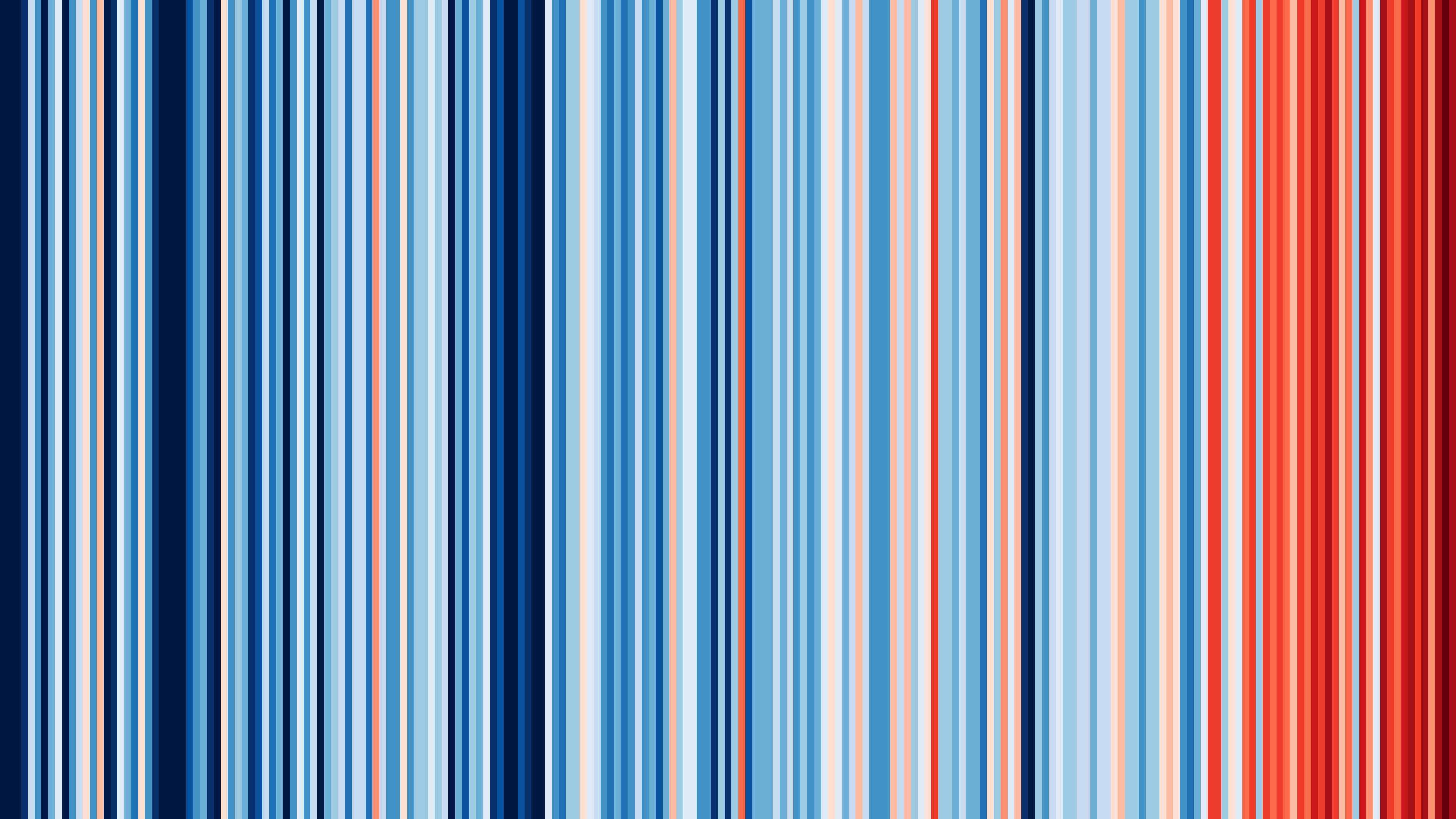
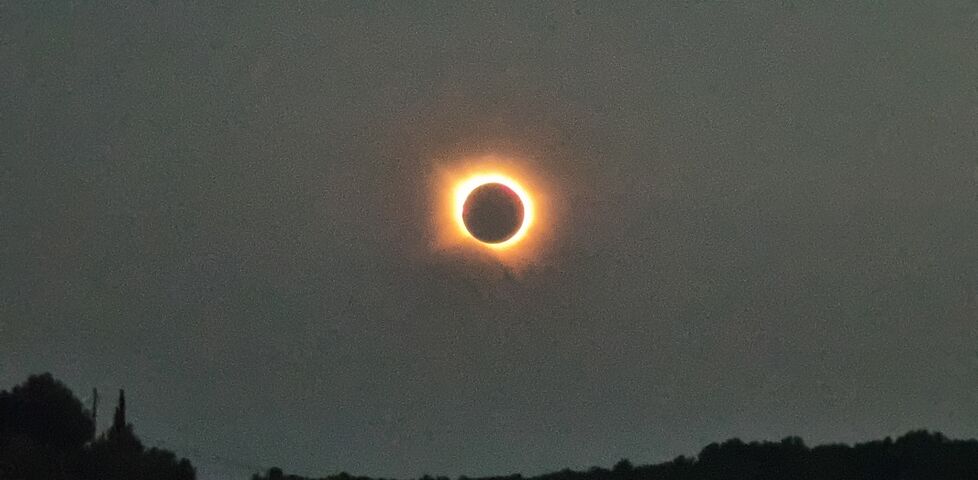
Last week was brutally hot across Europe, with multiple countries recording their hottest ever temperatures. Others including the UK repeatedly smashed their record for the month of June.

While climate change is a global problem, it affects different regions in different ways, and Europe is disproportionately affected by hotter temperatures and heatwaves.

The “Chicory House” we’re currently living in has terrible thermal characteristics, so we took the advice of wiser folks about staying cool. We created a “cold zone” in the living room with a portable air conditioner and for a few days I lived, worked, ate and slept mostly out of that one room (along with the children when they were trapped home because their schools had been shut down).

Out of my London window; dome and spires and chimneys, mist and smoke (1890), by Joseph Pennell. A serene watercolor captures a bridge spanning across what appears to be a wide river, with a city skyline barely visible in the misty background. Murky reflections waver beneath the bridge, suggesting either the early hours of morning or a dusky evening.
Among the reasons described for Europe’s faster warming than other parts of the world is that we’ve improved our air quality so much. Maybe we should’ve kept the smog?1

I thought our precautions would be sufficient, but I was wrong.

Heat exhaustion

After coming home from a shady morning dog walk on Friday2, I felt hot and grumpy, tired, and incredibly thirsty. I pushed on through my workday’s Friday hotfix, then retreated to my bedroom for a nap.

This was a mistake: my bedroom is somehow the hottest room in the Chicory House.

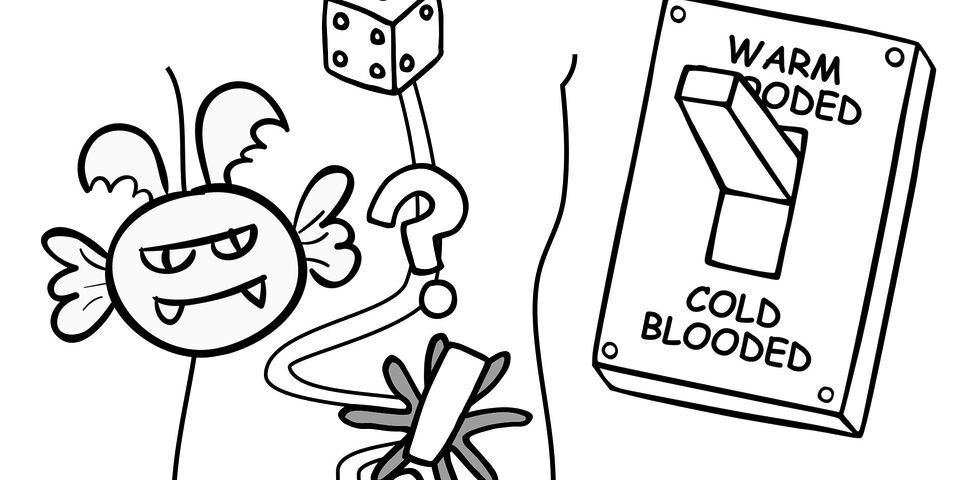
On Saturday I felt dreadful. It was as if some tiny monster had discovered a switch: one that they could use, randomly and without warning, to toggle me from being a warm blooded animal to a cold blooded one and back again, intermittently wrecking my capacity to regulate my temperature.

Here: I made a simulator3

A monster with horns and wings hovers by a switch labelled 'warm blooded' and 'cold blooded'. Right now it's set to 'cold blooded'.
The Dan Thermoregulation Switch™️. Go on, you can flip it if you want. (Unless you’re in a feed reader or have JS disabled.)

I’d feel overwhelmingly hot but barely sweat, or I’d suddenly switch to feeling cold and shivering. A cool bath helped, but only for a little while: between going to bed on Saturday night and getting up on Sunday morning there were more hours during which I took a shower4 than hours during which I slept.

Water that I drank seemed to just fall straight through without touching either sweat glands or my bladder. Or else it’d come right back out the way it went in. Attempting to eat solid foods would result in hours of horrible abdominal cramps.

Clearly, I was quite unwell.

Opportunistic infection

If you’re looking at all of those symptoms and you’re thinking “wait, could this be heatstroke-related organ damage?”… then yeah, that was one of my concerns. I mean: I’ve only once felt more-ill than I did on Sunday… and that was over a decade ago when I was hospitalised with an antibiotic-resistant kidney infection.

I can’t claim that I wasn’t influenced by growing reports of long heatwave-related waits at A&E departments. If I have to sit somewhere uncomfortable, feeling rotten, then it might as well be at home!

An orange, sliced into quarters, alongside a glass of slightly-opaque water.
By Monday afternoon I’d graduated out of a fluids-only diet to one that allowed mostly-water food. Like oranges, served here with an oral rehydration therapy drink (blech).

But also: on the balance of probability, I figured I knew what had happened. I’d suffered a moderately severe heat exhaustion that’d weakened my immune response to some kind of opportunistic bacterial gastroenteritis5.

When it reached Monday, the monster had stopped flicking the thermoregulation switch (did you set it the way you think it belongs, by the way?), but my digestive system still just seemed to be in its degraded state. That is: just an inflamed and painful tube through which I could pour fluids.

Conventional illustration of a digestive system alongside one labelled 'Dan's digestive system', showing a pipe leading from the 'input hole' to the 'output hole' with few corners, but structures labelled 'pipe (bidirectional)', 'filter #1 (rejects at random)', 'filter #2 (rejects most solids)', 'pain generator (function unknown)', and 'output hole (frequent schedule; less waiting!).
I’ve produced what I feel is a more-accurate illustration of the operation of my digestive system right now.
With thanks to weareheroes for the icons, used under a Creative Commons license.

So I finally caved and saw a doctor, who prodded and poked me and said… yup, my hunch was right and I should go back to lying in the cool and living on fluids and come bother him again only if it doesn’t get any better (or gets worse).

If you’d noticed that I’d been unusually “offline” for the last few days6… well, it’s because mostly I’ve been lying in bed and/or groaning in discomfort.

But I feel like I’m moving in the right direction again now, and I’m optimistic that when I try solid food again today that maybe I’ll be able to digest it. Fingers crossed!

Lessons learned

So what have we learned from all of this:

  1. Heat exhaustion is real, and it’s nasty, and it can leave you vulnerable to all kinds of other problems.
  2. (Even when my guts are in pain) I can trust my gut feeling on whether or not it’s a medical emergency7. Please disregard any Aber Effect comic which implies otherwise.
  3. You can probably be trusted with access the the Dan Thermoregulation Switch. You didn’t play with it at all!

Let me know below whether I was right to let you play with the switch. And look forward to hearing more from me now that I’m working towards feeling better again.

Footnotes

1 Obviously this is a joke, but the world we live in nowadays means that I feel that I have to say so.

2 It’s possible my heat exhaustion had begun to build up before Friday: Ruth observes that I reported feeling dizzy or lightheaded a couple of times during the week prior. But for the sake of the story, let’s call Friday the start of the problem.

3 If you can’t see the results of toggling the switch, it’s because I’m too far away from you to hear me groaning. Or maybe because it’s not that accurate a simulation. One of those.

4 Several times, literally lying foetal, exhausted, on the floor of the shower, only moving to tweak the dial to keep my body at the temperature I felt it “should” be at.

5 I’ve no idea how my relatively-isolated lifestyle exposed me to such an infection, but it’s quite possible that it was brought home by somebody, even me, whose immune system was working better and had it suppressed to the point of being asymptomatic… but with me exhausted and dehydrated it was able to gain a foothold. Or maybe it came from somewhere else. Perhaps I just need to stop French kissing the dog?

6 I was running a daily streak of 177 days of consecutive blogging – every day so far this year! – up until I got ill, so posting nothing to DanQ.me for four days… probably sounded like I was dead!

7 Sometimes it’s just bad sun tag-teaming with a bad stomach bug!

× × ×

Hotdog Among the Trees

As the UK’s heatwave continues, the dog and I were delighted that this morning was sufficiently overcast that we could manage a proper walk without completely melting.

A French Bulldog on a forested path, panting happily.

Her breed copes badly with the heat and we’ve lately had to keep her indoors or in the shade more than she’d like, so a chance to run around among the trees was very welcome!

×

[Bloganuary] Live Long and Prosper

This post is part of my attempt at Bloganuary 2024. Today’s prompt is:

What are your thoughts on the concept of living a very long life?

Today’s my 43rd birthday. Based on the current best statistics available for my age and country, I might expect to live about the same amount of time again: I’m literally about half-way through my anticipated life, today.1

Naturally, that’s the kind of shocking revelation that can make a person wish for an extended lifespan. Especially if, y’know, you read Andrew’s book on the subject and figured that, excitingly, we’re on the cusp of some meaningful life extension technologies!

Paperback copy of Ageless: The New Science of Getting Older Without Getting Old, by Andrew Steele.
I’ll be leaning heavily on the only book I’ve read on the subject for this one.

My very first thought when I read Andrew’s thoughts on lifespan extension was exactly the kind of knee-jerk panic response he tries to assuage with his free bonus chapter. He spends a while explaining how he’s not just talking about expending lifespan but healthspan, and so the need healthcare resources that are used to treat those in old-age wouldn’t increase dramatically as a result of lifespan increase, but that’s not the bit that worries me. My concern is that lifespan extension technologies will be unevenly distributed, and the (richer) societies that get them first are those same societies whose (richer) lifestyle has the greater negative impact on the Earth’s capacity to support human life.2

Andrew anticipates this concern and does some back-of-napkin maths to suggest that the increase in population doesn’t make too big an impact:

In this ‘worst’ case, the population in 2050 would be 11.3 billion—16% larger than had we not defeated ageing.

Is that a lot? I don’t think so—I’d happily work 16% harder to solve environmental problems if it meant no more suffering from old age.

This seems to me to be overly-optimistic:

  • The Earth doesn’t care whether or not you’re happy to work 16% harder to solve environmental problems if that extra effort isn’t possible (there’s necessarily an upper limit to how much change we can actually effect).
  • 16% extra population = 16% extra “work” to save them implies a linear relationship between the two that simply doesn’t exist.
  • And that you’re willing to give 16% more doesn’t matter a jot if most of the richest people on the planet don’t share that ideal.

Fortunately, I’m reassured by the fact that – as Andrew points out – change is unlikely to happen fast. That means that the existing existential threat of climate change remains a bigger and more-significant issue than potential future overpopulation does!

In short: while I’m hoping I’ll live happily and healthily to say 120, I don’t think I’m ready for the rest of the world to all suddenly start doing so too! But I think there are bigger worries in the meantime. I don’t fancy my chances of living long enough to find out.

Gosh, that’s a gloomy note for a birthday, isn’t it? I’d better get up and go do something cheerier to mark the day!

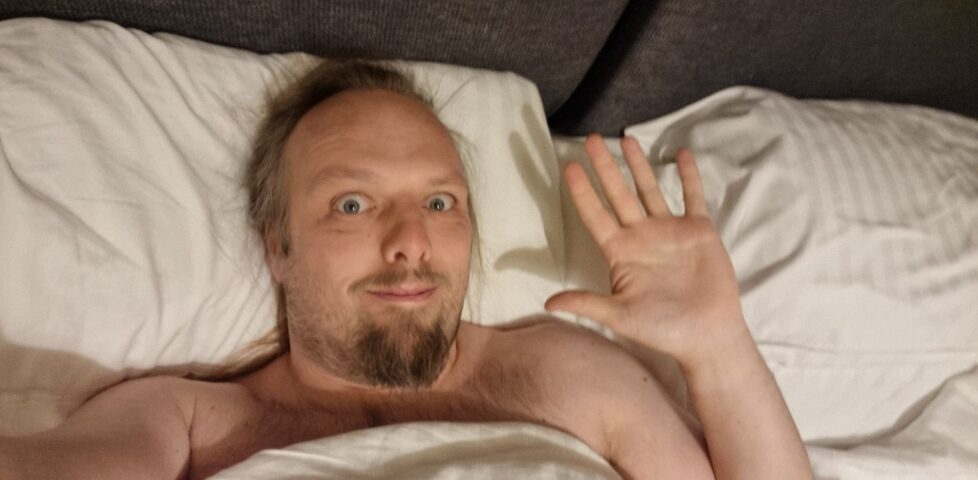
Dan waves, his head and shoulders peeping out from underneath a white duvet.
This post brought to you from my bed at the forest chalet I’ve spent the weekend in!

Footnotes

1 Assuming I don’t die of something before them, of course. Falling off a cliff isn’t a heritable condition, is it? ‘Cos there’s a family history of it, and I’ve always found myself affected by the influence of gravity, which I believe might be a precursor to falling off things.

2 Fun fact: just last month I threw together a little JavaScript simulator to illustrate how even with no population growth (a “replacement rate” of one child per adult) a population grows while its life expectancy grows, which some people find unintuitive.

× ×

Alpha-Gal and the Gaia Hypothesis

Ticking Point

An increasing number of people are reportedly suffering from an allergy to the meat and other products of nonhuman mammals, reports Mosaic Science this week, and we’re increasingly confident that the cause is a sensitivity to alpha-gal (Galactose-alpha-1,3-galactose), a carbohydrate produced in the bodies of virtually all mammals except for us and our cousin apes, monkeys, and simians (and one of the reasons you can’t transplant tissue from pigs to humans, for example).

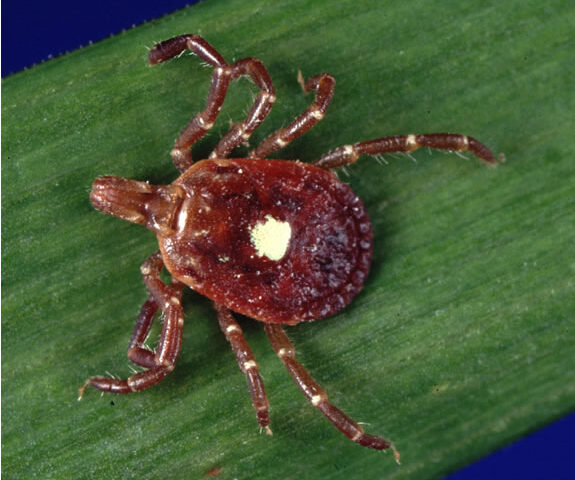
Lone star tick
The lone star tick (You call that a star, tick? Looks like a blob to me!), one of several vectors for alpha-gal sensitivity.

The interesting thing is that the most-common cause of alpha-gal sensitivity appears to be the bite of one of a small number of species of tick. The most-likely hypothesis seems to be that being bitten by such a tick after it’s bitten e.g. deer or cattle may introduce that species’ alpha-gal directly to your bloodstream. This exposure triggers an immune response through all future exposure, even if it’s is more minor, e.g. consuming milk products or even skin contact with an animal.

That’s nuts, isn’t it? The Mosaic Science article describes the reaction of Tami McGraw, whose symptoms began in 2010:

[She] asked her doctor to order a little-known blood test that would show if her immune system was reacting to a component of mammal meat. The test result was so strongly positive, her doctor called her at home to tell her to step away from the stove.

That should have been the end of her problems. Instead it launched her on an odyssey of discovering just how much mammal material is present in everyday life. One time, she took capsules of liquid painkiller and woke up in the middle of the night, itching and covered in hives provoked by the drug’s gelatine covering.

When she bought an unfamiliar lip balm, the lanolin in it made her mouth peel and blister. She planned to spend an afternoon gardening, spreading fertiliser and planting flowers, but passed out on the grass and had to be revived with an EpiPen. She had reacted to manure and bone meal that were enrichments in bagged compost she had bought.

A delicious-looking BLT. Mmm, bacon.
Cats can eat bacon. But some cat owners can’t. More bacon for the cats? The plot thickens. Also: haven’t used this picture in a while, have I?

Of course, this isn’t the only nor even the most-unusual (or most-severe) animal-induced allergy-to-a-different-animal we’re aware of. The hilariously-named but terribly-dangerous Pork-Cat syndrome is caused, though we’re not sure how, by exposure to cats and results in a severe allergy to pork. But what makes alpha-gal sensitivity really interesting is that it’s increasing in frequency at quite a dramatic rate. The culprit? Climate change. Probably.

It’s impossible to talk to physicians encountering alpha-gal cases without hearing that something has changed to make the tick that transmits it more common – even though they don’t know what that something might be.

“Climate change is likely playing a role in the northward expansion,” Ostfeld adds, but acknowledges that we don’t know what else could also be contributing.

Meat Me Half-Way

To take a minor diversion: another article I saw this week was the BBC‘s one on the climate footprint of the food you eat.

BBC graph showing climate impact of common foods. Beef is terrible *unshocker*.
An average serving of beef contributes almost 8kg of greenhouse gases, compared to around 1kg for chicken. Thanks, Beeb (click through for full article).

A little dated, perhaps: I’m sure that nobody needs to be told nowadays that one of the biggest things a Westerner can do to reduce their personal carbon footprint (after from breeding less or not at all, which I maintain is the biggest, or avoiding air travel, which Statto argues for) is to reduce or refrain from consumption of meat (especially pork and beef) and dairy products.

Indeed, environmental impact was the biggest factor in my vegetarianism (now weekday-vegetarianism) for the last eight years, and it’s an outlook that I’ve seen continue to grow in others over the same period.

Seeing these two stories side-by-side in my RSS reader put the Gaia hypothesis in my mind.

SMBC comic frame: "Yeah, I don't buy it. If Earth is self-regulating and alive, why hasn't it produced an immune response against humanity?"
If you want a pop-culture-grade introduction to the Gaia hypothesis in the context of climate change, this SMBC comic does the job, and does so almost with fewer words than this caption explaining that it does so.

If you’re not familiar with the Gaia hypothesis, the basic idea is this: by some mechanism, the Earth and all of the life on it act in synergy to maintain homeostasis. Organisms not only co-evolve with one another but also with the planet itself, affecting their environment in a way that in turn affects their future evolution in a perpetual symbiotic relationship of life and its habitat.

Its advocates point to negative feedback loops in nature such as plankton blooms affecting the weather in ways that inhibit plankton blooms and to simplistic theoretical models like the Daisyworld Simulation (cute video). A minority of its proponents go a step further and describe the Earth’s changes teleologically, implying a conscious Earth with an intention to protect its ecosystems (yes, these hypotheses were born out of the late 1960s, why do you ask?). Regardless, the essence is the same: life’s effect on its environment affects the environment’s hospitality to life, and vice-versa.

There’s an attractive symmetry to it, isn’t there, in light of the growth in alpha-gal allergies? Like:

  1. Yesterday – agriculture, particularly intensive farming of mammals, causes climate change.
  2. Today – climate change causes ticks to spread more-widely and bite more humans.
  3. Tomorrow – tick bites cause humans to consume less products farmed from mammals?
Daisyworld in SimEarth
Both my appreciation and my rejection of Gaia Hypothesis can probably be traced to me playing way too much SimEarth as a teenager. Here’s my Daisyworld in state of equilibrium, because I haven’t yet gotten bored and spawned dinosaurs to eat all of the daisies.

That’s not to say that I buy it, mind. The Gaia hypothesis has a number of problems, and – almost as bad – it encourages a complacent “it’ll all be okay, the Earth will fix itself” mindset to climate change (which, even if it’s true, doesn’t bode well for the humans residing on it).

But it was a fun parallel to land in my news reader this morning, so I thought I’d share it with you. And, by proxy, make you just a little bit warier of ticks than you might have been already. /shudders/

× × ×

If Doggerland Had Not Drowned

This is a repost promoting content originally published elsewhere. See more things Dan's reposted.

by Lee Rimmer

Doggerland

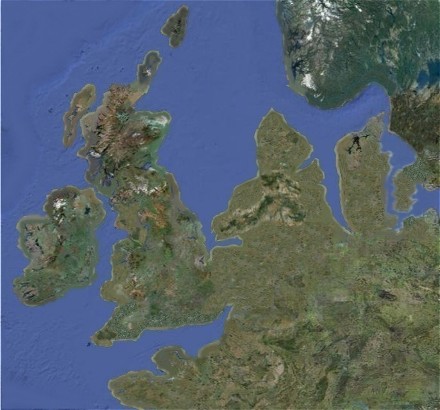
As well additional land around our familiar coastlines, the lower sea level reveals a low lying 9,000 square mile landmass called Doggerland – named after Dogger Bank, the large sandbank which currently sits in a shallow area of the North Sea off the east coast of England (dogger being an old Dutch word for fishing boat).

Doggerland had a rich landscape of hills, rivers and lakes and a coastline comprising lagoons, marshes and beaches.  It had woodlands of oak, elm, birch, willow, alder, hazel and pine.  It was home to horses, aurochs, deer, elks and wild pigs.  Waterfowl, otters and beavers abounded in wetland areas and the seas, lakes and rivers teemed with fish.  It was probably the richest hunting and fishing ground in Europe at the time and had an important influence on the course of prehistory in northwestern Europe as maritime and river-based societies adapted to this environment.

I love a bit of alternative history fiction, and this is a big one, going all the way back to prehistoric times. What if the period of global warming that took place thousands of years ago, “sinking” Doggerland and separating the formerly-connected British Isles from one another and from the European mainland? The potential impact is massive, affecting geography, history, and politics indefinitely, and it’s fun to think – and read – about.

The Dirty Secret of the Global Plan to Avert Climate Disaster

This is a repost promoting content originally published elsewhere. See more things Dan's reposted.

In 2014 Henrik Karlsson, a Swedish entrepreneur whose startup was failing, was lying in bed with a bankruptcy notice when the BBC called. The reporter had a scoop: On the eve of releasing a major report, the United Nation’s climate change panel appeared to be touting an untried technology as key to keeping planetary temperatures at safe levels. The technology went by the inelegant acronym BECCS, and Karlsson was apparently the only BECCS expert the reporter could find.

Karlsson was amazed. The bankruptcy notice was for his BECCS startup, which he’d founded seven years earlier after an idea came to him while watching a late-night television show in Gothenburg, Sweden. The show explored the benefits of capturing carbon dioxide before it was emitted from power plants. It’s the technology behind the much-touted notion of “clean coal,” a way to reduce greenhouse gas emissions and slow down climate change.

Karlsson, then a 27-year-old studying to be an operatic tenor, was no climate scientist or engineer. Still, the TV show got him thinking: During photosynthesis plants naturally suck carbon dioxide from the air, storing it in their leaves, branches, seeds, roots, and trunks. So what if you grew crops and then burned those crops for electricity, being sure to capture all of the carbon dioxide emitted? You’d then store all that dangerous CO2 underground. Such a power plant wouldn’t just be emitting less greenhouse gas into the atmosphere, it would effectively be sucking CO2 from the air. Karlsson was enraptured with the idea. He was going to help avert a global disaster.

Wonderful but horrifying longread about the truth of the theoretical effectiveness of the Paris Agreement. The short: if we’re going to keep global temperature rises under a “bad” 2°C rather than closer to a “catastrophic” 4°C, we need to take action, but the vast majority of the plans that have been authored on how to do that rely on investment in technologies and infrastructure that nobody is investing in and that might not work even if we did. We’re fucked, in short. See also this great video about greening the Sahara in an effort to lock carbon into plants (another great idea that, surprise surprise, nobody’s investing in).