It’s been a frantic week of security scares — it seems like every day there’s a new vulnerability. It’s been a real struggle for me personally to pretend like I understand what’s
going on when asked about it by family members.
Seeing people close to me get all flustered at the prospect of being “powned” has really put things in perspective for me.
So, it is with a heavy heart that I’ve decided to come clean and tell you all how I’ve been stealing usernames, passwords and credit card numbers from your sites for the past few
years.
A deconstruction of Fleetwood Mac's "Dreams," off their masterpiece 1977 album, Rumours. Get 10% any purchase here: http://squarespace.com/nerdwriter Support…
Hold on tight, because with a stabilised camera shot and a pair of sunglasses, you're about to see a video that works in both 2D and 3D at the same time. The…
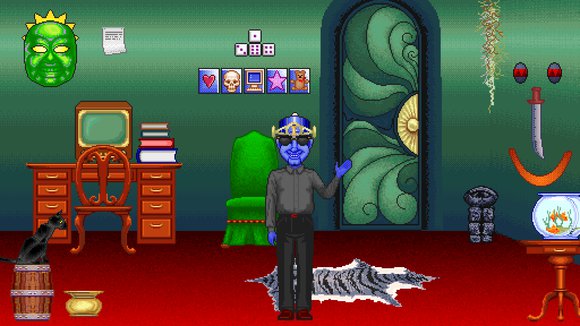
The year was 1995, and CompuServe’s online service cost $4.95 per hour. Yet thousands of people logged into this virtual world daily.
WorldsAway was born 20 years ago, when Fujitsu Cultural Technologies, a subsidiary of Japanese electronics giant Fujitsu, released this online experiment in multiplayer communities.
It debuted as part of the CompuServe online service in September, 1995. Users needed a special client to connect; once online, they could chat with others while represented onscreen
as a graphical avatar.
I was already a veteran of BBSes (I even started my own), Prodigy, CompuServe, and the Internet when I saw an advertisement for WorldsAway in CompuServe magazine (one of my favorite
magazines at the time). It promised a technicolor online world where you could be anything you wanted, and share a virtual city with people all over the globe. I signed up to receive
the client software CD. Right after its launch in September, I was up and running in the new world. It blew my young mind.
We cannot believe we’re a year old this week! It feels like only yesterday we were opening the doors and anxiously standing, hoping that someone would like the look of our new
restaurant and come and visit us! Thankfully, you did… over 100,000 of you this year! We are beyond proud to know that customers enjoy…
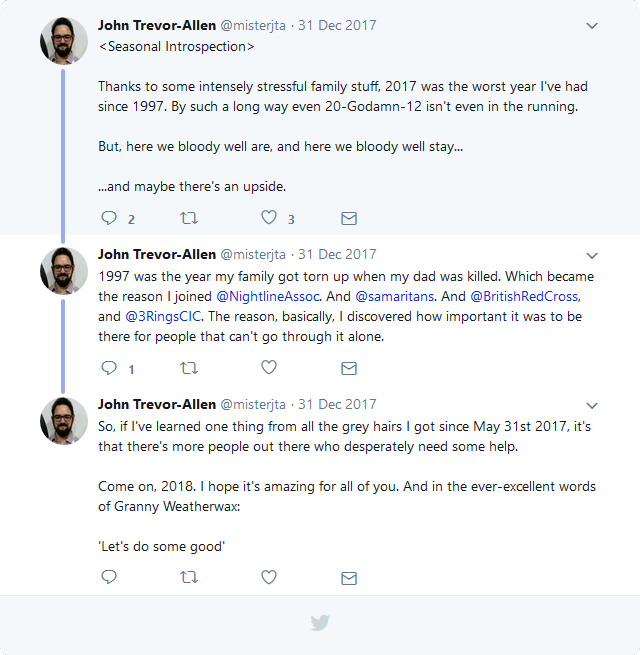
1997 was the year my family got torn up when my dad was killed. Which became the reason I joined @NightlineAssoc. And @samaritans. And @BritishRedCross, and @3RingsCIC. The reason,
basically, I discovered how important it was to be there for people that can't go through it alone.
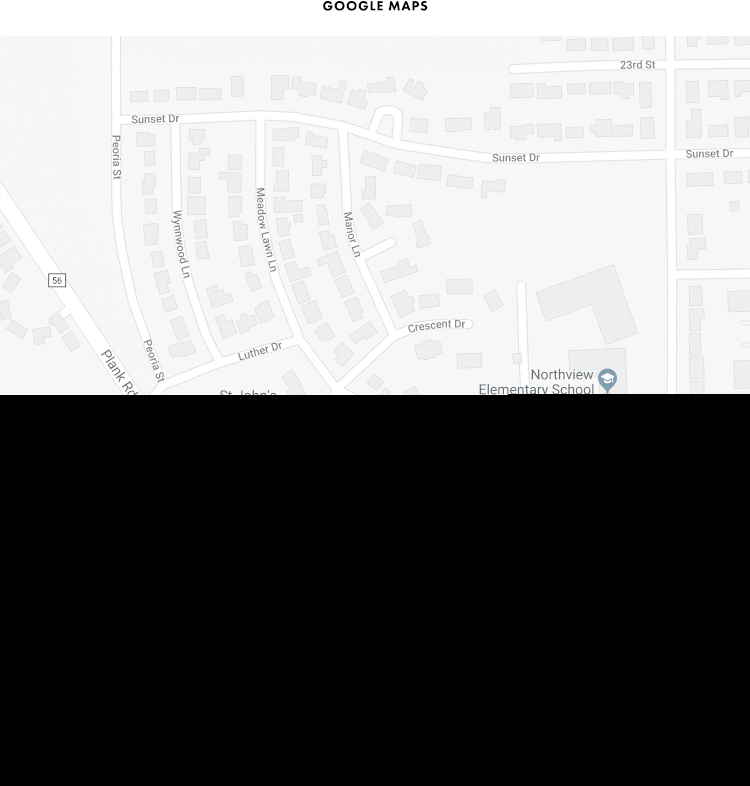
Over the past year, we’ve been comparing Google Maps and Apple Maps in New York,
San Francisco, and London—but some of the biggest differences are outside of large cities.
Take my childhood neighborhood in rural Illinois. Here the maps are strikingly different, and Apple’s looks empty compared to Google’s:
Similar to what we saw earlier this year at Patricia’s Green in San
Francisco, Apple’s parks are missing their green shapes. But perhaps the biggest difference is the building footprints: Google
seems to have them all, while Apple doesn’t have any.
No JavaScript frameworks were created during the writing of this article.
The following is inspired by the article “It’s the future” from Circle CI. You can read the originalhere. This piece is just an opinion, and like any JavaScript framework, it shouldn’t be taken too
seriously.
Hey, I got this new web project, but to be honest I haven’t coded much web in a few years and I’ve heard the landscape changed a bit. You are the most up-to date web dev around here
right?
-The actual term is Front End engineer, but yeah, I’m the right guy. I do web in 2016. Visualisations, music players, flying drones that play
football, you name it. I just came back from JsConf and ReactConf, so I know the latest technologies to create web apps.
Cool. I need to create a page that displays the latest activity from the users, so I just need to get the data from the REST endpoint and display it in some sort of filterable table,
and update it if anything changes in the server. I was thinking maybe using jQuery to fetch and display the data?
-Oh my god no, no one uses jQuery anymore. You should try learning React, it’s 2016.
Oh, OK. What’s React?
…
A year or two old, and I’d love to claim that things were better in Javascript-framework-land today… but they’re not.
This series already looks awesome with its compelling visuals and strong message. The video’s interactive (!) if you view it via the
official website, and I’m backing the creator on Patreon to help him make more content like this (and particularly a second part
to The Shadow Peace).
We seem to be finally, actually doing it: making the whole world aware of the polyamorous possibility. That’s Elisabeth Sheff’s term for discovering that happy, ethical
multi-loving relationships are even possible, that people are successfully doing them right now, and that maybe you can too.
Every December, Google announces the year’s top trending search terms compared to the year before. In the Relationships category, Google just announced that polyamory
became one of the top four topics. CNN Moneyreported
this morning,
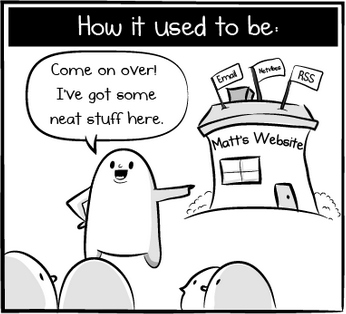
As somebody who likes to keep his content on his own server (y’know: right here!) but whose readers sometimes prefer that it’s syndicated to e.g. Facebook (as it is), I appreciate this comic by The Oatmeal.
My friend Jen‘s been blogging and vlogging about cystic fibrosis – which her young son Lorcán has – in order to raise awareness of
it and of a promising new treatment, Orkambi, which would very likely dramatically improve the lifespan and health of chidren like Lorcán… were it available on the NHS. For more
information, including petitions you can sign, see their blog Little Fierce One.
Once upon a time, long before I began selling my face by the acre for features on VICE dot com, I worked other jobs. There was one in particular that really had an impact on me:
writing fake reviews on TripAdvisor. Restaurant owners would pay me £10 and I’d write a positive review of their place, despite never eating there. Over time, I became obsessed with
monitoring the ratings of these businesses. Their fortunes would genuinely turn, and I was the catalyst.
This convinced me that TripAdvisor was a false reality – that the meals never took place; that the reviews were all written by other people like me. However, they’re not, of course –
they’re almost all completely genuine. And there was one other factor that seemed impossible to fake: the restaurants themselves. So I moved on.
And then, one day, sitting in the shed I live in, I had a revelation: within the current climate of misinformation, and society’s willingness to believe absolute bullshit, maybe a
fake restaurant is possible? Maybe it’s exactly the kind of place that could be a hit?
In that moment, it became my mission. With the help of fake reviews, mystique and nonsense, I was going to do it: turn my shed into London’s top-rated restaurant on TripAdvisor.