This was an enjoyable video. Nothing cutting-edge, but a description of an imaginative use of an everyday algorithm – DEFLATE, which
is what powers most of the things you consider “ZIP files” – to do pattern-matching and comparison between two files. The tl;dr is pretty simple:
Lossless compression works by looking for repetition, and replacing the longest/most-repeated content with references to a lookup table.
Therefore, the reduction-in-size from compressing a file is an indicator of the amount of repetition within it.
Therefore, the difference in reduction-in-size of compressing a single file to the reduction-in-size of compressing a pair of files is indicative of
their similarity, because the greatest compression gains come from repetition of data that is shared across both files.
This can be used, for example, to compare the same document written in two languages as an indication of the similarity of the languages to one another, or to compare the genomes of
two organisms as an indication of their genetic similarity (and therefore how closely-related they are).
I love it when somebody finds a clever and novel use for an everyday tool.
Off to my first day at Firstup. Gotta have an induction: get my ID badge, learn where the toilets are, how to refill the coffee machine, and all that
jazz.
Except, of course, none of those steps will be part of my induction. Because, yet again, I’ve taken a remote-first position. I’m 100% sold that, for me, remote/distributed work helps me
bring my most-productive self. It might not be for everybody, but it’s great for me.
And now: I’m going to find out where the water cooler is. No, wait… some other thing!
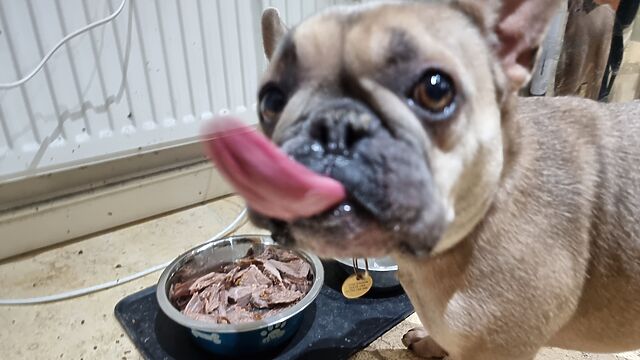
As the UK’s heatwave continues, the dog and I were delighted that this morning was sufficiently overcast that we could manage a proper walk without completely melting.
Her breed copes badly with the heat and we’ve lately had to keep her indoors or in the shade more than she’d like, so a chance to run around among the trees was very welcome!
On our family Slack, Ruth and I have a tradition of reacting to one another’s messages, where no other emoji seems appropriate, with a “person
rowing boat” emoji.
🚣
I can’t remember exactly how it started. Possibly one of us was using the text search to find the “robot” emoji (probably in reference to our robot vacuum cleaner, which used to be
more-frequently found hiding under the sofa than anywhere else in the world).
🤖
But whatever the reason, the game stuck. And because you can leave multiple emoji responses to a Slack message – and because Unicode permits a diversity of gender and skin tone options
for this particular emoji – sometimes this results in a whole flotilla of rowboats parading beneath our messages.
It started with a fascination after discovering a little-known stone circle near my new house. It grew into an obsession with the history of the place.
Two years later, our eldest was at school and her class was studying the stone age. Each of three groups were tasked with researching a particular neolithic monument, and our eldest was
surprised when she heard my voice coming from a laptop elsewhere in the class. One of her classmates had, in their research into the Quoits, come across my video.
It turns out “local expert” just means “I read the only book ever written about the archaeology of the stones, and a handful of ancillary things.”
And so this year, when another class – this time featuring our youngest – went on a similar school trip, the school asked me to go along again.
I’d tweaked my intro a bit – to pivot from talking about the archaeology to talking about the human stories in the history of the place – and it went down well: the
children raised excellent observations and intelligent questions1,
and clearly took a lot away from their visit. As a bonus, our visit falling shortly after the summer solstice meant that local neopagans had left a variety of curious offerings – mostly
pebbles painted with runes – that the kids enjoyed finding (though of course I asked them to put each back where they were found afterwards).
But the most heartwarming moment came when I later received an amazing handmade card, to which several members of the class had contributed:
I particularly enjoy the pencil drawing of me talking about the breadth of Bell Beaker culture, with a child
interrupting to say “cool!”.
I don’t know if I’ll be free to help out again in another two years, if they do it again2: perhaps I
should record a longer video, with a classroom focus, that shares everything I know about The Devil’s Quoits.
But I’ll certainly keep a fond memory of this (and the previous) time I got to go on such a fun school trip, and to be an (alleged) expert about a place whose history I find so
interesting!
Footnotes
1 Not every question the children asked was the smartest, but every one was gold.
One asked “is it possible aliens did it?” Another asked, “how old are you?”, which I can only assume was an effort to check if I remembered when this 5,000-year-old hengiform monument
was being constructed…
2 By lucky coincidence, this year’s trip fell during a period that I was between jobs, and
so I was very available, but that might not be the case in future!
This morning, Google pulled a video from YouTube belonging to my nonprofit Three Rings. This was a bit of a surprise.
Harassment and bullying? Whut?
Apparently the video – which is a demo of some Three Rings features – apparently fell foul of Google’s anti-doxxing rules. I’m glad that they have
anti-doxxing rules, of course.
Let’s see who I doxxed:
Yup… apparently doxxed an imaginary person with two structurally-invalid phone numbers and who’s recently moved house from Some Street to Other Street in the town of Somewhereville. 😂
(Maybe I’m wrong. Do you live on Some Street, Somewhereville?)
Let’s see what YouTube’s appeals process is like, shall we? 🤦
It’s possible that cycling this path wasn’t the wisest idea, I realised, as I dodged brambles on both sides. So focused was I on riding safely that I forgot which GPSr I’d brought with
me and listening for the beep it gives when I get close to my target… only realised 120m after the fact that I was using the GPSr that doesn’t give an audible beep and I’d overshot!
Doubled back and gave an extended hunt for the cache before finding it in pieces. Looks like it’s been wilfully vandalised (see photo). Returned the pieces to approximately where I
figure they’re meant to live.
Love the idea, hope it can be fully repaired soon!
After an appointment in Witney I opted to divert my cycle home to find this and the other cache on the same path. After cycling down to the GZ (past the noisiest sheep I’ve ever heard!)
I was pleased to discover that the recent weather has left the island very dry, and I’d be in no risk of damp feet.
Brambles were a minor threat, but soon the cache was in hand. SL. Outer container has a damaged hinge; just needs a few screws to repair, and it’s not urgent. TFTC!
This wonderful project, released six weeks ago, attempts the impossible challenge of building a Civilization-style tech tree but chronicling the development and interplay
of all of the actual technological innovations humanity has ever made. Even in its inevitably-incomplete state, it’s inspiring and informative. Or, as Open Culture put it:
Our civilization has made its way from stone tools to robotaxis, mRNA vaccines, and LLM chatbots; we’d all be better able to inhabit it with even a slightly clearer idea of how it
did so.
Accessible description: Dan, a white man with a goatee beard and a faded blue ponytail, stands in a darkened kitchen. Turning to the camera, he says “I get up when I want,
except on Wednesdays when I get rudely awakened by the tadpoles.” Then he holds up a book entitled “Pond Life”.
In a little over a week I’ll be starting my new role at Firstup, who use some of my favourite Web technologies to deliver tools that streamline
employee communication and engagement.
I’m sure there’ll be more to say about that down the line, but for now: let’s look at my recruitment experience, because it’s probably the fastest and most-streamlined technical
recruitment process I’ve ever experienced! Here’s the timeline:
Firstup Recruitment Timeline
Day 0 (Thursday), 21:18 – One evening, I submitted an application via jobs listing site Welcome To The Jungle. For
comparison, I submitted an application for a similar role at a similar company at almost the exact same time. Let’s call them, umm… “Secondup”.
21:42 – I received an automated response to say “Firstup have received your application”. So far, so normal.
21:44 – I received an email from a human – only 26 minutes after my initial application – to invite me to an initial screener interview the following week,
and offering a selection of times (including a reminder of the relative timezone difference between the interviewer and I).
21:55 – I replied to suggest meeting on Wednesday the following week1.
Day 6 (Wednesday), 15:30 – Half-hour screener interview, mostly an introduction, “keyword check” (can I say the right keywords about my qualifications and experience
to demonstrate that, yes, I’m able to do the things they’ll need), and – because it’s 2025 and we live in the darkest timeline – a confirmation that I was a real human being and not
an AI2.
The TalOps person, Talia, says she’d like to progress me to an interview with the person who’d become my team lead, and arranges the interview then-and-there for Friday. She talked me
through all the stages (max points to any recruiter who does this), and gave me an NDA to sign so we could “talk shop” in interviews if applicable.
I only took the initial stages of my Firstup interviews in our library, moving to my regular coding desk for the tech tests, but I’ve got to say it’s a great space for a quiet
conversation, away from the chaos and noise of our kids on an evening!
Day 8 (Friday), 18:30 – My new line manager, Kirk, is on the Pacific Coast of the US, so rather than wait until next week to meet I agreed to this early-evening
interview slot. I’m out of practice at interviews and I babbled a bit, but apparently I had the right credentials because, at a continuing breakneck pace…
21:32 – Talia emailed again to let me know I was through that stage, and asked to set up two live coding “tech test” interviews early the following week. I’ve been
enjoying all the conversations and the vibes so far, so I try to grab the earliest available slots that I can make. This put the two tech test interviews back-to-back, to which
Ruth raised her eyebrows – but to me it felt right to keep riding the energy of this high-speed recruitment process and dive right in to
both!
Day 11 (Monday), 18:30 – Not even a West Coast interviewer this time, but because I’d snatched the earliest possible opportunity I spoke to Joshua early in the
evening. Using a shared development environment, he had me doing a classic data-structures-and-algorithms style assessment: converting a JSON-based logical inference description
sort-of reminiscent of a Reverse Polish Notation tree into something that looked more pseudocode of the underlying
boolean logic. I spotted early on that I’d want a recursive solution, considered a procedural approach, and eventually went with a functional one. It was all going well… until it
wasn’t! Working at speed, I made frustrating early mistake left me with the wrong data “down” my tree and needed to do some log-based debugging (the shared environment didn’t support
a proper debugger, grr!) to get back on track… but I managed to deliver something that worked within the window, and talked at length through my approach every step of the way.
19:30 – The second technical interview was with Kevin, and was more about systems design from a technical perspective. I was challenged to make an object-oriented
implementation of a car park with three different sizes of spaces (for motorbikes, cars, and vans); vehicles can only fit into their own size of space or larger, except vans which –
in the absence of a van space – can straddle three car spaces. The specification called for a particular API that could answer questions about the numbers and types of spaces
available. Now warmed-up to the quirks of the shared coding environment, I started from a test-driven development approach: it didn’t actually support TDD, but I figured I could work
around that by implementing what was effectively my API’s client, hitting my non-existent classes and their non-existent methods and asserting particular responses before going and
filling in those classes until they worked. I felt like I really “clicked” with Kevin as well as with the tech test, and was really pleased with what I eventually delivered.
Day 12 (Tuesday), 12:14 – I heard from Talia again, inviting me to a final interview with Kirk’s manager Xiaojun, the Director of Engineering. Again, I opted for
the earliest mutually-convenient time – the very next day! – even though it would be unusually-late in the day.
Day 13 (Wednesday), 20:00 – The final interview with Xiaojun was a less-energetic affair, but still included some fun technical grilling and, as it happens,
my most-smug interview moment ever when he asked me how I’d go about implementing something… that I’d coincidentally implemented for fun a few weeks earlier! So instead of spending time thinking about an answer to the question, I was able to
dive right in to my most-recent solution, for which I’d conveniently drawn diagrams that I was able to use to explain my architectural choices. I found it harder to read Xiaojun and
get a feel for how the interview had gone than I had each previous stage, but I was excited to hear that they were working through a shortlist and should be ready to appoint somebody
at the “end of the week, or early next week” at the latest.
This. This is how you implement an LRU cache.
Day 14 (Thursday), 00:09 – At what is presumably the very end of the workday in her timezone, Talia emailed me to ask if we could chat at what must be the
start of her next workday. Or as I call it, lunchtime. That’s a promising sign.
13:00 – The sun had come out, so I took Talia’s call in the “meeting hammock” in the garden, with a can of cold non-alcoholic beer next to me (and the dog rolling
around on the grass). After exchanging pleasantries, she made the offer, which I verbally accepted then and there and (after clearing up a couple of quick queries) signed a contract
to a few hours later. Sorted.
Day 23 – You remember that I mentioned applying to another (very similar) role at the same time? This was the day that “Secondup” emailed to ask about my availability
for an interview. And while 23 days is certainly a more-normal turnaround for the start of a recruitment process, I’d already found myself excited by everything I’d learned about
Firstup: there are some great things they’re doing right; there are some exciting problems that I can be part of the solution to… I didn’t need another interview, so I turned down
“Secondup”. Something something early bird.
Wow, that was fast!
With only eight days between the screener interview and the offer – and barely a fortnight after my initial application – this has got to be the absolute fastest I’ve ever seen a tech
role recruitment process go. It felt like a rollercoaster, and I loved it.
Is it weird that I’d actually ride a recruitment-themed rollercoaster?
Footnotes
1 The earliest available slot for a screener interview, on Tuesday, clashed with my 8-year-old’s taekwondo class which I’d promised I’ll go along and join in with it as part of their “dads train free in June” promotion.
This turned out to be a painful and exhausting experience which I thoroughly enjoyed, but more on that some other time, perhaps.
2 After realising that “are you a robot” was part of the initial checks, I briefly
regretted taking the interview in our newly-constructed library because it provides exactly the kind of environment that looks like a fake background.