The output of this data anonymisation/scrambling script makes me feel seen. 🏳️🌈
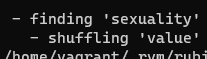
The output of this data anonymisation/scrambling script makes me feel seen. 🏳️🌈
This is a repost promoting content originally published elsewhere. See more things Dan's reposted.
Great to see somebody finally setting the record straight on bioluminescence and the 50/50 horse-myth. Come on people, it’s 2021!
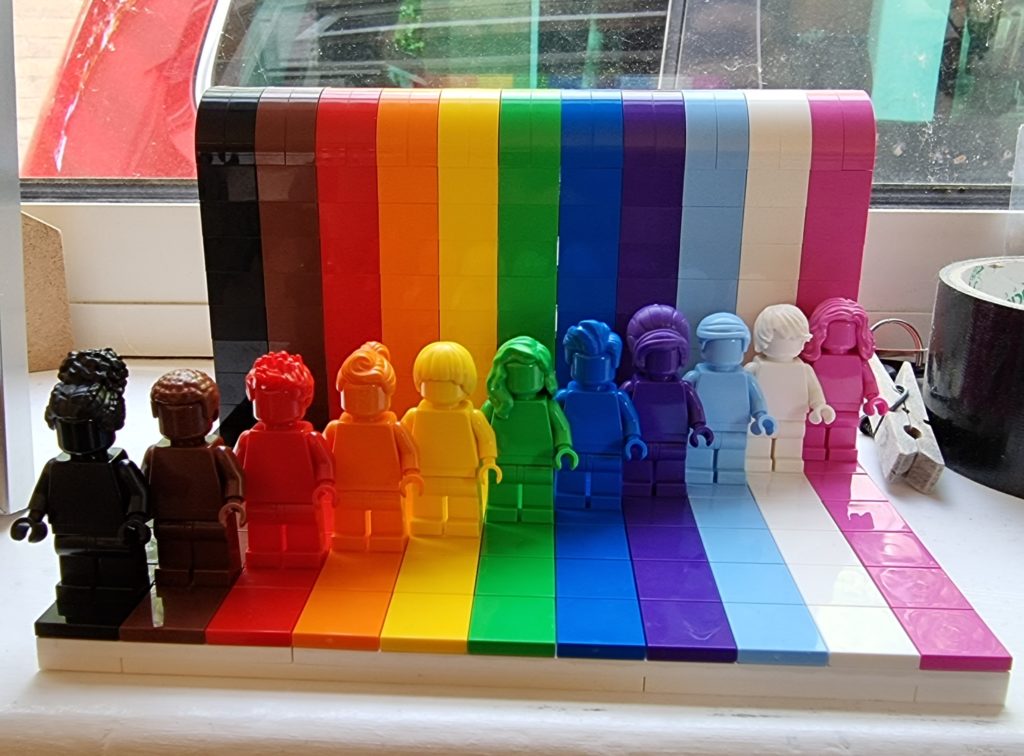
Ahead of schedule on work project. Invited to 2nd COVID jab next week. Spent half of day working on laptop in sunny garden. Parcel arrived from @LEGO_group with Everyone Is Awesome model (pictured).
Today was a Good Day.
This is a repost promoting content originally published elsewhere. See more things Dan's reposted.
Dr. Doe’s latest Sexplanations vlog is on polyamorous language, and despite being – or, perhaps, because I’m – a bit of a long-toothed polyamorist these days, fully a quarter or more of the terms she introduced were new to me! Fascinating!
This is a repost promoting content originally published elsewhere. See more things Dan's reposted.
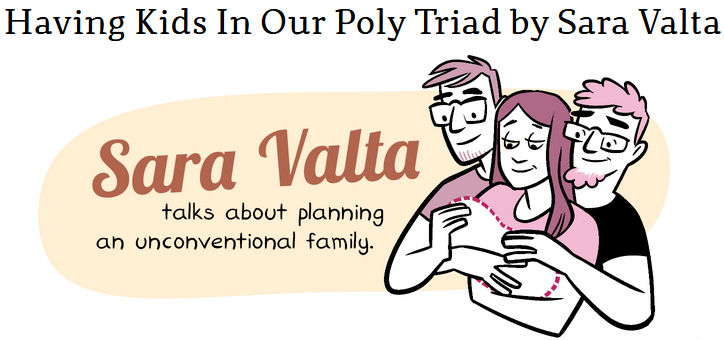
Sara’s back! You might remember a couple of years ago she’d shared with us a comic on her first year in a polyamory! We’re happy to have her back with a slice of life and a frank n’ real conversation about having kids in her Poly Triad relationship.
This sort of wholesome loving chat is just the thing we need for the start of 2021.
…
Start your year with a delightful comic about the author negotiating possible future children in a queer polyamorous triad, published via Oh Joy Sex Toy. Sara previously published a great polyamory-themed comic via OJST too, which is also worth a look.
This is a repost promoting content originally published elsewhere. See more things Dan's reposted.
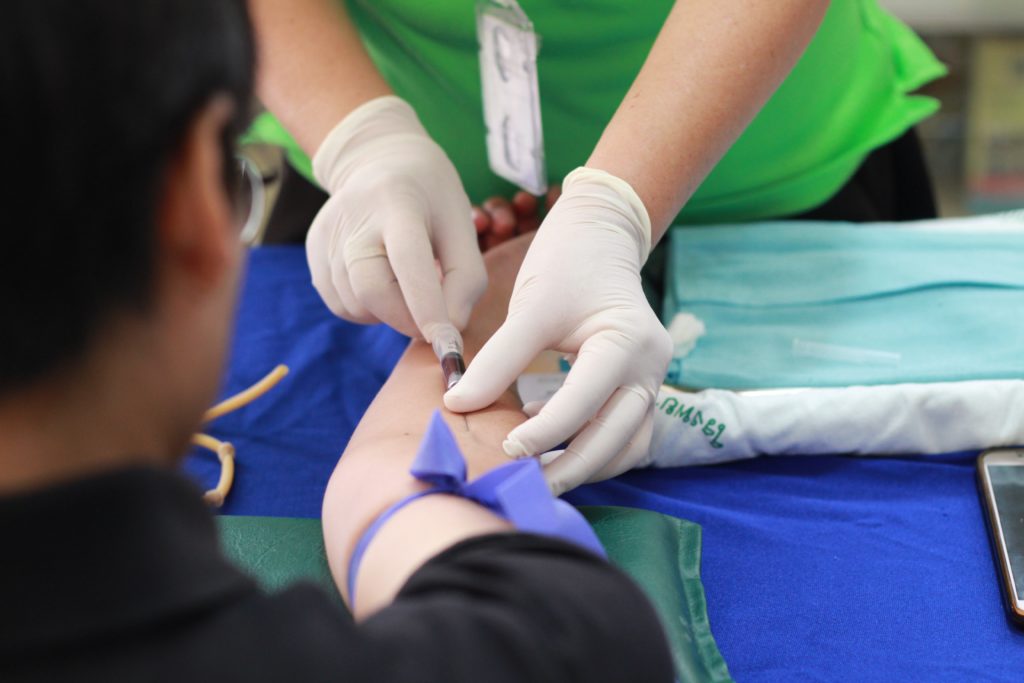
So the NHS blood donation rules are changing again. And while they’re certainly getting closer, they’re still not quite hitting the bullseye yet.
That’s great. Prior to 2011 men who’d ever had sex with men, as well as women who’d had sex with such a man within the last 6 months, were banned from donating blood. That rule clearly spun out of the AIDS hysteria of the 1980s and generally entrenched homophobia. It probably did little to protect the recipients of blood, and certainly did a lot to increase the stigma experienced by non-straight men.
The 2011 change permitted donation by men who’d previously had sex with men… so long as they hadn’t done so within the last year. Which opened the doors to donation by a lot of men: e.g. bisexual men who’d been in relationships exclusively with women, gay men who’d been celibate for a period, etc. It still wasn’t great, but it was a step in the right direction.
So when I saw that the rules were changing to better target only risky behaviours, rather than behaviours that are so broad-brush as to target identities, I was initially delighted. Evidence-based medicine, you say? For the win.
But… it’s not all sunshine and rainbows. The new rules prohibit blood donation regardless of gender by people who’ve had sex with more than one person in the last three months.
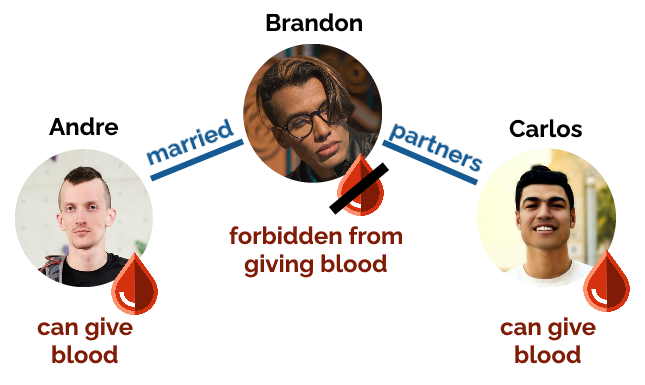
So if for example if there’s a V-shaped relationship consisting of three men, who only have sex within their thruple… two of them are now allowed to give blood but the third isn’t? (This isn’t a contrived example. I know such a thruple.)
Stranger still: if you swap Brandon in the diagram above for a woman then you get a polycule that’s a lot like mine, but the woman in the middle used to be allowed to give blood… and now can’t! My partner Ruth is in exactly the position: her situation hasn’t changed, but because she’s been in a long-term relationship with exactly two people she’s now not allowed to give blood. Wot?
On the whole, this rule change is an improvement. We’re getting closer to a perfect answer. But it’s amusing to see where the policy misses again and excludes donors who would otherwise be perfectly viable.
Update: as this is attracting a lot of attention I just wanted to remind people that the whole discussion is, of course, a lot
more complicated than can be summarised in a single, short, opinionated blog post. Take a look at the FAIR steering
group’s recommendations and compare to the government’s press release.
Update #2: justifying choice of words – “AIDS hysteria”
refers specifically to the media (and to a lesser extent the policy) reactions to the (very real, very devastating) pandemic. For a while there it was perfectly normal to see (often
misguided, sometimes homophobic) scaremongering news coverage suggesting that everybody was at enormous risk from HIV.
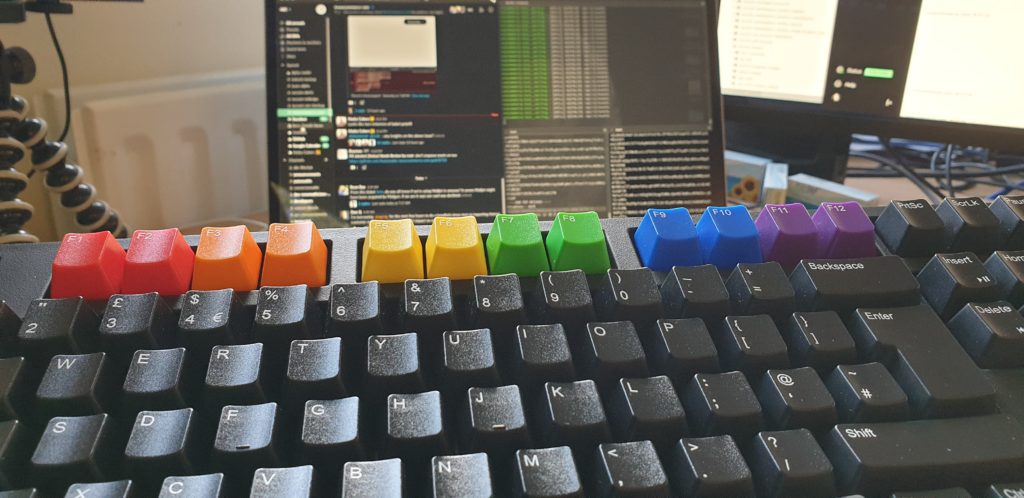
With thanks to @wasdkeyboards, my new #keyboard can show some #Pride. 🏳️🌈
This is a repost promoting content originally published elsewhere. See more things Dan's reposted.
For the first episode of the Human Tapestry, I talked to Dan, a bisexual man who lives in Oxford, England, with his partner and her husband in what he describes as a “polyamorous V-shaped thingy”. Listen as we talk about relationships, identities, the “bi-cycle”, and various forms of vegetarianism.
…
Fellow Automattician Mike has just launched his new podcast, exploring the diversity of human experience of relationships, sexuality, attraction, identity, gender, and all that jazz. Earlier this year, I volunteered myself as an interviewee, but I had no idea that I’d feature in the opening episode! If hearing people in your ears is something you like to do, and you’re interested in my journey so-far of polyamory and bisexuality, have a listen. And if you’re not: it might still be worth bookmarking the show for a listen later on – it could be an interesting ride.
Possibly SFW, depending on your work. Specific warnings:
Caveats aside, I think it came out moderately well; Mike’s an experienced interviewer with a good focus on potentially interesting details. He’s also looking for more guests, if you’d like to join him. He says it best, perhaps, with his very broad description of what the show’s about:
If you have a gender, have attractions (or non-attractions) to certain humans (or all humans), or have certain practices (or non-practices) in the bedroom (or elsewhere), we’d love to talk to you!
Go listen over there or right here.
This is a repost promoting content originally published elsewhere. See more things Dan's reposted.
Last week I happened to be at an unveiling/premiere event for the new Renault Clio. That’s a coincidence: I was actually there to see the new Zoe, because we’re hoping to be among the first people to get the right-hand-drive version of the new model when it starts rolling off the production line in 2020.
But I’ll tell you what, if they’d have shown me this video instead of showing me the advertising stuff they did, last week, I’d have been all: sure thing, Clio it is, SHUT UP AND TAKE MY MONEY! I’ve watched this ad four times now and seen more things in it every single time. (I even managed to not-cry at it on the fourth watch-through, too; hurrah!).
This is a repost promoting content originally published elsewhere. See more things Dan's reposted.
My 17 year old daughter generously sat down with me to talk about consent — her personal experiences with it, humor of it, nonverbal versions, and how to respond to rejection. We talked about her thoughts on the Dear Boy Who Likes My Daughter episode, how she perceives my romantic relationships, what makes a good cuddle partner, and being resourceful after trauma. There’s laughing and crying and lots of proud mama.
I’ve been gradually catching up on Dr. Doe‘s Sexplanations podcast; I’m up into the 30-somethings now but my favourite so far might have been episode 25, which presents a very authentic and raw look at Lindsey and her daughter Des’s thoughts on sex, romance, and consent. Adorable.
This is a repost promoting content originally published elsewhere. See more things Dan's reposted.
My 12th favourite and my 27th favourite YouTubers just did a collaboration and it’s brilliant. Also: I totally knew seven out of the twelve terms Dr Doe brought to the table and would have been able to guess at least one more (as well as, of course, knowing what TomSka meant by his British slang), so this video made me feel clever.
This is a repost promoting content originally published elsewhere. See more things Dan's reposted.
I don’t know if this is genius or insanity, but either way it’s pretty remarkable. Lost my shit at “pop girl”. Lost it again at “I can poke the nipple”.
It takes a true engineer to think to themselves, “Hey, I wonder if I could use technology to tell me when I’m feeling aroused? That sounds like a useful project.” I love it.
This is a repost promoting content originally published elsewhere. See more things Dan's reposted.
The Fratocrats at their funniest.
This is a repost promoting content originally published elsewhere. See more things Dan's reposted.
Watch Happy Pride Month! GIF by cheshix on Gfycat. Discover more Mark Kanemura GIFs, mkik808 GIFs on Gfycat.
I can’t get enough of this GIF.
This is a repost promoting content originally published elsewhere. See more things Dan's reposted.