Built In Obsolescence

This post contains and links to (clearly-identified) AI-generated content. As remains the case, none of my writing on this blog was generated by AI.

Imagine my excitement to learn that Pagan Wander Lu just dropped a new EP, Built In Obsolescence. And then imagine my horror to discover that it’s actually produced by P-AI-gan Wanderer Lu; an AI that’s been given PWL lyrics and some artistic direction.

Wot.

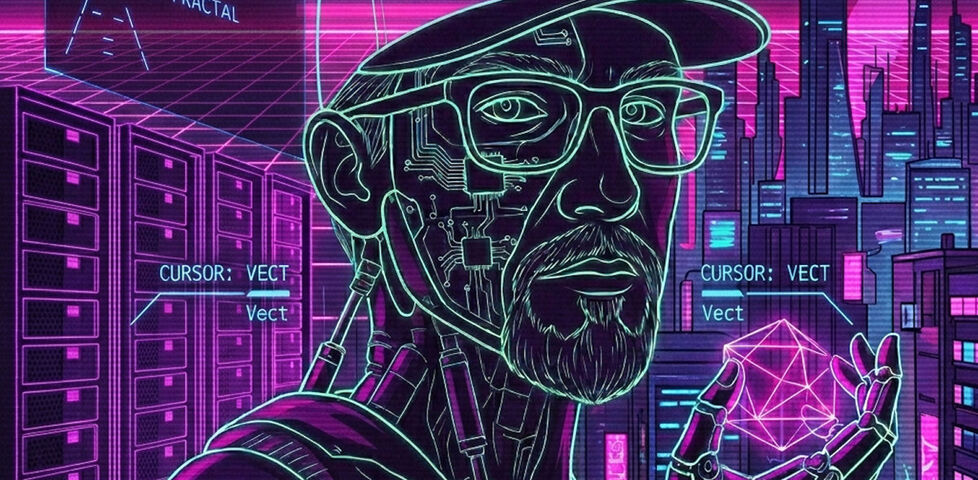
AI-generated EP cover of Built In Obsolescence by PAIgan Wanderer Lu, showing a neon digital outline of Andy.
The album art’s clearly also AI-generated, and that’s… well… you know. At least this robot hand has got the correct number of fingers.

Nothingness is what silicon dreams

My younger child’s been getting into PWL in a big way lately. As a result of this, I ended up making time for a careful re-listen to a lot of the back catalogue. This in turn inspired a blog post last year in which I mentioned that Checker Charlie‘s observations about humans replacing their work with machine effort feels increasingly prophetic in the age of generative AI. That’s something I didn’t see in it when I first reviewed it 13 years prior.

I’ve played with AI-generated music a couple of times myself, of course, mostly as an academic exercise. And it’s becoming more and more apparent that it’s hard to avoid bumping into it in the “real world”.

Early efforts at AI music were pretty unconvincing, always sounding a bit auto-tuney, frequently struggling to stress lines in the right places, and tripping over themselves when they try to do anything even remotely more-interesting than a simple repeating melody atop a predictable chord sequence. But they’re getting… shall we say… “better”, and there have been times nowadays when I’ve gotten some way through a track before realising that I’m listening to AI.

At least PWL’s being honest about it and declaring at the outset that this is AI-generated art. There’s plenty of folks using AI to generate content online and not declaring it, which is pretty awful1. Anyway: in this EP the AI’s moderately well-concealed and listening casually to most of the tracks I wouldn’t have noticed it if I hadn’t been told2.

Is there life enough in these chords?

So I listened to the EP. Three times.

The cover of Checker Charlie, I’m sad to admit, works. It’s got the feel of early-nineties pop, full of synths and saccharine, but instead of insipid lyrics about love it benefits a lot from Andy’s lyrical prowess. It’s a bouncy bop that would be forgettable if it weren’t for the excellent story told by the words is, I suppose, what I mean to say. And, of course, it’s the song that would have made me think about this. Anyway: I enjoyed it and would absolutely listen to it again, and I don’t know what that says about me, about the song, or anything else.

Uncanny Valley doesn’t work as well. Musically, it feels like a new artist in 2012 drew inspiration from their dad’s new wave albums but wanted to make it sound more like Carly Rae Jepsen was collabing with Daft Punk. And the result is kind-of…flat? Could I even say… soulless? It feels like it might have been the B-side of their cover of Chemicals Like You, which rolls out next in the same vein. Twice was probably enough for these two.

Repetition 4 is among my favourite – let’s say top 15? – Pagan Wanderer Lu songs and the AI’s cover of it starts so strong. It finishes pretty strong too. The voice it’s chosen shows only a hint of uncanny-valley-autotune and it wails plaintively. The most human-made bits – the lyrical themes of fighting for creativity against your own struggles as a vulnerable and flawed human “machine” – remain solid. I really expected to love this one! But by the time we were half way through the song it felt… musically-repetitive. You know when you get a pop cover of a classic song sometimes3 and you feel like the cover artist… missed the point somehow? That’s what this feels like to me.

The repetitions of “we are all machines… for dancing” in the original felt meaningful and real; a human’s cathartic resignation to pleasure in the simple things we all enjoy, despite the challenges of life… but the AI cover adds this kind of doo-woppy backing vocals that subtract, rather than adding to, the meaning. I’m not saying it ruins it – it’s still a fun and bouncy version of a great song… but it’s one of those covers that leaves you longing for the original.

And then there’s the “unaligned version” of Uncanny Valley. I’m not sure if the introduced distortions in this version are AI-generated or not. They don’t feel like the kinds of “creative” choices that any AI I’ve played with would make, so I suspect this represents a closer human intervention in the AI’s process: humans imitating machines imitating humans, perhaps? Anyway: the change doesn’t add anything for me.

Had this been produced entirely by a human, I’d say that EP consists one one track I’d add to my everyday playlist (the cover of Checker Charlie), maybe one or two tracks that I “wouldn’t necessarily skip” if they came up on a random shuffle while I wad driving… and the rest just feels too much like “bad cover” vibes.

And that’s as much of a review as I’m willing to give, for the reasons touched-upon below.

Building the engines of our own defeat

I continue to have several issues with the widespread use of generative AI, and in particular I have problems with it being used in the production of art. Those are partially mitigated by it being used by an artist to remix their own work, and partially mitigated by the transparent declaration of the use of AI by the publisher both of which are true in this case. But many issues (ethical, environmental, etc.) still remain.

Perhaps the biggest of which in this case is my concern that we’re using automation wrong.

As a child, I was optimistic about a future in which machines would take away the boring and repetitive work that humans do, leaving us free to pivot to experimental and experiential roles: the joy of working hard in the quest of discovery and of creativity. But instead, the predominant popular use of generative AI is to replace exactly those things, leaving humans only with an increasing amount of drudgery, review, and fact-checking. Where did we go wrong?

Don’t get me wrong: I love that Pagan Wanderer Lu has created this EP. Taking art that he’s created, whose concept touches on the concepts of AI… and feeding them into an actual AI for reinterpretation is transformative. It’s worthy of discussion as a piece of art in its own right. And the result is… well, some of it’s good, and other bits are okay.

What I don’t like is what it represents: the wider societal issue of the mainstream use of these technologies that have enormous unsolved problems.

So I guess… I appreciate the cognitive dissonance of enjoying a peice of music and disliking what it means?

Footnotes

1 Whether or not the side-effect of undisclosed AI-generated content “poisoning the well” for future AI training is a good or bad thing remains an open question, in my mind, but it’s certainly a real phenomenon. You know how we salvage the wrecks of ships sunk before the atomic age because they’re untainted by man-made radioactivity, which makes them useful for special purposes? It feels like the Internet before the explosion in generative AI may provide a similar cultural resource for future AI training, if you see what I mean.

2 And assuming I wasn’t already familiar with the artist, who doesn’t usually sound like an auto-tuned female singer.

3 I don’t have a specific example so I hope this is a universal experience!

The Signal and the Noise is still excellent

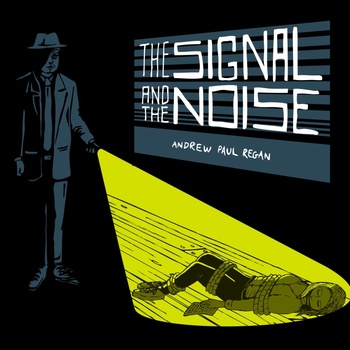
The Signal and The Noise album cover, showing a man in a dark room shining a torch on a woman, tied up and lying on a wooden floor, with her hand on a note.13 years ago I wrote a blog post praising The Signal and the Noise by Andrew Paul Regan / Pagan Wanderer Lu. It’s still excellent.

I may have raved about other concept albums in the meantime (this one, for example…), but The Signal and the Noise still makes my top 101. I’ve listened to it twice this week, and I still love it.

But I probably love it differently than I used to.

Spy NumbersOne Time Pad remains my favourite pair of tracks on the album, as it always was: like so much of Andy’s music it tells a story that feels almost like it belongs to a parallel universe… but that’s still relatable and compelling and delightful. And a fun little bop, too.

But In Potential, which I initially declared “a little weaker than the rest” of the album, has grown on me immensely over the course of the last decade. It presents an optimistic, humanistic conclusion to the album that I look forward to every time. After John Frum Will Return and Checker Charlie open the album in a way that warns us, almost prophetically, about the dangers of narrow target-lock thinking and AI dependence2, In Potential provides a beautiful and hopeful introspective about humanity and encourages an attitude of… just being gentle and forgiving with ourselves, I guess.

So yeah, the whole thing remains fantastic. And better yet: Andy announced about six weeks ago that all of his music is now available under a free/pay-what-you-like model, so if you missed it the first time around, now’s your opportunity to play catch-up!3

Footnotes

1 Though it’s possible that it got bumped down one spot by Musical Transients, this year.

2 In a upbeat and bouncy way, though. These are cheers, not dirges.

3 Just remember to have a hanky ready for when you get to The Frosted Pane: it breaks my heart every single time.

×

The Frosted Pane

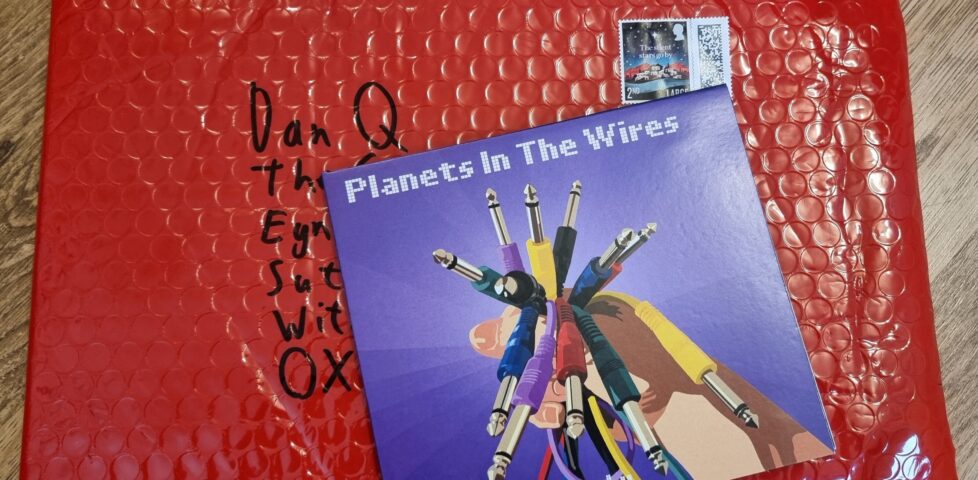
Pagan Wanderer Lu‘s new album Planets In The Wires dropped today, and I just cried my eyes out at track 5 (The Frosted Pane).

It opens almost apologetically, like an explanation for the gap in new releases for most of the twenty-teens. But it quickly becomes a poetic exploration of a detached depression of a man trapped under the weight of the world. It’s sad, and beautiful, and relatable.

The Signal and the Noise

The Signal and The Noise
The Signal and The Noise, by Andrew Paul Regan.

I’d just like to say a few words of praise for Andy‘s new album, The Signal and the Noise. It’s not the first time I’ve said nice things about him, but it’s the first time since he’s been recording under his full name, rather than as “Pagan Wanderer Lu”.

I can say this for sure, though: The Signal and the Noise has finally dethroned my previous favourite Lu album, Build Library Here (or else!). It’s catchy, it’s quirky, and it’s full of songs that will make you wish that you were cleverer: so far, so good. I think that one of the things that particularly appealed to me in this album were that the lyrical themes touched on so many topics that interest me: religion and superstition, artificial intelligence, the difficulties of overcoming materialism, cold war style espionage, and cryptography/analysis… all wrapped up in fun and relatable human stories, and with better-than average running-themes, links, and connections.

One of the joys of Andy’s (better) music comes from the fact that rather than interpretation, it lends itself far better to being issued with a reading list. To which end, here’s a stack of Wikipedia articles that might help you appreciate this spectacular album a little better, for the benefit of those of you who weren’t lucky enough to have read all of this stuff already:

Oh; backing vocals, you’re too kind! But this is just another chapter in the story of my life.

The Omniscient Narrator

The final track’s a little weaker than the rest (the actual final track, not the “hidden track” bit), and I’m left with a feeling that this was so-close but not quite a concept album (which would have been even more spectacular an achievement), but these are minor niggles in the shadow of an otherwise monumental album.

Go get a copy.

By the way; I’ve got a spare – who wants it? Spare copy’s gone to Claire as an early birthday present. Somehow she failed to preorder a copy of her own.

Looking for an alternate opinion? Here’s a guy who didn’t “get it”.

×

The Independent Scrutineer

Today I have mostly been listening to The Independent Scrutineer, Pagan Wanderer Lu‘s new EP. It’s very highly recommendable, and well worth the fiver I paid for it.

Unlike his previous releases, The Independent Scrutineer comes on a properly pressed CD (rather than a CD-R) and in a shiny jewel case with full-colour printing, though I know that in time I’ll miss the look and feel of the handmade folded brown paper, handwritten/newspaper cuttings CDs.
But that’s not the only thing that feels more “professional” about this release than his previous EPs… it sounds brilliant. With a cleaner, better-edited sound, PWL makes for genuinely fantastic listening. It’s still characteristically Lu: Repetition 2, my favourite track of the disc, still has it’s quirky discordant moments, but now they sound more funky than ever. Repetition 1 is clean and sharp and just slightly more openly emotional than many of his songs, and —- and Knight -> King 4 remain the fabulous ballads they were born as. There’s nothing new, strictly speaking, here, but the presentation, but it’s easily worth taking the time to listen to even if you’ve got a full library of pirated MP3s already.

Our New Hospital Sucks disappointed me a little. It’s a great song, but I think the best I’ve ever heard it was live, which is somewhat unusual: it just feels like it’s trying too hard to be loud and not hard enough to be smart. The Memorial Hall is a wonderful (and sad) song, but I preferred it when the time-signature transition in the middle was a little more obvious: a little more “raw”. Perhaps PWL’s just finding his feet in this exciting fast-paced world of “having real CDs cut and not having to burn them himself,” or perhaps I’m just being a little bit nostalgic.

Nonetheless, a brilliant CD. My minor gripes with it are most likely my general pickiness, and certainly don’t make the compilation itself any less enjoyable. And you can even listen to plenty of it online before you decide that it’s worth five of your Earth pounds.

Additional: What the fuck is Knight -> King 4 actually about? We’re very befuddled by it, lovely though it is. Answers on a postcard. Or in a comment would do, too.

Build Library Here (Or Else!)

This last few days, Claire and I have been listening to a hell of a lot of the new Pagan Wanderer Lu album, Build Library Here (Or Else!). And it’s such an impressive album that I’ve decided to write a little about it here, in the hope that some of you who’ve never heard of PWL before will take enough interest that you’ll download a few tracks (or persuade me to pirate some in your general direction), that you might enjoy them and the world will be a happier place. Oh; and so you might actually buy a copy of Build Library Here (Or Else!), ‘cos the artist is a great guy but is somewhat penniless:

Build Library Here (Or Else!) touches upon a combination of things going on both inside the songwriter and in the bigger picture, all put forward through a combination of intelligent lyrics, guitar, keyboard, and electronic/synthesised music. The Ending Makes What Came Before A Story is a slow acoustic piece with a soft chorus, which always reminds me of quite how easy it is to find pattern in something that you want to; whether in superstition or self-confidence. Or perhaps it’s about finding closure in hindsight. Good Christian/Bad Christian is a very danceable electronic affair: “I come to you with plans to be your leader – I come to you sing I’m a believer: Good Christian/Bad Christian… Baghdad can’t tell the difference,” sings PWL, in this politically and religiously fired-up song, challenging the link between state and religion that’s more obvious than ever in our terrorism-fuelled God-fearing Western democracies, with undertones of the association people mistakenly make between religion and morality. Keep The Weather Out is happy and bouncy; telling – on the surface – the story of a young couple buying a house for the first time and “settling down”, and the things that they consider important to making their house a home… with obvious references to tabloid-inspired xenophobia. Claire plays concertina in the background, and a strange synth drum-slapping session two and a half minutes in acts as a reminder that you are still listening to Pagan Wanderer Lu… in case you’d forgotten…

(Sick of) Playing Solo is, as Claire put it, possibly the bluntest, least-subtle Lu song ever. So far as anybody can see, there’re no deeply hidden meanings to go digging for; no clever run-on concepts to trip your brain up on; no second-listen “magic”. It is, essentially, an advertisement: but it’s a really, really good advertisement. Right from the start (and players of The Game will hate the second line) it presents a catchy, listenable tune, with frequent breaches of the fourth wall as the musician makes reference to his absent band and the things he’d love for them to be doing right now – with demonstrations. It’s fascinating to think that, owing to the complexity of the track, we may never see it played live ‘solo’, and the meaning is somewhat lost played with a band. I laughed out loud the first time I heard this song.

The Memorial Hall is my favourite song on the whole album. Even it’s musical peculiarities are remarkable and fascinating, such as the fact that it changes from 3/4 to 4/4 time some way into the song, without an awkward ‘jump’. These two parts each carry their own musical style: sombre and slow, and happy and disco-ey. It talks about the reasons for war, the arguments resulting from them, and the reactions of the people ‘left home’ in times of conflict, and comes to the startling realisation that the only valid purpose of modern warfare is to allow folks to dance at their local memorial hall disco. It makes reference to The Ending Makes What Came Before A Story, and leaves a catchy tune in your head that’ll soon take over your life in the way that (You And Me And) Winston Churchill, an earlier Pagan Wanderer Lu song, did before. It’s a remarkable song.

Show Me Yr Knuckles is worth a listen, 2 Bullets is good, although I can’t help but feel I’m missing something when listening to it, O Peter! (Won’t You Hear My Mournful Strum?) is an unusually deep-sounding, dramatic track, At The Hairdressers… is a masterful song about life, and death, and the triviality of it all in the eyes of anybody else, Harp & Chainsaw is an enjoyable experimental-sounding romp, and Yr On My Shoulder is a spectacular dive into personal ethics on which Claire and I are undecided whether the author is concerned with justification of his actions to himself (in a Marillion “Uninvited Guest” style ballad) or to somebody else: the lyrics could be read either way. Either way, it’s a stunning song.

Jabita Nu-Orleenz and Goodnight / Nos Da are both a little… weird, even for me. They’re still quite listenable, but there are perhaps boundaries in experimental up-and-coming music that even I’m not quite ready to venture into.

All in all, a fab CD.

Weekend

I seem to spend most of my time on this blog posting retrospectively about what I did on any given weekend. Will try to spice things up with a little more thought and debateworthy stuff in the future – I’ve got some ideas. In any case:

Friday was Andy’s gig – not as good as the last one I went to, but still a fab show (and, in particular, some great guitarwork this time around). Claire couldn’t come – she was in Gregynog on a Computer Science away-half-weekend (the replacement for what used to be the “second Aberdyfi weekend” that we used to have in the first year).

Saturday was Troma Night. Rory (visiting) and not-gay Gareth (recently discovered to be in Aberystwyth) came along, as did Claire’s friend Ruth, and a good time was had by all.

And, of course, Sunday was Geek Night. We played Hacker for the first time in ages, as well as a little Fluxx. Matt seems to be a huge fan of the latter – perhaps it apppeals to the mathematician inside him.

Oh, and: Yay!

Halloween In Aber

I’m a big bad wolf, it seems. And last night I, along with Little Red Riding Hood (Claire), Death (Bryn), Paul (Andy!), Judge Doom [barely] (JTA), Pinocchio (Matt), and Matt (not in costume… grr), went out to the Coopers Arms to see Pagan Wanderer Lu. And he was good – some songs I knew, some songs I didn’t: tried to buy a CD at the end but it was £3 and Claire and I only had a £20 note between us and he evidently hadn’t sold £17 worth (i.e. 6) CDs yet because he couldn’t give us change so he’s holding one for us. Nothing rhymes with ‘Aberystwyth’, by the way.

We didn’t stay for much longer, because by this point the room was very full and very hot (particularly with us all in costumes)… so we bailed and went for a sly drink in Scholars, before retiring to the flat to watch My Neighbours, The Yamadas. Which was good.

Hmm… what’s everybody else saying:

Surprisingly Good Unsigned Artist

I’m actually impressed. My friend Andy’s finally put some songs online, and he’s really good (for one reason or another, I’d never heard anything of his before, and I’m much impressed – for some reason I’d come to the assumption that he’d be shit). Anyway – so long as you’re willing to put up with the (pretty crappy) recordings he’s put online, go listen to B.O.A.T.S. and Straight To Video (and Kofi Annan TV, if you can put up with bad MP3 quality). Then leave him some feedback.

In other news, have made a few minor improvements to Abnib: mostly to better highlight upcoming Troma Night events. On which note – this Saturday is Troma Night 50 – “Return To Firetop Mountain” (well done to Matt for understanding the reference), which I’m much looking forward to.