Bat Out Of Hell At 40: What The Hell Explains Its Appeal?

This is a repost promoting content originally published elsewhere. See more things Dan's reposted.

Bat out of Hell

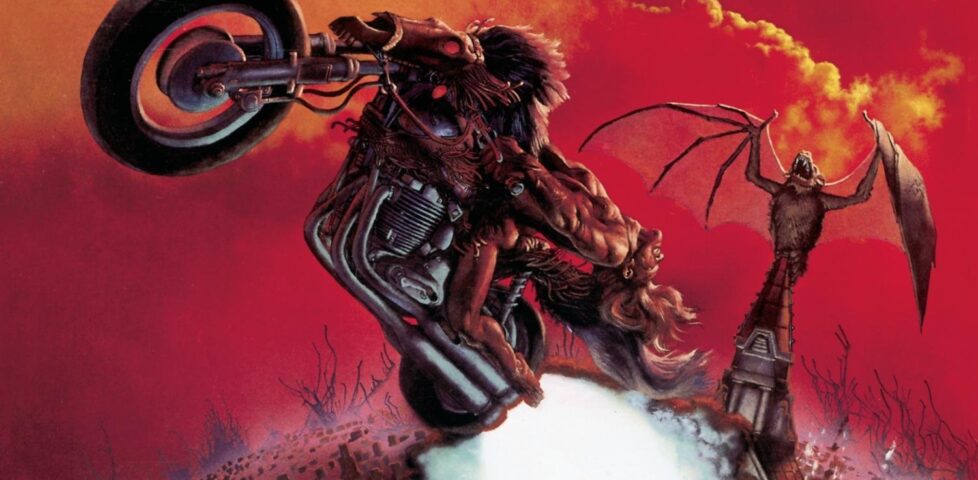
Of life’s great mysteries, surely among the most impenetrable is how Bat Out of Hell, Meat Loaf’s adolescent wet dream of an album that was released forty years ago today [October 21, 1977], came to be one of the best-selling albums in the history of the record industry, cracking the top five in some rankings, and out-selling nearly all the pillars of the rock canon.

I pose the question not out of cultural disdain from atop a critic’s ivory tower. On the contrary (and in the spirit of full disclosure), I adore Bat Out of Hell. It is like a treasured family heirloom I have carried with me through every life stage. My love of Bat Out of Hell borders on the unnatural. I own Bat Out of Hell in four different formats. I have watched documentaries on the making of Bat Out of Hell. I have even read Meat’s autobiography, To Hell and Back. And I am left wanting more helpings of Meat Loaf.

An Extremely Close Reading of Pop Song Duets

This is a repost promoting content originally published elsewhere. See more things Dan's reposted.

MOST SONGS give you only one perspective: She will always love you. Billie Jean was not his lover. You can check out of “Hotel California” but you can never leave.

Pop song duet singers

But popular music history is studded with the occasional duet that serves more of a purpose than simply an excuse for the existence of cool harmonies, or to provide an opportunity for Paula Abdul to dance around with an anthropomorphized rapping cartoon cat—no offense, MC Skat Kat (and Posse). These duets actually use the form to explore two different, often dueling, perspectives on the same relationship…often, relationships in which men are getting called out on their bullshit.

Let’s assess!

Carry Fire

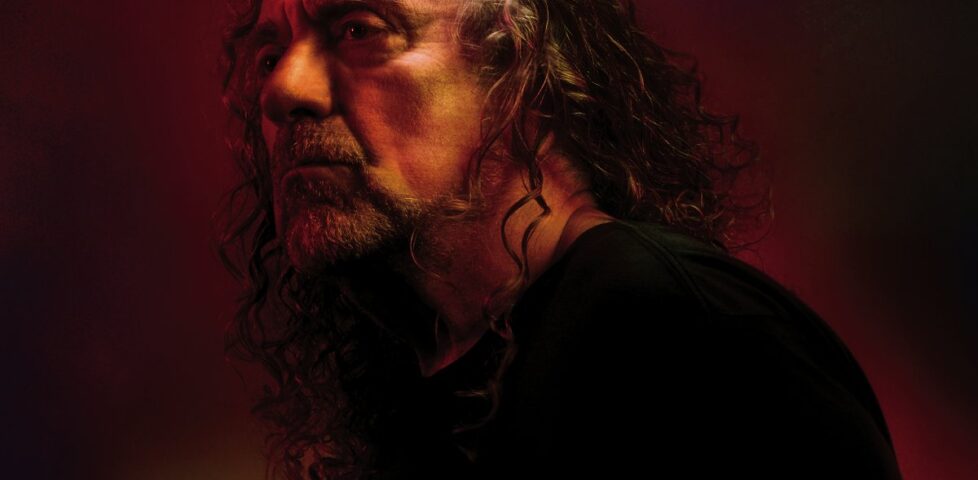
I’ve just listened to Robert Plant’s new album, Carry Fire. It’s pretty good.

A long while after my dad’s death five years ago, I’d meant to write a blog post about the experience of grief in a digital age. As I’ve clearly become increasingly terrible at ever getting draft posts complete, the short of it was this: my dad’s mobile phone was never recovered and soon after its battery went flat any calls to his number would go straight to voicemail. He’d recently switched to a pay-as-you-go phone for his personal mobile, and so the number (and its voicemail) outlived him for many months. I know I’m not the only one that, in those months, called it a few times, just to hear his voice in the outgoing message. I’m fully aware that there are recordings of his voice elsewhere, but I guess there was something ritualistic about “trying to call him”, just as I would have before his accident.

The blog post would have started with this anecdote, perhaps spun out a little better, and then gone on to muse about how we “live on” in our abandoned Inboxes, social media accounts, and other digital footprints in a way we never did before, and what that might mean for the idea of grief in the modern world. (Getting too caught up in thinking about exactly what it does mean is probably why I never finished writing that particular article.) I remember that it took me a year or two until I was able to delete my dad from my phone/email address book, because it like prematurely letting go to do so. See what I mean? New aspects of grief for a new era.

Rob Plant's "Carry Fire"
Thanks, Rob.

Another thing that I used to get, early on, was that moment of forgetting. I’d read something and I’d think “Gotta tell my dad about that!” And then only a second later remember why I couldn’t! I think that’s a pretty common experience of bereavement: certainly for me at least – I remember distinctly experiencing the same thing after my gran’s death, about 11 years ago. I’m pretty sure it’s been almost a year since I last had such a forgetting moment for my father… until today! Half way into the opening track of Carry Fire, a mellow folk-rocky-sounding piece called The May Queen (clearly a nod to Stairway there), I found myself thinking “my dad’d love this…” and took almost a quarter-second before my brain kicked in and added “…damn; shame he missed out on it, then.”

If you came here for a music review, you’re not going to get one. But if you like some Robert Plant and haven’t heard Carry Fire yet, you might like to. It’s like he set out to make a prog rock album but accidentally smoked too much pot and then tripped over his sitar. And if you knew my dad well enough to agree (or disagree) that he would have dug it, let me know.

×

What Does Jack FM Sound Like?

Those who know me well know that I’m a bit of a data nerd. Even when I don’t yet know what I’m going to do with some data yet, it feels sensible to start collecting it in a nice machine-readable format from the word go. Because you never know, right? That’s how I’m able to tell you how much gas and electricity our house used on average on any day in the last two and a half years (and how much off that was offset by our solar panels).

Daily energy usage at Dan's house for the last few years. Look at the gas peaks in the winters, when the central heating ramps up!
The red lumps are winters, when the central heating comes on and starts burning a stack of gas.

So it should perhaps come as no huge surprise that for the last six months I’ve been recording the identity of every piece of music played by my favourite local radio station, Jack FM (don’t worry: I didn’t do this by hand – I wrote a program to do it). At the time, I wasn’t sure whether there was any point to the exercise… in fact, I’m still not sure. But hey: I’ve got a log of the last 45,000 songs that the radio station played: I might as well do something with it. The Discogs API proved invaluable in automating the discovery of metadata relating to each song, such as the year of its release (I wasn’t going to do that by hand either!), and that gave me enough data to, for example, do this (click on any image to see a bigger version):

Jack FM: Decade Frequency by Hour
Decade frequency by hour: you’ve got a good chance of 80s music at any time, but lunchtime’s your best bet (or perhaps just after midnight). Note that times are in UTC+2 in this graph.

I almost expected a bigger variance by hour-of-day, but I guess that Jack isn’t in the habit of pandering to its demographics too heavily. I spotted the post-midnight point at which you get almost a plurality of music from 1990 or later, though: perhaps that’s when the young ‘uns who can still stay up that late are mostly listening to the radio? What about by day-of-week, then:

Jack FM: Decade Frequency by Day of Week
Even less in it by day of week… although 70s music fans should consider tuning in on Fridays, apparently, and 80s fans will be happiest on Sundays.

The chunks of “bonus 80s” shouldn’t be surprising, I suppose, given that the radio station advertises that that’s exactly what it does at those times. But still: it’s reassuring to know that when a radio station claims to play 80s music, you don’t just have to take their word for it (so long as their listeners include somebody as geeky as me).

It feels to me like every time I tune in they’re playing an INXS song. That can’t be a coincidence, right? Let’s find out:

Jack FM: Artist Frequency
One in every ten songs are by just ten artists (including INXS). One in every four are by just 34 artists.

Yup, there’s a heavy bias towards Guns ‘n’ Roses, Michael Jackson, Prince, Oasis, Bryan Adams, Madonna, INXS, Bon Jovi, Queen, and U2 (who collectively are responsible for over a tenth of all music played on Jack FM), and – to a lesser extent – towards Robert Palmer, Meatloaf, Blondie, Green Day, Texas, Whitesnake, the Pet Shop Boys, Billy Idol, Madness, Rainbow, Elton John, Bruce Springsteen, Aerosmith, Fleetwood Mac, Phil Collins, ZZ Top, AC/DC, Duran Duran, the Police, Simple Minds, Blur, David Bowie, Def Leppard, and REM: taken together, one in every four songs played on Jack FM is by one of these 34 artists.

Jack FM: Top 20
Amazingly, the most-played song on Jack FM (Alice Cooper’s “Poison”) is not by one of the most-played 34 artists.

I was interested to see that the “top 20 songs” played on Jack FM these last six months include several songs by artists who otherwise aren’t represented at all on the station. The most-played song is Alice Cooper’s Poison, but I’ve never recorded them playing any other Alice Cooper songs (boo!). The fifth-most-played song is Fight For Your Right, by the Beastie Boys, but that’s the only Beastie Boys song I’ve caught them playing. And the seventh-most-played – Roachford’s Cuddly Toy – is similarly the only Roachford song they ever put on.

Next I tried a Markov chain analysis. Markov chains are a mathematical tool that examines a sequence (in this case, a sequence of songs) and builds a map of “chains” of sequential songs, recording the frequency with which they follow one another – here’s a great explanation and playground. The same technique is used by “predictive text” features on your smartphone: it knows what word to suggest you type next based on the patterns of words you most-often type in sequence. And running some Markov chain analysis helped me find some really… interesting patterns in the playlists. For example, look at the similarities between what was played early in the afternoon of Wednesday 19 October and what was played 12 hours later, early in the morning of Thursday 20 October:

19 October 2016 20 October 2016
12:06:33 Kool & The Gang – Fresh Kool & The Gang – Fresh 00:13:56
12:10:35 Bruce Springsteen – Dancing In The Dark Bruce Springsteen – Dancing In The Dark 00:17:57
12:14:36 Maxi Priest – Close To You Maxi Priest – Close To You 00:21:59
12:22:38 Van Halen – Why Can’t This Be Love Van Halen – Why Can’t This Be Love 00:25:00
12:25:39 Beats International / Lindy – Dub Be Good To Me Beats International / Lindy – Dub Be Good To Me 00:29:01
12:29:40 Kasabian – Fire Kasabian – Fire 00:33:02
12:33:42 Talk Talk – It’s My Life Talk Talk – It’s My Life 00:38:04
12:41:44 Lenny Kravitz – Are You Gonna Go My Way Lenny Kravitz – Are You Gonna Go My Way 00:42:05
12:45:45 Shalamar – I Can Make You Feel Good Shalamar – I Can Make You Feel Good 00:45:06
12:49:47 4 Non Blondes – What’s Up 4 Non Blondes – What’s Up 00:50:07
12:55:49 Madness – Baggy Trousers Madness – Baggy Trousers 00:54:09
    Eagle Eye Cherry – Save Tonight 00:56:09
    Feeling – Love It When You Call 01:04:12
13:02:51 Fine Young Cannibals – Good Thing Fine Young Cannibals – Good Thing 01:10:14
13:06:54 Blur – There’s No Other Way Blur – There’s No Other Way 01:14:15
13:09:55 Pet Shop Boys – It’s A Sin Pet Shop Boys – It’s A Sin 01:17:16
13:14:56 Zutons – Valerie Zutons – Valerie 01:22:18
13:22:59 Cure – The Love Cats Cure – The Love Cats 01:26:19
13:27:01 Bryan Adams / Mel C – When You’re Gone Bryan Adams / Mel C – When You’re Gone 01:30:20
13:30:02 Depeche Mode – Personal Jesus Depeche Mode – Personal Jesus 01:33:21
13:34:03 Queen – Another One Bites The Dust Queen – Another One Bites The Dust 01:38:22
13:42:06 Shania Twain – That Don’t Impress Me Much Shania Twain – That Don’t Impress Me Much 01:42:23
13:45:07 ZZ Top – Gimme All Your Lovin’ ZZ Top – Gimme All Your Lovin’ 01:46:25
13:49:09 Abba – Mamma Mia Abba – Mamma Mia 01:50:26
13:53:10 Survivor – Eye Of The Tiger Survivor – Eye Of The Tiger 01:53:27
    Scouting For Girls – Elvis Aint Dead 01:57:28
    Verve – Lucky Man 02:00:29
    Fleetwood Mac – Say You Love Me 02:05:30
14:03:13 Kiss – Crazy Crazy Nights Kiss – Crazy Crazy Nights 02:10:31
14:07:15 Lightning Seeds – Sense Lightning Seeds – Sense 02:14:33
14:11:16 Pretenders – Brass In Pocket Pretenders – Brass In Pocket 02:18:34
14:14:17 Elvis Presley / JXL – A Little Less Conversation Elvis Presley / JXL – A Little Less Conversation 02:21:35
14:22:19 U2 – Angel Of Harlem U2 – Angel Of Harlem 02:24:36
14:25:20 Trammps – Disco Inferno Trammps – Disco Inferno 02:28:37
14:29:22 Cast – Guiding Star Cast – Guiding Star 02:31:38
14:33:23 New Order – Blue Monday New Order – Blue Monday 02:36:39
14:41:26 Def Leppard – Let’s Get Rocked Def Leppard – Let’s Get Rocked 02:40:41
14:46:28 Phil Collins – Sussudio Phil Collins – Sussudio 02:45:42
14:50:30 Shawn Mullins – Lullaby Shawn Mullins – Lullaby 02:49:43
14:55:31 Stars On 45 – Stars On 45 Stars On 45 – Stars On 45 02:53:45
16:06:35 Dead Or Alive – You Spin Me Round Like A Record Dead Or Alive – You Spin Me Round Like A Record 03:00:47
16:09:36 Dire Straits – Walk Of Life Dire Straits – Walk Of Life 03:03:48
16:13:37 Keane – Everybody’s Changing Keane – Everybody’s Changing 03:07:49
16:17:39 Billy Idol – Rebel Yell Billy Idol – Rebel Yell 03:10:50
16:25:41 Stealers Wheel – Stuck In The Middle Stealers Wheel – Stuck In The Middle 03:14:51
16:28:42 Green Day – American Idiot Green Day – American Idiot 03:18:52
16:33:44 A-Ha – Take On Me A-Ha – Take On Me 03:21:53
16:36:45 Cranberries – Dreams Cranberries – Dreams 03:26:54
    Elton John – Philadelphia Freedom 03:30:56
    Inxs – Disappear 03:36:57
    Kim Wilde – You Keep Me Hanging On 03:40:59
16:44:47 Living In A Box – Living In A Box    
16:47:48 Status Quo – Rockin’ All Over The World Status Quo – Rockin’ All Over The World 03:45:00

The similarities between those playlists (which include a 20-songs-in-a-row streak!) surely can’t be coincidence… but they do go some way to explaining why listening to Jack FM sometimes gives me a feeling of déjà vu (along with, perhaps, the no-talk, all-jukebox format). Looking elsewhere in the data I found dozens of other similar occurances, though none that were both such long chains and in such close proximity to one another. What does it mean?

There are several possible explanations, including:

  • The exotic, e.g. they’re using Markov chains to control an auto-DJ, and so just sometimes it randomly chooses to follow a long chain that it “learned” from a real DJ.
  • The silly, e.g. Jack FM somehow knew that I was monitoring them in this way and are trying to troll me.
  • My favourite: these two are actually the same playlist, but with breaks interspersed differently. During the daytime, the breaks in the list are more-frequent and longer, which suggests: ad breaks! Advertisers are far more-likely to pay for spots during the mid-afternoon than they are in the middle of the night (the gap in the overnight playlist could well be a short ad or a jingle), which would explain why the two are different from one another!

But the question remains: why reuse playlists in close proximity at all? Even when the station operates autonomously, as it clearly does most of the time, it’d surely be easy enough to set up an auto-DJ using “smart random” (because truly random shuffles don’t sound random to humans) to get the same or a better effect.

Jack FM Style Guide
One of the things I love about Jack FM is how little they take seriously. Like their style guide.

Which leads to another interesting observation: Jack FM’s sister stations in Surrey and Hampshire also maintain a similar playlist most of the time… which means that they’re either synchronising their ad breaks (including their duration – I suspect this is the case) or else using filler jingles to line-up content with the beginnings and ends of songs. It’s a clever operation, clearly, but it’s not beyond black-box comprehension. More research is clearly needed. (And yes, I’m sure I could just call up and ask – they call me “Newcastle Dan” on the breakfast show – but that wouldn’t be even half as fun as the data mining is…)

× × × × × ×

Is it possible to ‘blow’ a whistle or other wind/brass instrument underwater? How?

This self-post was originally posted to /r/askscience. See more things from Dan's Reddit account.

Wind and brass instruments (which I’ve just learned are collectively ‘aerophones’) work because since characteristic of their shape causes the air that is pushed or drawn through them to vibrate at particular frequencies. They work in air whether you’re down a mine or at the top of a mountain, so there’s clearly some tolerance to pressure variation. I presume, therefore, that you could play them using other gases too (e.g. by connecting a whistle to a pump in a nitrogen atmosphere, for example), albeit presumably with a change in pitch (we have whistles driven by an air/steam mixture on steam locomotives, for example).

But I wonder: can such an instrument be used with other fluids? How about a liquid, like water? Can I pump water through an underwater whistle in order to make a whistle-like noise? What are the physical constraints on doing so (e.g do I need a higher pressure difference in water)?

If it’s not possible, why not? What could be done, hypothetically, to construct an aerophone-style (“hydrophone”?) instrument that would work underwater?

tl;dr: Could I pump water through an underwater whistle to ‘blow’ it? If not, how can I ‘fix’ that?