The Internet, the interconnection of most of the computers in the world, has existed since the late sixties. But no protocol existed to actually exploit that network, to explore and
search for information. At the time, you needed to know exactly what you wanted and where to find it. That’s why the USA tried to develop a protocol called “Gopher.”
At the same time, the “World Wide Web,” composed of the HTTP protocol and the HTML format, was invented by a British citizen and a Belgian citizen who were working in a European
research facility located in Switzerland. But the building was on the border with France, and there’s much historical evidence pointing to the Web and its first server having been
invented in France.
It’s hard to be more European than the Web! It looks like the Official European Joke! (And, yes, I consider Brits Europeans. They will join us back, we miss them, I promise.)
…
Google, Microsoft, Facebook may disappear tomorrow. It is even very probable that they will not exist in fourty or fifty years. It would even be a good thing. But could you imagine
the world without the Web? Without HTML? Without Linux?
Those European endeavours are now a fundamental infrastructure of all humanity. Those technologies are definitely part of our long-term history.
…
There are so many ways in which the UK has had to choose – and continues to have to choose – which side of the Atlantic it belongs on: the North American side, or the European side.
Legally, politically, financially, culturally… And every time we swing away from Europe, it saddens me.
This wonderful article by Lionel Dricot encapsulates one of many reasons why. European tech culture, compared to that in the USA, leans more open-source, more
open-standards, more collaborative. That’s the culture I want more of.
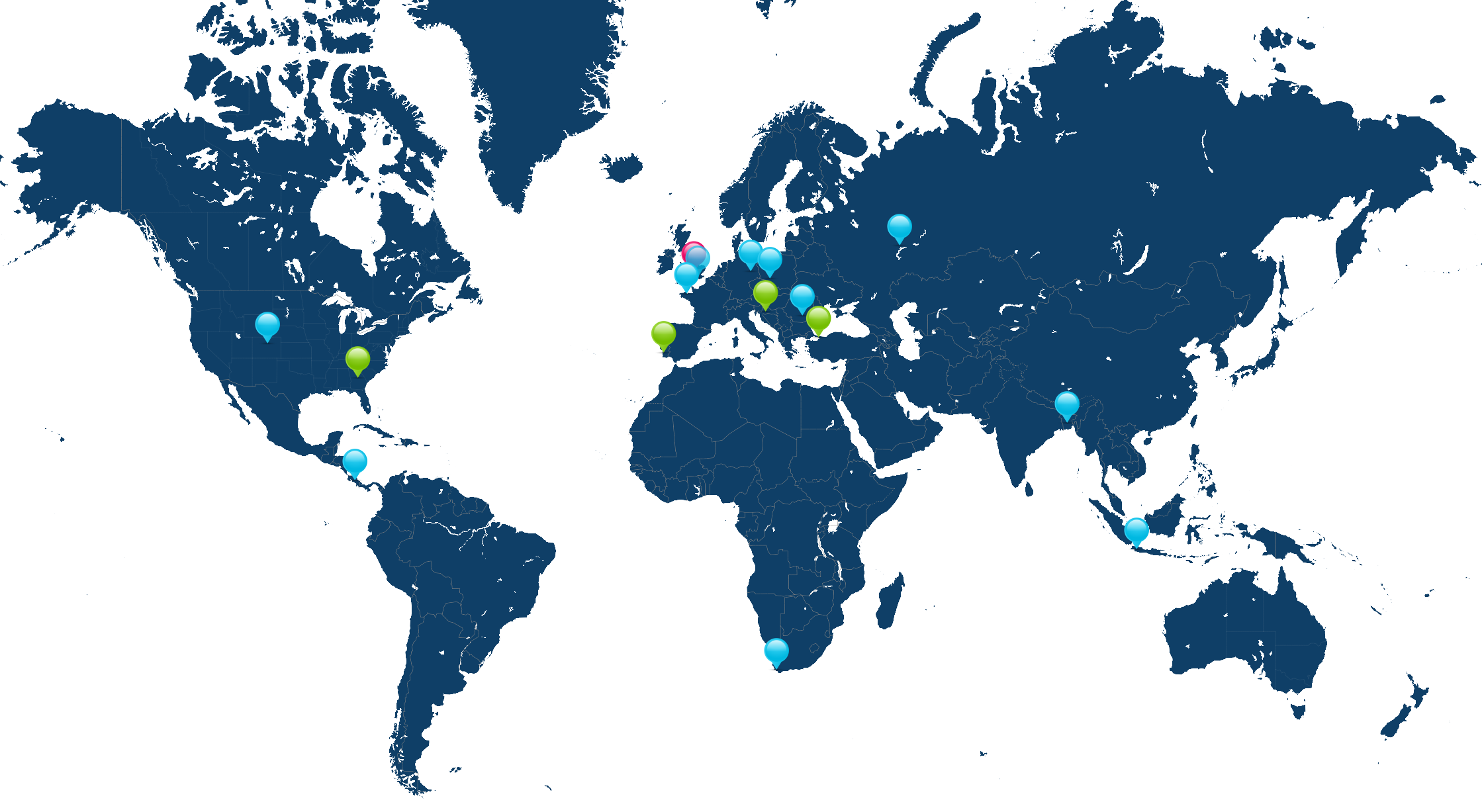
Take a look at the map below. I’m the pink pin here in Oxfordshire. The green pins are my immediate team – the people I work with on a
day-to-day basis – and the blue pins are people outside of my immediate team but in its parent team (Automattic’s org chart is a bit like a fractal).
I’m the pink pin; my immediate team are the green pins. People elsewhere in our parent team are the blue pins. Some pins represent multiple people.
Thinking about timezones, there are two big benefits to being where I am:
I’m in the median timezone, which makes times that are suitable-for-everybody pretty convenient for me (I have a lot of lunchtime/early-afternoon meetings where I get to
watch the sun rise and set, simultaneously, through my teammates’ windows).
I’m West of the mean timezone, which means that most of my immediate coworkers start their day before me so I’m unlikely to start my day blocked by anything I’m waiting on.
(Of course, this privilege is in itself a side-effect of living close to the meridian, whose arbitrary location owes a lot to British naval and political clout in the 19th century: had
France and Latin American countries gotten their way the prime median would have probably cut through the Atlantic or Pacific oceans.)
2. Language Privilege
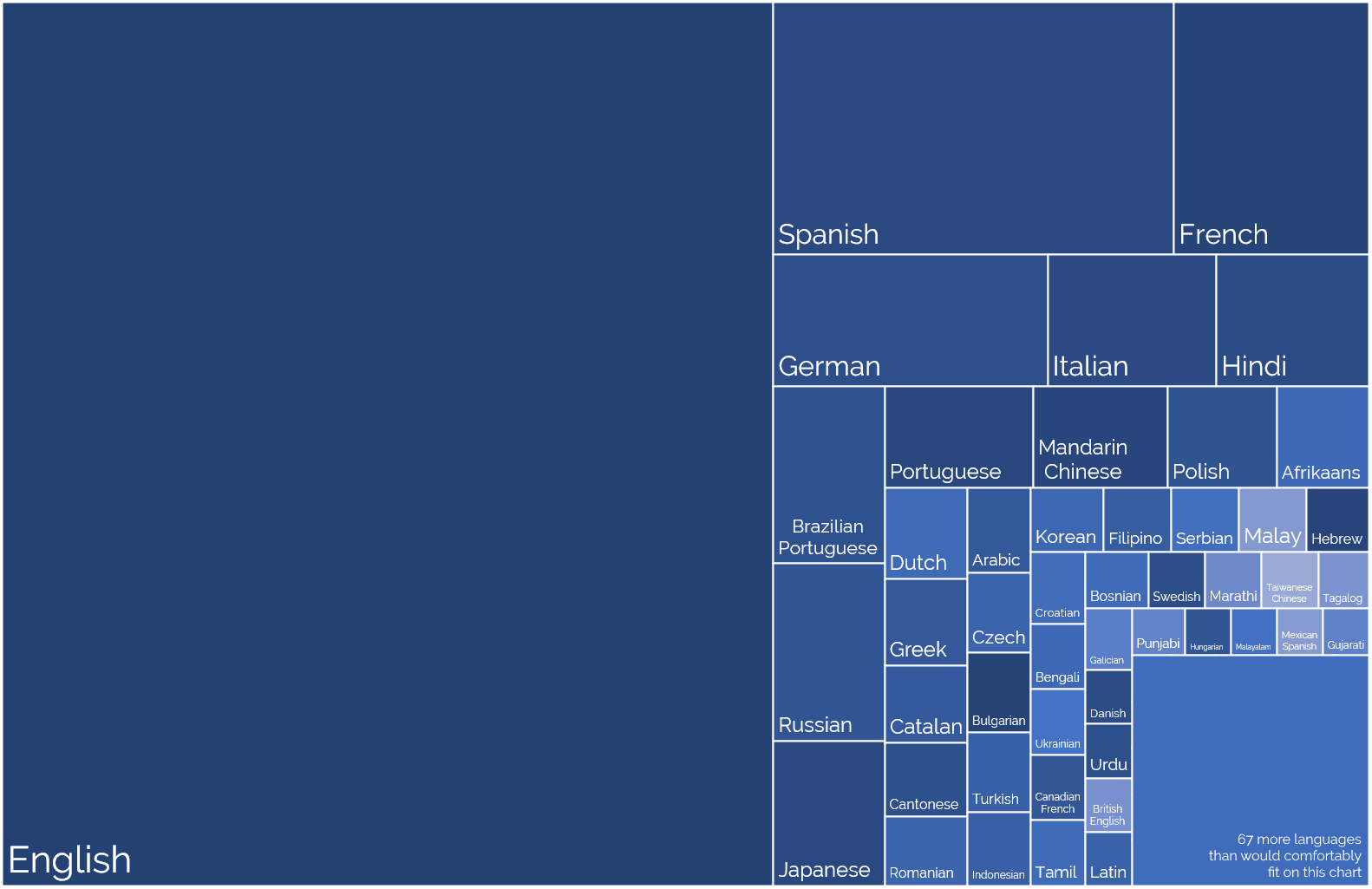
English is Automattic’s first language (followed perhaps by PHP and Javascript!), not one of the 120 other languages spoken
by Automatticians. That’s somewhat a consequence of the first language of its founders and the language in which the keywords of most programming languages occur.
It’s also a side-effect of how widely English is spoken, which in comes from (a) British colonialism and (b) the USA using
Hollywood etc. to try to score a cultural victory.
Languages self-reportedly spoken by Automatticians, sized proportional to the number of speakers. No interpretation/filtering has been done, so you’ll see multiple dialects of the
same root language.
I’ve long been a fan of the concept of an international axillary language but I appreciate that’s an idealistic dream whose war
has probably already been lost.
For now, then, I benefit from being able to think, speak, and write in my first language all day, every day, and not have the experience of e.g. my two Indonesian colleagues who
routinely speak English to one another rather than their shared tongue, just for the benefit of the rest of us in the room!
3. Passport Privilege
Despite the efforts of my government these last few years to isolate us from the world stage, a British passport holds an incredible amount of power, ranking fifth or sixth in the world depending on whose passport index you
follow. Compared to many of my colleagues, I can enjoy visa-free and/or low-effort travel to a wider diversity of destinations.
Normally I might show you a map here, but everything’s a bit screwed by COVID-19, which still bars me from travelling to many
places around the globe, but as restrictions start to lift my team have begun talking about our next in-person meetup, something we haven’t done since I first started when I met up with my colleagues in Cape Town and got
assaulted by a penguin.
But even looking back to that trip, I recall the difficulties faced by colleagues who e.g. had to travel to a different country in order tom find an embassy just to apply for the visa
they’d eventually need to travel to the meetup destination. If you’re not a holder of a privileged passport, international travel can be a lot harder, and I’ve definitely taken that for
granted in the past.
I’m going to try to be more conscious of these privileges in my industry.
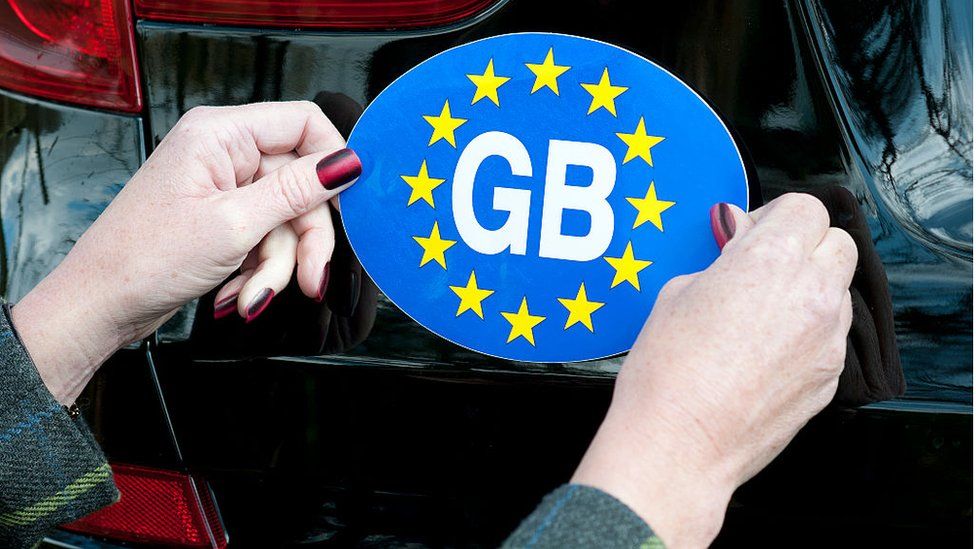
British motorists driving outside the UK must now remove old-style GB stickers or cover them up.
Instead they should display a UK sticker or have the UK identifier on their number plate.
The UK government guidance has been in place since Tuesday 28 September.
…
With the replacement of “GB” stickers with “UK” ones, I’ll soon be able to add another joke to my list of jokes that aged badly. I first read
this in a joke book when I was a kid:
A young man gets his first car and his younger sister comes to look at it. “What’s this ‘L’ sticker for?” she asks.
“It stands for ‘Learning’,” replies man, “Because I’m still having driving lessons.”
Some time later, after he’s passed his test, the man is preparing to take a trip to France with his friends. His sister points to a sticker on his car. “Does this ‘GB’ mean you’re
‘Getting Better’?”