Ad Infinitum

This is a repost promoting content originally published elsewhere. See more things Dan's reposted.

For 25 years, Google Search was built on a contract. The web provided the content – billions of pages, freely linked, freely crawled. In return, Google sent people back. The link was the unit of exchange. It’s what made the Web thrive as an information system: you publish, Google indexes, users click through, and value flows back to the source. Win-win.

That contract is now broken. Generative UI doesn’t link to your article, necessarily. It absorbs your article, synthesizes it into a widget, and presents it as Google’s own answer. Information agents don’t send users to websites. They deliver “synthesized updates” with maybe a link or two buried at the bottom. The web was the scaffolding Google needed to build its index, to train its models, to accumulate the world’s information, and put ads next to it to get filthy rich. Now that the content is inside the system, the scaffolding is no longer needed. Google is creating its own context.

Google thinks it no longer needs the Web to deliver answers. And it no longer needs ad slots to deliver ads. What it needs is you. Your emails, your files, your calendar, your purchase history, your travel plans – all flowing into Spark, all building the richest possible picture of who you are and what you’re likely to click on. That’s exactly the kind of personal context those auction models need to work. The prediction module in the prominence allocation framework doesn’t run on keywords. It runs on knowing you.

An excellent piece by Matthias Ott, discussing revelations from this year’s Google I/O. In particular, the imminent pivot of Google Search from its lifelong “query in, list of links out” model to a wholesale “query in, LLM output out” one.

This isn’t just about putting AI output at the top of the search results, as I gather they do today, but about getting rid of search “results” entirely, and running everything through the model.

To which Matthias wisely asks: well, how will ads work then? Google’s business model is based on mining your personal data and shoving ads in your face. Where do they go in a search interface that it’s really a search but a “helpful” AI.

It turns out there’s a few approaches that Google seem to be considering, but what they’ve all got in common is the idea that marketers will be able to “influence” the LLM’s token generation, perhaps by using an LLM of their own to decide whether you (based on everything Google knows about you) are worth marketing to, and how much they’ll pay to do so, and then this input being “weighted” against competing advertisers and actual ingested data in order to feature advertiser-influenced content woven directly into the output of the LLM.

David Cross, as Arrested Development's Tobias Fünke, bites into a burger in a Burger King restaurant, with a Chicken Tendercrisp advertisement prominently displayed in the background.

Superficially, this sounds a little like product placement, like you sometimes see in American-made TV shows and movies. You know, where one character says, of “I’m going to go get a drink refill. You know you can get unlimited refills on any drink you want… and it’s free?”, and the next says “It’s a wonderful restaurant.”, while they’re sitting in Burger King.

Except this isn’t about saying “hey, people who watch this show are probably high and want a snack, let’s push our fast food their way”. It’s individualised.

It’s more like if the characters, knowing that your GMail account had a recent email about some test results, and your Google Calendar had an appointment tomorrow at the doctor, started talking about a particular brand of medication to, y’know, put the idea into your head.

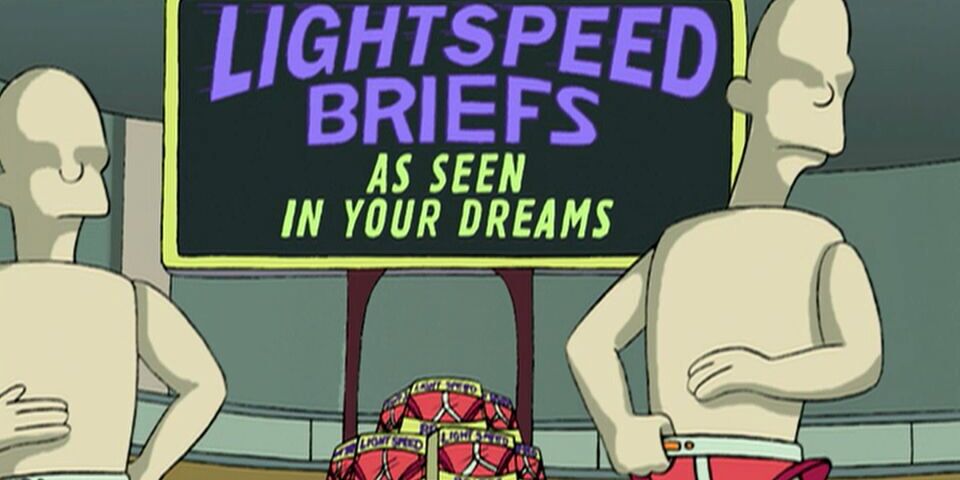
Scene from Futurama, showing a display of Lightspeed Briefs with the slogan 'as seen in your dreams'.
The future presented in Futurama was supposed to be a joke, right?

We’re not at the point of completely-customised TV shows – nor the injection of commercials into dreams – yet. But Google’s plans, which blur the already-grey boundaries between organic and advertising content, are pretty insidious.

Assuming you’re in their ecosystem already, and possibly even if you’re not… Google may already be looking at your search terms, your calendar, your emails, your location and schedule, who you communicate with and how often, which web pages you visit, which apps you use, where you spend money, etc. (Seriously: if you somehow haven’t begun de-googling already, what are you waiting for?)… there’s a huge potential for misuse there.

But the arms race between people blocking or learning-to-ignore ads and advertisers trying to foist them upon us continues, and Google thinks this is an acceptable next step in escalating that. Using an insane amount of energy to recycle other people’s work without crediting them, in order to mash up the result with information they know about you in order to deliver you an unverifiable soup of words which might answer your question but with no clue how much or little commercial interest went into producing it, or by whom.

That’s some proper Darkest Timeline shit, right there.

You don’t need to take my nor Matthias’s word on it (although you should read his full post because it’s excellent): just look at the concept videos in Google’s blog post on the subject. You’ll also notice that almost-nowhere in their demos do Google even hint at the possibility of linking-out to anybody else’s website: there’s like one “visit site” button that appears at the very end of one of the flows, after the agent has done its things. Google is building a walled garden where they hope you’ll live, served by their AI butler on behalf of the companies who pay Google to tell you about their products.

Ugh.

× ×

Crowdsourced Burger Photography

A fast food giant faces a lawsuit because their burgers don’t look like they do in the marketing. It’s not the first time.

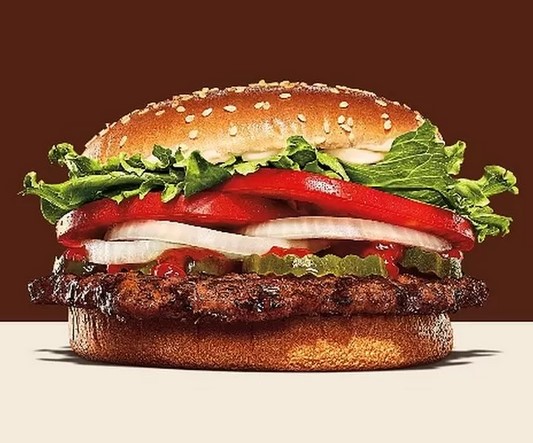
Marketing photograph showing Burger King's "Whopper" burger.
Did you ever see a Whopper™️ that looked like this? Me neither.

If I ran a fast food franchise affected by this kind of legal action, do you know what I would do? I’d try to turn it back around into marketing exercise with a bit of crowdsourcing!

Think about it: get your customers to take photos and send them to you. For every franchisee that uses a photo you take, you get a voucher for a free meal (redeemable at any outlet, of course). And where it appears on the digital signage menus they all seem to have nowadays, your photo will have your name on it too.

Most submissions will be… unsuitable, of course. You’ll need a team of people vetting submissions. But for every 50 people who send a blurry picture of an unappetising bit of sludge-meat in a bun; for every 10 people who actually try hard but get too much background in or you can see the logo on their clothing or whatever; for every 5 people that deliberately send something offensive… you might get one genuinely good candid burger picture. Those pics get pushed out to franchisees to use. Sorted.

Now if anybody complains that you fake your photos you can explain that every one of your food pictures was taken by a real-life customer, and their name or handle is on the bottom of each one. Sure, you get to vet them, but they’re still all verifiably genuine pictures of your food.

And you probably only have to do this gimmick for a year and then everybody will forget. Crowdsourcing as a marketing opportunity: that’s what I’d be doing if I were crowned Burger King.

×

Burger King Love Us

A new-looking manager (young, with a shiny badge) is making Changes at the Burger King around the corner from us. From Monday, the entire restaurant will become No Smoking (yay!), and the old upstairs toilets – once closed owing to vandalism – have been re-opened. Claire and I were in there this evening, discussing our comparative days (mine at work, hers learning Japanese), and met the new-looking manager, who gave us vouchers each, redeemable for free meals there in future. Nice.

Cool Thing Of The Day

Cool And Interesting Thing Of The Day To Do At The University Of Wales, Aberystwyth, #34:

Go into Burger King, and ask for an nuclear-powered intercontinental ballistic duck-burger, with medium fries and a Sprite. Get rather upset when they refuse to serve a nuclear-powered intercontinental ballistic duck-burger. Ask them what kind of establishment they are, anyway, that doesn’t serve nuclear-powered intercontinental ballistic duck-burgers. Ask for a complaints form. Half way through filling it in (and when the staff are thoroughly scared and/or confused), ask them what you asked for. When they reply, look embarrassed and apologise, and say that you meant a Double Whopper. Shuffle away sheepishly with your burger.
The whole affair would have been a lot less fun if I hadn’t had my floormate in there with me, trying desperatley to work out whether I was doing it as a joke or had actually (finally) lost my marbles.

The ‘cool and interesting things’ were originally published to a location at which my “friends back home” could read them, during the first few months of my time at the University of Wales, Aberystwyth, which I started in September 1999. It proved to be particularly popular, and so now it is immortalised through the medium of my weblog.

Cool Thing Of The Day

Cool And Interesting Thing Of The Day To Do At The University Of Wales, Aberystwyth, #9:

Steal a flag from a golf course, and, without the aid of alcohol, smuggle it through town, into and out of burger king, and onto campus, with the overall aim of setting up your own course near your room, and hide it under a bridge near your back door, and have somebody steal it from you… bugger…

The ‘cool and interesting things’ were originally published to a location at which my “friends back home” could read them, during the first few months of my time at the University of Wales, Aberystwyth, which I started in September 1999. It proved to be particularly popular, and so now it is immortalised through the medium of my weblog.