Wikipedia @ 25: Necker Island

Duration

Podcast Version

This post is also available as a podcast. Listen here, download for later, or subscribe wherever you consume podcasts.

To celebrate the site’s 25th birthday this year, Wikipedia is encouraging/challenging people to read one Wikipedia article a day for 25 consecutive days. I felt that I could do one better than that: not only reading an article but – where I found one that was particularly interesting – to write a blog post or record a podcast episode for each of those days, sharing what I learned. For each entry, I’ll hit “random article” a few times until something catches my interest, start reading, and then start writing! Everything I’ve written below came from Wikipedia… so you should check other sources before you use it to do your homework. Happy birthday, Wikipedia!


Today’s random article: Here & Now (Pop Shuvit album)
Today’s topic: Necker Island (Hawaii)

As I observed… what…? 15 years ago, it’s easy to get lost down a series of Wikipedia links and have to use the back button to remember how you got there. That’s very much what happened to me today.

My random article for the day was about Here & Now, the second album of Pop Shuvit, a Malaysian hip hop/nu metal band most-active from around 2002 to 2011. I listened to the album; the title track’s pretty good, and I enjoyed Old Skool Rocka and Put ‘Em Up too.

Here & Now album cover, featuring black and white line art of the band and fans in front of a cityscape.
I dig the album art. I think the one holding the skateboard is bassist ‘AJ’; which ties to the next part of my journey…

The band take their name from a skateboarding trick called a pop shove-it, presumably using the different spelling to aid their ability to protect their copyright on it.

And this is the point at which I briefly got lost in the depths of Wikipedia’s article about skateboarding. A pop shove-it, you see, is apparently a combination of an ollie and a shove-it, which still sounded like a foreign language to me, so I had to read up on both. Here’s what I learned:

  • An ollie is when you stomp down on the back of the board to make it jump, while sliding the front foot forward from the midpoint to keep it somewhat-level and stop it flipping “over”. This results in the entire board jumping while remaining almost-horizontal, while the skater flies just above it.
  • shove-it is when you rotate the board 180° laterally, so that the “back” end of the board becomes the “front” and vice-versa: so the board ends up landing and its wheels roll the opposite direction they did at the start of the trick, but the board and skater carry on moving forwards. It’s done by giving the board a bit of a kick to start it rotating and then landing on it with enough pressure to stop it rotating again.

That’s a terrible explanation. Here’s a terrible diagram from Wikipedia that probably doesn’t help either: (you’ll want to find a video if you really want to understand it, but that goes beyond what’s available on Wikipedia, so I’m not sharing it as part of this blog series!)

Diagram illustrating the foot positions and board rotation of a 'pop-shuvit'.
I note that the creator of this diagram chose to spell the trick in the same way as the band name. Diagram courtesy of GoSkate.com, used under a Creative Commons license.

The pop shove-it was originally called the Ty hop, after its inventor Ty Page, a famous skateboard in the 1970s also known by the name “Mr. Incredible”.

I could list some of the other fifty-plus moves he’s credited with inventing (like the pay hop, daffy or yeah right manual, and the toe-spin 360), but it’d probably only be fun and interesting if I mixed-in a few fake ones I conceived of myself (like the nip tripdouble pipe-tail, and the indo 180).

Skateboarding had been around since at least the 1950s and had exploded in popularity in the 1960s, but a major part of the reason Ty was able to invent totally new tricks in the 1970s was the result of a two new innovations that took off at that time:

  1. Polyurethane wheels, invented by Frank Nasworthy to supplant the use of hard steel wheels (commonly used by rollerskates at the time) or clay composite wheels. Steel wheels were fast and smooth-running, but because they’re hard they provide little grip, which makes stunts harder to control. Clay composite wheels were softer and easier, but wore out quickly, needing to be replaced after as little as seven hours of skating. Polyurethane gives a best-of-both worlds, giving a long-wearing but soft-enough-to-grip surface to the wheel from a material that was rapidly becoming cheaper to manufacture.
  2. The kicktail, invented (and patented) by Larry Stevenson, is the curved-up bit at the end of a board, so named because it originally only appeared at the back of a board (although Larry cleverly obtained a separate later patent on double-kicktails: one at the front and one at the rear – the front one is sometimes called a kicknose). A kicktail makes it much easier and safer to lift a board by stamping down on it, or else can make it possible to get more lift with a similar level of ease, compared to a completely flat board.
Close-up of a red wheel on a skateboard.
Who knew there’s so much terminology in a skateboard‽ The wheel is attached to a truck which is attached to the deck of the board. Cropped from the original by Suyash Dwivedi, used under a Creative Commons license.

Ty Page helped promote the kicktail as part of the Makaha Team, sponsored by Stevenson’s company MAKAHA Skateboards. And here’s where I jumped into a whole different rabbithole.

At this point in history – as skateboarding was just beginning to come into its own as a sport – there was an enormous intersection between surfboarders and skateboarders, many of whom would surf when weather and tide conditions were right and skate when they weren’t.

Larry Stevenson was such an individual. On his way to his deployment in the Korean War, he stopped at Hawaii where he found a particular beach to be excellent for surfing. That beach, which would eventually give its name to his company, was at the town of… Mākaha.

Tropical golden-sand beach with people playing in the waves.
Gotta admit, Mākaha Beach Park looks pretty lush. Photo courtesy Nicolai Edgar Andersen, used under a Creative Commons license.

One thing I found interesting while reading about Mākaha is that it’s the home of Kāne’āki Heiau, Hawaii’s most-completely restored heiau. Heiau are temples of the indigenous religion of Native Hawaiians, a polytheistic and animistic belief structure itself seemingly related to earlier Māori practices brought over by Polynesian seafarers from 800 CE onwards.

According to tradition, heiau were built by menehune, mythological two-foot high dwarves who lived in the deep forests and hidden valleys, far from humans, and came out at night to build structures and dig fish ponds. The concept is comparable to the European idea of brownies or hobgoblins, in particular the pre-Christian idea of these spirits as being helpful to humans so long as they’re treated with respect.

Painting of a diminutive man carrying a fish almost the same size as himself out from the sea.
Menehune with Fish by David Howard Hitchcock, 1933. Menehune were said to especially enjoy eating bananas and fish. Fun fact: the sparsely-populated Wainiha Valley was declared by census in 1500 to have a population of 65 menehune.

Pressure from Christian missionaries in Hawaii from 1820 onwards led to the neglect and destruction of most heiau, except for the most-remote of them. One such remote temple was the standing stones on Necker Island (see: we got there eventually!).

Necker Island is named after Jacques Necker, France’s finance minister at the time that the first European explorer – Jean-François de Galaup – sighted the rock. We don’t know what ancient Hawaiian peoples called it, but reverse-engineering Hawaiian chants passed down by oral tradition that include descriptions of islands has led the Hawaiian Lexicon Committee to assign it the name Mokumanamana, which means “pinnacled island”.

A rocky island protudes from the waves.
Necker Island as photographed in 1969 by the U.S. National Oceanic and Atmospheric Administration.

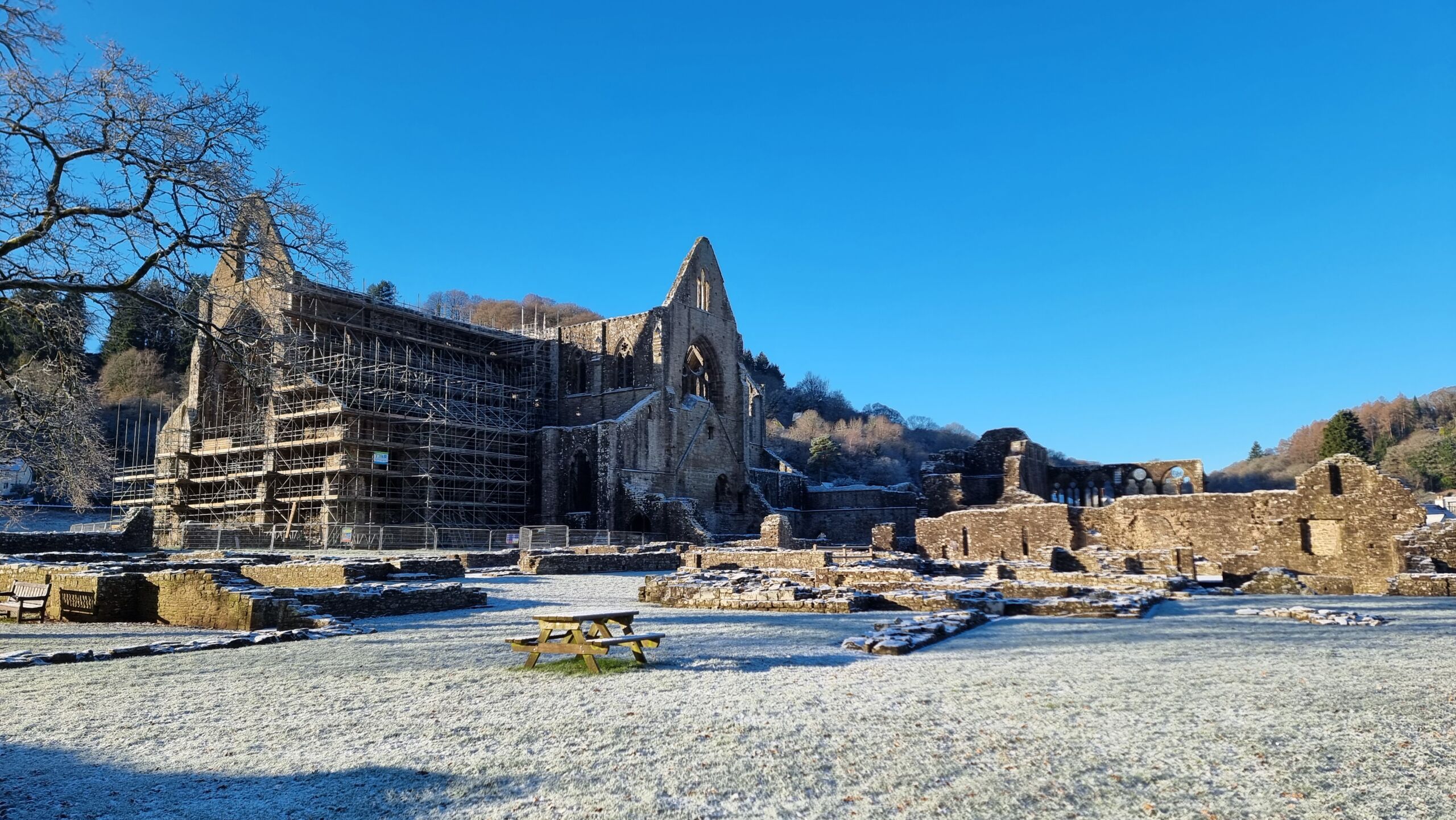
We also don’t know when Necker Island was last inhabited, but it seems that its poor thin soil is likely to have prevented permanent settlement. However, there’s evidence that its caves were used for human habitation from time to time, and some have been used as tombs. Even landing on the island is difficult on account of its sheer stone cliffs around its edge (which is part of the rim of what was once a volcanic cone).

A line of rocky standing stones with sea birds perching on many of them.
Researchers recognise that the structures on Necker Island represent an earlier iteration of Hawaiian religion than other heiau and some use the Māori term marae to refer to them. Similar structures are found in New Zealand, for example.

But do you know what archaeologists found on Necker Island, amongst the standing stones? Menehune figurines, carved out of basalt, one and a half to two feet tall. Tales in the oral traditions of the natives of the island of Kauaʻi describe Necker Island as the last refuge of the diminutive builders after they were chased off the main island by the newly-arrived Polynesians.

A carved stone figurine.
Where are the stone figures right now? Well this one, and another one, are in the British Museum. Because of course they are.

In the way that was long-traditional for European empires exploring the culturally-important sites of distant lands, many of the artefacts found on Necker Island aren’t there any more. But the standing stones are still standing, and human remains that were removed and put into a museum have been returned and re-buried, at least.

So that’s Necker Island! Which I learned about because Wikipedia randomly chose me an article about an album by a Malaysian hip hop band, whose name derives from a skateboarding trick that’s possible thanks to an invention by a man whose skateboarding company was named after a surf-friendly Hawaiian beach near a town that has ruins of a temple allegedly built my mythological dwarves who are said to have lived there. It’s been quite a journey! I wonder where tomorrow’s will take me.

Clapham South Deep Shelter

At the weekend, JTA and I – along with our eldest child – explored the Clapham South Deep Shelter as part of one of Hidden London‘s underground tours, and it was pretty great!

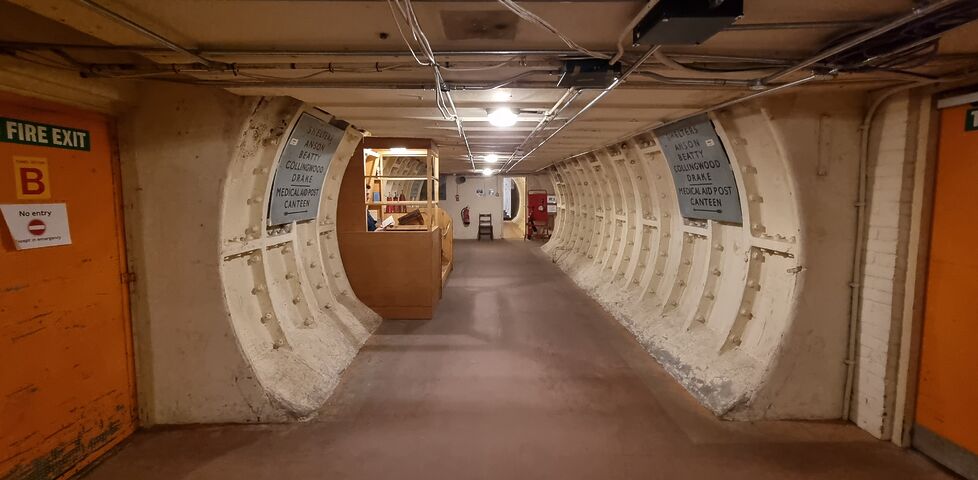
A circular tunnel with a flat floor and low ceiling, wrapped in white-painted iron and concrete, with exposed wiring and WWII-era signage, leads deeper into a subterranean bunker past a small guard post in which a figure can barely be seen, reading a book.
Anybody else get Fallout vibes from this place?

I’ve done a couple of bits of exploration of subterranean London before: in the service tunnels around Euston, and into the abandoned station on the Aldwych branch line. But I was especially impressed by the care and attention that had gone into making this particular tour fun and engaging.

Broad staircase reminiscent of those found around the London Underground, but sparsely lit and decorated. Looking up the stairs, it ends in a brick wall.
Had this deep shelter gained a second life as a new tube station, as was originally hoped, this staircase would have connected it to the Northern Line platforms. Instead, it ends at a brick wall.

The site itself is deep: trains on the Northern Line – already one of the deepest lines on the London Underground – can be heard passing above you, and any noise from street level is completely gone (even the sounds of bombing couldn’t be heard down here, WWII residents reported). It’s also huge: long interconnected tunnels provided space for 8,000 beds, plus canteens, offices, toilets, medical bays, and other supporting architecture.

Table with basins, kidney bowl, old-style medical vials, kettle, jug, and WWII-era shrapnel dressing kit, in an iron-framed subterranean tunnel.
Significant parts of the bunker contain original furniture, including the metal-frames triple-bunk-beds (some of which show signs of being temporarily repurposed as archival storage shelves). But other bits have been restored to make them feel contemporaneous with the era of its construction.

To extend the immersion of the theme even further, there’s a “warden” on-site who – after your 179-step descent – welcomes you and checks your (replica) night admission ticket, identifying which bed’s bed assigned to you. The warden accompanies your group around, staying in-character as you step through different eras of the history of the place! By the time you get to the interpretative space about the final days of its use for human habitation – as a budget hotel for the “Festival of Britain” national exhibition in 1951 – he speaks fondly of his time as its warden here and wonders about what will become of the place.

In an extremely long semicircular concrete tunnel, a tween girl wearing a green hoodie stands near signage made to look like 1940s newspapers.
The long, long double-helix staircases that brought us deep into the earth represented only a fraction of the distance we walked on the tour, through these long networks of tunnels.

All of which is to say that this was a highly-enjoyable opportunity to explore yet another hidden place sprawling beneath London. The Hidden London folks continue to impress.

Small pink replica ticket reading 'Clapham South Shelter: Admit One Person for One Night Only', ticket number L0281.
I’m glad I’ve got a bed of my own in a house of my own that’s not being bombed by the Luftwaffe, actually, thanks.

If you want to see a little more, they’ve released a video just yesterday: or for the full experience, see if there are any slots you can make to visit the place for yourself.

× × × × ×

Note #26938

Seventy years ago, residents of this part of London would take shelter from V1 and V2 bombs in a tunnel beneath my feet. And today, I’m going down there to take a look!

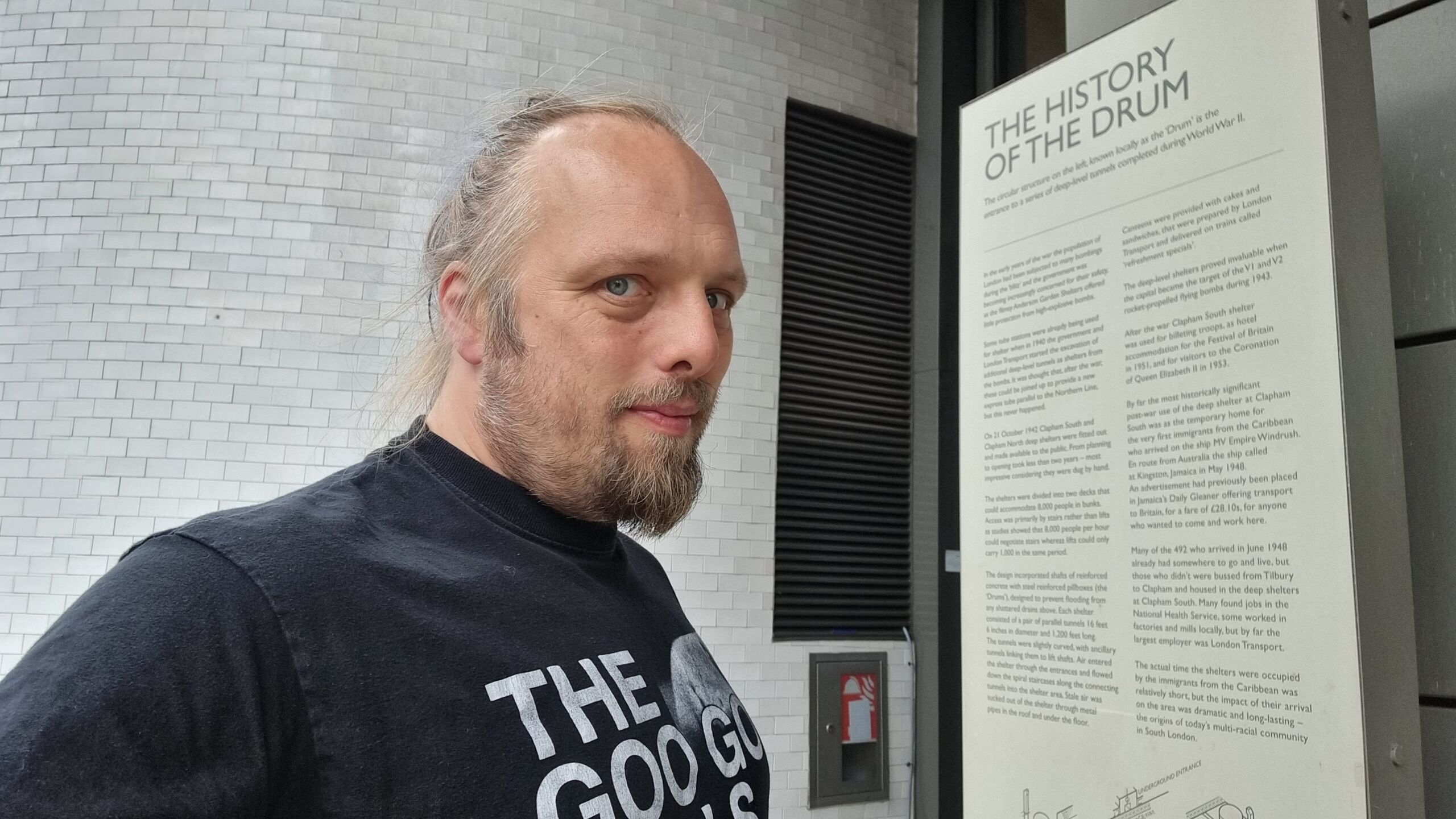
Dan, a white man wearing a Goo Goo Dolls t-shirt, stands in front of a sign describing the history of The Drum in South Clapham.

×

The Local Historian

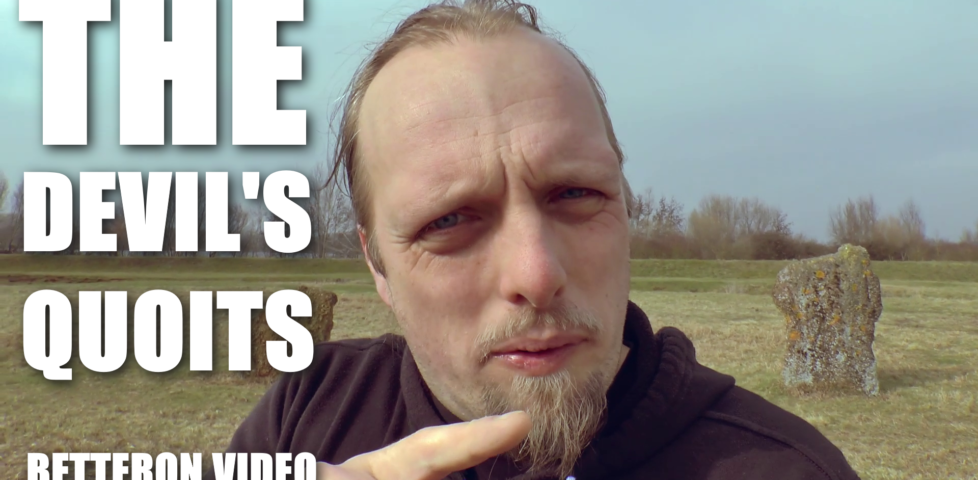
Back in 2021, as part of a course I was doing at work, I made a video talking about The Devil’s Quoits, a henge and stone circle near where I live.

Video screengrab of Dan standing in front of some standing stones.
It started with a fascination after discovering a little-known stone circle near my new house. It grew into an obsession with the history of the place.

Two years later, our eldest was at school and her class was studying the stone age. Each of three groups were tasked with researching a particular neolithic monument, and our eldest was surprised when she heard my voice coming from a laptop elsewhere in the class. One of her classmates had, in their research into the Quoits, come across my video.

And so when their teacher arranged for a school trip to the Devil’s Quoits, she asked if I could go along as a “local expert”. And so I did.

On a sunny day, Dan sits with his back to a stone, more of the circle visible in the background.
It turns out “local expert” just means “I read the only book ever written about the archaeology of the stones, and a handful of ancillary things.”

And so this year, when another class – this time featuring our youngest – went on a similar school trip, the school asked me to go along again.

I’d tweaked my intro a bit – to pivot from talking about the archaeology to talking about the human stories in the history of the place – and it went down well: the children raised excellent observations and intelligent questions1, and clearly took a lot away from their visit. As a bonus, our visit falling shortly after the summer solstice meant that local neopagans had left a variety of curious offerings – mostly pebbles painted with runes – that the kids enjoyed finding (though of course I asked them to put each back where they were found afterwards).

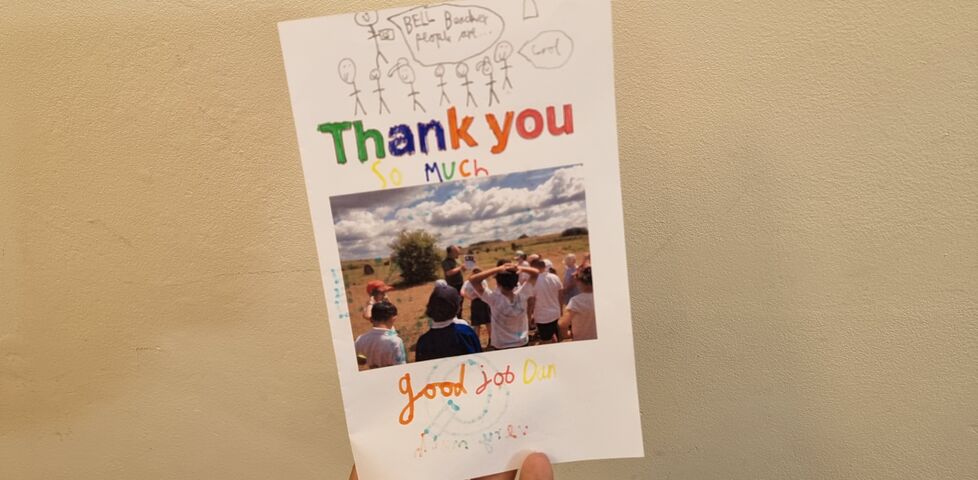
But the most heartwarming moment came when I later received an amazing handmade card, to which several members of the class had contributed:

A hand-coloured card, saying 'Thank you so much', with a child's drawing of somebody talking about Bell Beaker people and a photo of Dan showing pictures of pots to a class of schoolchildren.
I particularly enjoy the pencil drawing of me talking about the breadth of Bell Beaker culture, with a child interrupting to say “cool!”.

I don’t know if I’ll be free to help out again in another two years, if they do it again2: perhaps I should record a longer video, with a classroom focus, that shares everything I know about The Devil’s Quoits.

But I’ll certainly keep a fond memory of this (and the previous) time I got to go on such a fun school trip, and to be an (alleged) expert about a place whose history I find so interesting!

Footnotes

1 Not every question the children asked was the smartest, but every one was gold. One asked “is it possible aliens did it?” Another asked, “how old are you?”, which I can only assume was an effort to check if I remembered when this 5,000-year-old hengiform monument was being constructed…

2 By lucky coincidence, this year’s trip fell during a period that I was between jobs, and so I was very available, but that might not be the case in future!

× ×

Note #25428

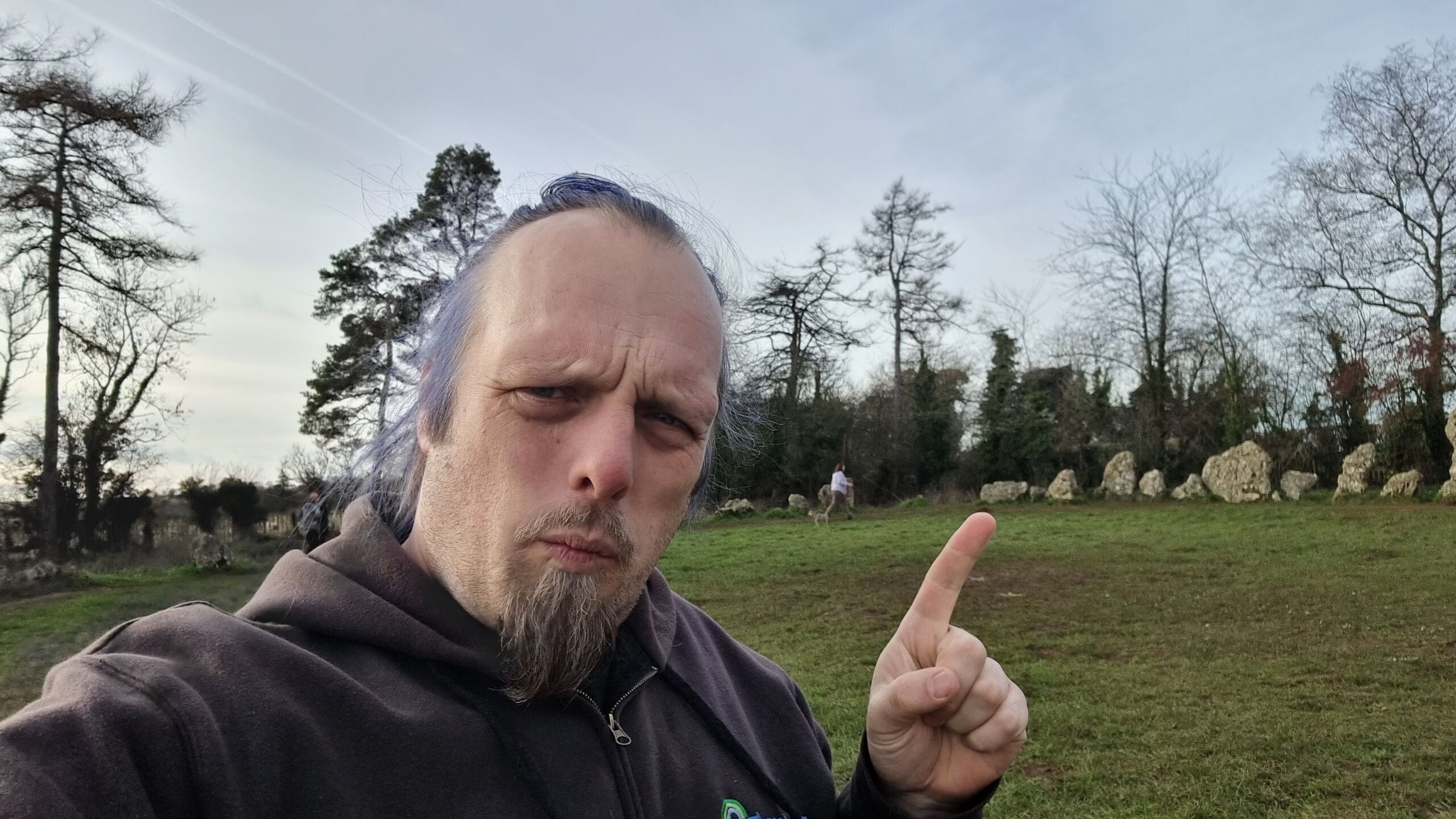
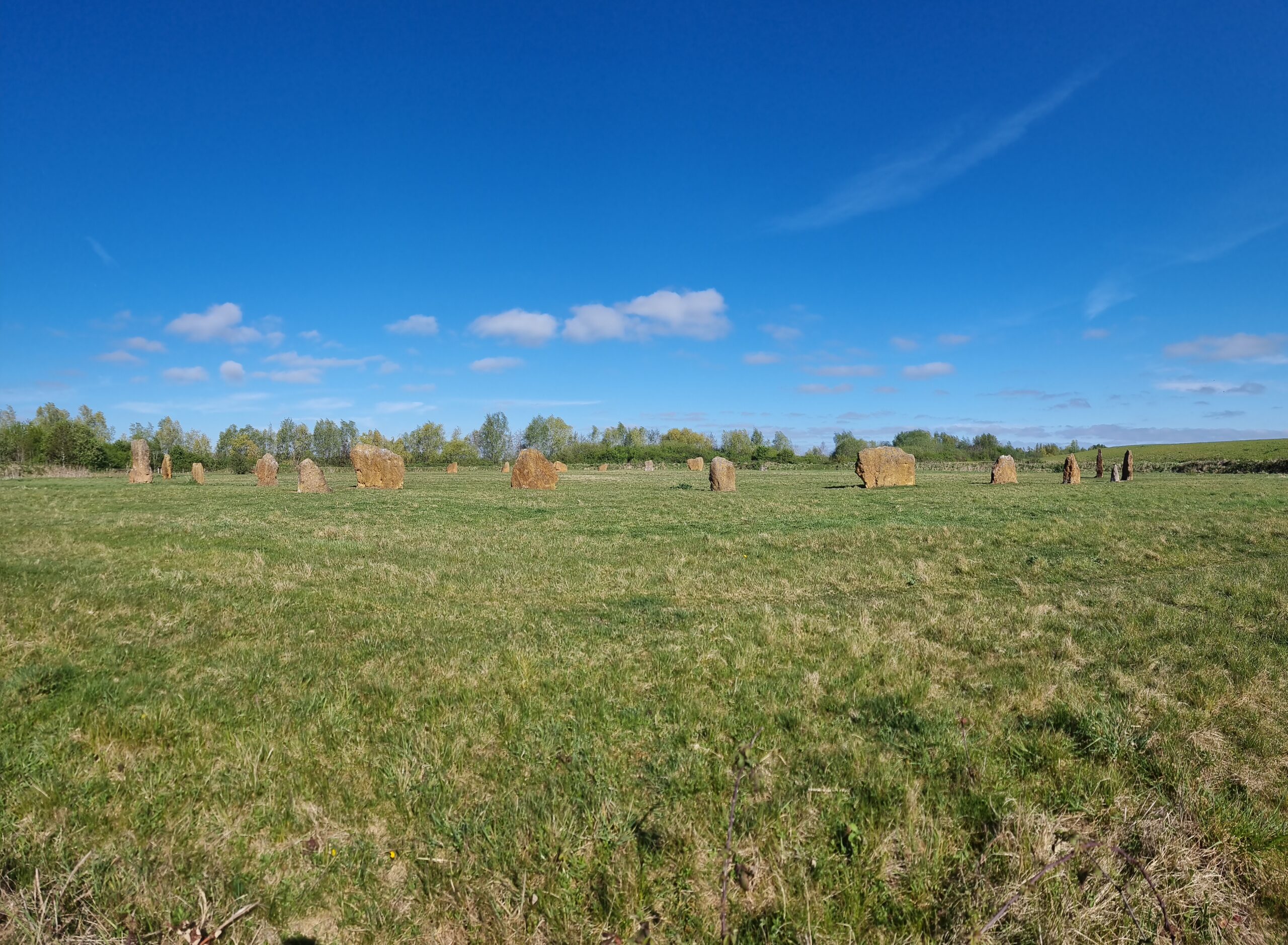
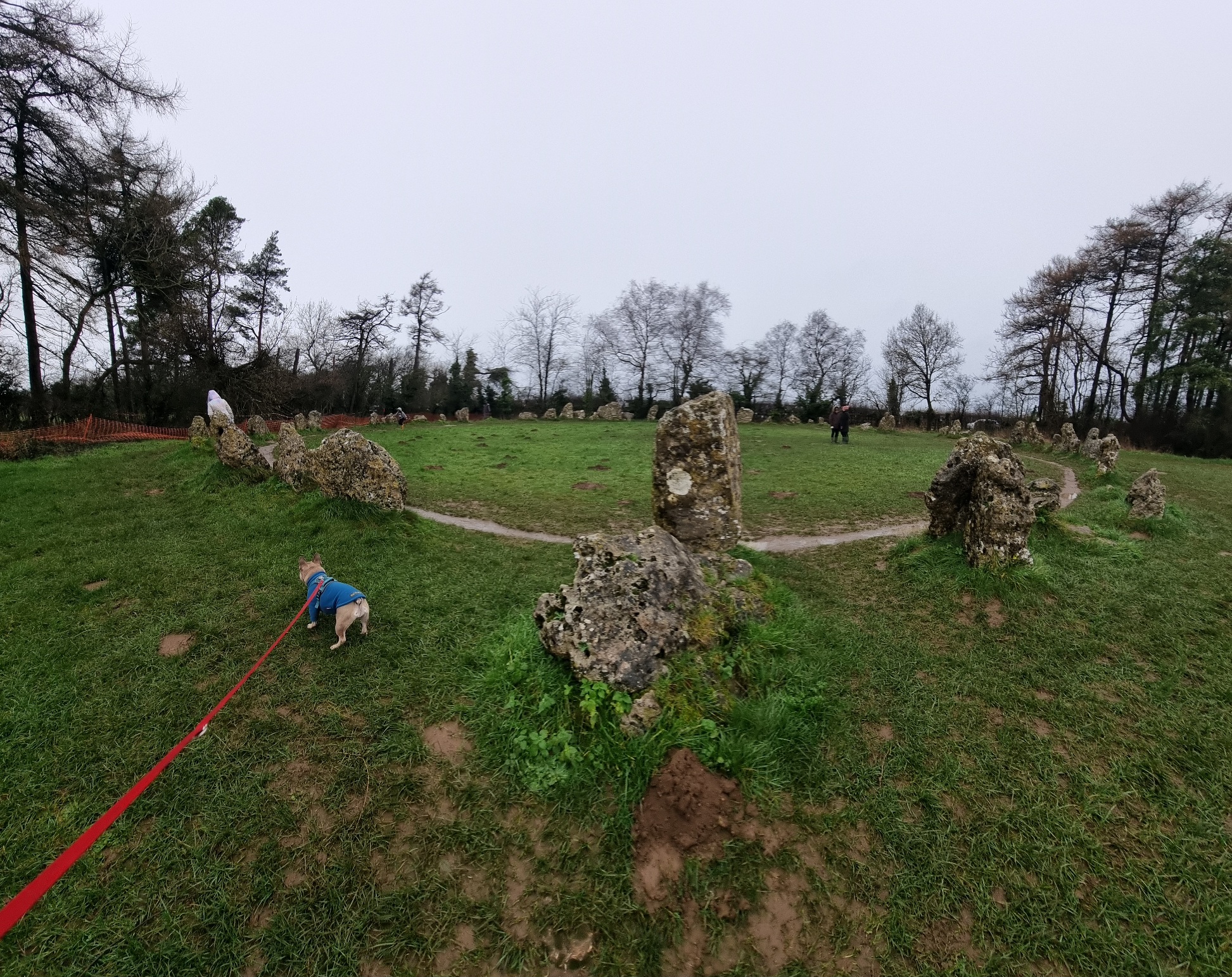
Our family tradition on New Year’s Day is to go to the Rollright Stones. Legend has it that you can’t count the standing stones and get the same answer twice.

This year the younger child counted 37, the elder 67… so wide a difference that you can see how one might ascribe a mystical reason!
A stone circle in the rain. Some people (and a dog) are walking around it.

×

The Eyebrow Painter

This is a repost promoting content originally published elsewhere. See more things Dan's reposted.

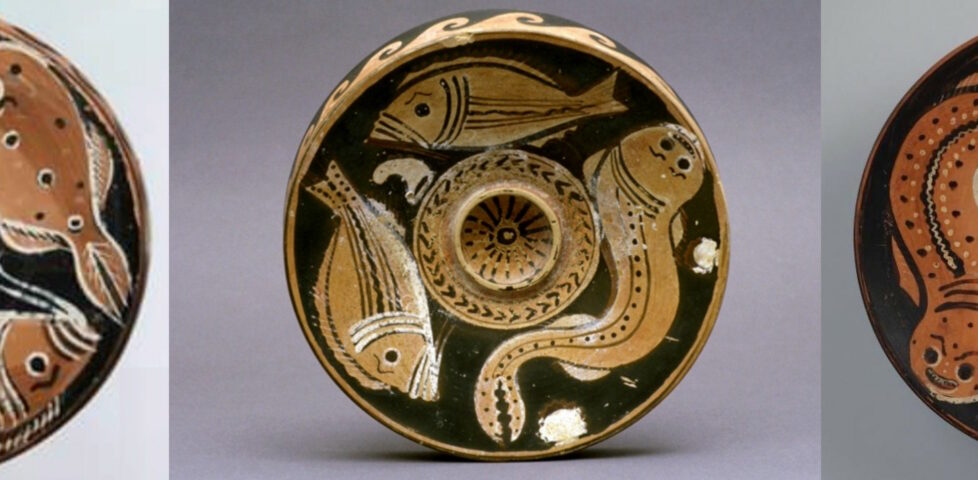
There are a whole bunch of things that could be the source for the name, e.g. where we found most of their work (The Dipylon Master) or the potter with whom they worked (the Amasis Painter), a favourite theme (The Athena Painter), the Museum that ended up with the most famous thing they did (The Berlin Painter) or a notable aspect of their style. Like, say, The Eyebrow Painter.

Guess what kind of pottery the Eyebrow Painter made?

Collage of three Hellenic plates decorated with fish. The fish all have strange-looking eyebrows!

AristotelianComplacency

Just excellent.

A frowning fish, painted onto a plate, surely makes for the best funerary offering.

×

Roman object that baffled experts to go on show at Lincoln Museum

This is a repost promoting content originally published elsewhere. See more things Dan's reposted.

Roman artefact

A mysterious Roman artefact found during an amateur archaeological dig is going on public display in Lincolnshire for the first time.

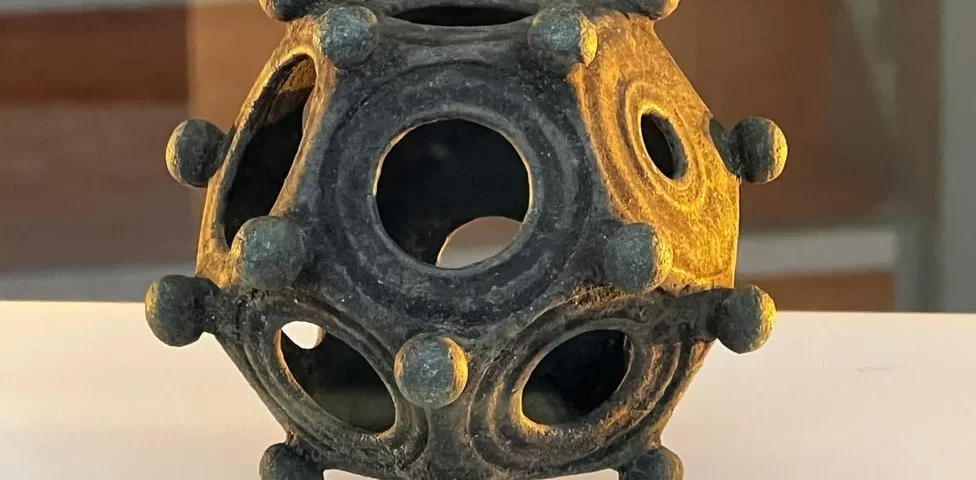
The object is one of only 33 dodecahedrons found in Britain, and the first to have been discovered in the Midlands.

I learned about these… things… from this BBC News story and I’m just gobsmacked. Seriously: what is this thing?

This isn’t a unique example. 33 have been found in Britain, but these strange Roman artefacts turn up all over Europe: we’ve found hundreds of them.

It doesn’t look like they were something that you’d find in any Roman-era household, but they seem to be common enough that if you wandered around third century Northern Europe with one for a week or so you’d surely be able to find somebody who could explain them to you. And yet we don’t know why.

 Two ancient Roman bronze dodecahedrons and an icosahedron (3rd c. AD) in the Rheinisches Landesmuseum in Bonn, Germany. The dodecahedrons were excavated in Bonn and Frechen-Bachem; the icosahedron in Arloff. Photo courtesy Kleon3 on Wikipedia, used under a Creative Commons license.
Here’s two of them and an equally-mysterious icosahedron found in Germany. Photo courtesy Kleon3, used under a Creative Commons license.

We have absolutely no idea why the Romans made these things. They’re finely and carefully created from bronze, and we find them buried in coin stashes, which suggests that they were valuable and important. But for what? Frustrated archaeologists have come up with all kinds of terrible ideas:

  • Maybe they were a weapon, like the ball of a mace or something to be flung from a sling? Nope; they’re not really heavy enough.
  • At least one was discovered near a bone staff, so it might have been a decorative scepter? But that doesn’t really go any distance to explaining the unusual shape, even if true (nor does it rule out the possibility of it being some kind of handled tool).
  • Perhaps they were a rangefinding tool, where a pair of opposing holes line up only when you’re a particular distance from the tool? If a target of a known size fills the opposite hole in your vision, its distance must be a specific multiple of your distance to the tool. But that seems unlikely because we’ve never found any markings on these that would show which side you were using; also the devices aren’t consistently-sized.
  • Roleplayers might notice the similarity to polyhedral dice: maybe they were a game? But the differing-sized holes make them pretty crap dice (researchers have tried), and Romans seemed to favour cubic dice anyway. They’re somewhat too intricate and complex to be good candidates for children’s toys.
  • They could be some kind of magical or divination tool, which would apparently fit with the kinds of fortune-telling mysticism believed to be common to the cultures at the sites where they’re found. Do the sides and holes correspond to the zodiac or have some other astrological significance?
  • Perhaps it was entirely decorative? Gold beads of a surprisingly-similar design have been found as far away as Cambodia, well outside the reach of the Roman Empire, which might suggest a continuing tradition of an earlier precursor dodecahedron!
  • This author thinks they might have acted as a kind of calendar, used for measuring the height of the midday sun by observing way its beam is cast through a pair of holes when the tool is placed on a surface and used to determine when winter grains should be planted.
  • Using replicas, some folks online have demonstrated how they could have been used as a knitting tool for making the fingers of gloves using a technique called “spool knitting”. But this knitting technique isn’t believed to have been invented until a millennium later than the youngest of these devices.
  • Others have proposed that they were a proof of qualification: something a master metalsmith would construct in order to show that they were capable of casting a complex and intricate object.
High-resolution close-up of a well-preserved Roman dodecahedron.
Seriously, what the hell are you for?

I love a good archaeological mystery. We might never know why the Romans made these things, but reading clever people’s speculations about them is great.

× ×

The Devil’s Quoits

I’ve been doing a course provided through work to try to improve my ability to connect with an audience over video. For one of my assignments in this, my fourth week, I picked a topic out from the “welcome” survey I filled out when I first started the course. The topic: the Devil’s Quoits. This stone circle – not far from my new house – has such a bizarre history of construction, demolition, and reconstruction… as well as a fun folk myth about its creation… that I’d thought it’d make a great follow-up to my previous “local history” piece, Oxford’s Long-Lost Zoo. I’d already hidden a “virtual” geocache at the henge, as I previously did for the zoo: a video seemed like the next logical step.

My brief required that the video be only about a minute long, which presented its own challenge in cutting down the story I’d like to tell to a bare minimum. Then on top of that, it took me at least eight takes until I was confident that I’d have one I was happy with, and there’s still things I’d do differently if I did it again (including a better windbreak on my lapel mic, and timing my takes for when geese weren’t honking their way past overhead!).

In any case: part of the ritual of this particular course encourages you to “make videos… as if people will see them”, and I’ve been taking that seriously! Firstly, I’ve been sharing many of my videos with others either at work or on my blog, like the one about how GPS works or the one about the secret of magic. Secondly, I’ve been doing “extra credit” by recording many of my daily-standup messages as videos, in addition to providing them through our usual Slack bot.

Anyway, the short of it is: you’re among the folks who get to see this one. Also available on YouTube.

Ancient Roman ‘Pen’ Was a Joke Souvenir

This is a repost promoting content originally published elsewhere. See more things Dan's reposted.

Ancient Roman stylus

The tradition of buying cheap, joke souvenirs for your loved ones while travelling dates back at least two millennia.

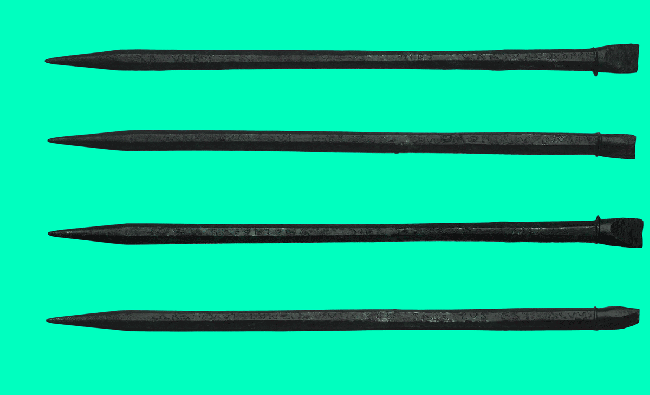
During an archaeological excavation at a Roman-era site in London, researchers found around 200 iron styluses used for writing on wax-filled wooden tablets. One of those styluses, which just debuted in its first public exhibition, holds a message written in tiny lettering along its sides. The inscription’s sentiment, according to the researchers who translated it, is essentially, “I went to Rome and all I got you was this pen.”

Also found in this excavation, I assume, were t-shirts printed with “I ❤ Pompeii” and moneyboxes in the shape of the Parthenon.

Note #11210

Notes from #musetech18 presentations (with a strong “collaboration” theme). Note that these are “live notes” first-and-foremost for my own use and so are probably full of typos. Sorry.

Matt Locke (StoryThings, @matlocke):

  • Over the last 100 years, proportional total advertising revenue has been stolen from newspapers by radio, then television: scheduled media that is experienced simultaneously. But we see a recent drift in “patterns of attention” towards the Internet. (Schedulers, not producers, hold the power in radio/television.)
  • The new attention “spectrum” includes things that aren’t “20-60 minutes” (which has historically been dominated by TV) nor “1-3 hours” (which has been film), but now there are shorter and longer forms of popular medium, from tweets and blog posts (very short) to livestreams and binging (very long). To gather the full spectrum of attention, we need to span these spectra.
  • Rhythm is the traditions and patterns of how work is done in your industry, sector, platforms and supply chains. You need to understand this to be most-effective (but this is hard to see from the inside: newcomers are helpful). In broadcast television as a medium, the schedules dictate the rhythms… in traditional print publishing, the major book festivals and “blockbuster release” cycles dominate the rhythm.
  • Then how do we collaborate with organisations not in our sector (i.e. with different rhythms)? There are several approaches, but think about the rhythmic impact.

Lizzy Bullock (English Heritage, @lizzybethness):

  • g.co/englishheritage
  • Partnered with Google Arts & Heritage; Google’s first single-partner project and also their first project with a multi-site organisation.
  • This kind of tech can be used to increase access (e.g. street view of closed sites) and also support curatorial/research aims (e.g. ultra-high-resolution photography).
  • Aside from the tech access, working with a big company like Google provides basically “free” PR. In combination, these benefits boost reach.
  • Learnings: prepare to work hard and fast, multi-site projects are a logistical nightmare, you will need help, stay organised and get recordkeeping/planning in place early, be aware that there’ll be things you can’t control (e.g. off-brand PR produced by the partner), don’t be afraid to stand your ground where you know your content better.
  • Decide what successw looks like at the outset and with all relevant stakeholders involved, so that you can stay on course. Make sure the project is integrated into contributors’ work streams.

Daria Cybulska (Wikimedia UK, @DCybulska):

  • Collaborative work via Wikimedians-in-residence not only provides a boost to open content but involves engagement with staff and opens further partnership opportunities.
  • Your audience is already using Wikipedia: reaching out via Wikipedia provides new ways to engage with them – see it as a medium as well as a platform.
  • Wikimedians-in-residence, being “external”, are great motivators to agitate processes and promote healthy change in your organisation.

Creative Collaborations ([1] Kate Noble @kateinoble, Ina Pruegel @3today, [2] Joanna Salter, [3] Michal Cudrnak, Johnathan Prior):

  • Digital making (learning about technology through making with it) can link museums with “maker culture”. Cambridge museums (Zoology, Fitzwilliam) used a “Maker in Residence” programme and promoted “family workshops” and worked with primary schools. Staff learned-as-they-went and delivered training that they’d just done themselves (which fits maker culture thinking). Unexpected outcomes included interest from staff and discovery of “hidden” resources around the museums, and the provision of valuable role models to participants. Tips: find allies, be ambitious and playful, and take risks.
  • National Maritime Museum Greenwich/National Maritime Museum – “re.think” aimed to engage public with emotive topics and physically-interactive exhibits. Digital wing allowed leaving of connections/memories, voting on hot issues, etc. This leads to a model in which visitors are actively engaged in shaping the future display (and interpretation) of exhibitions. Stefanie Posavec appointed as a data artist in residence.
  • SoundWalk Strazky at Slovak National Gallery: audio-geography soundwalks as an immersive experiential exhibition; can be done relatively cheaply, at the basic end. Telling fictional stories (based on reality) can help engage visitors with content (in this case, recreating scenes from artists’ lives). Interlingual challenges. Delivery via Phonegap app which provides map and audio at “spots”; with a simple design that discourages staring-at-the-screen (only use digital to improve access to content!).

Lightning talks:

  • Maritime Museum Greenwich: wanted to find out how people engage with objects – we added both a museum interpretation and a community message to each object. Highly-observational testing helped see how hundreds of people engage with content. Lesson: curators are not good judges of how their stuff will be received; audience ownership is amazing. Be reactive. Visitors don’t mind being testers of super-rough paper-based designs.
  • Nordic Museum / Swedish National Heritage Board explored Generous Interfaces: show first, don’t ask, rich overviews, interobject relationships, encourage exploration etc. (Whitelaw, 2012). Open data + open source + design sprints (with coding in between) + lots of testing = a collaborative process. Use testing to decide between sorting OR filtering; not both! As a bonus, generous interfaces encourage finding of data errors. bit.ly/2CNsNna
  • IWM on the centenary of WWI: thinking about continuing the crowdsourcing begun by the IWM’s original mission. Millions of assets have been created by users. Highly-collaborative mechanism to explore, contribute to, and share a data space.
  • Lauren Bassam (@lswbassam) on LGBT History and co-opting of Instagram as an archival space: Instagram is an unconventional archival source, but provides a few benefits in collaboration and engagement management, and serves as a viable platform for stories that are hard to tell using the collections in conventional archives. A suitably-engaged community can take pride in their accuracy and their research cred, whether or not you strictly approve of their use of the term “archivist”. With closed stacks, we sometimes forget how important engagement, touch, exploration and play can be.
  • Owen Gower (@owentg) from Dr. Jenner’s House Museum and Garden: they received EU REVEAL funding to look at VR as an engagement tool. Their game is for PSVR and has a commercial release. The objects that interested the game designers the most weren’t necessarily those which the curators might have chosen. Don’t let your designers get carried away and fill the game with e.g. zombies. But work with them, and your designers can help you find not only new ways to tell stories, but new stories you didn’t know you could tell. Don’t be afraid to use cheap/student developers!
  • Rebecca Kahm @rebamex from Pelagios Commons (@Pelagiosproject): the problem with linked data is that it’s hard to show its value to end users (or even show museums “what you can do” with it). Coins have great linked data, in collections. Peripleo was used to implement a sort-of “reverse Indiana Jones”: players try to recover information to find where an artefact belongs.
  • Jon Pratty: There are lots of useful services (Flickr, Storify etc.) and many are free (which is great)… but this produces problems for us in terms of the long-term life of our online content, not to mention the ethical issues with using services whose business model is built on trading personal data of our users. [Editor’s note: everything being talked about here is the stuff that the Indieweb movement have been working on for some time!] We need to de-siloise and de-centralise our content and services. redecentralize.org? responsibledata.io?

In-House Collaboration and the State of the Sector:

  • Rosie Cardiff @RosieCardiff, Serpentine Galleries on Mobile Tours. Delivered as web application via captive WiFi hotspot. Technical challenges were significant for a relatively small digital team, and there was some apprehension among frontline staff. As a result of these and other problems, the mobile tours were underused. Ideas to overcome barriers: report successes and feedback, reuse content cross-channel, fix bugs ASAP, invite dialogue. Interesting that they’ve gained a print guides off the back of the the digital. Learn lessons and relaunch.
  • Sarah Younaf @sarahyounas, Tyne & Wear Museums. Digital’s job is to ask the questions the museum wouldn’t normally ask, i.e. experimentation (with a human-centric bias). Digital is quietly, by its nature, “given permission” to take risks. Consider establishing relationships with (and inviting-in) people who will/want to do “mashups” or find alternative uses for your content; get those conversations going about collections access. Experimental Try-New-Things afternoons had value but this didn’t directly translate into ideas-from-the-bottom, perhaps as a result of a lack of confidence, a requirement for fully-formed ideas, or a heavy form in the application process for investment in new initiatives. Remember you can’t change everyone, but find champions and encourage participation!
  • Kati Price @katiprice on Structuring for Digital Success in GLAM. Study showed that technical leadership and digital management/analysis is rated as vital, yet they’re also underrepresented. Ambitions routinely outstrip budgets. Assumptions about what digital teams “look” like from an org-chart perspective don’t cover the full diversity: digital teams look very different from one another! Forrester Research model of Digital Maturity seems to be the closest measure of digital maturity in GLAM institutions, but has flaws (mostly relating to its focus in the commercial sector): what’s interesting is that digital maturity seems to correlate to structure – decentralised less mature than centralised less mature than hub-and-spoke less mature than holistic.
  • Jennifer Wexler, Daniel Pett, Chiara Bonacchi on Diversifying Museum Audiences through Participation and stuff. Crowdsourcing boring data entry tasks is sometimes easier than asking staff to do it, amazingly. For success, make sure you get institutional buy-in and get press on board. Also: make sure that the resulting data is open so everybody can explore it. Crowdsourcing is not implicitly democratisating, but it leads to the production of data that can be. 3D prints (made from 3D cutouts generated by crowdsourcing) are a useful accessibility feature for bringing a collection to blind or partially-sighted visitors, for example. Think about your audiences: kids might love your hip VR, but if their parents hate it then you still need a way to engage with them!

People don’t change

This is a repost promoting content originally published elsewhere. See more things Dan's reposted.

Fundamentally, people haven’t changed much in tens of thousands of years. If ancient Egyptians had smartphones, you know full well that they’d have been posting cat pictures too. What can we learn from this and how should we look at our role when developing front-end Web experiences?