This site maintains a table cross-referencing the most popular “secure” messaging apps (WhatsApp, Signal, Skype etc.) against their security features, so that you can make an informed
decision.
The tl;dr is, of course, what I’ve been saying all along: use Signal! (at least until Riot is more
mature…)
hen I was very young, before I was on the internet — even before the internet was really a thing you could “go on” — I would dial into BBSs (bulletin board systems). BBSs were kind of
like private, micro-internets that people set up in their
houses. You had to use a dial-up modem to connect to them, and the people who were in charge of these networks (usually just some random technology enthusiast) could shut them off or
boot you at any time. I got booted a lot when I was kid, because I was curious and annoying and all the things I am today but way less savvy about it. Once a guy who ran a BBS called
my house to complain to my mother that her son had been snooping around in places he wasn’t supposed to go — I don’t remember what I was after, but I’m sure he had a very good reason
to be angry.
Here’s why I mention this: What I was doing online, in a virtual space, had real-world repercussions. It was real. What I was doing was real. That guy who complained about me was
real. And I realize now that I never treated or experienced the internet like some other thing — as if the physical world were “real” and what happened on the internet was something
less. That was where my real life was. That’s where I was, as a person.
The internet was the most real thing to me that I’d ever had in my life, before my wife and my daughter; my job, my house, my things. Its existence helped to form the basis of my
worldview, my politics, my obsessions. It gave me tools to talk and create in ways that would have been impossible in another age. But it was never not reality. I wish the rest of the
world had always seen it this way…
If you’ve not come across her before: Elena Filatova is a Ukranian woman who periodically motorcycles through the Chernobyl exclusion zone, recording her progress and
filming/photographing what she sees on her adventures. I bought her photobook the other year and I’ve particularly enjoyed her videos ever since. Worth a look.
The time capsule was buried in a secluded square in Murmansk in 1967 on the eve of the fiftieth anniversary of the Russian Revolution. Inside was a
message dedicated to the citizens of the Communist future. At short notice, the authorities brought forward the capsule’s exhumation by ten days, to coincide with the city’s 101st
birthday. With the stroke of an official’s pen, a mid-century Soviet relic was enlisted to honour one of the last acts of Tsar (now Saint) Nicholas II, who founded my hometown in
October 1916. From socialism to monarchism in ten days. Some of the city’s pensioners accused the local government of trying to suppress the sacred memory of the revolution. ‘Our
forefathers would be turning in their graves,’ one woman wrote in a letter to the local paper. The time capsule ‘is not some kind of birthday present to the city; it’s a reminder of
the centenary of the great October Revolution and its human cost.’
My father had watched the time capsule being buried. He came to Murmansk aged 17. From his remote village, he had dreamed of the sea but he failed the navy’s eye test. In October
1967, he was a second-year student at the Higher Marine Engineering Academy, an elite training school for the Soviet Union’s massive fishing fleet. As a year-round warm water port,
Murmansk – the largest human settlement above the Arctic Circle – is a major fishing and shipping hub, home to the world’s only fleet of nuclear-powered ice-breakers…
This is going to be a really short post, but for someone it could save an hour of life.
So, you’ve nothing to do and you’ve decided to play around with IPv6 or maybe you’re happened to be an administrator of a web service
that needs to support IPv6 connectivity and you need to make your nginx server work nicely with this protocol.
First thing you need to do is to enable IPv6 in nginx by recompiling it with --with-ipv6 configure option and
reinstalling it. If you use some pre-built package, check if your nginx already has this key enabled by running nginx
-V.
As Tesla expands its Supercharger network, the automaker intends to up its game, building higher-end, retail-rich locations that CEO Elon Musk has called “Mega Superchargers” but that we’ll call just
Megachargers.
CEO Elon Musk has speculatively described them as “like really big supercharging locations with a bunch of amenities,” complete with “great restrooms, great food, amenities” and an
awesome place to “hang out for half an hour and then be on your way.”
The move makes sense. Superchargers are currently
located through the US and other countries, providing the fastest rate of recharging available to Tesla owners. The station can have varying numbers of charging stalls, however,
and they aren’t always located in the best areas for passing the time while a Tesla inhales new electrons, although Tesla typically tries to construct them near retail and dining
options…
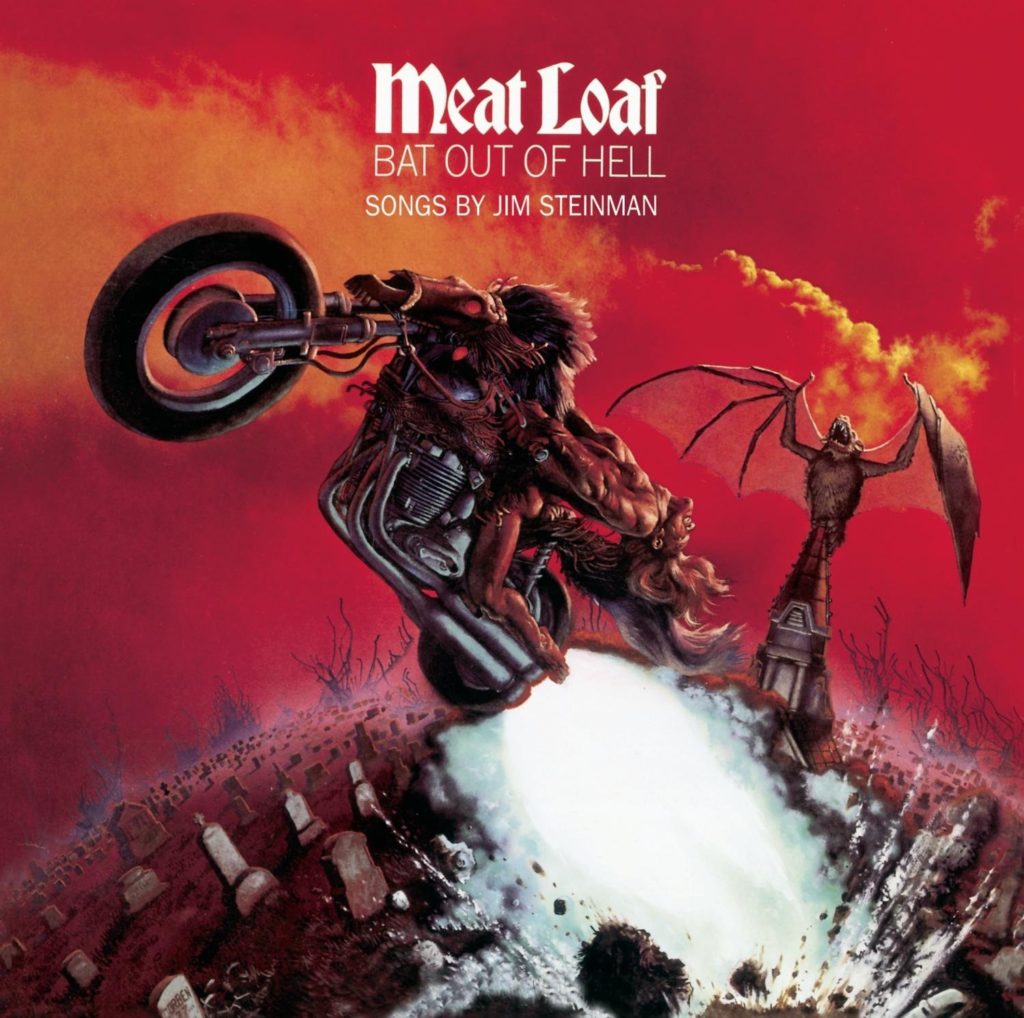
Of life’s great mysteries, surely among the most impenetrable is how Bat Out of Hell, Meat Loaf’s adolescent wet dream of an album that was released forty years ago today
[October 21, 1977], came to be one of the best-selling albums in the history of the record industry, cracking the top five in some rankings, and out-selling nearly all the pillars of
the rock canon.
I pose the question not out of cultural disdain from atop a critic’s ivory tower. On the contrary (and in the spirit of full disclosure), I adore Bat Out of Hell. It is like
a treasured family heirloom I have carried with me through every life stage. My love of Bat Out of Hell borders on the unnatural. I own Bat Out of Hell in four
different formats. I have watched documentaries on the making of Bat Out of Hell. I have even read Meat’s autobiography, To Hell and Back. And I am left wanting more
helpings of Meat Loaf.