McDonald's, 298 London Rd, Oxford OX3 8DJ, United Kingdom.
Rating: ⭐⭐⭐
Just another McDonald’s. Generally fast service and not too busy, but limited parking space and access by car is made challenging by the narrow road – partially through a housing
estate: no access from the dual carriageway any more – that provides access to it.
Partyman World Of Play, Ozone Leisure Park, Grenoble Rd, Oxford OX4 4XP, United Kingdom.
Rating: ⭐⭐⭐⭐
Moderately small but well-constructed soft play with plenty to do despite being smaller than some of its competitors. Clean and tidy. Good mixture of food options (and a licensed bar!),
although the pizza we had was very salty. Our favourite local soft play area.
Sainsbury's, 289 Oxford Rd, Kidlington OX5 2PE, United Kingdom.
Rating: ⭐⭐⭐
Perfectly reasonable supermarket. Car park sometimes challenging to leave at busy times, with tailbacks stretching into the lanes. Two convenient islands of self-service checkouts.
llustrating long-extinct creatures is difficult, but important work. With no living specimens to observe, it’s up to “paleoartists” who draw,
paint, or otherwise illustrate the creatures of prehistory as we think they might’ve been. Their work is the reason that when we talk about velociraptors, stegosaurs, or even woolly
mammoths, we have some idea of what they looked like.
But since all we have to go on are fossils, deciding how a dinosaur would have looked is as much art as it is science. And there’s at least one paleoartist who thinks we might be
getting things wrong…
Earlier this week, the Spanish government raided the Barcelona office of the PuntCat Foundation, the company that administers the .cat domain, and arrested one of its senior
executives.
PuntCat means “dot cat” in Catalan, the language spoken in the Catalonian region of Spain as well as places in France, Andorra, and Italy. The office was raided because Catalonia
hopes to hold a referendum on October 1 to decide if it should secede from Spain, and in an effort to quash the referendum, the government of Spain ordered puntCat to “block all .cat
domain names that may contain any kind of information about the forthcoming independence referendum,” according to a press release from the foundation.
This is an astonishing attempt at censorship by a member of the E.U. but, unfortunately, that aspect is going largely uncovered because the media is idiotically obsessed with cats…
Ever found you’ve accidentally entered too many gits in your terminal and wondered if there’s a solution to it? I quite often type git then go away and come
back, then type a full git status after it. This leads to a lovely (annoying) error out the box:
$ git git status
git: 'git' is not a git command. See 'git --help'.
What a git.
My initial thought was overriding the git binary in my $PATH and having it strip any leading arguments that match git, so we end up running just
the git status at the end of the arguments. An easier way is to just use git-config‘s alias.*
functionality to expand the first argument being git to a shell command.
git config --global alias.git '!exec git'
Which adds the following git config to your .gitconfig file
[alias]git=!exec git
And then you’ll find you can git git to your heart’s content
See what other git alias’ I have in my ~/.gitconfig, and laugh at all the typo corrections I
have in there. (Yes, git provides autocorrection if you enable it, but I’m used to these typos working!)
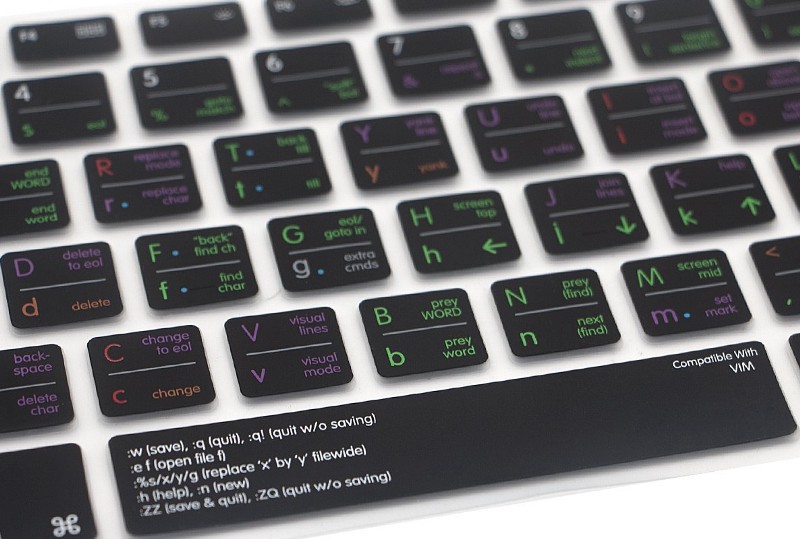
I often get asked about why I use Vim as my primary editor, there is no particular reason for this, except that I ended up learning it when I moved over to Linux full time many years
ago. I ended up liking it because I could edit my small source files on my quad-core machine without needing to wait forever for the file to open.
Sure Vim isn’t a bad editor, it’s highly extensible, it’s easy to shell out to the, err well shell, its everywhere so when you ssh into some obscure server you can just type vim (or
vi) and you’re good to go…
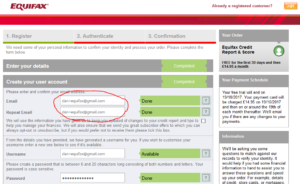
This month I advised people of a well-known but oft-forgotten trick to avoid spam to your GMail account by using a plus-sign and some arbitrary
text (or the name of the company you’re dealing with) in your email address, and shared with minimal interpretation a web app I’d developed:
fnorders.com. I also made my first attempt to publicly call out the library of the Bilkent University for ripping off
the design of the website of the Bodleian Libraries.
This technique’s about a decade old, but a lot of people still aren’t using it, and
I can’t help but suspect that can only be because they didn’t know about it yet, so let’s revisit:
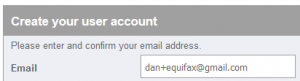
You have a GMail account, right? Or else Google for Domains? Suppose your email address is dan@gmail.com… did you know that also means that you own:
dan+smith@gmail.com
dan+something@gmail.com
dan+anything-really@gmail.com
d.an@gmail.com
d..a..n@gmail.com
…
You have a practically infinite number of GMail addresses. Just put a plus sign (+) after your name but before the @-sign and then type anything you like there, and the
email will still reach you. You can also insert as many full stops (.) as you like, anywhere in the first half of your email address, and they’ll still reach you, too. And
that’s really, really useful.
Often, you end up having to give your email address to companies that you don’t necessarily trust…
When you’re asked to give your email address to a company, don’t give them your email address. Instead, give them a mutated form of your email address that will still
work, but that identifies exactly who you gave it to. So for example you might give the email address dan+amazon@gmail.com to Amazon, the email address
dan+twitter@gmail.com to Twitter, and the email address dan+pornhub@gmail.com to… that other website you have an account on.
Why is this a clever idea? Well, there are a few reasons:
If the company sells your email address to spammers, or hackers steal their database, you’ll know who to blame by the email address they’re sending to. I’ve actually caught
out an organisation in this way who were illegally reselling their mailing lists to third parties.
If you start getting unwanted mail from somebody (whether because spammers got the email or because you don’t like what the company is sending to you), you can easily block
them. Even if you can’t unsubscribe or just because they make it hard to do so, you can just set up a filter to
automatically discard anything that comes to that email address in future.
If you feel like organising your life better, you can set up filters for that, too: it doesn’t matter what address a company sends from, so long as you know what address
they’re sending to, so you can easily have filters that e.g. automatically forward copies of the mortgage statement that come to dan+yourbank@gmail.com to your
spouse, or automatically label anything coming to
dan+someshop@gmail.com with the label “Shopping”.
If you’re signing up just to get a freebie and you don’t trust them not to spam you afterwards, you don’t need to use a throwaway: just receive the goodies from them and them block
them at the source.
Certainly, you can have… THIS email address.
I know that some people get some of these benefits by maintaining a ‘throwaway’ email address. But it’s far more-convenient to use the email address you already have (you’re
already logged-in to it and you use it every day)! And if you ever do want a true ‘throwaway’, you’re generally better using Mailinator: when you’re asked for your email address, just mash the keyboard and then put @mailinator.com on the end, to get e.g.
dsif9tsnev4y8594es87n65y4@mailinator.com. Copy the first half of the email address to the clipboard, and then when you’re done signing up to whatever spammy service it
is, just go to mailinator.com and paste into the box to see what they emailed you.
A handful of badly-configured websites won’t accept email addresses with plus signs in them, claiming that they’re invalid (they’re not). Personally, when I come across these I
generally just inform the owner of the site of the bug and then take my business elsewhere; that’s how important it is to me to be able to filter my email properly! But another option
is to exploit the fact that you can put as many dots in (the first part of) your GMail address as you like. So you could put d…an@gmail.com in and the email
will still reach you, and you can later filter-out emails to that address. I’ll leave it as an exercise for the reader to decide how to encode information about the service you’re
signing up to into the pattern and number of dots that you use.