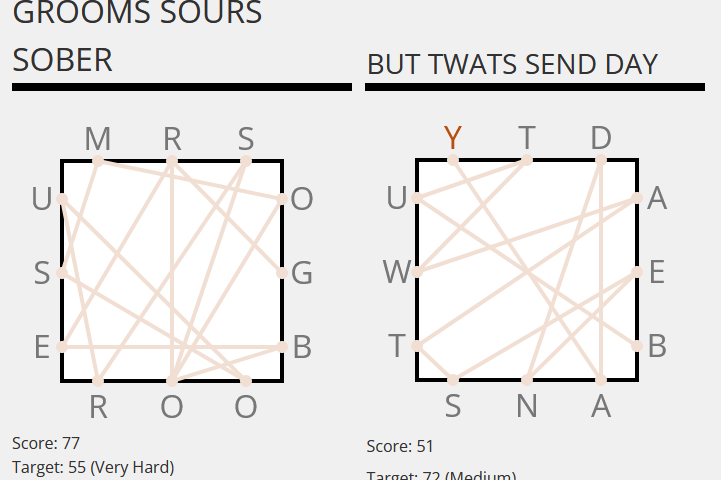
I’ve been enjoying playing Chain Words, from eclectech, intermittently, since it came out in November (when I complained that the word ‘TOSSPOT’ was rejected; I don’t know if this obvious omission has yet been corrected). If you’ve not given it a go yet, and you like a word game that’s “a bit different”, you should try it!
Day: 13 January 2026
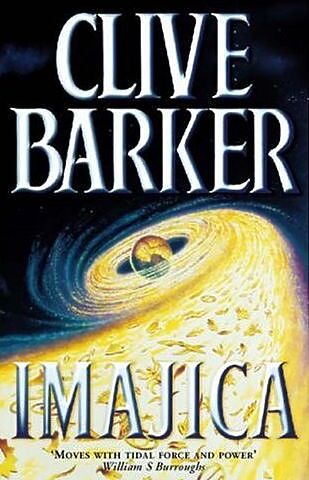
Imajica by Clive Barker
Clive Barker’s Imajica has long been one of my favourite fantasy novels. The heft
of the single-volume edition renders it both unwieldy and intimidating, which is probably why my most recent reading of it was only the fourth time I’ve enjoyed it from
cover-to-cover. But enjoyed it I did, and I’m sure I’ll pick it up again in a further decade or so for another adventure.
I’m aware that it draws comparison to his perhaps more-widely-read Weaveworld, but somehow that never did it for me in the same way. Perhaps my mistake was reading Imajica first, way back when I was a teenager, and so satiating my appetite for “curious flawed everyman explores adjacent reality alongside magical woman, faces horrors”; just an unfortunate coincidence that I picked up Weaveworld right after!
I also fully accept the critics who observe that it’s exceptionally drawn-out, at times. But where it does seem to drag, it does so with a certain gravity; an inertia: the slower parts of the story are full of intention, and meaning, and – frequently – foreshadowing. I still find new expressions of its themes in it, each time I read it. This time around, for example, I found myself finding a plethora of reflections of protagonist Gentle’s role as a forger: unable to create anything novel as an artist (for reasons that become apparent in the long run) but only able to copy beautiful things belonging to others. This self-inflicted curse shows up again and again in innumerable subtle ways before the truth of it is (finally, eventually – did I mention how weighty this fat book is?) exposed… and with such an epic tale it’s little wonder that it’s impossible to remember all of the indications that preceded it!
I’ve long appreciated how Imajica plays with gender and, to a lesser-extent, relationships and sexuality, in a way that was revelatory for me on a first reading and which with the benefit of hindsight I can see is incredibly progressive for its age. Gentle and Judith exist each to further the plot in their own ways, not as romantic “goals” for one another… despite not only tropes in the genre but also the ways in which their characters are presented within their world – by which I mean: this isn’t a story about how they “get together at the end”, and that subverts both the expectation of how they’re introduced in the writing and also the destinies with which their characters seem to be imbued. Pie’o’pah presents, depending on the circumstance, as either male or female but also as some other gender entirely. Gender is a huge overarching theme, with a oppressive patriarchal power that’s threatened by a mysterious feminine energy playing a key role that, like everything else, is quietly echoed throughout the novel.
But perhaps my favourite part of this wonderful book is its world-building, which – through the eyes of an outsider – paints a rich picture of each of several fantastical dominions. Over the course of the adventure a character draws a map to chart the wonders of the story’s universe, but it’s ultimately incomplete (and perhaps impossible to complete). That’s what it feels like to me as a reader, too: like being given a glimpse of a wider and even-more-wonderful world just beyond the horizon: a fantastical creation too large to ever fully comprehend. While retaining a focus on the story of three-or-so core characters, Barker teases us with the idea that there’s “something more” just beyond our peripheral vision. And that’s flipping amazing.