
How the European heatwave fucked me up

CW: reference to bodily processes, broad discussion of illness

This year’s “once in a generation” weather

Last week was brutally hot across Europe, with multiple countries recording their hottest ever temperatures. Others including the UK repeatedly smashed their record for the month of June.

While climate change is a global problem, it affects different regions in different ways, and Europe is disproportionately affected by hotter temperatures and heatwaves.

The “Chicory House” we’re currently living in has terrible thermal characteristics, so we took the advice of wiser folks about staying cool. We created a “cold zone” in the living room with a portable air conditioner and for a few days I lived, worked, ate and slept mostly out of that one room (along with the children when they were trapped home because their schools had been shut down).

Out of my London window; dome and spires and chimneys, mist and smoke (1890), by Joseph Pennell. A serene watercolor captures a bridge spanning across what appears to be a wide river, with a city skyline barely visible in the misty background. Murky reflections waver beneath the bridge, suggesting either the early hours of morning or a dusky evening.
Among the reasons described for Europe’s faster warming than other parts of the world is that we’ve improved our air quality so much. Maybe we should’ve kept the smog?1

I thought our precautions would be sufficient, but I was wrong.

Heat exhaustion

After coming home from a shady morning dog walk on Friday2, I felt hot and grumpy, tired, and incredibly thirsty. I pushed on through my workday’s Friday hotfix, then retreated to my bedroom for a nap.

This was a mistake: my bedroom is somehow the hottest room in the Chicory House.

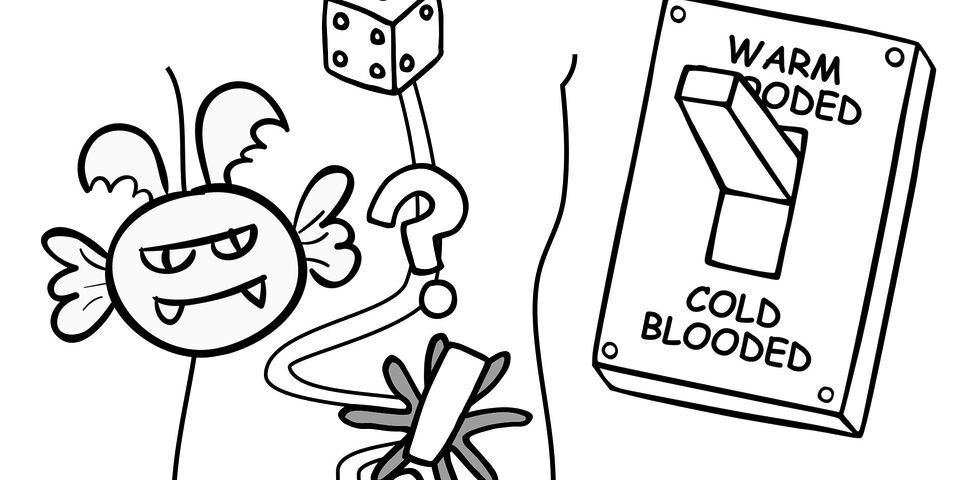
On Saturday I felt dreadful. It was as if some tiny monster had discovered a switch: one that they could use, randomly and without warning, to toggle me from being a warm blooded animal to a cold blooded one and back again, intermittently wrecking my capacity to regulate my temperature.

Here: I made a simulator3

A monster with horns and wings hovers by a switch labelled 'warm blooded' and 'cold blooded'. Right now it's set to 'cold blooded'.
The Dan Thermoregulation Switch™️. Go on, you can flip it if you want. (Unless you’re in a feed reader or have JS disabled.)

I’d feel overwhelmingly hot but barely sweat, or I’d suddenly switch to feeling cold and shivering. A cool bath helped, but only for a little while: between going to bed on Saturday night and getting up on Sunday morning there were more hours during which I took a shower4 than hours during which I slept.

Water that I drank seemed to just fall straight through without touching either sweat glands or my bladder. Or else it’d come right back out the way it went in. Attempting to eat solid foods would result in hours of horrible abdominal cramps.

Clearly, I was quite unwell.

Opportunistic infection

If you’re looking at all of those symptoms and you’re thinking “wait, could this be heatstroke-related organ damage?”… then yeah, that was one of my concerns. I mean: I’ve only once felt more-ill than I did on Sunday… and that was over a decade ago when I was hospitalised with an antibiotic-resistant kidney infection.

I can’t claim that I wasn’t influenced by growing reports of long heatwave-related waits at A&E departments. If I have to sit somewhere uncomfortable, feeling rotten, then it might as well be at home!

An orange, sliced into quarters, alongside a glass of slightly-opaque water.
By Monday afternoon I’d graduated out of a fluids-only diet to one that allowed mostly-water food. Like oranges, served here with an oral rehydration therapy drink (blech).

But also: on the balance of probability, I figured I knew what had happened. I’d suffered a moderately severe heat exhaustion that’d weakened my immune response to some kind of opportunistic bacterial gastroenteritis5.

When it reached Monday, the monster had stopped flicking the thermoregulation switch (did you set it the way you think it belongs, by the way?), but my digestive system still just seemed to be in its degraded state. That is: just an inflamed and painful tube through which I could pour fluids.

Conventional illustration of a digestive system alongside one labelled 'Dan's digestive system', showing a pipe leading from the 'input hole' to the 'output hole' with few corners, but structures labelled 'pipe (bidirectional)', 'filter #1 (rejects at random)', 'filter #2 (rejects most solids)', 'pain generator (function unknown)', and 'output hole (frequent schedule; less waiting!).
I’ve produced what I feel is a more-accurate illustration of the operation of my digestive system right now.
With thanks to weareheroes for the icons, used under a Creative Commons license.

So I finally caved and saw a doctor, who prodded and poked me and said… yup, my hunch was right and I should go back to lying in the cool and living on fluids and come bother him again only if it doesn’t get any better (or gets worse).

If you’d noticed that I’d been unusually “offline” for the last few days6… well, it’s because mostly I’ve been lying in bed and/or groaning in discomfort.

But I feel like I’m moving in the right direction again now, and I’m optimistic that when I try solid food again today that maybe I’ll be able to digest it. Fingers crossed!

Lessons learned

So what have we learned from all of this:

  1. Heat exhaustion is real, and it’s nasty, and it can leave you vulnerable to all kinds of other problems.
  2. (Even when my guts are in pain) I can trust my gut feeling on whether or not it’s a medical emergency7. Please disregard any Aber Effect comic which implies otherwise.
  3. You can probably be trusted with access the the Dan Thermoregulation Switch. You didn’t play with it at all!

Let me know below whether I was right to let you play with the switch. And look forward to hearing more from me now that I’m working towards feeling better again.

Footnotes

1 Obviously this is a joke, but the world we live in nowadays means that I feel that I have to say so.

2 It’s possible my heat exhaustion had begun to build up before Friday: Ruth observes that I reported feeling dizzy or lightheaded a couple of times during the week prior. But for the sake of the story, let’s call Friday the start of the problem.

3 If you can’t see the results of toggling the switch, it’s because I’m too far away from you to hear me groaning. Or maybe because it’s not that accurate a simulation. One of those.

4 Several times, literally lying foetal, exhausted, on the floor of the shower, only moving to tweak the dial to keep my body at the temperature I felt it “should” be at.

5 I’ve no idea how my relatively-isolated lifestyle exposed me to such an infection, but it’s quite possible that it was brought home by somebody, even me, whose immune system was working better and had it suppressed to the point of being asymptomatic… but with me exhausted and dehydrated it was able to gain a foothold. Or maybe it came from somewhere else. Perhaps I just need to stop French kissing the dog?

6 I was running a daily streak of 177 days of consecutive blogging – every day so far this year! – up until I got ill, so posting nothing to DanQ.me for four days… probably sounded like I was dead!

7 Sometimes it’s just bad sun tag-teaming with a bad stomach bug!

× × ×

LGBT+ History Month

It’s February, which means that (here in the UK) it’s LGBT+ History Month.1 And it feels like this year, it’s more important than ever to remember our country’s queer history.

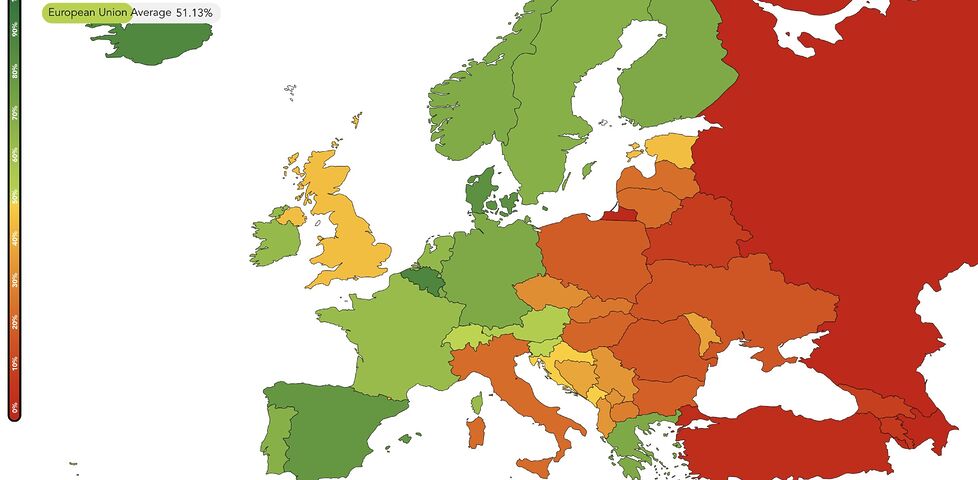
In 2015, the UK was ranked first place in ILGA Europe‘s annual “Rainbow Map” study of LGBT rights in 50 countries of Europe. By 2025, the UK had fallen to 22nd place. That’s the fastest drop of any country in the list, tied with Hungary2 and Georgia3.

'Rainbow Map' of Europe. In general, the trend is that the further East you go, the weaker LGBT+ rights are, with Russia and Turkey being the worst, and the further West the better they get (with Belgium and Iceland excelling). There are a few exceptions, like Italy (less rights than you'd expect) and Greece (more rights than you'd expect), as well as standout Malta (topping the charts), but otherwise the trend is solid... except for the UK, which stands out as a weak performer in Western Europe, even compared to traditionally socially-conservative countries like Ireland and Switzerland.
By the time Western European countries traditionally seen as ‘socially conservative’ like Ireland and Switzerland are outranking the UK in LGBT+ rights rankings… it’s a clue that something’s gone wrong, right?

Knowing your history is important. I’ve talked before about my personal experience of growing up under Section 28, and I don’t think that the UK’s backsliding is, by any means, harmless4. In case the reasons for the UK’s drop in the rankings aren’t obvious, it’s pretty much entirely to do with the UK’s increasingly restrictive gender identity laws (thanks, Supreme Court)5.

This stuff affects everybody. When you build a community that is a safe space for queer people, and trans people,6 everybody benefits7. So even if you’re somehow not compelled by the argument that we should treat everybody fairly and with compassion, you should at least accept that it helps you, too, when we do.

In many ways, queer rights in the UK have been a success story in recent decades. Within my lifetime, we’ve seen the harmonisation of the age of consent (2001), civil partnerships (2004), the Gender Recognition Act (2004), the Equality Act (2010), same-sex marriage (2013; I was genuinely surprised this bill passed!) and the mass-pardoning of people previously convicted under discriminatory sex act laws (2017). These are enormous and important steps and it’s little wonder that the UK topped ILGA Europe’s scoreboard for a while there.

But as recent developments have shown: we can’t rest on our laurels. There’s more to do. History shows us what’s possible; it’s up to us to decide whether we keep moving forward or let it unravel.

So this LGBT+ History Month, don’t just remember the past: pay attention to the present, and push back where it’s slipping.

Footnotes

1 We celebrate it in February; I’ve never truly understood why. The Independent claims the month was chosen to coincide with the 2003 abolition of Section 28 in England and Wales, but that wouldn’t happen until later in the year; it doesn’t really coincide with the Employment Equality (Sexual Orientation) Regulations 2003 (made June, commencing December) either. So if anybody knows the real reason the UK marks LGBT+ History month in February, I’ve love to hear it.

2 Hungary banned same-sex couples from adopting five years ago and banned Pride parades last year, in an incredible backslide for an EU country.

3 Georgia’s backslide is superficially similar to Hungary’s except that one can’t help but feel the influence of partial occupier Russia – a frequent bottom-scorer in ILGA’s list – in that.

4 By the way: I just looked back at my own blog posts tagged ‘sexuality’, and man, that shit is on fire! Some fun things there if you’re new to my blog and just catching-up, if I may toot my own horn a little! (Is “toots own horn” a protected identity? ‘Cos I do it a lot.)

5 It’s also aggravated by established but regressive problems like the fact that the UK still doesn’t outlaw “conversion therapy”, gender identity is not a recognised justification for seeking asylum, and protections for intersex people are basically nonexistent.

6 And, it turns out, furries, who’ve ‘gone from “ew cringe” to “they’re the lichens of a healthy social ecosystem”‘.

7 Everybody benefits… except, perhaps, nazis.

×

Why there’s no European Google?

This is a repost promoting content originally published elsewhere. See more things Dan's reposted.

The Internet, the interconnection of most of the computers in the world, has existed since the late sixties. But no protocol existed to actually exploit that network, to explore and search for information. At the time, you needed to know exactly what you wanted and where to find it. That’s why the USA tried to develop a protocol called “Gopher.”

At the same time, the “World Wide Web,” composed of the HTTP protocol and the HTML format, was invented by a British citizen and a Belgian citizen who were working in a European research facility located in Switzerland. But the building was on the border with France, and there’s much historical evidence pointing to the Web and its first server having been invented in France.

It’s hard to be more European than the Web! It looks like the Official European Joke! (And, yes, I consider Brits Europeans. They will join us back, we miss them, I promise.)

Google, Microsoft, Facebook may disappear tomorrow. It is even very probable that they will not exist in fourty or fifty years. It would even be a good thing. But could you imagine the world without the Web? Without HTML? Without Linux?

Those European endeavours are now a fundamental infrastructure of all humanity. Those technologies are definitely part of our long-term history.

There are so many ways in which the UK has had to choose – and continues to have to choose – which side of the Atlantic it belongs on: the North American side, or the European side. Legally, politically, financially, culturally… And every time we swing away from Europe, it saddens me.

This wonderful article by Lionel Dricot encapsulates one of many reasons why. European tech culture, compared to that in the USA, leans more open-source, more open-standards, more collaborative. That’s the culture I want more of.

Worth a read.

What If the EU Never Existed?

This is a repost promoting content originally published elsewhere. See more things Dan's reposted.

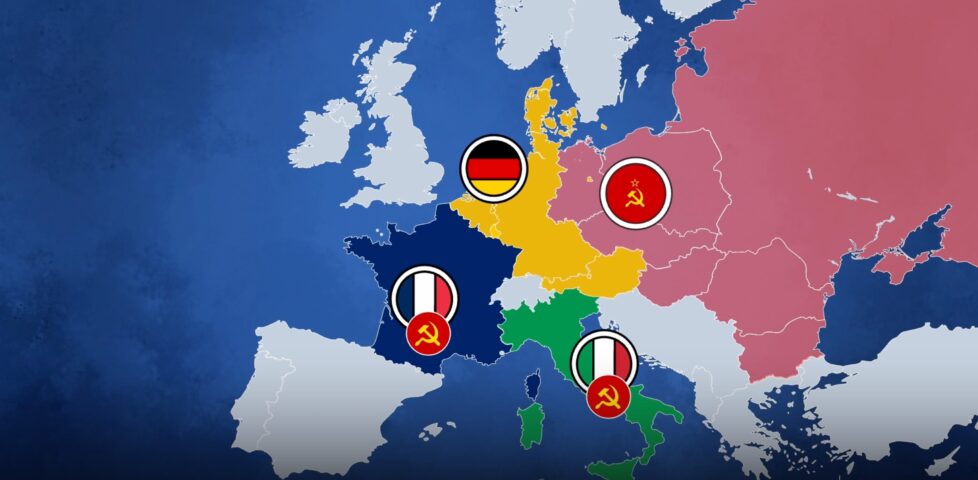
Video framegrab showing an alternate history map of Europe in mid-to-late 20th century. West Germany has formed an economic union with several neighbouring states, while France and Italy have elected Communist governments and are within the Soviet sphere of influence.

This video, which I saw on Nebula but which is also available on YouTube, explores a hypothetical alternate history in which the Schuman Plan/European Coal & Steel Community never happened, and the knock-on effects lead to no EU, a more fragmented Europe, and an ultimately more-fractured and more-complicated Europe of the late 20th/early 21st century.

Obviously it’s highly-speculative and you could easily come up with your own alternative alternative history! But the Twilight Struggle player in me as well as the alternate history lover (and, of course, European Union fan) especially loves the way this story is told.

It’s worth remembering that for the last half-millenium or more, the default state of Europe has been to be fighting one another: if not outright war then at least agressive economic and political rivals. Post-WWII gave Europe perhaps its longest ever period of relative peace, and that’s great enough that all of the other benefits of a harmonised and cooperative union are just icing on the cake.

EU Made Simple is a fantastic channel in general, and I’d recommend you give it a look. It ties news and history in with its creators outlook, but it’s always clear which bits are opinion and it’s delightfully bitesized. For Europeans-in-exile in this post-Brexit age, it’s hopeful and happy, and I like it.

Happy Europe Day, one and all.

Trans former judge plans to challenge gender ruling at European court

“Trans former judge plans to challenge gender ruling at European court”: https://www.bbc.co.uk/news/articles/c9qw2149yelo

Representation matters. That we have a trans former-judge, somebody both well-equipped and motivated to escalate this important challenge to the ECHR, is hugely fortunate.

We need more representation (of trans people specifically, but many other groups too, and perhaps particularly in the intersections) in positions of power, expertise, and authority. To defend the human rights of all of us.

Wishing you luck, Victoria McCloud.

German chat app slacking on hashing fined €20k

This is a repost promoting content originally published elsewhere. See more things Dan's reposted.

by Richard Chirgwin (The Register)

German chat platform Knuddels.de (“Cuddles”) has been fined €20,000 for storing user passwords in plain text (no hash at all? Come on, people, it’s 2018).

The data of Knuddels users was copied and published by malefactors in July. In September, someone emailed the company warning them that user data had been published at Pastebin (only 8,000 members affected) and Mega.nz (a much bigger breach). The company duly notified its users and the Baden-Württemberg data protection authority.

Interesting stuff: this German region’s equivalent of the ICO applied a fine to this app for failing to hash passwords, describing them as personal information that was inadequately protected following their theft. That’s interesting because it sets a German, and to a lesser extend a European, precedent that plaintext passwords can be considered personal information and therefore allowing the (significant) weight of the GDPR to be applied to their misuse.

For the love of god, not everything is about cats

This is a repost promoting content originally published elsewhere. See more things Dan's reposted.

Earlier this week, the Spanish government raided the Barcelona office of the PuntCat Foundation, the company that administers the .cat domain, and arrested one of its senior executives.

PuntCat means “dot cat” in Catalan, the language spoken in the Catalonian region of Spain as well as places in France, Andorra, and Italy. The office was raided because Catalonia hopes to hold a referendum on October 1 to decide if it should secede from Spain, and in an effort to quash the referendum, the government of Spain ordered puntCat to “block all .cat domain names that may contain any kind of information about the forthcoming independence referendum,” according to a press release from the foundation.

This is an astonishing attempt at censorship by a member of the E.U. but, unfortunately, that aspect is going largely uncovered because the media is idiotically obsessed with cats…

Data-hucksters beware: online privacy is returning

This is a repost promoting content originally published elsewhere. See more things Dan's reposted.

Next year, 25 May looks like being a significant date. That’s because it’s the day that the European Union’s general data protection regulation (GDPR) comes into force. This may not seem like a big deal to you, but it’s a date that is already keeping many corporate executives awake at night. And for those who are still sleeping soundly, perhaps it would be worth checking that their organisations are ready for what’s coming down the line.

First things first. Unlike much of the legislation that emerges from Brussels, the GDPR is a regulation rather than a directive. This means that it becomes law in all EU countries at the same time; a directive, in contrast, allows each country to decide how its requirements are to be incorporated in national laws…

Leading By Example

This week, I was reading the new EU legislation [PDF] which relates to, among other things, the way that websites are allowed to use HTTP cookies (and similar technologies) to track their users. The Information Commissioner’s Office has released a statement to ask website owners to review their processes in advance of the legislation coming into effect later this month, but for those of you who like the big-print edition with pictures, here’s the short of it:

From 26th May, a website must not give you a cookie unless it’s either (a) an essential (and implied) part of the functionality of the site, or (b) you have opted-in to it. This is a stark change from the previous “so long as you allow opt-outs, it’s okay” thinking of earlier legislation, and large organisations (you know, like the one I now work for) in particular are having to sit up and pay attention: after all, they’re the ones that people are going to try to sue.

The legislation is surprisingly woolly on some quite important questions. Like… who has liability for ensuring that a user has opted-in to third-party cookies (e.g. Google Analytics)? Is this up to the web site owner or to the third party? What about when a site represents companies both in and outside the EU? And so on.

Seeking guidance, I decided to browse the website of the Information Commissioner’s Office. And guess what I found…

Hey! I didn't opt-in to any of these cookies, Mr. Information Commissioner!

…not what I was looking for: just more circular and woolly thinking. But I did find that the ICO themselves does not comply with the guidance that they themselves give. Upon arriving at their site – and having never been asked for my consent – I quickly found myself issued with five different cookies (with lifespans of up to two years!). I checked their privacy policy, and found a mention of the Google Analytics cookie they use, but no indication about the others (presumably they’re not only “opt-out”, but also “secret”). What gives, guys?

Honestly: I’m tempted to assume that only this guy has the right approach. I’m all in favour of better cookie law, but can’t we wait until after the technological side (in web browsers) is implemented before we have to fix all of our websites? Personally, I thought that P3P policies (remember when those were all the rage?) had a lot of potential, properly-implemented, because they genuinely put the power into the hands of the users. The specification wasn’t perfect, but if it had have been, we wouldn’t be in the mess we are now. Perhaps it’s time to dig it up, fix it, and then somehow explain it to the politicians.

×