Previous Page
Dark Science #85 is almost finished, but in the meantime enjoy this interlude comic with indispensable cyborg knowledge! Enjoy Dresden Codak? Become a Patreon subscriber today!
http://dresdencodak.com/wp-content/plugins/patron-button-and-widgets-by-codebard/images/patreo…
Dresden Codak is one of the most fabulous (but strange) webcomic series, and it’s great to see this quirky “aside” piece.
It's a psychological quirk that when something becomes rarer, people may spot it in more places than ever. What is the 'concept creep' that lets context change how we categorize the
world around us?
Why do many problems in life seem to stubbornly stick around, no matter how hard people work to fix them? It turns out that a quirk in the way human brains process information means
that when something becomes rare, we sometimes see it in more places than ever.
Think of a “neighborhood watch” made up of volunteers who call the police when they see anything suspicious. Imagine a new volunteer who joins the watch to help lower crime in the
area. When they first start volunteering, they raise the alarm when they see signs of serious crimes, like assault or burglary.
Let’s assume these efforts help and, over time, assaults and burglaries become rarer in the neighborhood. What would the volunteer do next? One possibility is that they would relax
and stop calling the police. After all, the serious crimes they used to worry about are a thing of the past.
But you may share the intuition my research group had – that many volunteers in this situation wouldn’t relax just because crime went down. Instead, they’d start calling things
“suspicious” that they would never have cared about back when crime was high, like jaywalking or loitering at night.
You can probably think of many similar situations in which problems never seem to go away, because people keep changing how they define them. This is sometimes called “concept creep,” or “moving the goalposts,” and it can be a frustrating experience. How can you know if you’re making progress
solving a problem, when you keep redefining what it means to solve it? My colleagues and I wanted to understand when this kind
of behavior happens, why, and if it can be prevented.
After violent crime starts going down, loiterers and jaywalkers may start to seem more threatening.Marc Bruxelle/Shutterstock.com
Looking for trouble
To study how concepts change when they become less common, we brought volunteers into our laboratory and gave them a
simple task – to look at a series of computer-generated faces and decide which ones seem “threatening.” The faces had been carefully
designed by researchers to range from very intimidating to very harmless.
As we showed people fewer and fewer threatening faces over time, we found that they expanded their definition of “threatening” to include a wider range of faces. In other words,
when they ran out of threatening faces to find, they started calling faces threatening that they used to call harmless. Rather than being a consistent category, what people
considered “threats” depended on how many threats they had seen lately.
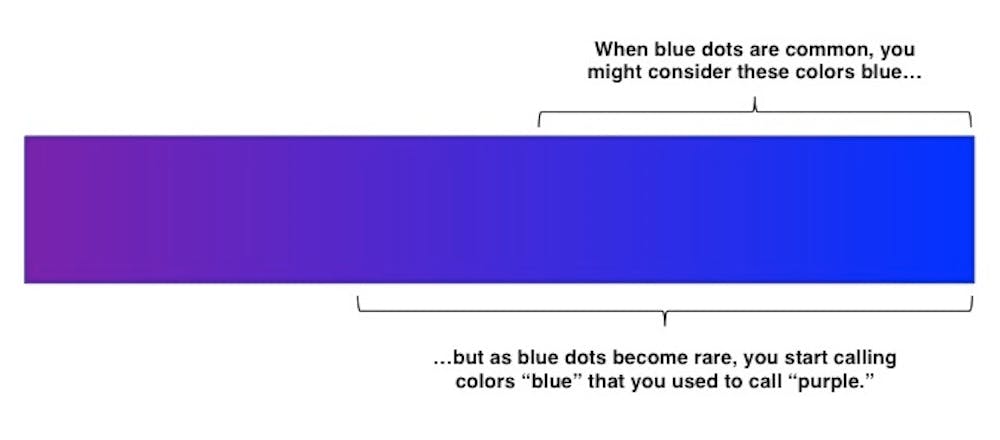
This kind of inconsistency isn’t limited to judgments about threat. In another experiment, we asked people to make an even simpler decision: whether colored dots on a screen were
blue or purple.
As the context changes, so do the boundaries of your categories.David Levari, CC BY-ND
As blue dots became rare, people started calling slightly purple dots blue. They even did this when we told them blue dots were going to become rare, or offered them cash prizes to
stay consistent over time. These results suggest that this behavior isn’t entirely under conscious control – otherwise, people would have been able to be consistent to earn a cash
prize.
Expanding what counts as immoral
After looking at the results of our experiments on facial threat and color judgments, our research group wondered if maybe this
was just a funny property of the visual system. Would this kind of concept change also happen with non-visual judgments?
To test this, we ran a final experiment in which we asked volunteers to read about different scientific studies, and decide which were ethical and which were unethical. We were
skeptical that we would find the same inconsistencies in these kind of judgments that we did with colors and threat.
Why? Because moral judgments, we suspected, would be more consistent across time than other kinds of judgments. After all, if you think violence is wrong today, you should still
think it is wrong tomorrow, regardless of how much or how little violence you see that day.
But surprisingly, we found the same pattern. As we showed people fewer and fewer unethical studies over time, they started calling a wider range of studies unethical. In other
words, just because they were reading about fewer unethical studies, they became harsher judges of what counted as ethical.
The brain likes to make comparisons
Why can’t people help but expand what they call threatening when threats become rare? Research from cognitive psychology and neuroscience suggests that this kind of behavior is a
consequence of the basic way that our brains process information – we are constantly comparing what is front of us to its recent
context.
Instead of carefully deciding how threatening a face is compared to all other faces, the brain can just store how threatening it is compared to other faces it has seen recently, or compare it to some average
of recently seen faces, or the most and least threatening faces it has seen. This kind of comparison could lead directly to the
pattern my research group saw in our experiments, because when threatening faces are rare, new faces would be judged relative to mostly harmless faces. In a sea of mild faces, even
slightly threatening faces might seem scary.
It turns out that for your brain, relative comparisons often use less energy than absolute measurements. To get a sense
for why this is, just think about how it’s easier to remember which of your cousins is the tallest than exactly how tall each cousin is. Human brains have likely evolved to use relative comparisons in many situations, because these comparisons often provide enough information to safely navigate our
environments and make decisions, all while expending as little effort as possible.
Being consistent when it counts
Sometimes, relative judgments work just fine. If you are looking for a fancy restaurant, what you count as “fancy” in Paris, Texas, should be different than in Paris, France.
But a neighborhood watcher who makes relative judgments will keep expanding their concept of “crime” to include milder and milder transgressions, long after serious crimes have
become rare. As a result, they may never fully appreciate their success in helping to reduce the problem they are worried about. From medical diagnoses to financial investments,
modern humans have to make many complicated judgments where being consistent matters.
How can people make more consistent decisions when necessary? My research group is currently doing follow-up research in the lab to develop more effective interventions to help
counter the strange consequences of relative judgment.
One potential strategy: When you’re making decisions where consistency is important, define your categories as clearly as you can. So if you do join a neighborhood watch, think
about writing down a list of what kinds of transgressions to worry about when you start. Otherwise, before you know it, you may find yourself calling the cops on dogs being walked
without leashes.
I remember when this advertisement did its original run and I loved it. I was delighted to accidentally stumble across it on the Web recently; if you haven’t seen it before (and even if
you have) you should give it a watch…
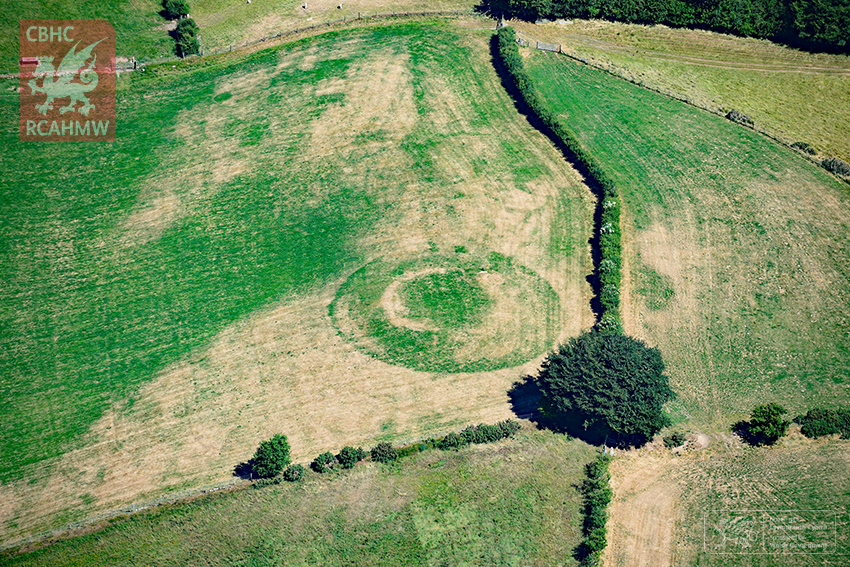
The unprecedented spell of hot, dry weather across Wales has provided perfect conditions for archaeological aerial photography. As the drought has persisted across Wales, scores of
long-buried archaeological sites have been revealed once again as ‘cropmarks’, or patterns of growth in ripening crops and parched grasslands. The Royal Commission’s aerial
investigator Dr Toby Driver has been busy in the skies across mid and south Wales over the last week documenting known sites in the dry conditions, but also discovering hitherto lost
monuments. With the drought expected to last at least another two weeks Toby will be surveying right across north and south Wales in a light aircraft to permanently record these
discoveries for the National Monuments Record of Wales, before thunderstorms and rain wash away the markings
until the next dry summer.
There comes a time when people at a technical conference like this need something more relaxing. A change of pace. A shift of style. To put aside all that work stuff and think of
something refreshingly different.
So let’s talk about coding theory. There are perhaps some of you here tonight who are not experts in coding theory, but rather have been dragged here kicking and screaming. So I
thought it would be a good idea if I gave you a sort of instant, five minute graduate course in coding theory.
Coding theorists are concerned with two things. Firstly and most importantly they are concerned with the private lives of two people called Alice and Bob. In theory papers, whenever a
coding theorist wants to describe a transaction between two parties he doesn’t call then A and B. No. For some longstanding traditional reason he calls them Alice and Bob.
Now there are hundreds of papers written about Alice and Bob. Over the years Alice and Bob have tried to defraud insurance companies, they’ve played poker for high stakes by mail, and
they’ve exchanged secret messages over tapped telephones.
If we put together all the little details from here and there, snippets from lots of papers, we get a fascinating picture of their lives. This may be the first time a definitive
biography of Alice and Bob has been given.
In papers written by American authors Bob is frequently selling stock to speculators. From the number of stock market deals Bob is involved in we infer that he is probably a
stockbroker. However from his concern about eavesdropping he is probably active in some subversive enterprise as well. And from the number of times Alice tries to buy stock from him
we infer she is probably a speculator. Alice is also concerned that her financial dealings with Bob are not brought to the attention of her husband. So Bob is a subversive stockbroker
and Alice is a two-timing speculator.
But Alice has a number of serious problems. She and Bob only get to talk by telephone or by electronic mail. In the country where they live the telephone service is very expensive.
And Alice and Bob are cheapskates. So the first thing Alice must do is MINIMIZE THE COST OF THE PHONE CALL.
The telephone is also very noisy. Often the interference is so bad that Alice and Bob can hardly hear each other. On top of that Alice and Bob have very powerful enemies. One of their
enemies is the Tax Authority. Another is the Secret Police. This is a pity, since their favorite topics of discussion are tax frauds and overthrowing the government.
These enemies have almost unlimited resources. They always listen in to telephone conversations between Alice and Bob. And these enemies are very sneaky. One of their favorite tricks
is to telephone Alice and pretend to be Bob.
Well, you think, so all Alice has to do is listen very carefully to be sure she recognizes Bob’s voice. But no. You see Alice has never met Bob. She has no idea what his voice sounds
like.
So you see Alice has a whole bunch of problems to face. Oh yes, and there is one more thing I forgot so say – Alice doesn’t trust Bob. We don’t know why she doesn’t trust him, but at
some time in the past there has been an incident.
Now most people in Alice’s position would give up. Not Alice. She has courage which can only be described as awesome. Against all odds, over a noisy telephone line, tapped by the tax
authorities and the secret police, Alice will happily attempt, with someone she doesn’t trust, whom she cannot hear clearly, and who is probably someone else, to fiddle her tax
returns and to organize a coup d’etat, while at the same time minimizing the cost of the phone call.
A coding theorist is someone who doesn’t think Alice is crazy.
…
I’ve always been a fan of the “expanded universe” of cyptography placeholders Alice & Bob, and this humorous speech –
partially-reproduced here – is a great example of Alice & Bob headcanon at its best.
Fabulous explanation of the Strong Equivalence Principle coupled with a nice bit of recent research to prove that it holds true even in extreme gravitational fields (and therefore
disproving a few interesting fringe theories). It’s hard science made to enjoy like pop science: yay! Plus a Hitch-Hiker’s Guide to the Galaxy reference, to boot. Under 10,000
views; go show them some love.
The day that Mitchell Hurwitz starts making shallow humor is the day that we rip the mask off of Mitchell Hurwitz and find the real Mitchell Hurwitz bound in his own cellar.
Throughout the first three seasons of Arrested Development, we were treated to some ridiculous attention to details, hidden clues, foreshadowing, Easter eggs, and in-jokes. For instance, ever wonder what
was with the obsession with seals in the first few seasons? They were actually a metaphor for Lucille Bluth, the matriarch of the family, who kept poor baby Buster Bluth, a
juice-loving man child, terrified of ever leaving the nest (or entering the ocean). As an act of defiance, Buster enters the ocean and gets his hand bitten off by a “loose seal.”
Loose. Seal. “Lucille.” Do I need to add a “GET IT?!” there?
But that’s not even the crazy part. As we’ve talked about before, the hand being bitten off was foreshadowed throughout the entire season. In one episode in season three,
the U.S. Securities and Exchange Commission attempts to persuade Tobias Funke, a struggling actor, into
cooperating with them and becoming a mole in the Bluth family. He misunderstands the entire situation and inadvertently becomes a mole (in all senses of the word — by which I mean he
fucking dresses like a mole.) But the real mole in the family was right under our noses all along since season one …
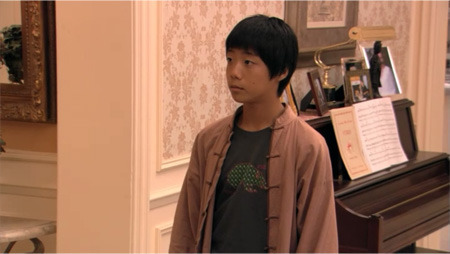
Look at his shirt.
However, all of this is just a teaser for the grandest mystery in Arrested Development: that of “Nichael Bluth.”
Tom Scott’s new YouTube game show, Lateral, has just finished it’s first series. Start watching from here, if you’re at all interested… and you should be, it’s funny and clever
(albeit in a very different way to Citation Needed).
It’s never easy to crack into a market with an innovative new product but makers of the “world’s first smart fingerprint padlock” have made one critical error: they forgot about the
existence of screwdrivers.
Tapplock raised $320,000 in 2016 for their product that would allow you to use just your finger to open the “unbreakable” lock. Amazing. Things took a turn for the worse when the ship
date of September came and went, and backers complained that the upstart has stopped posting any updates and wasn’t responding to emails nor social media posts.
But after months of silence, the startup assuredEl Reg that everything was still moving forward and the delays were due to “issues with manufacturing in China.”
Fast forward 18 months and finally – finally – the $100 Tapplock is out on the market and it is… well, how do we put this kindly? Somewhat flawed.
VICTORIA, BC – After data collection from thousands of parties across the country, reports are coming in that the annoying person who brings an acoustic guitar to a party is now
officially less hated than the person who expects everyone to sit down and play Cards Against Humanity.
“At least when some asshole starts playing the tune to Wonderwall you can get up and go to a different room,” says Michelle Kalleta, 22, avid partygoer. “Jerks who show up with any
sort of card game expect everyone to play, and the last thing I want to do at a party is sit in a circle with a bunch of people who think they’re hilariously edgy.”
Last night I attended the always excellent JS Oxford, and as well as having my mind expanded by both Jo and Ruth’s talks (Lemmings make an excellent analogy for multi-threading, who
knew!), I gave a brief talk on the Indieweb movement.
If you’ve not heard of Indieweb movement before, it’s a pu…
Last night I attended the always excellent JS Oxford, and as well as having my mind expanded by
both Jo and Ruth’s talks (Lemmings make an excellent analogy for
multi-threading, who knew!), I gave a brief talk on the Indieweb movement.
If you’ve not heard of Indieweb movement before, it’s a push to encourage people to claim their own bit of the web, for their identity and content, free from corporate platforms. It’s
not about abandoning those platforms, but ensuring that you have control of your content if something goes wrong.
When you post something on the web, it should belong to you, not a corporation. Too many companies have gone out of business and lost all of their users’ data. By joining the
IndieWeb, your content stays yours and in your control.
You are better connected
Your articles and status messages can go to all services, not just one, allowing you to engage with everyone. Even replies and likes on other services can come back to your site so
they’re all in one place.
I’ve been interested in the Indieweb for a while, after attending IndieWebCamp Brighton in 2016, and I’ve been slowly
implementing Indieweb features on here ever since.
The great thing about the Indieweb is that you can implement as much or as little as you want, and it always gives you something to work on. It doesn’t matter where you start. The act
of getting your own domain is the first step on a longer journey.
To that end I’m interested in organising an IndieWebCamp Oxford this year. If this sounds like something that interests you, then come find me in the Digital Oxford Slack, or on Twitter.
I’m so excited to see that there are others in Oxford who care about IndieWeb things! I’ve honestly fantasised myself about running an IndieWebCamp or Homebrew Website Club here, but let’s face it: that fantasy is more one of a world in which I had the free time for such a venture. So
imagine my delight when somebody else offers to do the hard work!
Once upon a time there was a giant called Rab who lived in Glasgow and almost no one came to his door to kill him anymore. He had lived there since the time before legend, long before
there even was a Glasgow, when giants and witches and kings and fairies and goblins fought, loved, and tricked their way across the land. It was a time when you had to live on your
wits and you could only survive by being clever enough to escape from the traps and tricks that you‘ll have heard about in other fairy stories. It was a time of hotheads and feuds but
luckily for him Rab was a more thoughtful person who managed to survive, more by avoiding than outwitting or fighting. So it was that he kept living in Glasgow right up to the present
day.